Meaning at a glance
Garnet is a family of minerals that comes in many colors beyond red; historical use and documented meanings come from gemological records, while modern symbolism is largely personal and cultural interpretation. Practical buying, disclosure, and care guidance helps protect value and appearance.
Quick answer
Garnet is a mineral group that occurs in far more colors than red. Documented history, January-birthstone tradition, variety names, disclosure, and care should remain separate from modern passion or protection symbolism.
What garnet is and why color and variety matter
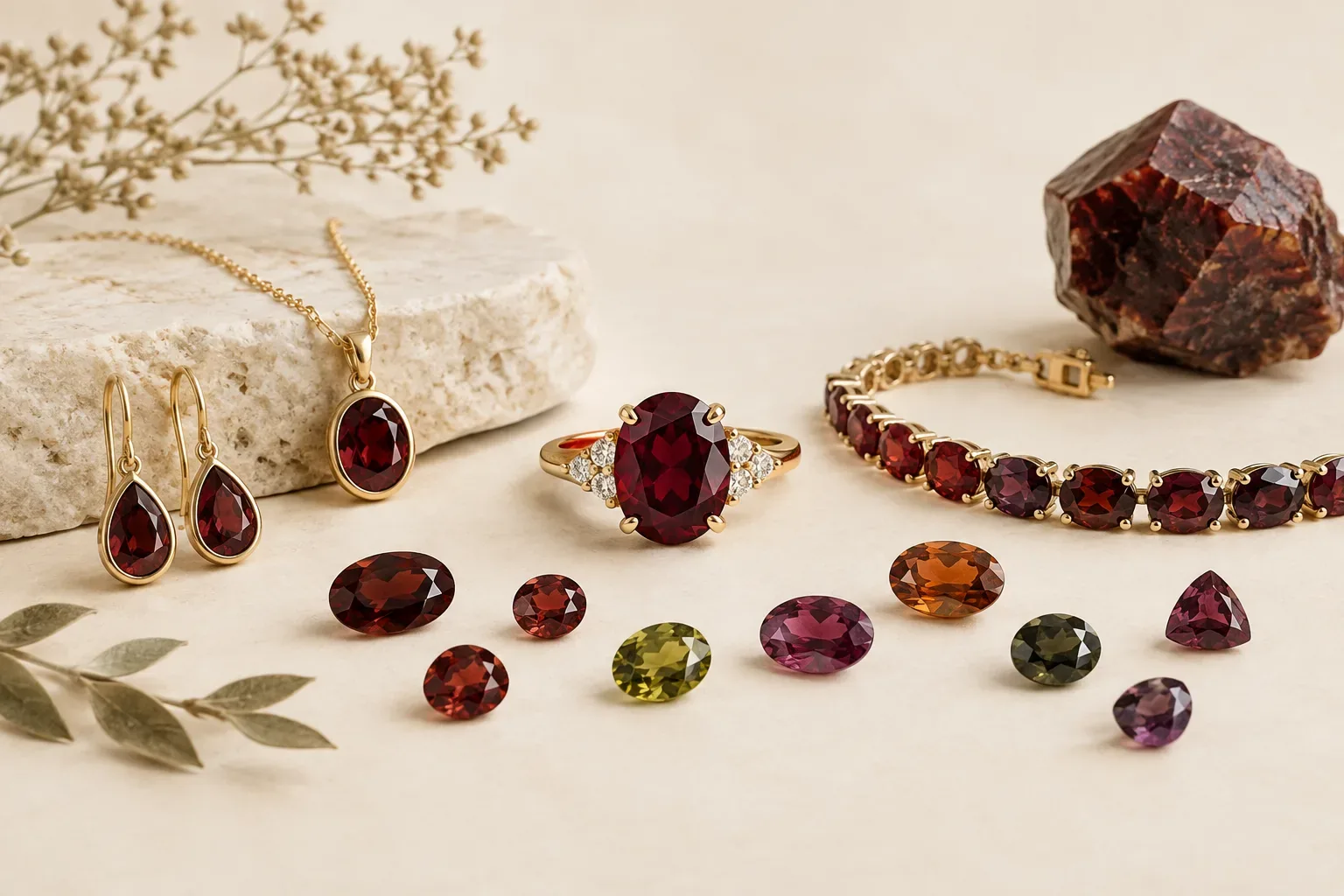
Garnet is not a single mineral but a group of closely related minerals that form a family of gemstones with a range of chemical compositions and colors. The Gemological Institute of America (GIA) describes garnet varieties by name—pyrope, almandine, spessartine, grossular, andradite, and uvarovite—each of which can present different hues and optical properties. While many people think of deep red garnets first, the group also includes orange, yellow, green, and rare color-change examples.
Color and variety matter for appearance, rarity, and market terminology. Trade and gemological descriptions often pair a variety name with a color term to clarify what a buyer is seeing. Because several different mineral varieties are called 'garnet' in jewelry, asking for the variety name or a reliable description helps avoid confusion and ensures reasonable expectations about color, durability, and value.
Documented historical evidence and cultural uses
Documented evidence collected by professional gemological bodies shows garnet's long use in personal ornament and trade. The Gemological Institute of America reports that garnets have been used in jewelry for thousands of years and appear in archaeological and historical contexts across multiple regions. GIA notes examples of garnet use in ancient settings, including beads, inlays, and carved gems, and traces of the gem in artifacts from ancient Mediterranean and European contexts.
The GIA's historical overview highlights that different cultures prized garnet for its color and durability and used it in distinct ways. For example, garnet beads and intaglios appear in ancient Mediterranean archaeology, while later historical periods in Europe favored garnets in signet rings and cluster-style settings. The GIA record also documents the popularity of certain garnet sources at particular times—such as Bohemian garnet faceting in 19th-century European jewelry—without asserting a single universal meaning attached to the stone.
Where historical records exist, they describe the contexts in which garnet was used rather than a single, uniform symbolism. Treaties of jewellery, inventories, and archaeological catalogs reported by professional gemological sources focus on technique, source, and style rather than comprehensive statements about spiritual or protective powers.
Documented meanings versus modern interpretations
It is important to keep documented meanings separate from later or contemporary interpretations. Gemological and historical sources document how people used garnet and where it circulated, but they rarely record a single agreed-upon metaphysical meaning. Professional records indicate cultural preference and function—ornament, trade, seal stones—rather than universal symbolism.
Modern symbolism—ideas that garnet protects, fuels passion, or conveys devotion—largely reflects personal belief systems, romantic marketing, and contemporary tradition-building. These modern meanings can be meaningful and respectful when chosen deliberately, but they should be presented as contemporary or personal interpretations, not as universally documented historical facts.
How garnet appears in jewelry: cuts, settings, and motifs
Garnets appear across the full range of jewelry forms. Faceted garnets are common in rings and earrings for their brilliance and color. Cabochon cuts highlight translucent varieties and unusual colors. Garnet beads and strings are traditional in necklaces and rosaries, and small faceted garnets historically appear in cluster settings that emphasize groups of stones rather than single large gems.
Historical and modern jewelry techniques that use garnet include inlay work, intaglio carving for seals, closed-back settings that deepen color for older styles, and modern prong or bezel mounts that prioritize durability. Jewelers choose cut and setting based on the specific garnet variety, its transparency, and desired color effect. For example, darker red stones are often faceted to give flash, while rarer green or color-change garnets may be cut to maximize unique optical effects.
Buying garnet: disclosure, treatments, and questions to ask
When purchasing garnet jewelry, treat the transaction like any colored gemstone purchase. The U.S. Federal Trade Commission (FTC) advises that sellers must disclose material facts about gemstones, including whether a stone is natural, laboratory-grown, treated, or an imitation. Ask the seller to describe the gem by variety name, color, weight, and any known treatments or enhancements.
Because the garnet group includes many varieties, ask for clear identification. Request a written description and, for higher-value pieces, consider independent lab testing or a professional appraisal. If a seller uses trade names or marketing descriptors (for example, 'rhodolite' for a particular garnet composition), ask for the underlying gemological name and any test results that support the claim.
Selection and gifting guidance
Choose garnet jewelry for its color, durability, and personal meaning rather than relying on assumed universal symbolism. If you intend a garnet gift to carry a particular message—such as a tie to birth-month tradition, a token of affection, or a nod to family history—state that intention clearly in a card or conversation so the recipient understands the meaning you intend.
Respect cultural differences and personal beliefs. If you are gifting a garnet to someone who values historical context, consider including a short note that distinguishes documented history from modern symbolism. For milestone gifts or heirloom purchases, choose settings and metals that protect the stone and suit the recipient's lifestyle, and keep purchase records and any lab reports with the piece.
Caring for garnet jewelry
Garnet is generally durable enough for everyday jewelry, but care depends on the specific variety and any treatments. The Gemological Institute of America recommends routine cleaning with mild soap, warm water, and a soft brush for most garnets, along with careful drying and separate storage to avoid scratching from harder gems or metal edges.
Avoid exposing garnet jewelry to harsh chemicals or extreme thermal shock and remove pieces during heavy manual work. GIA also advises that for any piece showing looseness, unusual inclusions, or suspected fracture fills or treatments, seek a professional jeweler for inspection before using ultrasonic or steam cleaners. Periodic professional inspection and secure settings will help preserve both appearance and value.
Putting meaning into practice
If you value historical associations, use reputable sources such as gemological reports and museum catalogs to support any claims about past use. If you prefer contemporary symbolism, be explicit that the meaning is personal or modern and not a direct continuation of a single historical practice. Either approach is valid when done thoughtfully and respectfully.
Finally, combine thoughtful selection with good documentation and care. A well-chosen garnet piece accompanied by clear provenance, a note about intended meaning, and reasonable care will more likely become a treasured object for its aesthetic, story, and personal significance.
Frequently asked questions
Is garnet always red?
No. The garnet group includes several mineral varieties that occur in a range of colors, including red, orange, yellow, green, and rare color-change stones. Professional gemological sources emphasize variety names to clarify color and composition.
Is garnet the January birthstone?
Yes. Garnet is traditionally associated with January as a birthstone in modern birthstone lists, a tradition distinct from historical uses and meanings documented by gemological authorities.
How should I clean and store garnet jewelry?
For most garnets, gently clean with mild soap, warm water, and a soft brush, then dry and store separately to avoid scratches. Avoid harsh chemicals and rapid temperature changes, and seek professional inspection before using ultrasonic or steam cleaners on unfamiliar or treated stones.
How can I tell if a garnet is natural, treated, or an imitation?
Identification often requires gemological testing. The FTC advises buyers to request disclosure from sellers about treatments, whether the stone is natural or lab-grown, and any imitations. For higher-value purchases, obtain a report from a reputable laboratory or an independent appraisal.
Are some garnets fragile or unsuitable for everyday wear?
Most garnets are durable enough for everyday jewelry, but hardness and toughness vary by variety. Choose protective settings and avoid exposure to hard knocks, and consult a jeweler if a piece will be used for intensive wear.
Sources and further reading
- Garnet Gemstone — Gemological Institute of America
- Buying Gemstones, Diamonds, and Pearls — Federal Trade Commission
- Tips on Caring for Jewelry — Gemological Institute of America