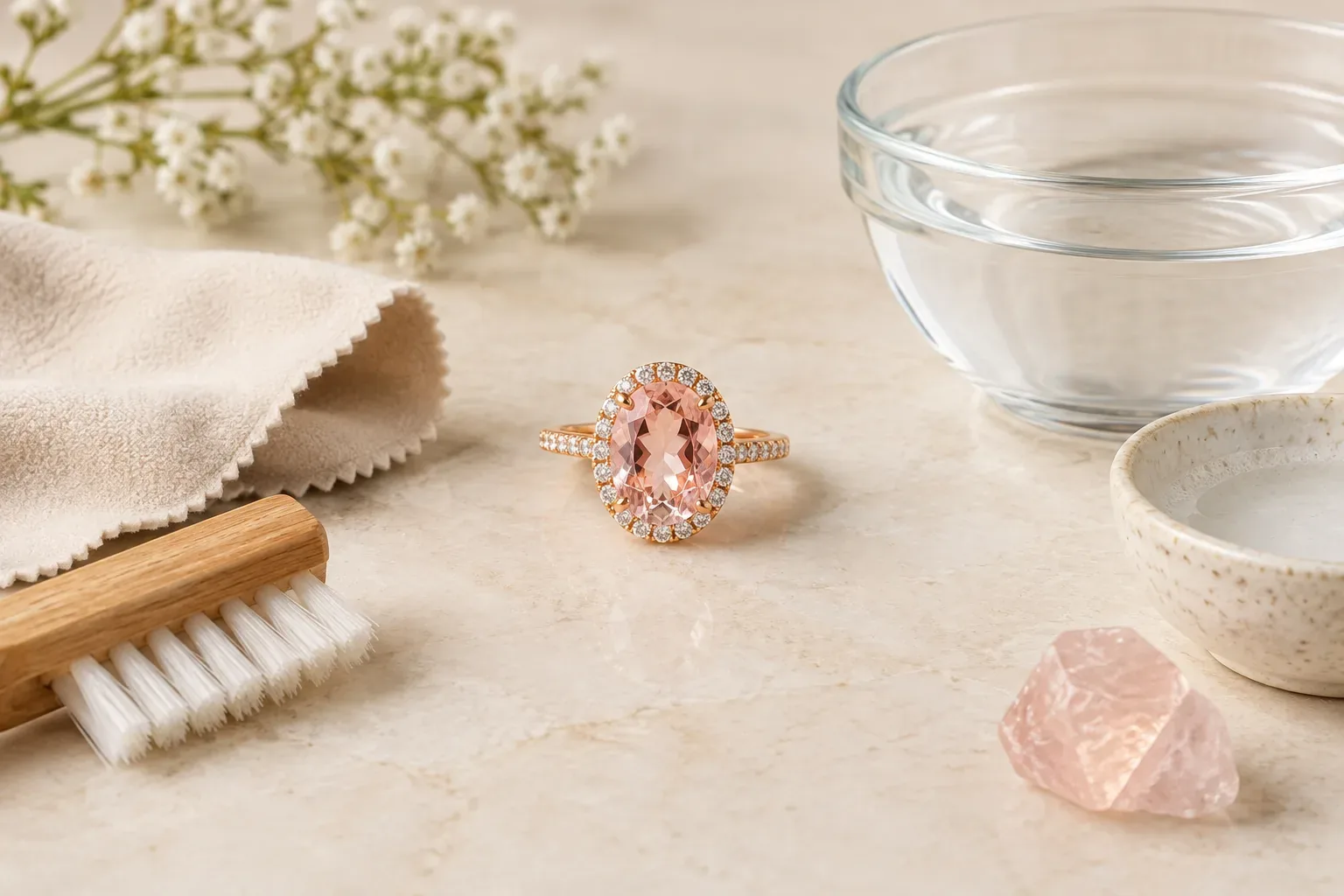
Meaning at a glance
This morganite cleaning guide gives concise, practical advice: use gentle warm water and mild soap with a soft brush for routine cleaning, avoid harsh chemicals and aggressive ultrasonic or steam treatments unless a qualified jeweler confirms a stone’s durability and treatment status, and always verify treatment disclosure in writing where value or daily wear are concerns.
Quick answer
Use a mild dish soap and warm water with a soft brush for routine cleaning, rinse and dry with a lint‑free cloth; avoid harsh chemicals, abrasives, and aggressive machines such as ultrasonic cleaners or steamers unless a qualified jeweler or laboratory has confirmed the stone’s treatment and mounting are safe for such methods. Confirm any treatment or enhancement with written disclosure at purchase and when in doubt ask a professional before attempting strong cleaning methods.
What the historical record and market evidence show
There is little widely cited, long‑term cultural history recorded specifically for morganite in the standard literature included with this brief. Contemporary market and trend reporting shows that colored gemstones and gemstone rings, including engagement pieces and sculptural settings, have grown in consumer search and buying interest, which is the context in which morganite gains visibility in modern jewelry. Imaginaire Digital reports strong demand for engagement rings and various gemstone shapes and styles in recent UK search data, and Professional Jeweller / PRYA Jewellery Search Insights identifies growth in gemstone rings and birthstone necklaces as category trends, which helps explain why morganite is increasingly used in modern pieces.
Documented historical meanings versus modern personal interpretations
There is a difference between documented, long‑standing cultural symbolism and contemporary or personal meanings that buyers assign to a gem. For morganite, widely available authoritative sources used for this article do not establish an extensive pre‑existing cultural symbolism that can be traced across specific historical periods or cultures. Instead, the gem’s associations—such as romantic or emotional symbolism—are largely modern interpretations that individuals, designers, and retailers attach when using morganite in engagement or gift jewelry.
Treat modern personal interpretations as contemporary fashions or individual sentiment rather than as universal or historical facts. When symbolic meaning matters in a purchase or gift, state the intended meaning aloud or in writing so the recipient understands the sentiment rather than assuming a universal cultural meaning.
How morganite appears in jewelry today
In the current jewelry market context, morganite most commonly appears as center stones in rings—particularly engagement rings—and as stones in earrings, pendants, and cluster settings. Market analyses cited above show growing consumer interest in sculptural designs, gemstone rings, and gemstone necklaces, which helps explain morganite’s frequent use in fashion and bridal jewelry.
Designers often set morganite in a range of metals and settings from delicate halo frames to three‑stone and cluster designs. Because trends favor personalized and birthstone jewelry, morganite is also incorporated into necklaces and bracelets where color and cut complement contemporary styling. If a piece is intended for frequent wear, the setting and the overall design should be evaluated alongside cleaning and care needs.
Safe cleaning methods: practical at‑home steps
For routine surface cleaning, many jewelers recommend a gentle, non‑abrasive approach. Prepare a bowl of warm (not hot) water mixed with a small amount of mild liquid dish soap. Soak the jewelry briefly, then use a soft, non‑metal brush to loosen dirt in crevices and under the setting. Rinse thoroughly with clean water and dry with a lint‑free cloth. This approach removes oils, dust and everyday grime while minimizing mechanical or chemical stress on the stone and setting.
Keep expectations realistic: routine home cleaning refreshes appearance but will not alter or remove internal treatments or correct problems such as loose settings, severe scratches, or fracture damage. For stubborn surface deposits such as hardened lotions or adhesives, seek professional cleaning rather than applying stronger household chemicals yourself.
What to avoid and why
Avoid exposure to harsh household chemicals, strong acids, bleach, abrasive cleaners, and abrasive cloths or pads. These substances and materials can damage metal settings and any surface treatments and could dull or etch a gemstone’s surface. Avoid using aggressive mechanical methods such as ultrasonic cleaners or steam cleaners unless a qualified jeweler or a gemological laboratory has confirmed that the specific stone and its mounting are safe for those processes. The Gemological Institute of America emphasizes that treatments and durability influence care needs and that detectability of treatments can affect what cleaning methods are appropriate.
Also avoid abrupt temperature changes and blunt force; thermal shock and impacts can cause fractures or loosen settings. When in doubt about using any stronger cleaning technique, get written confirmation from a trusted jeweler or a laboratory report that details any treatments and states whether ultrasonic or steam cleaning is advisable.
Trade‑offs and decision criteria when choosing cleaning methods
Every cleaning decision involves trade‑offs between convenience, appearance, and risk. At‑home methods are inexpensive and sufficiently effective for routine upkeep but carry the small risk of missing hidden damage or inadvertently affecting treated stones. Professional cleaning is more expensive but provides deeper cleaning and an opportunity for a trained technician to inspect settings, check for loose stones, and recommend repairs.
Use the following decision criteria: how often will the piece be worn, whether the stone is mounted for daily wear, the disclosed treatment status of the gemstone, and the value or sentimental importance of the piece. For high‑value items or those worn daily—especially engagement rings—favor professional inspection and periodic professional cleaning. For fashion pieces or costume settings, routine home cleaning is usually adequate provided the setting and stones are intact.
What only a jeweler or gemological laboratory can verify
Certain facts cannot be reliably verified at home. The presence and type of treatments, the precise identity of a gemstone, and some durability or enhancement details often require gemological testing. The Gemological Institute of America notes that treatments, detectability and disclosure are important consumer issues, and the Federal Trade Commission advises consumers to seek clear written distinctions among natural, lab‑created, treated and imitation materials. If you need to know whether a stone has been heat treated, irradiated, filled or subjected to other enhancements, or if you need a formal identification and grading, a recognized gemological laboratory or qualified independent appraiser is the proper resource.
Ask for written disclosure at purchase and keep receipts and any lab reports. For valuable purchases, request a laboratory report from a reputable lab and keep contact information for the jeweler in case follow‑up testing or repairs are required.
Selection and gifting guidance
When selecting or gifting morganite, be explicit about intended use and expected durability. If the recipient intends to wear the piece daily, choose a secure setting and at least semi‑protected placement for the stone. Request written disclosure about treatments and ask whether the seller recommends any specific cleaning or care. The Federal Trade Commission recommends that sellers provide clear written distinctions about natural, lab‑created, treated and imitation materials, so ask for those disclosures at the point of sale.
Consider budget trade‑offs: untreated or laboratory‑verified stones with documentation may cost more but provide greater certainty about care and long‑term value. For sentimental gifts where symbolism is important, explain the chosen meaning in a note or card so the message accompanies the piece and is not left to assumption. Insure valuable pieces and consider an appraisal for replacement value if the gem or setting is costly or irreplaceable.
Storage, routine upkeep, and when to get professional help
Store morganite jewelry separately from harder stones to reduce scratching and avoid exposure to prolonged strong sunlight or chemical vapors from cosmetics and cleaning products. Wipe pieces gently after wearing to remove skin oils and perfumes. Perform a visual inspection periodically to confirm prongs and settings remain secure.
Seek professional help if you notice chips, deep scratches, loose settings, clouding that does not respond to gentle cleaning, or if you suspect a treated stone. Professional jewelers and gemological labs can perform cleaning, repairs and tests that go beyond at‑home care.
Frequently asked questions
What is the simplest safe method to clean morganite at home?
A common safe routine is to soak the piece briefly in warm (not hot) water with a small amount of mild dish soap, use a soft brush to gently clean under the setting, rinse completely with clean water, and dry with a lint‑free cloth; for anything beyond light surface cleaning, consult a professional.
Can I use an ultrasonic or steam cleaner on morganite?
Do not use ultrasonic or steam cleaning unless a qualified jeweler or gemological laboratory has confirmed the specific stone and its setting are safe for those methods; treatments and mounting types can make aggressive cleaning risky, and the Gemological Institute of America highlights that durability and treatments affect care.
Will cleaning remove any treatments or coatings?
Cleaning should not be relied on to alter or remove internal treatments or permanent enhancements. If you need to know whether a stone has been treated, request written disclosure at purchase and consider laboratory testing for definitive answers, consistent with Federal Trade Commission guidance on disclosure.
How often should I professionally inspect or clean a morganite piece?
For jewelry worn daily—such as an engagement ring—consider a professional inspection and cleaning at least once a year; for pieces worn less often, professional attention every 18–24 months is commonly sufficient, but adjust based on visible wear or any concern about the setting.
What can only a lab or qualified jeweler tell me about a morganite?
A qualified jeweler or gemological laboratory can identify treatments, confirm whether a stone is natural or lab‑grown, and provide formal identification and durability assessments. These judgments often require specialized instruments and expertise beyond at‑home inspection, and reputable sellers should provide written disclosures.
Sources and further reading
- Imaginaire Digital — Imaginaire Digital
- Professional Jeweller / PRYA Jewellery Search Insights — Professional Jeweller / PRYA Jewellery Search Insights
- Gemological Institute of America — Gemological Institute of America
- Federal Trade Commission — Federal Trade Commission