Meaning at a glance
This guide explains the documented historical context for beryl stones (the family that includes morganite), separates recorded cultural evidence from modern marketing and personal meanings, and gives clear, practical steps to evaluate color, clarity, cut, carat, treatment disclosure, and setting when buying or gifting morganite jewelry.
Direct answer — what this guide sets out to do
This article lays out the documented history and changing contexts that affect morganite quality and value factors, distinguishes what is recorded about gemstones from later popular or personal interpretations, and provides practical advice for choosing, gifting, and caring for morganite jewelry today.
Historical evidence and cultural context — what is documented
Most recorded museum and reference material treats morganite as part of the beryl family rather than as a long-standing, separate cultural symbol. The Victoria and Albert Museum’s A–Z of Gemstones explains how varieties of beryl have been identified and used in different periods, and the museum’s historical overviews underline that social meanings attached to stones change as fashions, technologies and markets change. Use of the beryl family in jewelry has a documented presence in museum collections and published histories, but that documentation typically treats identification and use rather than a fixed symbolic meaning for any one new variety.
The V&A’s exhibition material on jewellery history also emphasizes changing social context: pieces that carried a certain significance in one era can be reinterpreted in another as technology, availability, and social values shift. In short, the documented historical record—so far as the museum evidence attests—places morganite within a broader story of how gem varieties are classified and used, rather than as a gemstone with a long, distinct cultural or religious tradition recorded across many societies.
Documented meanings versus modern interpretations
The museum evidence supports recorded uses, attributions, and evolving fashions for gemstones in general, but it does not establish a universal, historical symbolism unique to morganite. Any widely circulated claims that morganite has ancient religious or pan-cultural meanings should be treated as modern interpretations or marketing language unless supported by primary historical sources or specific cultural documentation.
Contemporary meanings attached to morganite—such as associations with love, compassion, or emotional healing—are modern and personal interpretations. These contemporary associations are common in current jewelry marketing and in personal gifting practice, but they are not the same as documented, historically continuous cultural beliefs. Keeping those two categories separate helps buyers and gifters be clear about whether they are honoring a documented tradition or choosing a stone for its contemporary symbolism or personal resonance.
Gem basics: what affects morganite quality and value
Morganite is a pink to peach variety of the beryl family. When evaluating quality and value, treat morganite the way you would assess other colored gemstones: color, clarity, cut, and carat weight are the primary internal factors that determine appearance and market price. Color intensity and hue are often the single biggest driver of value for pink gemstones—stones with even, attractive pink or peach-pink color command higher prices than pale or unevenly colored material.
Clarity matters because morganite is typically valued for clean, transparent stones that display color without obvious inclusions. Cut affects both brilliance and the way color is presented; well-executed cuts maximize face-up color and minimize visible inclusions. Carat weight influences price per stone and per carat, but larger stones should be judged in relation to color and clarity—size without attractive color or acceptable clarity will not necessarily increase desirability.
External factors that influence value include market demand, metal and setting choice, and provenance when available. The Victoria and Albert Museum’s resources on gemstones and jewellery history highlight how social fashion and collectible value shift over time; a stone’s market value can rise or fall as tastes change.
Treatments, imitations, and buyer protections
Many colored gemstones receive treatments to improve color or clarity. Buyers should assume that treatments are possible and should ask sellers to disclose them. The U.S. Federal Trade Commission’s guidance on buying gemstones, diamonds and pearls underscores that sellers must disclose material treatments, enhancements, or imitations. Ask for written confirmation about whether a stone has been heat-treated, irradiated, dyed, or otherwise enhanced, and request a full description of any treatment.
Lab reports or certificates from reputable gemological laboratories are useful when asking about treatments or identification. If a seller claims an untreated stone is rare or commands a premium because it is ‘natural’ or ‘untreated,’ request documentation. If you are unsure about an offered certificate, consider independent testing or a second opinion from a trusted, accredited lab.
How morganite commonly appears in jewelry today
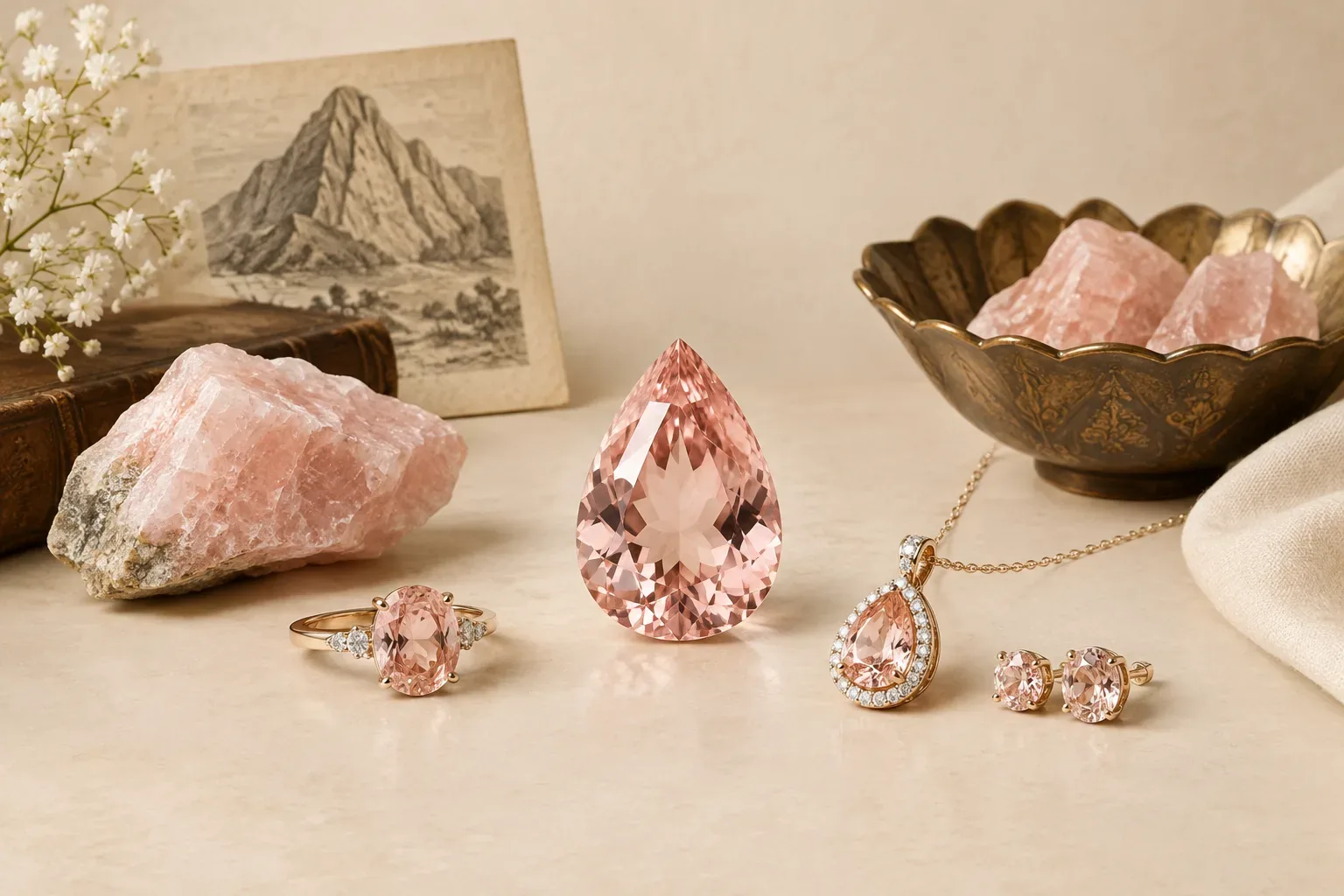
In modern jewelry, morganite often appears in warm-colored pairings: it is frequently set in rose gold or yellow gold that complements pink and peach tones. Settings vary from solitaires to halo styles, where small diamonds or other stones surround the central morganite to accentuate its color. The stone also appears in engagement rings, pendant necklaces, earrings, and cocktail rings; designers choose cuts and settings to emphasize its delicate color rather than fire.
Because it is part of the broader beryl family, traditional jewelry techniques for faceting and setting colored beryls apply to morganite. Contemporary makers and clients choose morganite for its pastel palette and approachable price point compared with some other pink gems, which is why you will see it used both as a center stone and as an accent in fashionable and bridal jewelry.
Practical selection and gifting guidance
Decide whether your priority is color, size, or budget and set a clear order of preference before you shop. For most buyers, a richer, evenly distributed pink or peach color will be more immediately attractive than a marginal increase in carat weight with pale color. If you are buying a ring for everyday wear, choose a setting that offers protection for the stone’s girdle and table and consider a hard-wearing metal and secure prongs.
When gifting, be explicit about whether the sentiment you intend is a documented tradition or a modern personal meaning. If you want the gift to carry a specific cultural message, research that symbolism carefully or choose a piece whose documented history you can reference. If your intention is personal—such as using morganite to symbolize affection or a private memory—explain that to the recipient so the meaning you intend is clear.
Always ask the seller about treatment disclosure, return policies, and any available certification. Compare multiple offers and consider the seller’s reputation and written guarantees. For higher-value purchases, a current independent appraisal and insurance are appropriate safeguards.
Care, cleaning, and practical wear considerations
Treat morganite as you would other valuable colored gemstones: avoid exposure to harsh chemicals and extreme thermal shock, remove jewelry for heavy work or situations where the stone could be struck, and store pieces separately to prevent scratches. Routine cleaning with warm soapy water and a soft brush is generally safe for most colored stones; always confirm care recommendations with the seller, especially if the piece contains fragile settings or mixed materials.
Regularly inspect settings and prongs for wear. A jeweller’s periodic maintenance can prevent loss and preserve appearance. For any questions about cleaning or aftercare, rely on the seller’s guidance and on reputable care practices for colored gemstones rather than informal or anecdotal advice.
Checklist for buying morganite
Before purchase, confirm color preference, clarify whether the stone has received treatments and obtain written disclosure, request any available lab report, check the seller’s return policy and warranty, and request a clear photograph or, when possible, view the stone in person. Think about the wearer’s lifestyle when choosing metal and setting, and decide whether you want documented provenance or personal meaning emphasized at the point of gifting.
If you are unsure about a claim or a certificate, pause and seek independent verification. The relatively approachable price range for morganite can encourage impulse buys; the protections described by the FTC and best practice guidance from established museums suggest that documentation and clear disclosure will protect your investment and make the gift more meaningful.
Final note
Morganite can be a beautiful, wearable choice when selected with attention to color, clarity, cut, and treatment disclosure. Keep documented historical evidence and modern personal meanings separate: museum resources show how gemstones are used and interpreted in changing contexts, while contemporary associations often reflect current tastes and personal sentiment. Use the practical checks outlined here to buy with confidence and to gift with intentionality.
Frequently asked questions
What is the single most important factor in morganite value?
Color is usually the primary driver of value: a richer, evenly distributed pink or peach-pink hue is typically more sought after than a larger but paler stone. Always balance color with clarity and cut when judging overall value.
Are morganites commonly treated?
Treatments to improve color or clarity are possible. The Federal Trade Commission advises buyers to request written disclosure of any material treatments. Ask the seller for specific information and for any available laboratory documentation.
Is morganite suitable for an engagement ring?
Morganite is used in engagement rings and fashion rings; choose a protective setting and sturdy metal if the wearer plans daily use. Discuss lifestyle and maintenance needs before committing to a ring intended for everyday wear.
How should I clean and care for morganite jewelry?
Use warm soapy water and a soft brush for routine cleaning, avoid harsh chemicals and extreme temperature changes, remove jewelry during heavy work, and have settings checked periodically by a jeweller.
How can I be sure a morganite is authentic and fairly described?
Request treatment disclosure, ask for any available lab report, buy from reputable sellers with clear return policies, and consider an independent appraisal for higher-value purchases.
Does morganite have a long historical symbolism?
Documented historical sources treat morganite as part of the beryl family rather than as a gemstone with a long, distinct cultural tradition. Modern symbolic associations are contemporary interpretations rather than continuous historical beliefs.
Sources and further reading
- Bedazzled: A History of Jewellery — Victoria and Albert Museum
- An A-Z of Gemstones — Victoria and Albert Museum
- Buying Gemstones, Diamonds, and Pearls — Federal Trade Commission