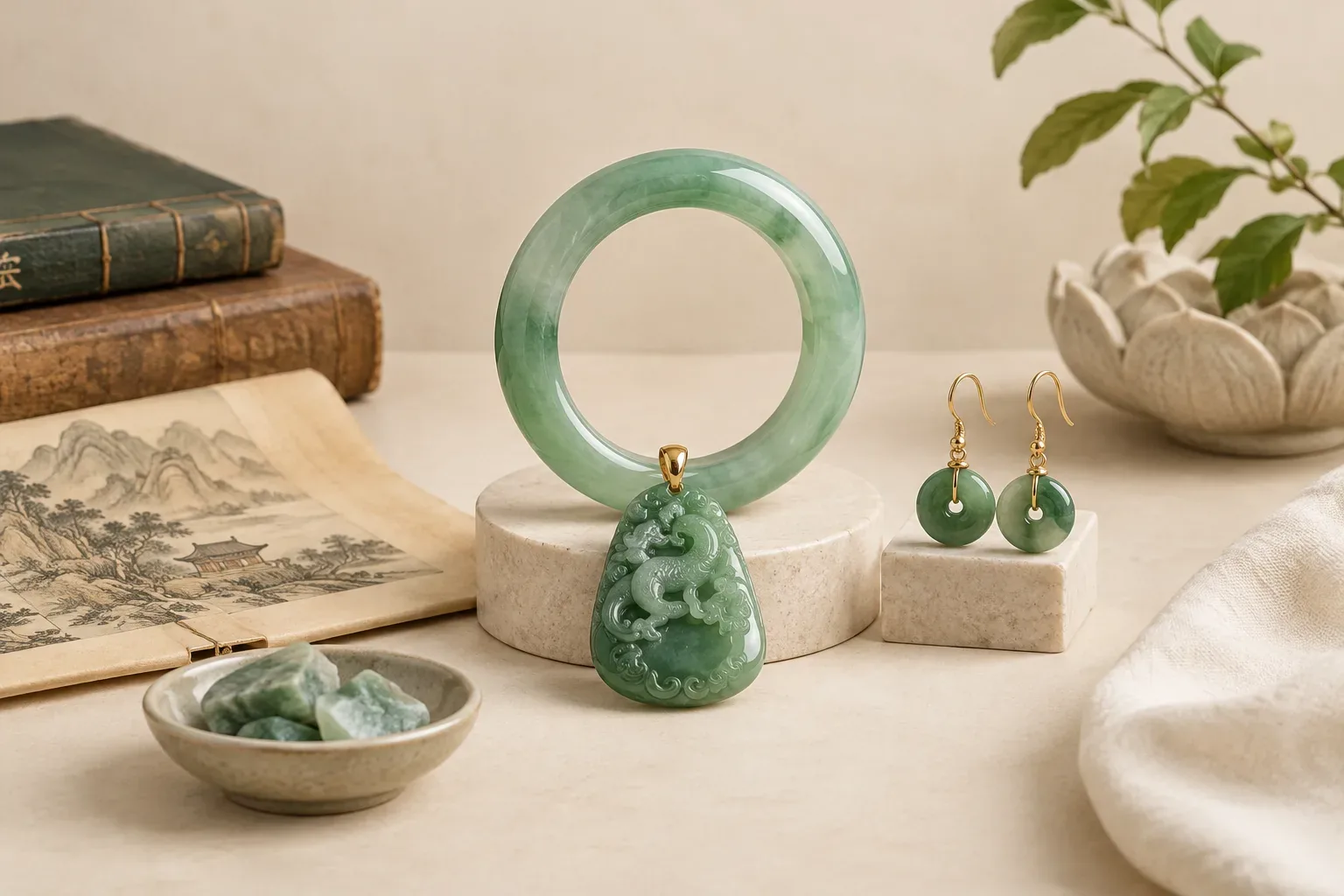
Meaning at a glance
Jade quality and value factors depend on observable material qualities such as color, translucency, texture, carving and condition, plus provenance and disclosure of treatments; historical meanings recorded by museums are culture-specific and different from modern personal interpretations; choose jade by documented quality signs, seller transparency, and cultural sensitivity when wearing or gifting.
What the historical record shows (and which cultures it ties to)
The meaning and value of jade in dress and ritual have changed by era and region. The Victoria and Albert Museum presents jewelry history as a changing social practice, showing how gemstones and materials acquire new roles and meanings in different cultures and periods. Museum documentation links jade to important social and ritual uses in a number of major traditions rather than to a single, universal meaning.
For example, in East Asia—most notably in China—museum collections and curatorial notes trace a long history of jade being worked for ritual objects, personal adornment, and symbols of rank. In other regions, such as pre‑Columbian Mesoamerica, museums record that jade objects appear in distinctive ritual and status contexts different from Chinese practice. The V&A’s broad surveys of jewellery history and of gemstones emphasize that meanings are specific to each culture and can shift over centuries as styles, technologies, and social values change.
Documented historical meanings versus modern personal interpretations
When museum sources describe the historical meanings of jade, they link particular objects and forms to verifiable social roles documented in collections, archives, and provenance records. Those documented meanings include uses in ritual, indicators of social status, and stylistic conventions tied to particular dynasties, workshops, or regions, as described in museum summaries of jewellery history.
Modern personal and commercial interpretations—such as claims that jade ‘‘brings specific health benefits’’ or that wearing a particular motif guarantees a particular outcome—are not the same as documented historical practice. Those contemporary beliefs can be meaningful to individuals and communities today, but they should be treated as personal, cultural, or commercial interpretations rather than universal facts. Distinguishing documented museum evidence from personal belief helps buyers respect history while making their own choices.
How jade appears in jewelry and motifs to look for
Jade appears in jewelry in a variety of ways: as carved pendants and amulets, as beads strung into necklaces or bracelets, as bangles and rings, and as inlays and settings combined with metalwork. Museum surveys show that different traditions favour different forms; for instance, some cultures emphasise large, flat plaques and carved motifs while others favour polished beads or bangles.
Motifs carved in jade—such as stylised animals, abstract patterns, or symbolic emblems—carry meanings that are specific to their culture of origin and to the period when they were made. In a modern jewelry context you will see traditional motifs reproduced in contemporary designs, sometimes combined with other gemstones and metals. The quality of the carving, the smoothness of the polish, and how the jade is set into a piece strongly affect both aesthetic value and durability.
Material factors that affect value and how to assess them
Several material attributes commonly influence the market value of jade. Color intensity and evenness matter; translucency (how light passes through the stone) is often prized; the fineness of texture and the absence of surface flaws or fractures affect both beauty and durability; and expert carving or finish increases value. Provenance and rarity of a particular type or source can also be relevant, especially where historical or cultural associations are documented.
Because museums and gem guides treat gemstone identification as a specialized skill, buyers should combine visual assessment with seller documentation. Look at the stone in natural and controlled light, examine its surface for scratches, chips or repair, and note how the material responds to light. Ask the seller for any available paperwork on origin, treatments, and previous ownership. Where a scientific report is available, it can clarify identity and treatment history, but the absence of a report does not always mean a piece is inauthentic—rather, it points to the need for careful evaluation.
Treatments, imitations and legal disclosure
Treatments and imitations are common issues across many gemstones, and jade is no exception. The Federal Trade Commission requires that sellers disclose significant material treatments and the presence of imitations when marketing gemstones. That means you should expect transparent answers when you ask a dealer whether a piece has been dyed, impregnated, assembled from smaller pieces, or otherwise altered.
If a seller hesitates or gives vague answers, consider walking away or seeking an independent opinion. Reputable dealers are willing to explain the material history of a piece and to supply documentation. Museum literature underscores the importance of understanding both how an object was made and how it has been handled or modified over time.
Practical buying and gifting guidance
Decide first whether you are buying for aesthetic, historical, cultural or investment reasons. If you want a wearable piece for everyday use, choose a durable cut and setting and favour pieces with good condition and minimal fractures. If you are buying for historical interest, seek provenance and consider purchasing from reputable dealers or auction houses that provide documentation and allow time for inspection.
When selecting a design for gifting, be thoughtful about the recipient’s cultural background and personal values. Some motifs carry particular ceremonial or familial meanings in their culture of origin; if you are unsure, ask a knowledgeable seller or consult the recipient. A well-chosen piece that acknowledges cultural significance is more respectful and often more appreciated than a flashy but context-free item.
Insist on clear disclosure about treatments, repairs, and origin. Ask about return policies and written guarantees. For higher value purchases, seek a formal gemological report or third‑party appraisal. When in doubt, compare similar pieces from multiple reputable sources to understand market norms for price and quality.
Care, wear and ethical considerations
Jade requires sensible care: avoid hard knocks that can chip or crack fine carving, protect polished surfaces from sharp abrasives, and store pieces so they do not rub against harder gemstones or metals. Museum conservation practice underlines gentle handling and controlled environmental conditions for historic pieces; apply the same common‑sense approach to personal jewelry.
Respect for cultural heritage matters. Avoid presenting culturally specific ritual forms as novelty items if you cannot explain their significance. If you are buying antique or ethnographic jade that may have been removed from its cultural context, seek sellers who provide clear provenance and who respect laws and ethical guidelines for cultural property.
Making an informed purchase without specialist knowledge
You do not need to be an expert to buy well. Learn the basic visual cues—color, translucency, surface condition and carving quality—ask direct questions about treatments and origin, and buy from sellers who welcome inspection and provide written information. Use museum resources and reputable guides to understand how particular motifs fit into historical contexts before you purchase.
When you cannot verify origin or treatment to your satisfaction, treat the piece as a decorative object rather than as an investment. That approach lets you enjoy the design and material while avoiding unsupported expectations about future financial or cultural value.
Frequently asked questions
What are the main factors that determine jade’s value?
Value is influenced by observable material traits—color, translucency, texture, condition—and by the quality of carving and finish. Provenance and documented history can add value, and the presence or absence of treatments or repairs affects market price.
How can I be sure a jade piece is authentic and not treated or an imitation?
Ask the seller for full disclosure about any treatments or enhancements and for any available documentation. The Federal Trade Commission recommends that significant treatments and imitations be disclosed. For higher value purchases, request a third‑party gemological report or appraisal.
Does the historical significance of a jade motif make it inappropriate to wear?
Not automatically. Many traditional motifs are worn respectfully in contemporary contexts, but some objects have sacred or ceremonial significance for particular communities. If you are uncertain, research the motif’s cultural context or ask the seller; opting for designs that acknowledge that heritage is a respectful choice.
Is brighter or more translucent jade always better?
Brighter color and greater translucency are commonly prized, but taste and cultural preferences vary. The overall quality—condition, carving, and provenance—matters as much as any single attribute. Decide whether aesthetics, durability, or historical significance are your priority.
How should I care for jade jewelry?
Handle jade gently to avoid knocks that can chip carved edges, keep pieces separate from harder stones and metals, clean with a soft cloth and mild soap if necessary, and store in a padded jewellery box. For valuable antiques, consult a conservator or specialist before cleaning.
Should I treat jade as an investment?
Some high‑quality, well‑documented pieces can hold or increase in value, but market prices fluctuate. If investment is your primary motive, seek well‑documented provenance, independent appraisals, and buy from reputable sources rather than relying on unverified claims.
Sources and further reading
- Bedazzled: A History of Jewellery — Victoria and Albert Museum
- An A-Z of Gemstones — Victoria and Albert Museum
- Buying Gemstones, Diamonds, and Pearls — Federal Trade Commission