Meaning at a glance
This guide answers the search intent behind “morganite engagement ring guide” with clear definitions, decision criteria, practical trade-offs, safe care guidance, and the limits of buyer verification without a qualified jeweler or gemological laboratory.
What morganite is and why shoppers choose it
Morganite is a pink to peach gemstone used in contemporary jewelry for its warm color range and affordability relative to some other colored gems. Modern retail and trend reports show increased consumer interest in gemstone engagement rings and oval/colored stones as alternative center stones, which contextualizes the rise in morganite’s popularity in engagement jewelry (Professional Jeweller / PRYA Jewellery Search Insights; Imaginaire Digital).
Shoppers are usually choosing morganite for its gentle color, perceived romantic tone, and because it allows larger-looking center stones for a given budget. Those priorities shape decisions about cut, size, and setting more than any single technical property.
Historical evidence and cultural use
There is little documented historical use of morganite in ancient or classical jewelry collections, and most evidence for morganite’s presence in engagement rings is modern and commercial. Contemporary industry reporting places morganite within current trends for gemstone rings, sculptural forms and vintage-inspired rings rather than within long-standing cultural engagement traditions (Professional Jeweller / PRYA Jewellery Search Insights; Imaginaire Digital).
Because modern publications and trade analyses frame morganite as part of a broader move toward colored and personalized engagement rings, it should be treated as a contemporary choice shaped by 20th–21st century consumer tastes rather than by longstanding ritual use.
Documented historical meanings versus modern personal interpretation
Documented historical meanings tied specifically to morganite are scarce in the published trade literature and consumer-search reporting. Contemporary meanings people apply to morganite—such as romantic softness, emotional warmth, or suitability as an alternative to diamond—are modern personal interpretations rather than historically documented symbols.
When discussing symbolism with a recipient, treat any emotional or symbolic meaning as personal and contemporary. The trade reporting that highlights interest in birthstone and gemstone personalization explains why many modern couples assign their own meanings to colored stones in engagement jewelry (Professional Jeweller / PRYA Jewellery Search Insights).
How morganite typically appears in jewelry and motif considerations
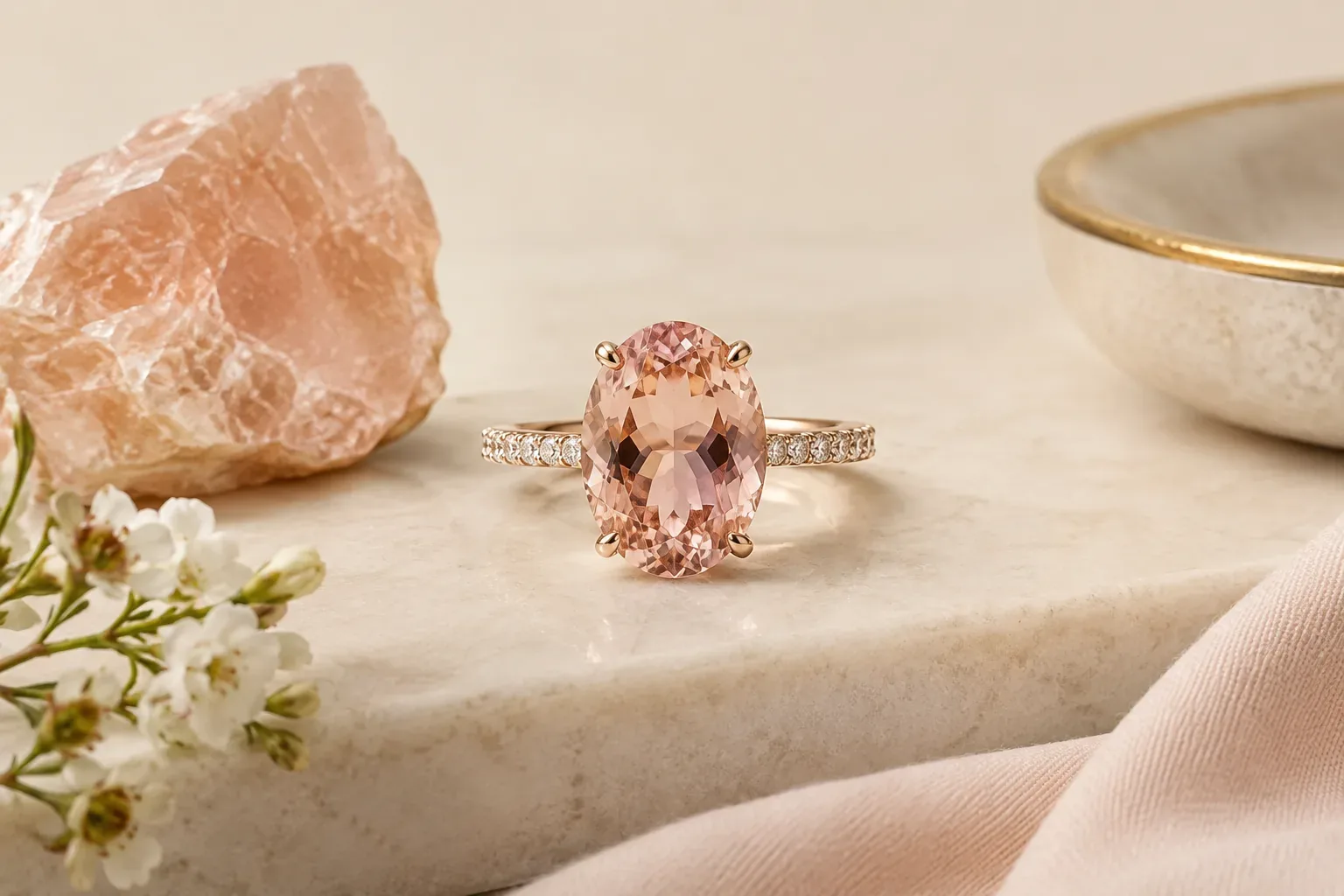
In engagement rings morganite most commonly appears as a single center stone in cuts that emphasize color and size, such as oval, cushion, and emerald cuts. Jewelers also set morganite within halos, three-stone arrangements, and cluster motifs to boost perceived size and add sparkle without using larger amounts of more expensive accent gemstones.
Color of the mounting metal will affect how the stone’s color reads: warmer metals such as rose or yellow gold tend to emphasize peach and warm pink tones, while white metals can give the gem a cooler or paler appearance. Designers frequently pair morganite with diamond accents, small sapphires, or other gemstones to create Art Deco–inspired or sculptural cluster motifs, which aligns with recent trend reporting on sculptural jewelry and vintage references (Professional Jeweller / PRYA Jewellery Search Insights; Imaginaire Digital).
Suitability and practical decision criteria
Consider four practical questions when deciding if a morganite engagement ring suits you: how you wear rings day-to-day; whether you want a low-maintenance or delicate piece; the visual priorities for color versus brilliance; and budget. These factors determine trade-offs such as choosing a larger morganite in a protective setting versus a smaller, more brilliant diamond-style choice.
Because treatments, detectability, durability and special care are common consumer concerns across gemstones, ask the seller whether the stone is natural, lab-created, heat-treated or otherwise enhanced and request written disclosures (Gemological Institute of America; Federal Trade Commission). The seller should be able to explain typical care needs and any stability or wear considerations for that particular stone and setting.
Settings and design trade-offs
If you prioritize daily wear and longevity, choose settings that protect the girdle and pavilion edges of the stone. Bezel settings offer strong protection for softer or more brittle gems because the metal surrounds the edge, while low-profile prong settings can reduce snagging. Halo and three-stone layouts protect the center stone visually and mechanically by keeping it set lower and surrounding it with accent stones.
If maximizing the apparent size and color of the morganite is the priority, an open prong or cathedral setting with a halo can increase perceived scale and light return, but these choices may expose the stone more and can require more careful wear. Metal choice also matters: warmer golds complement the stone’s tones, while platinum or white gold highlights contrast and may suit different styling goals.
Care, maintenance, and when to seek professional help
Treatments and stone durability create distinct care needs for many gemstones. Ask whether the morganite has been treated and follow the jeweler’s recommended cleaning method; some gemstones and enhancements require gentler cleaning and should avoid harsh chemicals and certain ultrasonic cleaners (Gemological Institute of America).
Have the ring inspected periodically by a qualified jeweler to check prongs, mounting integrity and any signs of wear. For any discoloration, chips, or loosened settings, stop wearing the ring and seek professional repair. For resale, insurance, or if origin and treatment status matter for your purchase, obtain a written seller disclosure and, when warranted by price or concern, a report from an independent gemological laboratory because only trained gemologists and labs can reliably confirm natural versus lab-grown origin, detect many treatments, and provide authoritative identification (Federal Trade Commission; Gemological Institute of America).
What a buyer can verify and what requires a jeweler or lab
You can verify visual aspects at the point of sale: color appearance in different lights, cut and symmetry you can see, ring weight, metal hallmarking, the seller’s return policy, and whether the seller provides written disclosure about treatments or origin. You can also ask for photographs, videos and a written invoice listing whether the stone is described as natural, lab-created or treated.
What you cannot reliably verify without expert help includes formal identification of the gem type in marginal cases, detection of many treatments, accurate origin claims, and the precise durability profile under long-term wear. These determinations require gemological instrumentation and specialist training, so ask for or commission an independent lab report if the answers affect price, insurance, or future resale (Federal Trade Commission; Gemological Institute of America).
Selection and gifting guidance
Respect the recipient’s style and lifestyle. If the recipient works with their hands, prioritize protective settings and lower profiles over maximum size. If they favor vintage or warm-metal aesthetics, consider yellow or rose gold and halo or cluster motifs that emphasize warmth and romantic tone. If you cannot be sure of style, choose flexible designs that can be worn daily or on special occasions.
Before gifting, find out the seller’s policies on returns, resizing and warranties. Request written disclosure about the stone’s origin and any treatments, and consider insuring the ring soon after purchase. For high-value purchases or when the buyer and recipient disagree about durability or authenticity, plan to obtain an independent gemological report so both parties have shared factual information to guide care and future decisions (Federal Trade Commission; Gemological Institute of America).
Summary
Morganite can be an excellent choice for an engagement ring if you value warm color, affordability relative to some colored gems, and individualized symbolism. Choose protective settings if you expect daily wear, insist on seller disclosures about treatments or origin, and obtain professional inspection and laboratory testing when authenticity, treatment status, or long-term durability are critical to your decision. Treat modern symbolic meanings as personal choices rather than historical facts, and use the practical trade-offs described here to select the combination of cut, setting and metal that best matches lifestyle and aesthetic priorities.
Frequently asked questions
Is morganite a good everyday engagement stone?
Morganite can be used for everyday engagement rings, but suitability depends on the wearer’s lifestyle and the chosen setting. Protective settings such as bezels or low-profile halos reduce exposure to knocks and scratches. Ask the seller about any treatments the stone has had and follow professional care guidance; for high-risk daily wearers, choose more protective mountings or consider alternative center stones.
What should I ask the seller before buying a morganite ring?
Request written disclosure about whether the stone is natural, lab-created, or treated; ask for the metal type and hallmark; confirm return, resizing and warranty policies; and ask whether the seller can provide or recommend an independent gemological report if origin, treatment status or valuation is important to you.
Can I clean morganite at home?
Cleaning recommendations depend on whether the stone is treated and on the metal and setting. Many jewelers recommend gentle soap, warm water and a soft brush for colored gemstones, but avoid harsh chemicals and confirm with the seller. For stones with unknown treatments, seek the jeweler’s guidance and avoid ultrasonic or steam cleaners until you have professional advice.
How can I verify if a morganite is natural or treated?
Only a qualified jeweler with gemological tools or an independent gemological laboratory can reliably identify natural versus lab-grown material and detect many treatments. If this matters for price, insurance or resale, obtain a written lab report from a recognized laboratory.
Does the metal choice matter for morganite color?
Yes. Warm metals such as yellow or rose gold tend to enhance peach and pink tones, while platinum or white gold can make the stone appear cooler or paler. Choose the metal that best matches the recipient’s skin tone and style preferences.
Sources and further reading
- Imaginaire Digital — Imaginaire Digital
- Professional Jeweller / PRYA Jewellery Search Insights — Professional Jeweller / PRYA Jewellery Search Insights
- Gemological Institute of America — Gemological Institute of America
- Federal Trade Commission — Federal Trade Commission