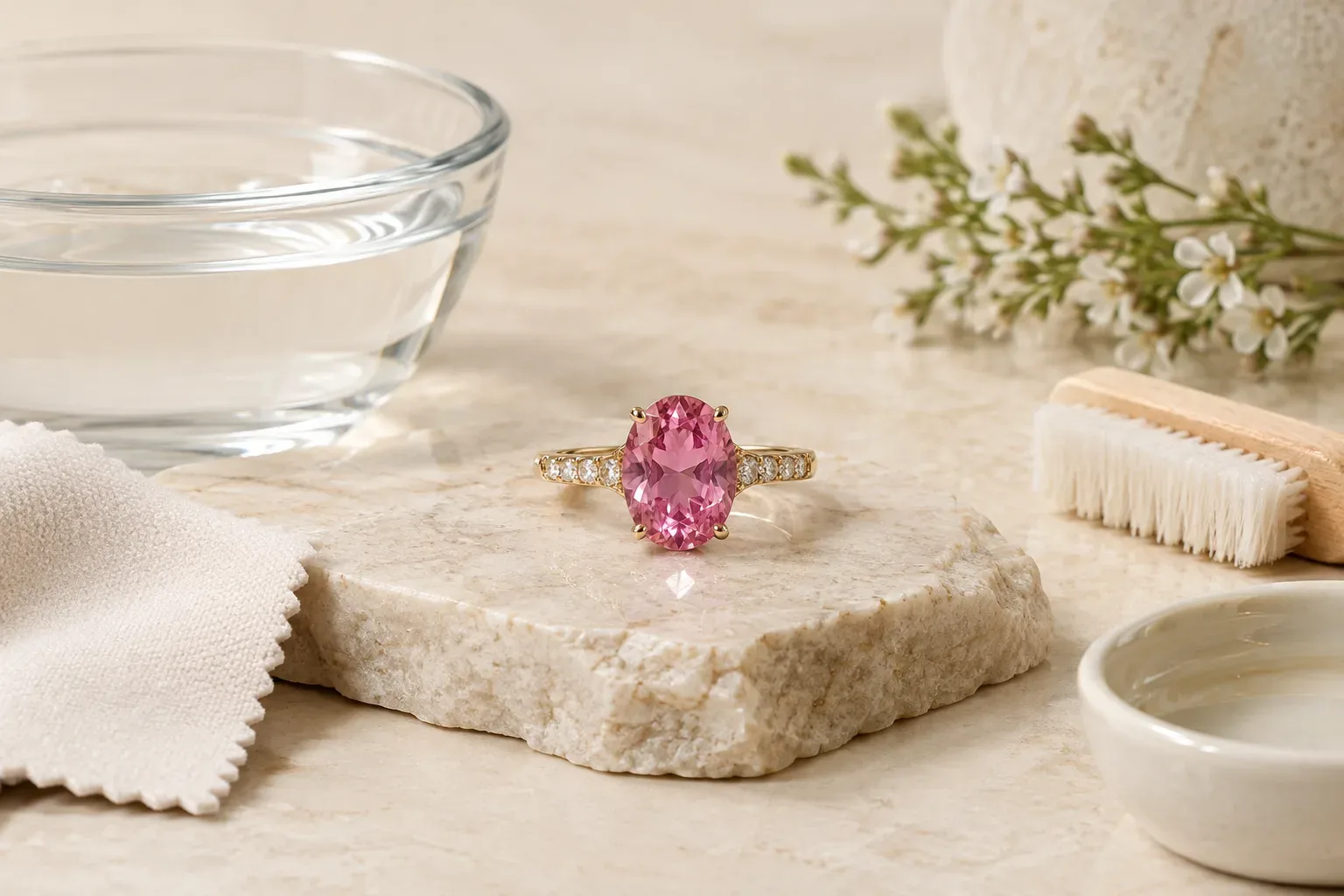
Meaning at a glance
Use warm soapy water and a soft brush for routine cleaning of pink sapphires, avoid harsh chemicals and abrasive cleaners, and do not use ultrasonic or steam cleaners unless a qualified jeweler confirms the stone’s treatment status and setting security; for verification of treatments or origin you need a qualified jeweler or a gemological laboratory report.
Direct answer: what to do and what not to do
For most pink sapphire jewelry, the safest routine cleaning is warm water with a mild dish soap and a soft, clean brush, followed by a thorough rinse and gentle drying with a lint‑free cloth. Avoid strong acids, household bleach, acetone, abrasive pastes and cleaners, and avoid ultrasonic or steam cleaning unless a qualified jeweler confirms that the stone’s treatment and the mounting are safe for those methods. If a stone is loose, cracked or has unknown treatments, stop and consult a professional before further cleaning.
Modern documented history and market context
Contemporary documentation about sapphires and consumer concerns focuses on treatments, disclosure and market demand rather than ancient cultural lore. The Gemological Institute of America (GIA) explains that treatments, disclosure, detectability, durability and special care raise distinct questions for gemstone buyers and owners, and these issues shape modern care recommendations.
Market reporting from industry publishers shows strong current demand for gemstone jewelry styles where pink sapphires commonly appear. Imaginaire Digital’s 2026 search analysis highlights ongoing consumer interest in engagement rings, bracelets, earrings, necklaces and gemstone rings, and Professional Jeweller’s 2026 insights note growth in sculptural jewelry, birthstone necklaces and gemstone rings. These modern trade reports explain why practical cleaning advice matters for everyday wear and retail turnover.
Separating documented facts from modern personal meanings
Documented facts supported by trade and regulatory sources concern treatments, disclosure and the mechanics of care. The FTC explicitly advises consumers to seek clear distinctions between natural, lab‑created, treated and imitation materials and to ask for written disclosures when buying gemstones. Those are verifiable consumer protections and obligations, not symbolic meanings.
Modern personal interpretations—such as what a pink sapphire signifies emotionally for a particular giver or wearer—are subjective and vary widely. These personal meanings are valid in individual contexts but are not universal and cannot be verified by inspection; they are not the same as documented information about origin, treatments or durability.
How pink sapphires typically appear in jewelry
Trade reporting indicates that pink sapphires are frequently used in engagement rings, gemstone rings, necklaces and other fashion pieces that emphasize color and form. Professional Jeweller and Imaginaire Digital both document increased consumer interest in gemstone rings and birthstone necklaces, which is where pink sapphires often appear in contemporary collections.
In practice, pink sapphires are set in a wide variety of mountings from simple solitaires to cluster and halo designs, and they appear in both fine and fashion jewelry. The metal (gold, platinum, silver, vermeil) and the presence of accent stones such as diamonds affect both the visual result and the appropriate care approach because settings and adjacent stones react differently to cleaning methods.
Safe home cleaning: step‑by‑step method
Prepare a bowl of warm water and add a drop or two of mild dish soap that does not contain bleach, ammonia or strong solvents. Use water that is warm to the touch, not boiling.
Place the piece in the soapy water and let it soak for a few minutes to loosen oils and dirt. Use a soft, clean toothbrush or a brush made for jewelry to gently clean around the stone, under the bezel or prongs, and in any crevices. Keep motions gentle to avoid levering on prongs or settings.
Rinse thoroughly under running lukewarm water to remove soap residue, or use a second bowl of clean water for rinsing if you are cleaning over a sink without a plug. Dry the piece carefully with a lint‑free cloth and let it air dry fully before storing or wearing.
What to avoid when cleaning pink sapphires
Do not use household bleach, oven cleaners, acetone, hydrogen peroxide, abrasive toothpaste or metal polishes on pink sapphire jewelry. These substances can damage mounting metals, weaken settings, or attack coatings and surface treatments if present.
Avoid abrasive cloths and scouring pads that can scratch metal and any softer inclusions in gems. Never try to pry a stuck setting loose with tools at home. If stones are loose, cracked, chipped or visibly damaged, stop home cleaning and seek professional repair.
Ultrasonic and steam cleaners: trade‑offs and limits
Ultrasonic and steam cleaners are powerful and can remove stubborn deposits, but they can also worsen pre‑existing fractures, dislodge stones from insecure settings, and negatively affect certain treatments. The GIA documents that treatments and detectability affect durability and special care, which means those devices carry both benefits and risks depending on the stone and its treatments.
Because some treatments or fracture‑filling substances are not visible to the unaided eye, a buyer or owner cannot reliably determine whether ultrasonic or steam cleaning is safe without professional examination. If you do not have written disclosure or a lab report for a higher‑value piece, have a qualified jeweler inspect the stone before using ultrasonic or steam cleaners.
Inspection, verification and what you cannot confirm at home
You can perform a basic visual inspection at home to look for loose prongs, chips, or cloudiness and you can test that settings feel secure on the finger, chain or mounting. If anything feels loose or if a stone has obvious damage, stop wearing and seek repair.
However, you cannot reliably determine whether a pink sapphire has been heat‑treated, fracture‑filled, laboratory‑grown, or otherwise modified without professional tools. The Federal Trade Commission advises consumers to seek clear written disclosures from sellers about whether a stone is natural, lab‑created or treated, and the GIA explains that detectability and disclosure are technical issues best addressed by laboratories and qualified gemologists. For confirmation of treatments or origin you need a qualified jeweler or a gemological laboratory report.
Storage and everyday care
Store pink sapphire jewelry separately in soft pouches or partitioned jewelry boxes to prevent contact with harder stones and metal that could cause scratches. Remove gemstone jewelry before doing household chores, gardening, exercise, or activities that risk impact.
Avoid prolonged exposure to cosmetics, perfumes, chlorine and extreme temperatures. Routine wiping with a soft cloth after wear will reduce surface oils and slow the need for deeper cleaning.
Selection and gifting guidance
When buying or gifting pink sapphire jewelry, prioritize clear written disclosures about origin and treatments. The FTC recommends written seller disclosures for distinctions among natural, lab‑created, treated and imitation materials. For higher value pieces, ask for a reputable laboratory report and confirm whether sellers provide return policies, insurance appraisals and post‑purchase services.
Match the choice to the wearer’s lifestyle. If daily wear is expected, choose a durable setting with secure prongs or a bezel and consider an untreated or documented stone so you and a jeweler can confidently use professional cleaning methods when necessary. If the recipient prefers delicate or artisanal settings, explain how to clean and when to consult a jeweler to avoid damage.
Practical trade‑offs and final recommendations
The simplest, lowest‑risk course is routine home cleaning with warm soapy water and a soft brush, combined with periodic professional inspections. Ultrasonic and steam cleaning provide deeper cleaning but present a trade‑off: more effective removal of grime vs increased risk for treated, filled or damaged stones and loose settings.
Remember that written disclosure and lab reports reduce risk and increase the range of safe professional options. If you cannot obtain reliable disclosure for a high‑value piece, treat the stone as potentially vulnerable and avoid aggressive cleaning until a professional assessment is completed.
Frequently asked questions
How do I safely clean a pink sapphire at home?
Soak the piece in warm water with a mild dish soap, gently brush with a soft toothbrush, rinse in lukewarm water and dry with a lint‑free cloth. Avoid harsh chemicals, abrasives and strong solvents.
Can I use an ultrasonic cleaner on a pink sapphire?
Only if a qualified jeweler confirms the stone’s treatment status and that the setting is secure. Ultrasonic cleaners can dislodge loose stones and damage treated or fracture‑filled gems; the GIA advises caution.
Is steam cleaning safe for pink sapphires?
Steam cleaning carries similar risks to ultrasonic cleaning. Do not steam clean unless a professional has verified that the sapphire and its setting are safe for that method.
How often should I have my pink sapphire inspected professionally?
Have high‑wear pieces inspected by a jeweler at least once a year, or sooner if you notice looseness, chips or any change in appearance. Inspections identify setting issues and hidden damage that home cleaning cannot address.
Can I tell if a sapphire is treated or lab‑created at home?
No. The Federal Trade Commission recommends obtaining written disclosures from sellers and the GIA explains that treatments and origin are technical matters best confirmed by qualified gemologists or a gemological laboratory report.
What should I ask the seller when buying pink sapphire jewelry?
Request written disclosure about whether the sapphire is natural, lab‑created or treated, ask for any available laboratory reports, confirm return and repair policies, and check for professional cleaning options and insurance appraisals.
Sources and further reading
- Imaginaire Digital — Imaginaire Digital
- Professional Jeweller / PRYA Jewellery Search Insights — Professional Jeweller / PRYA Jewellery Search Insights
- Gemological Institute of America — Gemological Institute of America
- Federal Trade Commission — Federal Trade Commission