Meaning at a glance
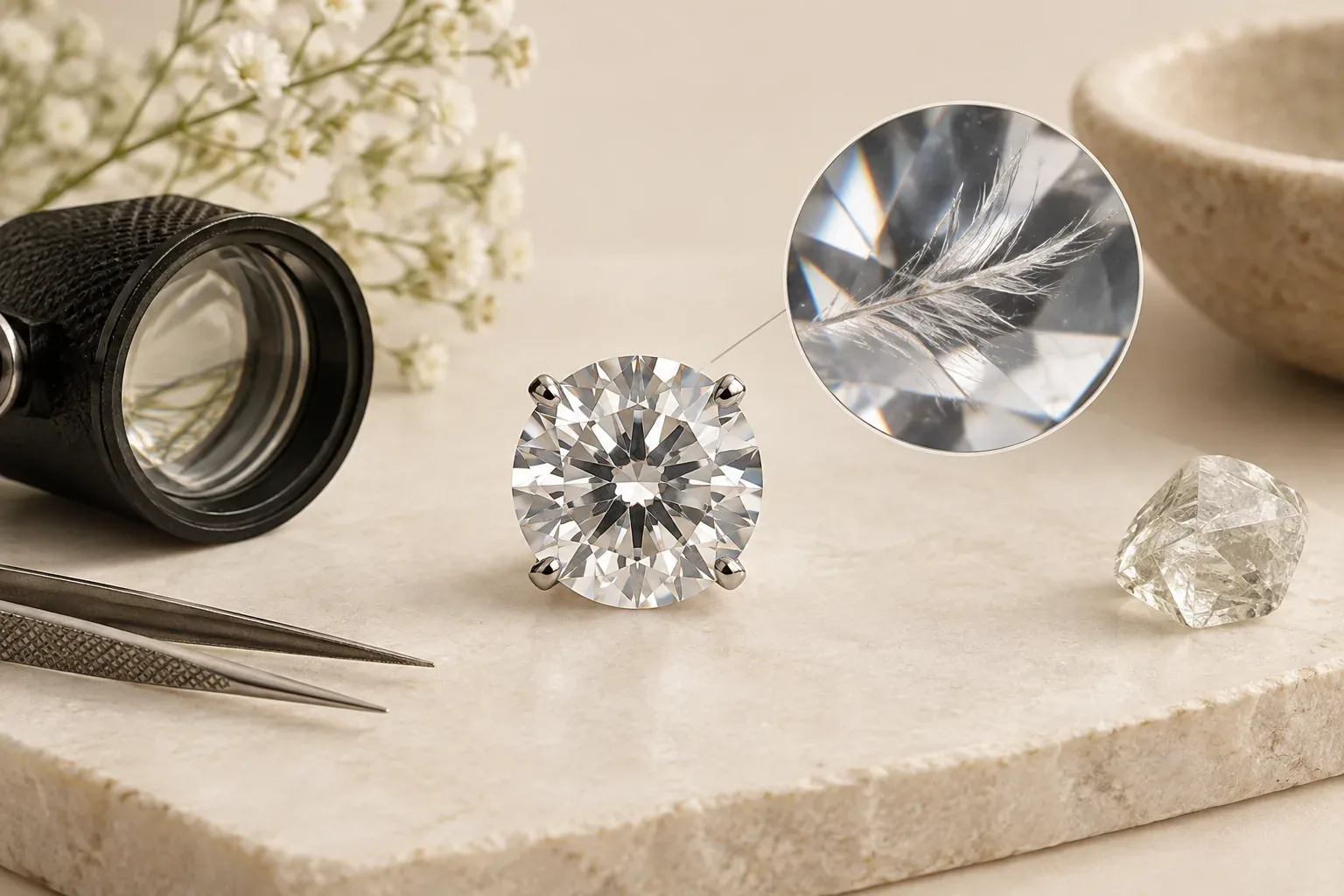
A feather inclusion is a common internal feature—usually a tiny fracture or healed break with a feather-like appearance—that can affect a diamond’s clarity, price, and, in some placements, its durability; deciding whether a feather matters is a question of clarity grade, inclusion location and size, personal priorities, and what independent grading reports or qualified jewelers disclose.
What a feather inclusion is, in gemological terms
Gemologists use the term “feather” to describe an internal irregularity that often looks like a tiny, wispy fracture or a healed break inside a diamond. Under magnification a feather can appear white, translucent or slightly reflective. Feathers are recorded on clarity plots in grading reports because they affect how light travels through the stone and because they are part of the clarity assessment that helps determine a diamond’s market value.
Historical evidence and cultural meanings — what the reviewed sources show
In preparing this explanation I reviewed the approved references for market and consumer guidance and found no documented historical tradition or primary-source evidence that links feather-like internal inclusions in diamonds to specific symbolic meanings for named cultures or historical periods. The Gemological Institute of America (GIA) frames inclusions as physical growth or breakage features important to identification, treatment detection and durability rather than as carriers of cultural symbolism. The Federal Trade Commission (FTC) emphasizes transparent disclosure of gem origin and treatments for consumer protection rather than any historical symbolic interpretations. Market overviews such as the Imaginaire Digital report describe consumer demand for types of diamond jewelry but do not record historic cultural meanings for internal inclusions. In short, the reviewed sources do not establish an historical cultural meaning for feather inclusions in diamonds.
Documented history versus modern personal interpretation
Because the authoritative gemological and consumer-protection sources do not document a cultural history of symbolic meaning for diamond feathers, any current “symbolic” claims are modern personal or marketing interpretations rather than established historical traditions. Some people today may interpret a feather inclusion as a poetic mark—for example, likening it to a feather of luck, a reminder of fragility, or a unique fingerprint that emphasizes the stone’s individuality—but those are personal narratives applied after the fact and not documented historical meanings. Distinguishing the two matters: documented history concerns evidence in primary or reputable secondary sources; modern personal meaning is subjective and varies by the wearer and by the storyteller.
How feather inclusions and feather motifs appear in jewelry
Feather inclusions occur inside the diamond itself and are visible under magnification; they are not an external motif. Separately, jewelers often use feather shapes and feather imagery as a surface motif in metalwork or as a design element in settings and pendants. These two things—an internal feather inclusion and an external feather motif—are unrelated practically but can be combined aesthetically. For example, a jeweler might set a diamond that contains a feather inclusion into a pendant with a feather design to create a deliberate narrative, or a buyer might choose a ring with a feather motif and accept—or even celebrate—an internal feather inclusion as part of the story.
How a feather inclusion affects value, appearance and durability
Commercially, feather inclusions are one of the many clarity characteristics that factor into a diamond’s clarity grade and therefore its price. Small feathers that are off-center and not visible to the naked eye often have negligible impact on appearance and only a modest effect on price. Larger feathers, or feathers that sit near the surface or the girdle, can be more visible and can lower clarity grades significantly and reduce value accordingly. From a durability standpoint, a feather that reaches or comes close to the surface is more likely to propagate under impact and could, in rare cases, contribute to chipping. The GIA's materials on treatments, detectability and durability emphasize that the physical condition and setting determine the real-world risk; consumer guidance from the FTC underscores the need for disclosure about treatments and origin when assessing value.
Decision criteria and practical trade-offs when buying
When a shopper searches for 'diamond feather inclusion explained' they are usually deciding whether to accept a stone with a feather. Useful decision criteria include: the stone’s clarity grade and the grading report’s plotted location of the feather; whether the feather is visible to the naked eye (a loupe or close-up photo can help); whether the feather is near the surface or the girdle where it could affect durability; the price discount relative to comparable higher-clarity stones; and the setting you plan to use. Trade-offs are straightforward: accepting a visible feather can yield a lower price and a unique character but may increase risk of visibility or long-term wear. Demanding an internally flawless or higher-clarity stone reduces that risk but increases cost. For engagement rings or heirloom pieces, many buyers prioritize a grading report and a jeweler’s durability assessment.
What only a qualified jeweler or gemological laboratory can verify
There are clear limits to what a buyer can verify alone. You can inspect high-resolution images, examine a diamond with a loupe, and ask for a grading report, but only a qualified gemologist or a gemological laboratory can definitively identify the nature of an inclusion, detect certain treatments, or certify the stone as natural or lab-grown with authority. The GIA explains that treatments and detectability are technical matters best determined by laboratory testing, and the FTC requires clear seller disclosure about the stone’s origin and treatments. If you need a definitive statement about whether a feather is a simple internal fracture, a filled fracture, or the result of a specific treatment, request a laboratory report or an independent appraisal.
Safe care guidance
Treat feather-bearing diamonds like any other diamond with an identified internal feature: protect the stone from hard knocks and avoid wearing it during heavy manual work where impacts might propagate a fracture. Ultrasonic cleaners and steam cleaning can sometimes worsen existing fractures; consult the jeweler or the GIA guidance for special-care recommendations for diamonds with surface-reaching feathers. Regular inspection by a qualified jeweler will reveal any changes around a feather that is near the surface, and a protective setting—such as a bezel or prongs that keep edges clear of impact—can mitigate risk.
Practical and respectful selection or gifting guidance
When selecting or gifting a diamond that contains a feather inclusion, match the choice to the recipient’s priorities. If the recipient values perfection and resale value, choose a higher-clarity stone or one with a certificate from a respected laboratory. If the recipient values individuality and a story, a modest feather that is not eye-visible can be an inexpensive way to acquire a larger or more interesting stone. Always ask the seller for full disclosure, request photographs or a video of the actual stone, and ask to see any laboratory report. For engagement rings and important gifts, arrange for an independent assessment if you have concerns about durability or treatments. Be respectful when speaking about inclusions: describing a feather as a unique fingerprint or character is fine, but avoid implying any universal symbolic meaning. The FTC’s consumer guidance supports written disclosures so you and the gift recipient can make informed choices.
Final practical checklist before purchase
Before you buy, ask for the diamond’s grading report and check the plotted inclusion map, view multiple high-resolution images or videos, have the stone inspected by the seller under magnification, and ask a qualified jeweler about any durability risks if the feather is near the surface. If you want definitive answers about origin or treatments, request a laboratory report from a respected lab. Balance the visual appearance and price with the recipient’s priorities and the intended daily use of the piece.
Frequently asked questions
What exactly is a feather inclusion?
A feather inclusion is an internal feature in a diamond that looks like a small fracture or healed break; it is recorded on clarity plots and can affect the stone’s clarity grade, appearance and, in some cases, its durability.
Does a feather inclusion always lower a diamond’s value?
Not always—the impact on value depends on the feather’s size, location and visibility; small, internal feathers that are not visible to the naked eye usually have only a modest effect on price, while large or surface-reaching feathers can reduce value significantly.
Can a feather cause a diamond to break or chip?
A feather that reaches or comes close to the surface poses a higher risk of chipping or propagation, especially if the stone experiences a hard impact; a jeweler can assess structural risk and recommend protective settings.
Can a seller or buyer remove a feather inclusion?
Feathers cannot be 'removed' from within a polished diamond; some surface-reaching fractures are sometimes filled in treated diamonds, but treatment detection and disclosure are technical matters that should be verified by a laboratory or qualified gemologist.
How do I verify whether a diamond’s feather is treated or the diamond is lab-grown?
Request a current laboratory grading report and full seller disclosure; only a qualified gemological laboratory can definitively detect certain treatments and certify natural versus lab-grown origin, as the GIA and the FTC explain.
Is it safe to clean a diamond with a feather in an ultrasonic cleaner?
Ultrasonics can put stress on existing fractures; consult your jeweler for guidance and follow GIA recommendations for care—stones with surface-reaching feathers may be safer with gentle cleaning methods and occasional professional inspections.
Sources and further reading
- Imaginaire Digital — Imaginaire Digital
- Gemological Institute of America — Gemological Institute of America
- Federal Trade Commission — Federal Trade Commission