Meaning at a glance
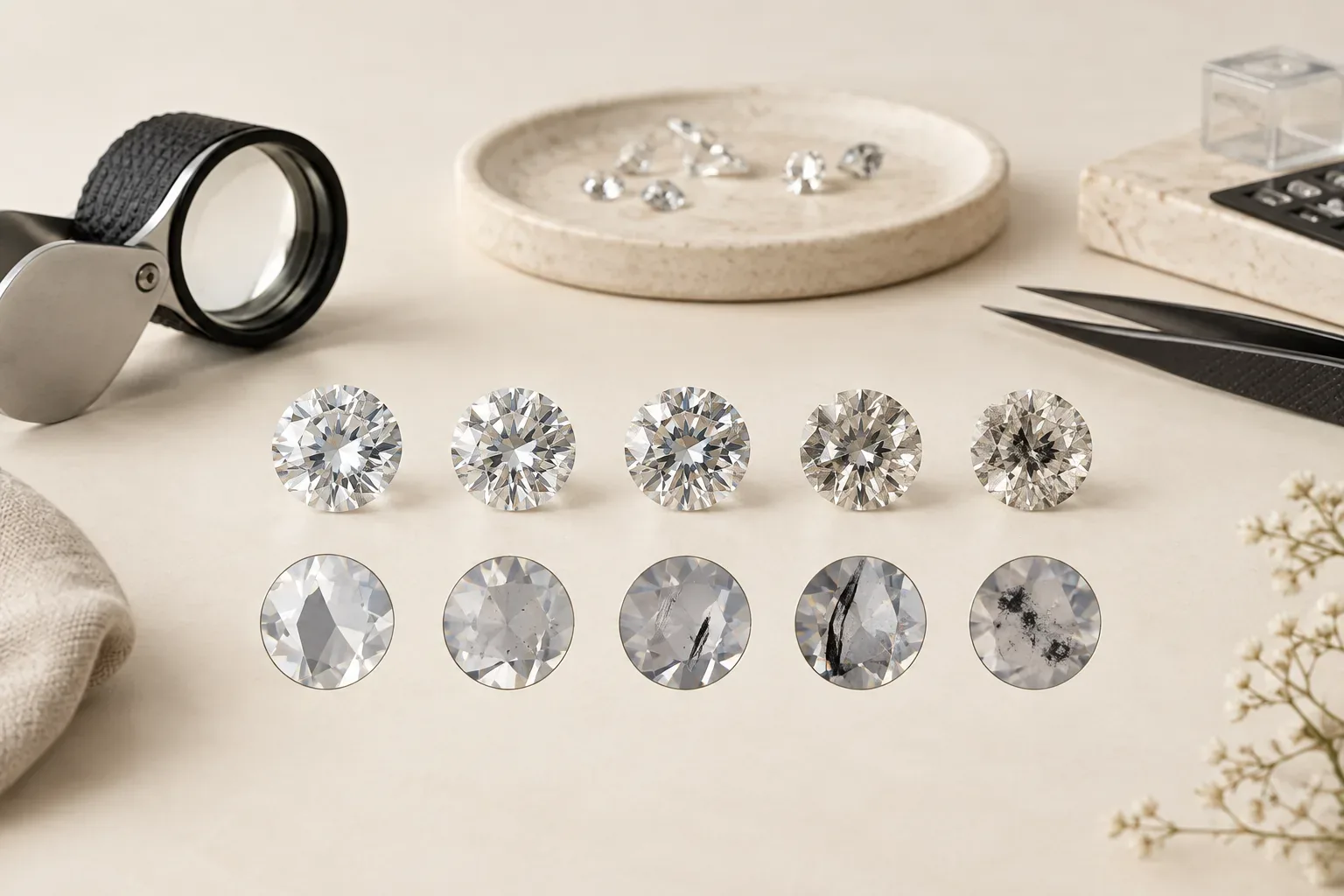
This diamond inclusions comparison guide explains the main ways inclusion type, size, number, location and position relative to the table change a diamond’s appearance and price, clarifies limits on what shoppers can verify without a lab report, summarizes treatment and disclosure issues documented by the Gemological Institute of America and the U.S. Federal Trade Commission, and gives practical selection, gifting and care guidance.
Direct answer — what to expect from this guide
Concise answer: Different inclusion types (for example, crystals, feathers, clouds or needles), together with their size, number and exact position inside the stone, determine whether an inclusion is eye‑visible and how much it reduces market value. Cut, shape and setting can hide or highlight inclusions, and treatments or clarity enhancements change what you can verify without a laboratory report. For a reliable purchase you need both objective documentation (a reputable laboratory report and written seller disclosures) and an assessment of the visual trade‑offs you are willing to accept.
What gemologists mean by inclusions
In gemological practice, an inclusion is any internal characteristic or imperfection that is part of the diamond or trapped within it during growth. Laboratory reports and seller descriptions routinely note internal features because they affect appearance, durability and value. The Gemological Institute of America explains that treatments, detectability, disclosure and durability are core concerns when assessing a gemstone; inclusions factor into each of these concerns.
How inclusion type, size, number and location change appearance
Type matters because different internal features interact with light in different ways. Small pinpoint crystals and tiny needles often appear only under magnification and rarely affect face‑up brightness, whereas clouds (clusters of minute inclusions) can make a part of the stone look hazy when concentrated. Feathers are internal cracks; small, isolated feathers are often benign visually but if they reach the surface or lie under the table they can be visible and, in some placements, affect durability.
Size and number are straightforward: many small inclusions can produce a visible effect equivalent to a single larger inclusion. Location matters more than most shoppers expect. An inclusion sitting directly under the table (the large upper facet) is more likely to be seen from a normal viewing distance than a similar inclusion near the pavilion or under a bezel edge. The shape and facet arrangement of the diamond also influence whether inclusions are hidden by reflections or highlighted by the cut.
How inclusion characteristics affect price and buying trade‑offs
Market pricing is generally driven by the degree to which inclusions reduce a gem’s face‑up appearance and by durability concerns. Stones described as 'eye‑clean' command higher prices than comparable stones with visible inclusions. Conversely, choosing a larger carat weight or a more desirable color grade while accepting a lower clarity grade is a common, legitimate trade‑off for buyers who prioritize size or hue over flawless appearance.
Other trade‑offs include style choices. A well‑executed halo setting can make a center stone with visible inclusions look brighter, reducing the visual impact and making a lower‑clarity stone an economical way to achieve a particular overall look. Alternatively, buyers who prize an unobstructed, brilliant face‑up appearance should budget for higher clarity grades or insist on an independently graded laboratory report that documents the stone’s internal features.
Treatments, disclosure and what you cannot verify alone
Treatments that alter clarity or color are material facts for a buyer. The Gemological Institute of America emphasizes that treatments, their detectability, their effect on durability, and the need for disclosure raise specific consumer questions. The U.S. Federal Trade Commission likewise states that consumers need clear distinctions among natural, lab‑created, treated and imitation materials, and that sellers must provide written disclosures.
What a shopper can verify without professional help is limited. You can examine a stone with a jeweler’s loupe and ask for photographs or videos, but you cannot reliably detect subtle clarity enhancements, permanence of a treatment, or whether a stone’s grading was performed or altered without viewing the original laboratory report. For those verifications you need a qualified jeweler, an independent gemological laboratory report, or both.
Documented historical evidence and the limits of cultural meanings
Within the evidence sources used for this guide, published materials are focused on consumer protection, laboratory practice and market demand rather than long‑form historical symbolism of inclusions. Federal and gemological guidance address material and disclosure issues rather than tying specific inclusion types to fixed meanings in particular cultures or periods.
Modern interpretations that treat inclusions as ‘character’ or ‘fingerprints’ are contemporary consumer trends, not documentation of historical ritual or cultural symbolism. Those modern personal interpretations are valid as personal taste, but they are separate from the technical, documented information that laboratories and consumer protection agencies provide about what inclusions are and how they affect value.
How inclusions show up in finished jewelry
Inclusions are part of the stone itself, so how they appear in jewelry depends on setting and designer choices. Open‑back settings and prong mounts expose the pavilion and interplay of light, so they can either reveal or help conceal internal features depending on the viewing angle. Bezel or channel settings cover parts of the girdle and can conceal surface‑reaching naturals and some feathers, which is useful when a stone has a vulnerability near the edge.
Designers sometimes select included diamonds deliberately. Contemporary styles that embrace what some buyers call imperfect or ‘salt and pepper’ looks treat internal features as aesthetic texture. That approach is a stylistic choice and a modern interpretation rather than a historically documented symbolic system. Whether an inclusion becomes a design feature or a flaw depends on the maker’s intent and the buyer’s preference.
Practical selection and gifting guidance
If visual perfection is the priority, ask for a stone that is described as eye‑clean and insist on a current report from a reputable laboratory. View the actual stone in the mounting or ask for high‑resolution, standardized photographs taken under neutral lighting. Confirm in writing whether any clarity enhancements or treatments were performed and whether the seller will provide a certificate from an independent lab.
If value per carat or a particular size is more important than absolute clarity, decide how much visual inclusion you are comfortable with before shopping and bring a trusted jeweler. For gifts where surprise matters, consider buying a ring with a return period and an appraisal so the recipient can trade up or change the setting after inspection. Always request written disclosure consistent with the Federal Trade Commission’s guidance and keep documentation for insurance and resale.
Care guidance for diamonds with inclusions
Inclusions that compromise structural integrity, such as large feathers that reach the surface, can increase the risk of chip or breakage if the stone is struck. The Gemological Institute of America notes that treatments and durability concerns create specific care questions for gemstones. Handle included diamonds with common‑sense precautions: remove rings during heavy manual work, avoid abrupt temperature shocks, and have prongs and settings inspected periodically by a professional.
For cleaning, professional ultrasonic or steam cleaning is safe for most diamonds, but any cleaning method should be cleared with the jeweler if a stone has visible feathers or known treatments. Keep records of the stone’s report and condition photos taken at purchase so you and a jeweler can spot changes over time and advise on any necessary repairs.
Summary and limits of verification
Diamond inclusions affect appearance and price through a mix of type, size, number and placement, and buyers control the trade‑offs by choosing the clarity grade, the cut, or a setting that hides or highlights inclusions. For all purchases, especially those involving lower clarity grades or advertised clarity enhancements, demand written disclosure and an independent laboratory report. The Federal Trade Commission and the Gemological Institute of America provide authoritative guidance about disclosure and treatment issues, and marketplace demand trends show how different styles of diamond jewelry remain popular.
Frequently asked questions
What inclusion types most affect a diamond’s face‑up appearance?
In general, inclusion types that are large, dark, clustered, or directly beneath the table tend to be most visible. Clouds and clusters of inclusions can create haziness, while larger crystals or surface‑reaching feathers are more likely to be seen without magnification.
Can I detect clarity enhancements or treatments at home?
No. Some clarity enhancements and color or surface treatments are subtle or require laboratory tools to identify reliably. The Gemological Institute of America notes that detectability and treatment disclosure are specialist issues, so obtain written disclosure and an independent laboratory report if treatment status matters to you.
How much does an inclusion lower price?
There is no single rule for price impact because the market price depends on visibility, location, size, and how the inclusion interacts with cut and color. The safest approach is to compare stones with similar documented grades and to get a second opinion from a qualified appraiser if you are unsure.
Are inclusions ever considered desirable?
Some modern buyers and designers intentionally choose included diamonds for their unique internal patterns or for specific contemporary looks. These are personal aesthetic choices rather than historically universal meanings, and they do not change the technical effects inclusions have on durability and value.
What should I ask the seller before buying?
Ask for a current independent laboratory report, whether any treatments or enhancements have been applied, high‑quality images or video of the actual stone, and a written disclosure consistent with FTC guidance. Confirm the return policy, warranty, and whether the setting will be inspected or adjusted later.
How should I care for a diamond with visible feathers?
Have the setting and prongs checked regularly, avoid heavy impacts and sudden temperature changes, and consult a professional before using ultrasonic or steam cleaning when large surface‑reaching feathers are present. Keep purchase documentation and condition photos to monitor any change over time.
Sources and further reading
- Imaginaire Digital — Imaginaire Digital
- Gemological Institute of America — Gemological Institute of America
- Federal Trade Commission — Federal Trade Commission