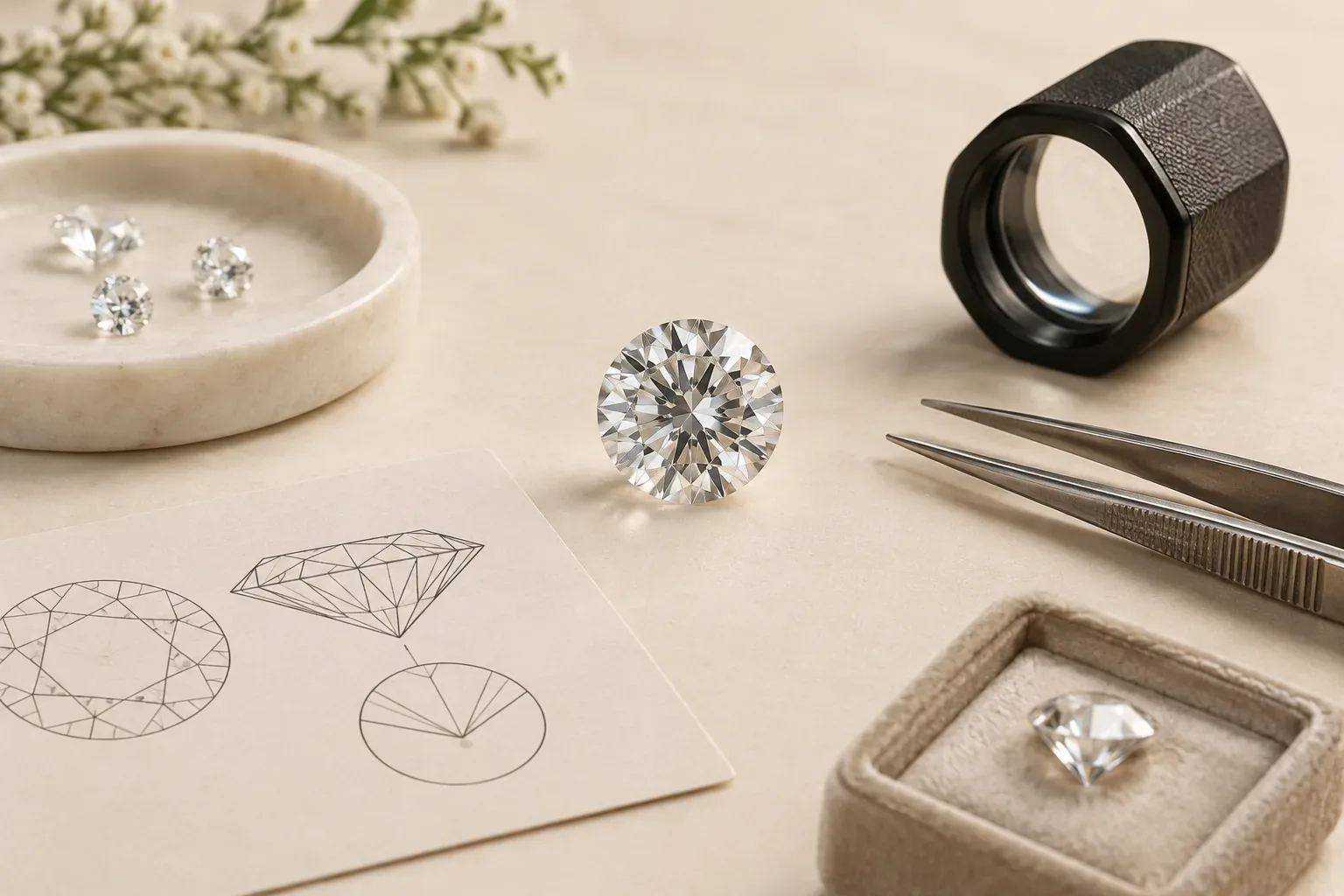
Meaning at a glance
A diamond culet report guide explains that the culet is the small facet (or absence of one) at the pavilion tip; reports may note its presence, size, or that it is 'none' or 'pointed'. Use visual comparisons and a qualified jeweler or gemological laboratory for definitive verification; rely on seller disclosures for origin and treatments per FTC and diagnostic capabilities per GIA.
What a culet is and how it appears on reports
In plain terms, the culet is the small facet sometimes placed at the pavilion tip to prevent the point from chipping. On consumer-facing paperwork and technical grading reports you may see culet described with simple terms such as 'none', 'pointed', or a size descriptor. A report’s culet field is a visual and descriptive note rather than a standalone quality grade.
Historical evidence — what the approved sources show
None of the three approved sources provided for this article (GIA, Federal Trade Commission, Imaginaire Digital) supply a historical account tying the culet to particular cultures, symbolic meanings, or specific historical periods. The available evidence in those sources focuses on modern consumer questions, disclosure, detectability, and market demand rather than cultural symbolism.
Because the approved reference material does not document historical cultural meanings for the culet, we cannot responsibly attribute the culet to particular cultures or eras without citing other historical scholarship. Readers seeking cultural history should consult specialized gemological histories or museum catalogues; the sources used here support only consumer, disclosure, and diagnostic contexts.
Documented technical context versus modern personal interpretations
Documented technical context, as supported by industry guidance and consumer-protection documents, treats the culet as a physical, measurable feature that can influence durability and appearance in specific ways. The Gemological Institute of America (GIA) emphasizes the importance of clear information about gem treatments, detectability, and care, and that diagnostic work is required to confirm technical claims.
Modern personal interpretations—such as reading the presence of a culet as a symbol or talisman—are personal or stylistic views rather than documented historical facts. The Federal Trade Commission (FTC) asks sellers to provide transparent written disclosures about origins, treatments, and other material facts; such disclosures are the appropriate place to record material technical information, not to document symbolic meanings.
How the culet motif or feature appears in jewelry
In finished jewelry the culet is rarely a design feature meant to be seen. When a diamond is set table-up in a prong, bezel, or closed setting, the culet sits at the hidden lower tip of the stone and is only visible in imaging, diagrams, or when the setting allows light through. In open-back settings, or when stones are photographed or examined under magnification, a culet can show as a small flat or pointed area at the pavilion’s center.
Photographs and plot diagrams on lab reports may show a culet symbol or describe its location. A very large culet may be visible as a dark or lighter spot in face-up viewing, while a pointed culet or 'none' is effectively invisible without magnification. Jewelers sometimes choose settings that protect a pointed pavilion to mitigate chipping risk.
Decision criteria and practical trade-offs
When reading a report and choosing a diamond, treat the culet as one factor among many. Consider appearance: an unusually large culet can produce a visible dark spot in face-up viewing, which some buyers find distracting. Consider durability: a small culet can protect an otherwise vulnerable pavilion point from chipping, and a truly pointed pavilion tip may be more at risk if the setting does not protect it.
Trade-offs are pragmatic: smaller or no culet may improve face-up brilliance in some cuts but can require a more protective setting; a larger culet can make the stone more robust but may change appearance. Balance these factors against other characteristics such as cut, clarity, and the intended mount when making a selection.
What you can verify yourself and what needs an expert or laboratory
You can verify basic, observable facts at the consumer level: look at photos under magnification or request clear table-down and face-up images from the seller to spot an obvious culet or dark spot. You can ask the seller for any written disclosures about treatments, origin, and report certificates; the FTC recommends that sellers provide clear, written distinctions among natural, lab-grown, treated, and imitation materials.
You cannot, however, rely on consumer photos alone to confirm subtle measurements, precise culet size grades, or treatment detectability. Those determinations require either hands-on assessment by a qualified jeweler with proper tools or a recognized gemological laboratory report. The GIA and comparable labs are the places to obtain technical grading, treatment detection, and durable identification—especially where the culet interacts with other cut and clarity features.
Care guidance and durability
Care for a diamond with respect to the culet is mostly practical: avoid knocks or lateral blows to the pavilion point and choose a protective setting for pointed culets. Routine cleaning with a mild, non-abrasive jewelry cleaner and soft brush keeps the stone free of oils and dirt that can exaggerate visual issues around pavilion features.
For questions about treatments, durability, or any special care instructions tied to a stone’s reported characteristics, consult the GIA guidance on treatments, detectability, and special care. GIA’s materials make clear that certain treatments and conditions require different handling and disclosure, and that laboratory diagnostics are important when treatments are suspected.
Practical and respectful selection or gifting guidance
If you are buying an engagement ring or other meaningful gift, start with purpose and budget. Imaginaire Digital’s 2026 UK search estimates show strong ongoing consumer demand for engagement rings and classic diamond styles, which suggests that conventional, well-documented configurations remain popular with many buyers. Decide whether the recipient prefers classic, invisible pavilion features or robust practicality.
Ask the seller for clear images and any existing lab report. Request written disclosure about origin and treatments in line with FTC guidance; accept nothing less than written confirmation for major claims. When gifting, be respectful of the recipient’s preferences: if they value visual brilliance above all, prioritize cut proportions and choose a culet description that minimizes visible artifacts. If they value durability or an active lifestyle, consider a setting that protects a pointed pavilion tip or choose a small culet.
Reading lab reports: limits and recommended questions
On a lab report, read the culet line as descriptive information, not as an independent grading score. If the report lacks a culet description but you have concerns, ask for a report addendum or independent imaging. For seller-provided reports, verify the issuing laboratory’s name and scope; FTC guidance stresses the importance of proper disclosure and seller transparency.
Ask specific questions: does the report show table-down or plotted diagrams, what magnification was used for observations, and does the laboratory note any treatments or clarity enhancements? If any seller claim about the stone’s origin or treatment cannot be supported by a recognized laboratory certificate or a qualified jeweler’s written inspection, treat the claim as provisional.
Frequently asked questions
What does a culet entry on a report mean?
A culet entry describes whether a small facet exists at the pavilion tip and may use terms such as 'none', 'pointed', or a size descriptor; it is a descriptive note on appearance or structure rather than a grade, and definitive measurements require a qualified jeweler or gemological lab.
Can I verify the culet from seller photos?
You can spot an obvious, large culet or a visible dark spot in good-quality, magnified photos, but subtle culet sizes and their impact on performance require hands-on assessment or a reputable laboratory report for confirmation.
Does the culet affect diamond value?
A culet can influence appearance and perceived value when large enough to be visible, or when it affects durability concerns; value depends on the overall package—cut, clarity, carat, and market preferences—so treat the culet as one factor among many.
Should I ask for a lab report when buying a diamond?
Yes. The FTC recommends clear written disclosure about origin, treatments, and material facts, and laboratories such as the GIA provide technical diagnostics that can confirm culet details, treatments, and other material characteristics.
How should I care for a diamond to protect the pavilion tip?
Avoid heavy knocks and choose a protective setting for a pointed pavilion tip; clean with mild, non-abrasive cleaners and consult a jeweler for any questions about treatments or special care requirements, following GIA guidance on treatment-related care.
Sources and further reading
- Imaginaire Digital — Imaginaire Digital
- Gemological Institute of America — Gemological Institute of America
- Federal Trade Commission — Federal Trade Commission