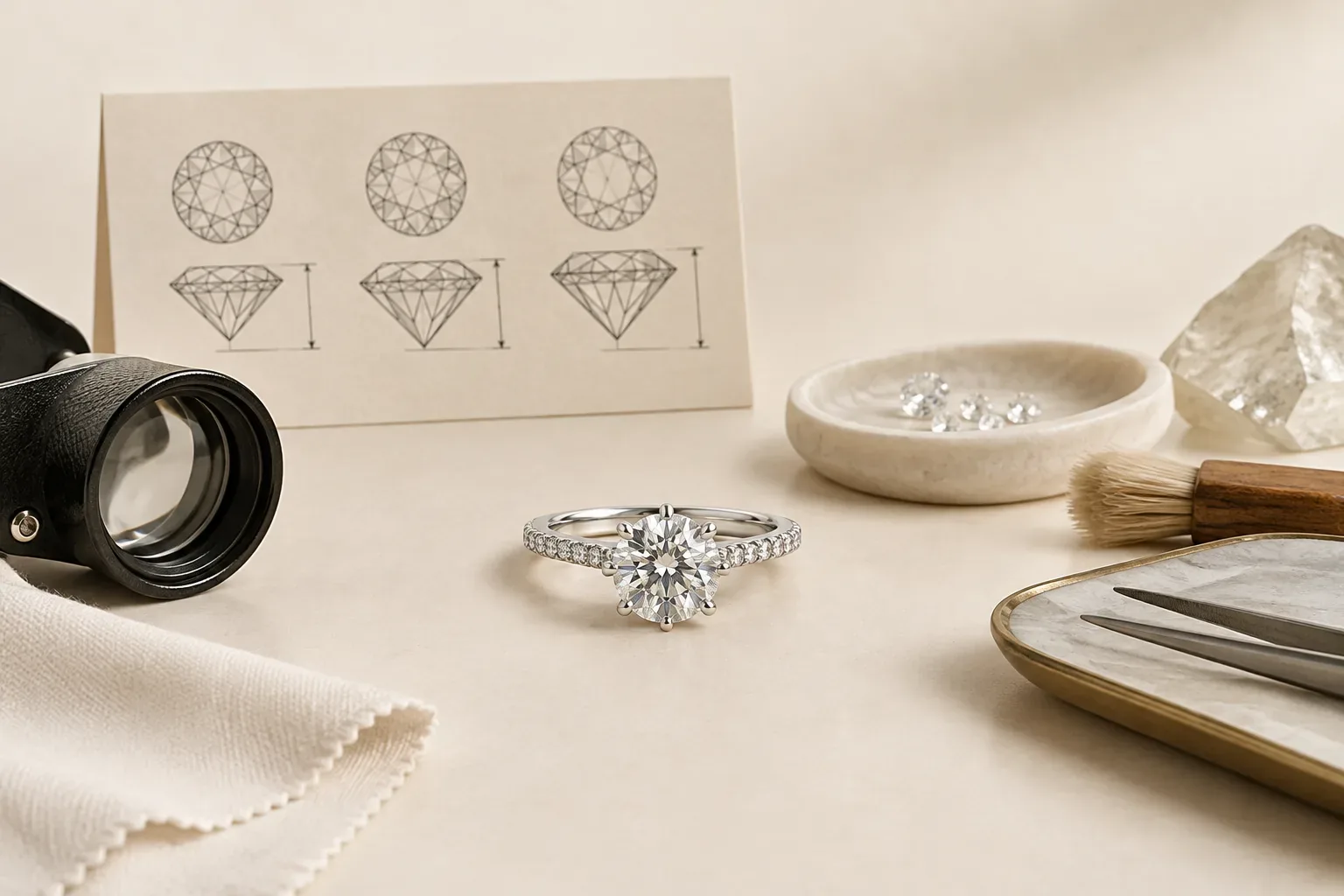
Meaning at a glance
Diamond depth percentage (depth divided by diameter, expressed as a percent) matters for light performance and for some durability trade-offs; buyers should rely on seller disclosures and lab reports, use gentle cleaning methods, avoid risky treatments or DIY repairs, and consult a qualified jeweler or gemological laboratory for verification or restorative work.
What 'depth percentage' is and why it matters
Depth percentage is calculated by dividing the diamond's depth (from table to culet) by its average diameter and multiplying by 100. The figure is a quick way to compare proportions among stones of different sizes and shapes.
Technically, depth percentage contributes to a diamond's optical behavior: very shallow or very deep proportions can change the way light returns to the viewer, which affects perceived brilliance and face-up size. It also correlates with other proportion factors such as pavilion angle and girdle thickness that affect how a stone should be set and handled.
Historical evidence and what the approved sources support
The set of approved sources for this guide focuses on modern gemological practice, consumer protections, and recent market demand rather than detailed pre-modern cultural histories. The Gemological Institute of America (GIA) frames care recommendations around gem durability, treatments, detectability, and the need for appropriate handling. The Federal Trade Commission (FTC) emphasizes consumer disclosure and the need for clear distinctions among natural, lab-created, treated, and imitation materials. Market research from Imaginaire Digital documents strong modern UK consumer demand for engagement-related diamond jewelry categories in 2026, which helps explain why shoppers ask technical questions about proportions today.
Because the approved evidence set does not include primary historical sources on pre-modern or non‑Western cultural practices with diamonds, this article does not claim precise historical meanings for particular cultures or periods. If you need historically specific symbolism (for example, Victorian-era engagement customs or diamond use in Mughal India), consult dedicated historical studies or museum catalogues before drawing cultural conclusions.
Documented historical meanings versus modern personal interpretation
Documented meanings in the approved evidence are largely contemporary and regulatory: consumers and regulators now focus on material identity, treatment disclosure, and objective measures such as proportions and certificates. The FTC requires clear seller disclosures about whether a stone is natural, lab-grown, treated, or simulated, which shapes how modern consumers interpret value and care.
Modern personal or cultural interpretations—what a giver or wearer feels a diamond symbolizes—are legitimate but separate from what gemological reports document. Personal meanings evolve with fashion, advertising, and social practice (for example, the contemporary popularity of engagement rings). Imaginaire Digital's 2026 search data shows sustained interest in classic diamond jewelry types, which reflects modern consumer tastes rather than universal symbolic meanings.
How depth percentage appears in jewelry and its practical implications
Jewellers and grading reports commonly display depth percentage alongside other measurements. In jewelry photography and listings you will often see length, width, depth, and a stated depth percentage; these numbers help compare face-up appearance between stones of similar carat weight.
In settings, depth and associated features influence the choice of mount. Very shallow stones can sit low and appear larger face-up but may suffer from light leakage if cut poorly. Very deep stones may sit higher and have a smaller face-up appearance for the same carat weight. Girdle thickness and the presence of a culet are also visible considerations when a stone is set; thin girdles can chip if hit, and heavy girdles add weight without increasing face-up size.
Durability, cleaning, and repair precautions tied to depth and proportions
Durability is not solely determined by depth percentage. Diamonds are the hardest natural material and resist scratching, but they can chip or cleave if struck on an edge or if a girdle is thin. The GIA stresses that treatments, detectability, and durability questions are distinct consumer concerns, so assume that any work you request could alter a stone's integrity or require special handling.
Cleaning: For routine cleaning, use warm water, a mild dish soap, and a soft brush, rinse thoroughly, and dry with a lint-free cloth. Avoid household bleach or chlorine (which can damage some metal settings) and abrasive cleaners. Ultrasonic and steam cleaning are effective for many diamonds but should be used only when a stone is free of loose fractures, extensive surface-reaching inclusions, or certain treatments that the seller or certificate discloses might be affected. If you do not have a laboratory report or the seller's disclosure, do not subject the stone to ultrasonic or steam cleaning without a professional check.
Repair and setting work: If you notice a loose prong, a visible chip, or need ring resizing, stop wearing the piece and consult a qualified jeweler. Repairs that involve removing a stone, re-tipping prongs, or soldering near a mounted diamond require skill and are best left to experienced professionals. The FTC underlines that sellers must disclose treatments and origins; ask for these disclosures before any repair or cleaning that could interact with treatments.
Selection and gifting guidance: decision points and what you can verify
Decide which trade-offs matter to you. If you prioritize maximum visual sparkle, light performance and a reputable lab's cut grading are key. If you prioritize face-up size for budget, be aware that shallower proportions can make a diamond look larger but may sacrifice return of light. If durability and everyday wear are priorities, inspect the girdle thickness and ask about the setting type—bezel and flush settings provide more protection than high-prong solitaires.
What you can verify without a laboratory visit: request the diamond's measurements and depth percentage, a high-resolution image or video (table view and profile), and a seller-provided lab report (for example, from GIA or another recognized laboratory). The FTC requires clear disclosure of material type and treatments, so demand those disclosures in writing. What you cannot reliably verify at home: whether a declared treatment is present or how an inclusion structure affects long-term durability. Those determinations require a trained gemologist, specialized instruments, or a recognized laboratory report.
Gifting advice: If the recipient cares about objective grading, include any available lab report with the gift and an explanatory note about the depth percentage and how it relates to appearance and care. If you are unsure about proportions but need to buy now, consider a return policy or insurance that allows independent verification within a short period.
When to consult a qualified jeweler or gemological laboratory
Consult a qualified jeweler or a gemological laboratory when you need definitive answers: confirming whether a seller's depth percentage and proportions are accurate, testing for treatments or lab creation, assessing the cause and repairability of a chip, or certifying a stone before resale or insurance. The GIA highlights that detectability and disclosure of treatments are technical issues; the FTC requires sellers to provide material disclosures but does not substitute for lab-grade verification.
Practical triggers to seek professional help include visible chips, a loose or damaged setting, uncertainty about a seller's written disclosures, or when a stone's proportions fall far outside commonly cited industry ranges and you want an expert opinion on appearance versus risk.
Clear limits and final practical checklist
Limitations: Without a recognized laboratory report or a jeweler's microscopic inspection you cannot reliably confirm treatments, internal fracture patterns that affect repairability, or precise pavilion angles beyond basic measurements. The FTC makes clear that consumer protection depends on written disclosures; rely on those and ask follow-up questions.
Practical checklist before purchase or after receiving a gift: obtain and keep the grading report and seller disclosures, note the listed depth percentage and dimensions, examine high-quality images or request to see the stone in person, avoid ultrasonic/steam cleaning until a pro confirms the stone is stable, and send any required repairs to an experienced jeweler. If in doubt about identity or treatment, send the stone to a recognized gemological laboratory for a report.
Frequently asked questions
What is diamond depth percentage and how do I calculate it?
Depth percentage is the stone's depth divided by its average diameter, expressed as a percent. Sellers or lab reports list depth and diameter so you can calculate it yourself, or ask for the reported depth percentage directly.
Does depth percentage affect how durable a diamond is?
Depth percentage itself is one of many proportion factors. Diamonds are extremely hard but can chip at thin girdles or edges. Proportions that create very thin girdles or sharp angles may increase risk of damage, so inspect girdle thickness and have a jeweler examine any suspect stone.
Can I safely use an ultrasonic cleaner on a diamond?
Ultrasonic cleaners can be safe for intact, untreated diamonds, but they can worsen fractures or damage certain treatments. The Gemological Institute of America recommends professional evaluation before ultrasonic or steam cleaning if you don’t have full disclosure or a lab report.
What should I request from a seller before buying?
Ask for the stone’s full measurements, depth percentage, high-resolution images or video, and a lab report or written disclosure about whether the stone is natural, lab-grown, treated, or simulated. The FTC requires clear disclosure of material type and treatments.
How do I know when to send a diamond to a lab or qualified jeweler?
If you need to verify a seller claim about identification or treatment, if the stone has visible damage (chip or a loose setting), or before major repairs or resale, consult a qualified jeweler or send the stone to a recognized gemological laboratory for a formal assessment.
Are there safe packing or wearing habits to protect a diamond with unusual proportions?
Store jewelry separately to avoid hard knocks against other pieces, choose protective settings such as bezels for everyday wear, and be mindful of activities that put edges or prongs at risk. If a stone has unusual proportions, ask a jeweler whether a different mounting would better protect it.
Sources and further reading
- Imaginaire Digital — Imaginaire Digital
- Gemological Institute of America — Gemological Institute of America
- Federal Trade Commission — Federal Trade Commission