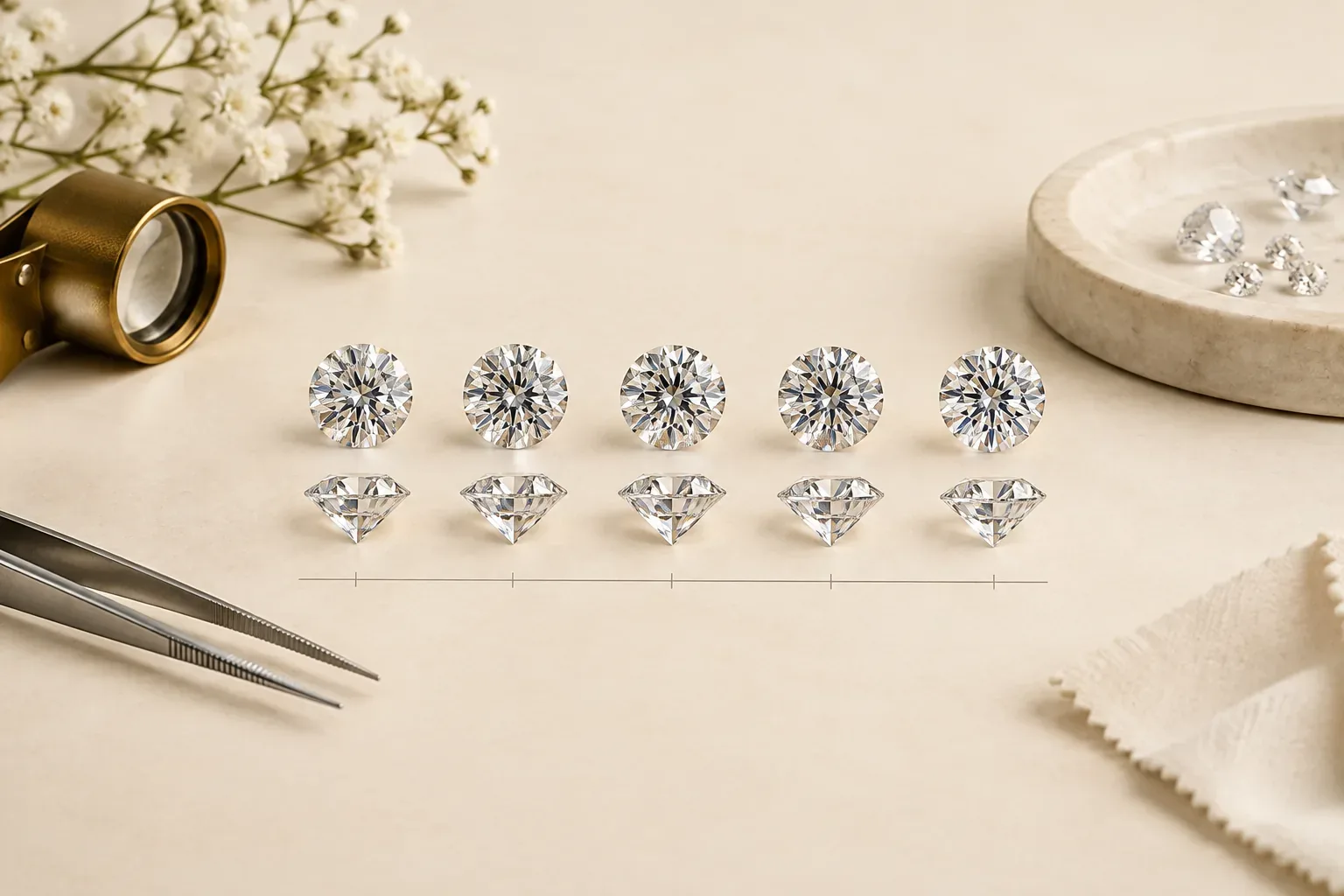
Meaning at a glance
Depth percentage is a simple ratio that strongly affects a diamond’s face-up size, light return, and perceived value. This guide defines the metric, describes the visual and price trade-offs of shallower versus deeper stones, explains what you can verify without a lab, and offers practical selection and gifting advice while clarifying the limits of historical and cultural claims.
What depth percentage is and how it’s calculated
Depth percentage is calculated by dividing the total depth of the diamond (from table to culet) by the diamond’s average diameter and multiplying by 100. For round brilliants the average diameter is the mean of the measured widths across the girdle; for fancy shapes the calculation uses an averaged diameter appropriate to the shape. The metric is a proportion, not a quality grade by itself, but it is an important proportion used by cutters, graders and shoppers to evaluate cut performance and face-up appearance.
How changes in depth percentage alter appearance and price
When cutters alter proportions to meet a target carat weight, they change a diamond’s depth. A shallower stone spreads the same weight over a larger face-up area, so it typically looks larger when viewed from above. However, if a diamond becomes too shallow, light can escape from the pavilion rather than reflecting back through the crown, which reduces perceived brilliance. Conversely, a deeper diamond concentrates weight vertically; the face-up diameter is smaller and the stone can appear smaller for its carat weight and sometimes darker if light is trapped rather than returned.
These optical outcomes influence price. Two diamonds with identical weight, clarity and color can be priced differently because the shallower, larger face-up diamond may look more impressive to a buyer, while a deep-cut diamond may be discounted if it appears small and dull. Sellers and cutters decide on proportion trade-offs based on market preferences, the rough’s shape, and intended price points.
Decision criteria: what shoppers should weigh
Shoppers deciding between diamonds with different depth percentages should prioritize what they value most: face-up size, brilliance and sparkle, or price per carat. If face-up appearance is the priority, a shallower profile can give a larger-looking stone for the same weight. If maximum light return and scintillation are most important, aim for proportions that favor optics rather than face-up spread. A diamond that looks bright and lively in controlled lighting and in real photos will usually be more pleasing in daily wear than one that merely measures larger on paper.
Consider secondary factors that interact with depth: the setting (a bezel or deep prong setting can hide a small face-up), the cut quality of the crown and pavilion facets, and the stone’s shape. Fancy shapes have different structural norms, so depth changes that are acceptable for one shape may be poor for another.
Practical trade-offs and durability concerns
A very shallow girdle may leave pavilion facets with minimal protection, increasing the risk of chipping along the girdle during daily wear or during setting. Extremely deep stones can create practical problems as well: deep pavilions require higher settings to show the stone’s face, which can increase the ring’s profile and the chance of snagging. Both extremes can affect how the stone sets and sits on a ring shank, and both can lead to a buyer paying for weight that does not translate into an appealing face-up size.
Because treatments or enhancements to gemstones can affect durability, consumers should be aware that some processes are not visible to the naked eye and that the Gemological Institute of America advises buyers about treatments, disclosure, detectability and care needs for gemstones (Gemological Institute of America).
Documented history and cultural meanings (what the evidence shows)
The approved evidence used for this article does not provide cultural histories tying specific depth percentages to distinct symbolic meanings in named historical cultures or periods. What is documented in the referenced sources concerns consumer disclosure, treatment detection and modern market demand rather than cultural symbolism. The Gemological Institute of America provides technical and consumer guidance about treatments and their detectability, and the U.S. Federal Trade Commission emphasizes the legal and consumer-history context for clear seller disclosures and the distinctions among natural, lab-created and treated materials (Gemological Institute of America; Federal Trade Commission). Imaginaire Digital reports modern search and market trends that show what buyers are actively seeking in the marketplace today (Imaginaire Digital).
Modern interpretations versus documented facts
Many personal and cultural interpretations attach symbolic meaning to diamonds and to specific aspects of ring design, but those interpretations are modern, variable and subjective. They are distinct from documented, technical facts about depth percentage and from legal or laboratory determinations about a stone’s origin or treatment. Keep the distinction clear: documented facts include measurable proportions, grading reports, and lab-detectable treatments; personal interpretations concern sentiment, fashion, social signaling and individual taste.
How depth percentage appears in actual jewelry
Depth percentage is not labeled on jewelry but its visual effects are visible in different styles. A solitaire set low in a thin prong can showcase a shallow, large face-up stone. A deeply cut stone often requires taller prongs or a thicker setting to present the face and can look smaller in halo settings if the halo’s profile dominates the diamond. Pavé and micro-pavé settings emphasize surface sparkle and may mitigate some perceived depth issues by reflecting extra light around the center stone, while bezel settings can make any loss of face-up diameter less noticeable but will further reduce apparent size because the metal rim obscures the edge.
What buyers can verify without a lab, and what needs a professional
Without a gemological laboratory, a shopper can verify the diamond’s listed measurements, ask for clear face-up and profile photos, compare how the stone looks in different lighting conditions, review any available grading report, and ask for written disclosures about origin and treatments. The Federal Trade Commission advises consumers to insist on clear distinctions and written disclosure when buying gemstones, diamonds, and pearls (Federal Trade Commission). However, some internal features and many treatments or syntheses require the instruments and expertise of a qualified jeweler or an accredited laboratory to detect and confirm. A laboratory report from a recognized gemological laboratory is the most reliable way to verify claims about origin, treatments and grading.
Selection and gifting guidance
When selecting or gifting a diamond, start by deciding which visual outcome matters most to the recipient: larger face-up size, maximum sparkle, lower cost per carat, or long-term durability and resale value. Ask the seller for exact measurements, real photos (not only stock images), and any grading report. If purchasing online, verify the seller’s return policy and whether independent appraisal is allowed after purchase. For sensitive conversations about budget and expectation, consider showing side-by-side images of candidate stones to compare face-up size and sparkle rather than relying on carat weight alone.
Gift-giving advice should also account for style and comfort: a setting that reduces snagging and protects a thinner girdle may be thoughtful for an active wearer, while a lower-profile setting may suit someone who prefers subtlety. Always request written disclosure about whether the diamond is natural, lab-created, or treated, in line with FTC guidance (Federal Trade Commission). If care needs or durability could be affected by treatments, consult the Gemological Institute of America’s guidance on treatment disclosure and care (Gemological Institute of America).
Care and maintenance
Routine cleaning with mild soap, warm water and a soft brush typically restores a diamond’s surface brilliance. More intensive cleaning, repair or assessment should be done by a professional jeweler. If a diamond’s origin or treatment is uncertain, avoid aggressive home treatments until a qualified jeweler or laboratory has advised on safe care. The Gemological Institute of America advises that treatments, disclosure and durability are distinct consumer concerns and that certain treatments may require special care (Gemological Institute of America).
Summary and final limits
Depth percentage is a key proportion that affects face-up size, light return and value. Buyers should weigh face-up appearance against brilliance and durability and insist on objective measurements and written disclosures. Some questions—such as the presence of certain treatments, exact origin, or internal clarity characteristics—can only be resolved reliably by a qualified jeweler or a recognized gemological laboratory. The Federal Trade Commission and the Gemological Institute of America both emphasize the need for clear disclosure and professional verification, and recent market data show strong consumer interest in engagement rings and specific diamond shapes, underscoring the importance of matching technical choices to buyer preferences (Federal Trade Commission; Gemological Institute of America; Imaginaire Digital).
Frequently asked questions
What is diamond depth percentage and why does it matter?
Depth percentage is total depth divided by average diameter expressed as a percentage. It matters because it affects face-up size, how light returns from the diamond, and therefore appearance and perceived value.
Can I tell a diamond’s depth percentage from photos or listing numbers?
You can confirm listed measurements and compare face-up and profile photos to get a sense of depth effects, but exact confirmation of internal proportions and treatments requires either an experienced jeweler or an accredited laboratory and a grading report.
Does a higher depth percentage always mean lower price?
Not always. A deeper stone often looks smaller and may sell for less than a shallower stone of the same weight, but price also depends on cut quality, color, clarity, shape, market demand, and whether the stone has a grading report or treatment disclosures.
Are very shallow or very deep diamonds less durable?
Extremely shallow girdles can be vulnerable to chipping, while very deep stones may require higher settings that increase snagging risk. Durability can also be affected by treatments, which is why professional assessment is advised.
What should I ask the seller before buying?
Ask for exact measurements, clear face-up and profile photos, any available grading report, written disclosures about origin and treatments, the return policy, and whether independent appraisal after purchase is allowed, as recommended by consumer-protection guidance (Federal Trade Commission).
Sources and further reading
- Imaginaire Digital — Imaginaire Digital
- Gemological Institute of America — Gemological Institute of America
- Federal Trade Commission — Federal Trade Commission