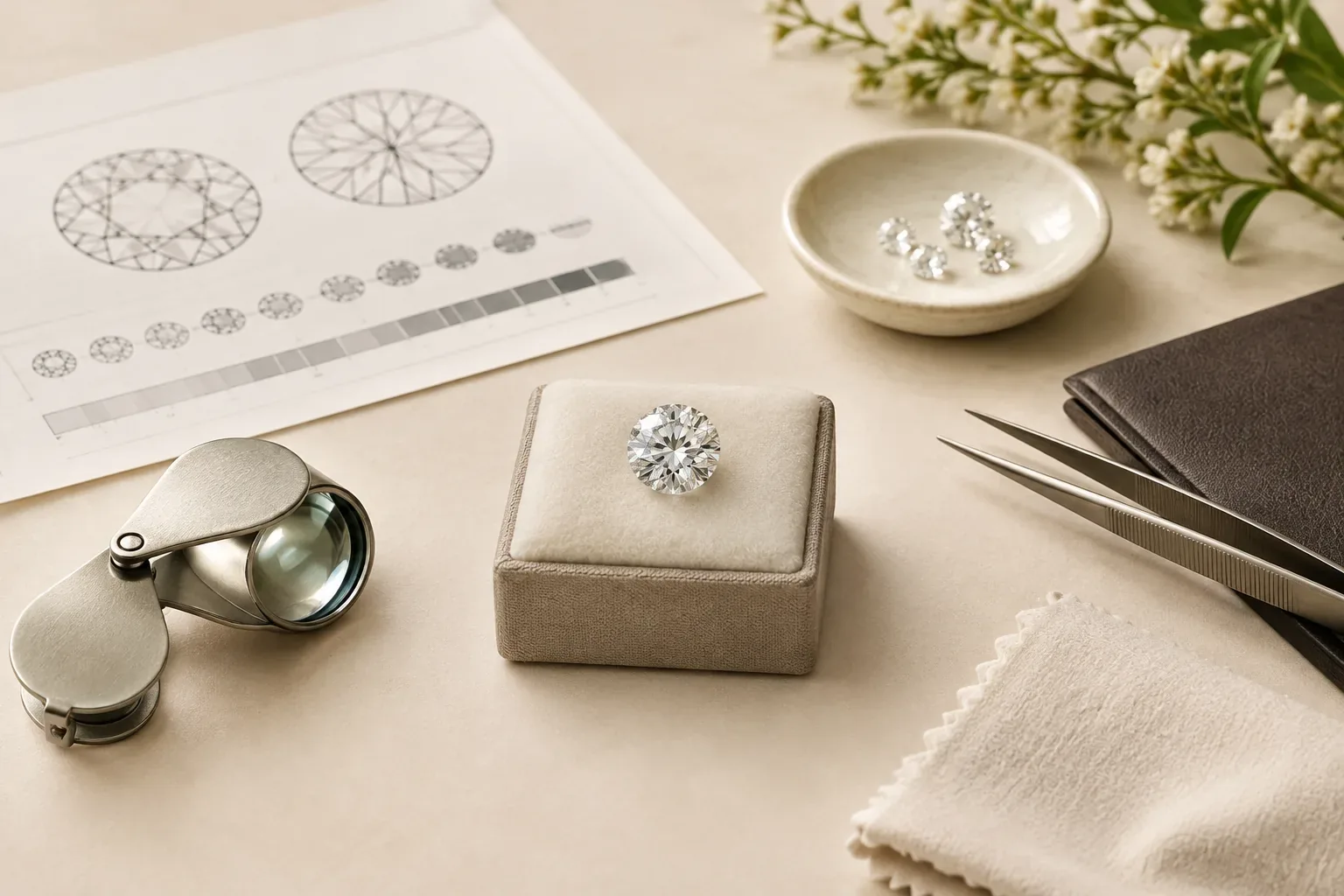
Meaning at a glance
A diamond polish report provides a laboratory record about a diamond's surface finish and related observations; use it to compare stones, ask precise questions of sellers, weigh price versus visible benefit, follow recommended care, and understand the limits of what you can verify without a qualified jeweler or gemological laboratory.
Direct answer: What a diamond polish report is and why it matters
A diamond polish report is a technical document that records a laboratory's observations about a diamond's surface condition and any visible finishing details a grader notes. Read it as evidence about surface finish that can inform buying decisions, but not as a complete certificate of value or permanence. Use the report to compare stones, clarify seller disclosures, and decide whether minor surface issues are important to you relative to price, cut, and other attributes.
This guide follows the practical consumer intent behind the search phrase diamond polish report guide: it defines the subject, explains decision criteria and trade-offs, gives safe-care and selection advice, and sets clear limits on what a shopper can verify without a qualified jeweler or a recognized gemological laboratory.
Short historical context and where polish reports come from
Polish reports are a modern development that grew alongside institutional gem grading and the professionalization of the jewelry trade in the 20th century. They are not an ancient cultural motif or symbolic tradition; rather, they are documentary tools used by laboratories and trade professionals to record observable conditions and treatments.
The purpose and use of laboratory documentation in the contemporary market are part of the same set of consumer and regulatory concerns the Federal Trade Commission highlights about clear distinctions and written seller disclosures for gemstones and diamonds. The FTC's guidance makes clear that modern consumers need reliable, written information about whether a stone is natural, lab-created, treated, or an imitation and that sellers should provide accurate disclosures.
What a polish report typically records and what those entries mean
A polish report focuses on the diamond's surface finish and any observable attributes that affect how the facets meet or how light interacts with the surface. Laboratories will record their observations and sometimes add short remarks. Think of the report as a trained observer's set of notes, not a comprehensive valuation or a guarantee.
Because professional gemological organizations have long warned consumers about treatments and detectability, a polish report may also be read in the context of treatment disclosures. The Gemological Institute of America explains that treatments, their detectability, and their impacts on durability and care are distinct consumer issues, and graders take such information into account when reporting observable characteristics.
Clear limits: what shoppers can and cannot verify without a lab or qualified jeweler
A report is useful, but remember that many important attributes require trained instruments and expertise to confirm. You cannot reliably identify many treatments, internal features, or precise facet proportions with the naked eye alone. Only a qualified jeweler with proper equipment or an accredited gemological laboratory can perform the tests required to identify many treatments or to measure exact cut proportions.
For consumer protection reasons, the FTC emphasizes that sellers should disclose whether a stone is natural, lab-created, treated, or an imitation. If a seller cannot or will not provide a clear written disclosure and an accompanying laboratory report when requested, treat that as a red flag.
How polish and related report content appear in jewelry and why they matter to appearance
Surface polish affects how a diamond's facets reflect and return light; a well-finished surface will have crisp facet junctions and fewer tiny abrasions that scatter light. In finished jewelry, surface condition influences perceived brightness and contrast, particularly at close inspection. That said, other factors such as overall cut geometry and cleanliness often exert greater influence on everyday sparkle than micro-scale polish differences.
In practical terms, a stone with minor polish observations can still look excellent in a setting, especially once cleaned and well-maintained. The settings you choose, metal color, and surrounding stones will also change the perceived appearance. If you are choosing an engagement ring or a pair of studs, examine the diamond in the intended setting and lighting, and ask the seller how the reported surface observations might be visible in normal wear.
Decision criteria and trade-offs to use when reading a polish report
Start by identifying what matters most to you: maximum brilliance at any cost, a specific visual character, budget constraints, or a durable everyday piece. Use the polish report to resolve targeted questions rather than to make absolute judgments. If the report shows minor surface observations, ask whether those are likely to be visible in the chosen setting and how they compare to other diamonds in the same price band.
Consider trade-offs. Prioritizing a slightly higher polish grade can raise price with diminishing visual returns once you pass a threshold that is invisible at normal viewing distances. Conversely, saving on polish may let you increase carat size or improve cut proportions, which often has a larger effect on what a person notices in daily wear. Use the report to balance these priorities transparently with the seller.
Practical selection and respectful gifting guidance
When selecting or gifting a diamond, ask for any available laboratory documentation and a clear written disclosure about origin and treatments, as the FTC recommends. Request images or, when possible, examine the actual stone in the setting and under the lighting conditions where it will be worn. If you rely on a report, cross-reference it with the seller's written statement so the lab observations and the merchant's claims align.
Respect the recipient's preferences and long-term care needs. If the gift is for everyday wear, favor durability and ease of maintenance. If the recipient values technical excellence or collecting, prioritize documentary completeness and consider asking for an independent laboratory review. When in doubt, arrange an independent appraisal or seek a qualified jeweler's opinion before completing a purchase.
Safe care guidance informed by treatment and durability considerations
Care needs can change if a diamond has been treated or subjected to enhancement. The Gemological Institute of America explains that treatments create distinct consumer questions about detectability, durability, and special care. If a report or seller disclosure indicates treatment, ask how that treatment affects cleaning, heat exposure, and routine maintenance.
For everyday care of untreated diamonds, follow conservative cleaning and storage habits: clean gently with a soft brush and mild detergent, avoid harsh chemicals and excessive heat, and store jewelry separately to avoid abrasion. If the diamond has specific reported observations or treatments, ask a qualified jeweler for tailored care instructions.
How to use the report in negotiation and post-purchase steps
Treat a polish report as a negotiation tool and a clarity tool. If a report documents minor surface observations, discuss how that affects pricing and return options. Confirm return policies and what documentation is required for refunds or exchanges. If long-term documentation is important, arrange for the lab report to accompany the purchase contract.
After purchase, keep the report and any seller disclosures with your insurance and appraisal documents. If you later decide you need further testing, an accredited gemological laboratory can perform more detailed analyses, but expect additional fees and turnaround time.
Links and further reading
For broader context on gem treatments and consumer guidance, consult the Gemological Institute of America discussion of treatments and detectability, and the Federal Trade Commission guidance on buying gemstones, diamonds, and pearls. For market context on consumer demand that shapes how vendors present diamonds online, see recent search and market trend analysis from Imaginaire Digital.
If you want to explore other gemstone meanings and care topics, see our Gemstones landing page and related articles such as Amethyst Meaning in Jewelry, Onyx Jewelry Meaning, and Moonstone Jewelry Meaning, History, and Care.
Frequently asked questions
What is the single most important thing a polish report tells me?
A polish report documents a laboratory's observations about a diamond's surface finish; its primary value is to communicate any visible surface conditions that might affect appearance or care, but it does not replace broader testing or a full valuation.
Can I rely on a seller's verbal description or do I need a written report?
Always ask for written documentation. The Federal Trade Commission advises consumers to obtain clear written disclosures about origin and treatments; written reports reduce misunderstandings and are far easier to use for insurance or resale.
Will a minor polish comment be visible in everyday wear?
Often minor comments are not noticeable in normal wear, especially once the diamond is mounted and cleaned. Whether a comment will be visible depends on the setting, lighting, and how close the viewer is. Ask for images or an in-person inspection.
Can I test polish issues at home?
No reliable home test exists for many subtleties. A loupe or magnifier can show obvious surface scratches, but only a qualified jeweler or gemological laboratory can properly evaluate polish and related treatments.
Should I prioritize polish over carat, cut, or color?
Prioritization depends on your goals. In many situations, overall cut quality and proportions influence perceived sparkle more than micro-scale polish differences, so balance polish against size, cut, and budget when making a decision.
What should I do if a polish report or seller disclosure mentions treatment?
Ask the seller for details about the treatment and how it affects durability and care, and consider having the stone examined by an accredited laboratory if the treatment status materially affects your purchase decision. The GIA provides guidance on the consumer implications of treatments.
Sources and further reading
- Imaginaire Digital — Imaginaire Digital
- Gemological Institute of America — Gemological Institute of America
- Federal Trade Commission — Federal Trade Commission