Meaning at a glance
This diamond polish care guide explains what polish is, how polish and common treatments affect durability, safe home cleaning and repair precautions, decision trade-offs when buying or gifting, and which claims require a qualified jeweler or gemological laboratory for verification.
What "polish" means and why it matters
In gemological terms, polish refers to the smoothness and finish of a diamond’s facet surfaces after cutting. A well-polished facet reflects light cleanly; a poorly polished facet can scatter light and reduce apparent brightness. Polish is one element among cut, clarity, color, and carat that influences a diamond’s visual performance, and it interacts with the mounting and wear patterns a piece will experience in real life.
Polish is a surface condition, not a substitute for the diamond’s structural hardness. Diamonds are the hardest natural material on Mohs scale, which makes them highly resistant to scratching by other gems. However, that hardness does not make a diamond invulnerable: facet edges, girdles and included fractures can chip under impact, and metal settings can wear or corrode, affecting how the polished stone sits in the mounting.
Documented historical evidence (what the record shows)
Documented, industry-level history relevant to diamond care centers on the evolution of gem treatments, disclosure rules and testing methods rather than a single cultural practice. The Gemological Institute of America (GIA) explains that treatments, disclosure, detectability, durability and special care have long been topics in gemology, and the development of detection methods and consumer guidance has shaped modern care recommendations.
On the consumer-protection side, the U.S. Federal Trade Commission (FTC) documents a long-standing expectation that sellers provide clear written disclosures distinguishing natural, lab-created, treated and imitation gemstones. Those disclosure requirements are why modern buyers are advised to request documentation and reports when purchasing diamonds, especially for significant purchases such as engagement rings.
Marketplace research from industry publishers such as Imaginaire Digital shows contemporary demand patterns that influence how people care for and choose diamond jewelry today, such as strong searches for engagement rings, diamond studs and tennis bracelets in recent UK data. That demand context helps explain why clear care and disclosure guidance is commercially important to both sellers and buyers.
Documented historical meanings versus modern personal interpretations
The historical record emphasized here is institutional and regulatory: gemological bodies and consumer-protection agencies have documented treatments, testing and disclosure practices. Those are verifiable documents and frameworks and should be treated as factual background when making care decisions.
Cultural or personal meanings attached to diamonds—such as symbols of status, love, commitment, or personal milestones—are modern interpretations that vary widely by region, community and individual. Those symbolic meanings are real to the people who hold them but are not the same as the technical, documented information about polish, durability or treatments supplied by gemological laboratories and consumer agencies.
How polish, treatments and settings appear in jewelry
Polish appears as the visual finish on a cut diamond’s facets. In jewelry descriptions you will see polish grades (where provided) or photographs that show how light returns from the stone. A high polish gives crisp, mirror-like facet surfaces; lower polish can appear slightly hazy or satiny in close inspection.
Treatments such as clarity enhancements, laser drilling, or heat-type processes can alter how a diamond looks and how it should be cared for. The GIA notes that treatments affect detectability and may change durability or special-care needs. Sellers should disclose these treatments in writing, and treated stones often require different cleaning or repair approaches than untreated gems.
Settings modify practical care needs. Prong settings expose more of the girdle and can be more vulnerable to knocks, while bezel and channel settings protect the edges but can trap dirt around the metal-to-stone junction. The metal used (for example, plated base metals or high-karat gold) also determines whether certain cleaning chemicals are safe.
Safe cleaning methods and what to avoid
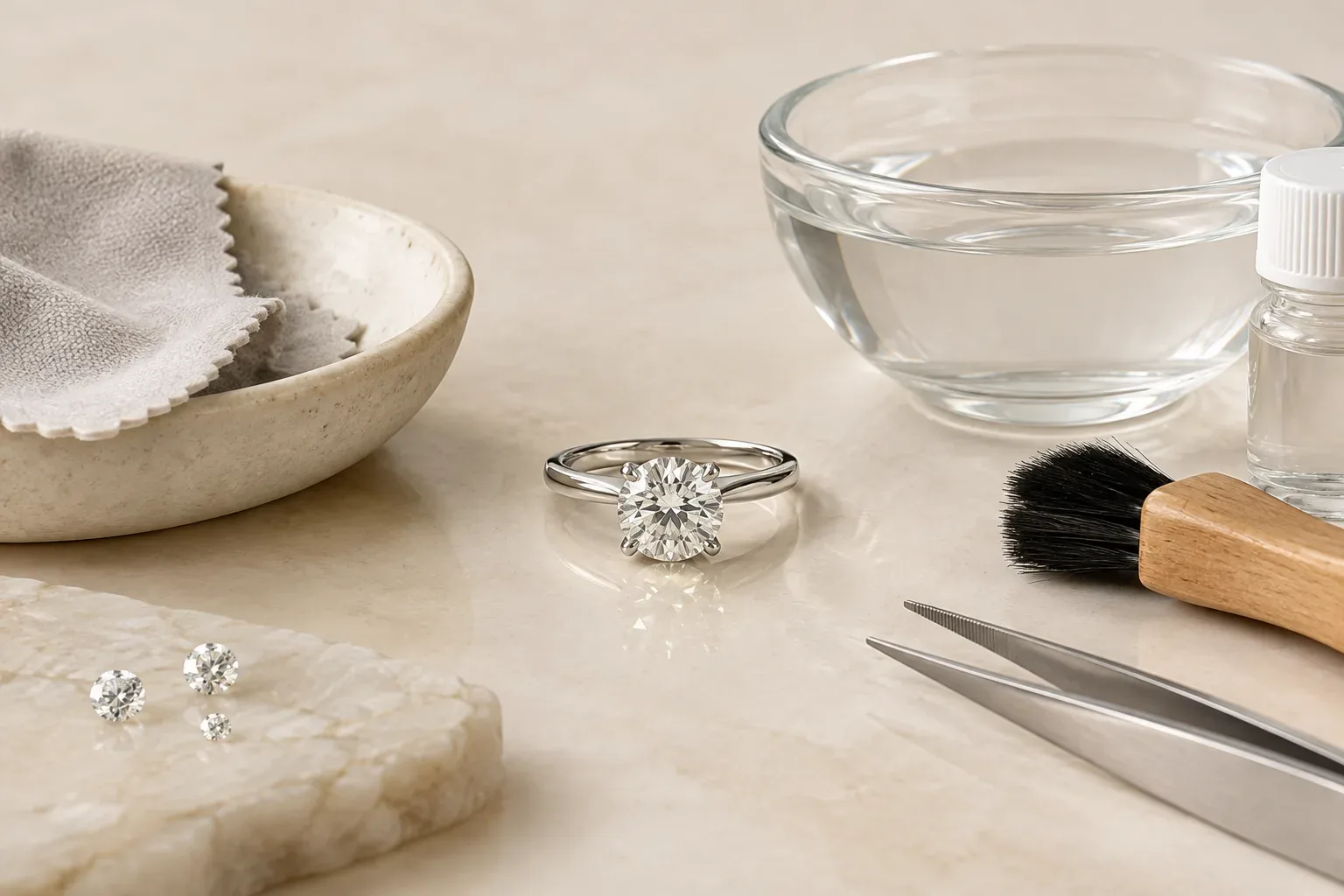
For routine cleaning of most diamonds, warm water, a drop of mild dish soap, and a very soft toothbrush will remove oils and surface grime that dim brilliance. Rinse well and dry with a clean, lint-free cloth. This is the lowest-risk approach for preserving polish and avoiding damage to settings.
Ultrasonic and steam cleaners are commonly effective on diamonds, but they are not universally safe. Ultrasonics can loosen or dislodge stones from worn settings and may be inappropriate for diamonds that have certain clarity treatments or filled fractures. Always ask a qualified jeweler whether the particular stone and its setting are safe for ultrasonic or steam cleaning before proceeding.
Avoid chlorine, bleach and other strong chemicals that can corrode or pit metals and weaken settings. Chlorine, in particular, can damage some gold and platinum alloys and accelerate the failure of settings even though the diamond itself is chemically inert.
Repair precautions, limits and decision criteria
Before any repair—soldering, rhodium plating, stone tightening, re-polishing or re-cutting—consult a trained jeweler and request a written estimate describing the proposed work. Some repairs are cosmetic and reversible; others, such as re-cutting to remove a chip, permanently change the stone and its weight and should only be undertaken with clear consent.
If you suspect a treated or altered stone, do not assume home repairs or cleaning will be safe. The GIA warns that treatments and enhancements can change how a gem responds to mechanical or chemical processes. If a stone has been clarity-enhanced or fracture-filled, those alterations can be damaged or removed by heat or strong cleaning methods.
A qualified jeweler can often confirm loose settings, worn prongs and obvious damage, but definitive identification of treatments such as HPHT (high-pressure, high-temperature) or certain clarity enhancements requires a gemological laboratory’s instruments and a lab report. The FTC emphasizes written disclosure of treatments; if a seller cannot provide clear documentation, a buyer should treat that as a material issue.
Practical selection and gifting guidance
Decide what matters most for the recipient’s lifestyle: choose a protective setting such as a bezel or lower-profile prongs for active wearers, and reserve high-profile solitaire settings for careful, occasional wear. For engagement rings, consider a balance between visual performance and durability—settings that protect the girdle and prongs that are easy to inspect and maintain are often better long-term.
Ask for written disclosures and, where appropriate for the budget and importance of the purchase, a gemological report from an accredited laboratory. The FTC makes clear that consumers should be given distinctions among natural, lab-created, treated and imitation materials in writing. A lab report is the most reliable way to know about treatments and to establish baseline condition before gifting.
Factor in serviceability: choose a jeweler who offers routine inspection and cleaning, or budget for periodic checks. A modest warranty, regular prong checks, and a reputable aftercare service are more valuable than chasing the absolute highest polish grade if the buyer or recipient plans to wear the item daily.
What a shopper can verify and what needs a lab or qualified jeweler
With a loupe and visual inspection you can check for obvious issues: loose settings, visible chips, heavy surface abrasion, and whether a seller provides written documentation. You can also compare photographs and view the stone in different lighting to get a sense of polish and brilliance.
You cannot reliably detect many treatments, such as HPHT or some clarity enhancements, without laboratory equipment and a trained gemologist. The GIA explains that detectability varies by treatment, and the FTC requires sellers to disclose treatments in writing. If treatment history is material to the purchase, insist on a lab report from an accredited gemological laboratory rather than relying on unaided visual tests.
Decision trade-offs to weigh
Opting for a treated stone will usually lower the price but may bring additional care constraints and affect future resale or insurance. A natural, untreated stone with a certified report may cost more but will typically be simpler to care for and easier to insure and resell with confidence.
Choosing a setting that hides the girdle or uses tight bezels enhances protection but can collect dirt and make cleaning more frequent or more difficult. High-polish finishes on metal can show scratches faster; matte or brushed finishes can mask surface wear at the cost of a different aesthetic. Balance aesthetics, everyday durability, and maintenance commitment for the wearer’s lifestyle.
Practical checklist before cleaning or repairing
Verify in writing whether the diamond has any treatments and whether the seller recommends or forbids ultrasonic or steam cleaning. Inspect the setting for loose prongs or bent metal. If the stone is valuable or has an unclear history, obtain a gemological report before undertaking significant repair or aggressive cleaning.
If you are giving the piece as a gift, include documentation, recommended care instructions, and contact details for a trusted jeweler for future servicing. This helps the recipient maintain polish and structural safety while preserving value.
Where to get authoritative help
For questions about treatments and detectability, consult a recognized gemological laboratory or a qualified appraiser. The Gemological Institute of America publishes guidance on treatments and care that contextualizes how special care varies by treatment type. For consumer-rights and disclosure issues, consult FTC consumer guidance about buying gemstones, diamonds and pearls.
When in doubt, prioritize a written lab report and written seller disclosures. Professional inspection before any invasive cleaning or repair is the safest route for higher-value items.
Frequently asked questions
Is it safe to clean my diamond in an ultrasonic cleaner at home?
Ultrasonic cleaners can be safe for many diamonds, but they can loosen stones in worn settings and may damage some clarity-treated or fracture-filled diamonds. Ask a qualified jeweler whether your specific stone and setting are suitable for ultrasonic cleaning before using one.
How often should I have my diamond professionally inspected?
Have prongs and settings inspected by a jeweler at least once a year for regularly worn pieces, or more frequently if you lead an active lifestyle. Annual checks help prevent loss and identify wear before a small issue becomes a major repair.
Can I verify a diamond’s treatments myself?
You can look for seller disclosures and ask for a laboratory report, but reliable identification of many treatments requires professional instruments and a gemological laboratory. If treatment history matters to you, require written documentation from an accredited lab.
Will cleaning remove scratches from the polish?
Routine cleaning removes oils and dirt but does not remove scratches from a facet’s polish. Removing surface scratches requires repolishing or recutting, which is a permanent alteration that should be done only by a qualified professional.
What should I ask for when buying a diamond as a gift?
Ask the seller for written disclosures about origin and treatments, request any available lab reports, choose a setting appropriate to the recipient’s lifestyle, and buy from a jeweler who offers inspection, cleaning and clear after-sales care.
Sources and further reading
- Imaginaire Digital — Imaginaire Digital
- Gemological Institute of America — Gemological Institute of America
- Federal Trade Commission — Federal Trade Commission