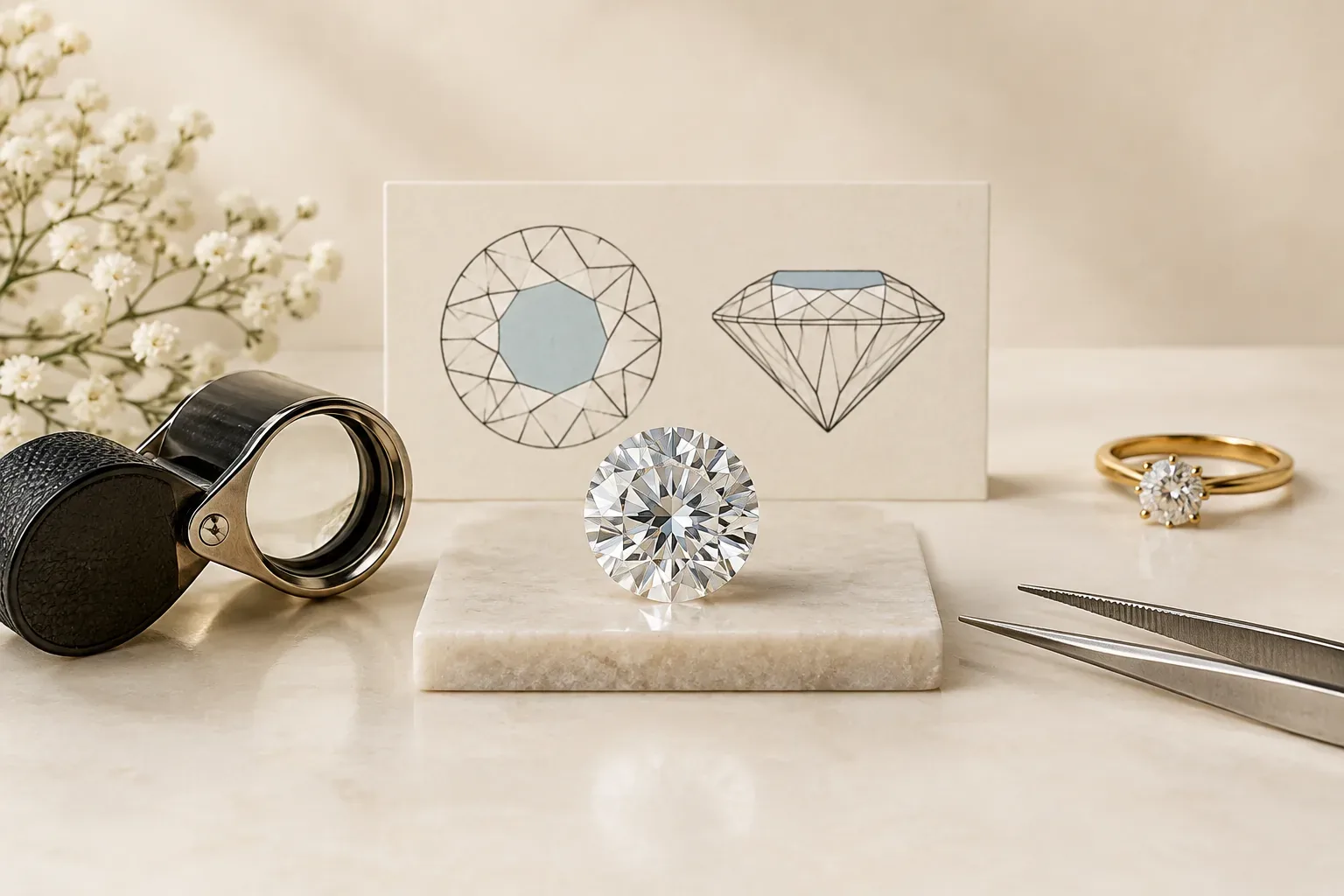
Meaning at a glance
Diamond table percentage explained: the table percentage is the width of a diamond's top (the table) expressed as a proportion of the stone's overall diameter; it affects face-up size, light behavior and trade-offs between brightness and scintillation; you cannot reliably verify exact table percentage without a qualified jeweler or a gemological laboratory report, so use the seller's measurements and ask for disclosure when selecting or gifting.
Direct answer — what 'diamond table percentage' means and why it matters
Diamond table percentage explained simply: it is the width of a diamond’s largest, flat top facet (the table) expressed as a percentage of the stone’s overall diameter. That single measurement helps describe how light will enter and return from the stone, how large the diamond looks face-up, and the trade-offs between apparent size, brightness, and sparkle. For shoppers, the table percentage is a practical data point used together with other proportions, the cut style, and a grading or measurement report to make informed selections; it is not a standalone guarantee of how a diamond will look or perform.
What the table percentage measures and how to read it
The table is the broad, flat facet at the center of many diamond cuts. Table percentage is calculated by dividing the table's width by the stone’s diameter and expressing that ratio as a percentage. In practice this figure appears on trade reports and vendor measurements and is read alongside other proportion numbers rather than in isolation.
Because table percentage is a single linear ratio, it gives information about face-up appearance but does not describe crown angle, pavilion depth, facet arrangement or optical performance on its own. Those additional factors strongly influence brightness, fire, and scintillation, so a balanced view of multiple measurements is required for a useful assessment.
Historical evidence and development of the measurement
Documentary evidence tying a numeric 'table percentage' to specific cultural symbolism is limited. The practice of measuring and standardizing diamond proportions is a product of modern gemological methods rather than an ancient cultural classification. Modern proportion measurement, reporting and the idea of using precise numeric proportions for cut grading became widespread in the 20th century as gemological laboratories and the trade professionalized.
The Gemological Institute of America (GIA) and similar institutions were instrumental in developing measurement techniques, terminology and reporting conventions used by cutters, dealers and labs. These modern, technical standards are the origin of the numerical data (including table percentage) that consumers now encounter on reports and in listing details.
Documented historical meanings versus modern personal interpretations
There is no historical record that communities attached symbolic meanings specifically to a diamond’s table percentage. Historical meanings applied to diamonds more broadly—status, durability and association with betrothal—are cultural and contextual and do not extend to the technical proportion numbers used by cutters and labs.
Today, some people interpret proportions, including table percentage, as indicators of taste, value or personality: for example preferring a larger table for a bolder, more 'face-up' look or a smaller table for a more scintillating appearance. Those are modern, personal preferences and should be distinguished from documented, historical symbolism.
How table percentage appears in jewelry and why you see it on listings
Sellers and labs list table percentage because it is a compact, measurable way to describe part of a diamond’s proportions. In listings for engagement rings, studs and classic solitaire settings you will often see table percentage alongside other measurements such as carat weight, color, clarity, and sometimes a cut grade or other proportions.
The table percentage helps predict face-up visual size and certain light effects. For example, in ring settings where the diamond is viewed from above, a larger table can make the diamond appear slightly larger face-up for the same carat weight. Conversely, a smaller table changes how light is broken up and returned, which can influence the pattern and extent of sparkle you perceive when the stone moves.
Practical decision criteria and trade-offs
Use table percentage as one decision criterion among several. It is useful when comparing stones of similar cut style and carat weight because it helps explain differences in apparent face-up size and light performance. However, it does not replace a visual evaluation or a grading/measurement report that includes angles, pavilion depth, and the cutter’s facet layout.
The practical trade-offs are straightforward: a larger table tends to increase the apparent face-up size and can produce a broader flash of light, sometimes at the cost of less scintillation (the small flashes of light). A smaller table can contribute to lively scintillation and more visible 'fire' in certain combinations, but it may reduce the face-up spread. The best balance depends on the cut style, the intended setting, and the wearer’s visual preference.
Selection and gifting guidance — respectful, practical steps
Ask for a measurement report or seller disclosure that includes table percentage and the other major proportions. The Federal Trade Commission recommends clear written disclosure for gemstones and diamonds that distinguishes natural, lab-created, treated and imitation materials, and that consumers should ask for this documentation. Treat table percentage as useful factual information but pair it with a photo, video, or in-person viewing when possible.
When gifting, consider the recipient’s priorities: do they prefer maximum face-up size, maximum brilliance, or a particular style? If you are unsure, choose a reputable dealer who can show comparable stones with slightly different table percentages so you can see the visual differences. If the stone is accompanied by a laboratory report from an established lab or a qualified jeweler’s measurements, ask the seller to explain how the table percentage works with the other proportions to affect appearance.
If you are buying remotely, request a full disclosure in writing and insist on documented measurements. The FTC emphasizes written seller disclosures for consumer protection. If the seller cannot provide clear measurement information or a credible grading document, treat that as a red flag.
Care, treatments and verification limits
Standard diamond care applies regardless of table percentage: remove jewelry for heavy manual tasks, avoid harsh chemicals, and have mountings inspected periodically to ensure the stone is secure. The Gemological Institute of America notes that treatments, disclosure and detectability are important consumer considerations: know whether a stone has been treated or is lab-grown because those facts affect value, disclosure obligations and, occasionally, care recommendations.
Importantly, you cannot reliably verify an exact table percentage by eye. Accurate measurement requires tools, experience, and frequently a standardized lab report. A qualified jeweler can measure and explain proportions; a gemological laboratory report is the gold standard for independent verification of proportions and origin. If precise numeric verification matters for purchase, insist on an independent lab report or a documented measurement from a trusted professional.
Summary and practical next steps
Diamond table percentage explained: it is a useful, measurable proportion describing the width of the stone’s table relative to its diameter and helps predict face-up size and some aspects of light performance. Use it together with other measurements, a visual evaluation, and reliable documentation.
For buyers and gifters: ask for clear written measurements, view comparable stones when possible, work with reputable vendors who will disclose treatments and origins, and use a lab report or qualified jeweler for critical verification. These steps keep expectations realistic and protect your purchase.
Frequently asked questions
What exactly is table percentage?
Table percentage is the width of a diamond’s table facet expressed as a percentage of the stone’s overall diameter. It is a single proportion used with other measurements to describe a diamond’s cut.
Does a higher or lower table percentage make a diamond more valuable?
Table percentage alone does not determine value. Value is influenced by carat weight, color, clarity, cut quality, and market demand. Table percentage affects appearance and should be considered with other proportions and a grading or measurement report.
Can I tell table percentage by looking at a diamond?
No. You cannot reliably determine a precise table percentage by eye. Accurate measurement requires tools and experience; ask for a measurement report or have a qualified jeweler or gemological laboratory verify proportions.
How does table percentage affect sparkle and face-up size?
A larger table can increase apparent face-up size and produce broader flashes of light, while a smaller table can emphasize scintillation and facet pattern. The final effect depends on crown angle, pavilion depth and facet arrangement as well.
What should I ask a seller when buying a diamond?
Request clear written measurements including table percentage and other proportions, ask if the stone has been treated or is lab-created, ask for a grading lab report if available, and request good quality photos or video. If the seller cannot provide clear information, consider other vendors.
Do I need special care for diamonds based on table percentage?
No. Care recommendations depend on the material, setting and any treatments rather than the table percentage. Follow routine jewelry care: avoid harsh chemicals, remove jewelry for heavy tasks, and have settings inspected periodically.
Sources and further reading
- Imaginaire Digital — Imaginaire Digital
- Gemological Institute of America — Gemological Institute of America
- Federal Trade Commission — Federal Trade Commission