Meaning at a glance
This guide defines diamond clarity grades as a trade-off between visible inclusions and price, explains how inclusions can affect durability, gives safe cleaning and repair precautions, and clearly states what only a qualified jeweler or gemological laboratory can verify.
Quick answer
Diamond clarity grade care guide: treat clarity as a factor that affects appearance and—when inclusions are large or surface-reaching—structural risk; clean diamonds with mild soap, warm water and a soft brush or an ultrasonic/steam cleaner only when no treatments or fragile settings are present; avoid aggressive prying, heat, and soldering near diamonds with significant inclusions; and accept that only a qualified jeweler or a gemological laboratory can reliably verify a clarity grade, detect certain treatments, and confirm durability limits.
What diamond clarity grades are (definitions and decision criteria)
Clarity grading is a descriptive system gemologists use to record the presence, size, number, location and type of internal inclusions and surface blemishes that affect how a diamond looks under magnification and to the unaided eye. Shoppers and sellers use clarity grades as a shorthand for how visible inclusions are and how much they should expect to pay for a given carat weight and cut.
When choosing among clarity grades, the practical decision criteria are: how noticeable the inclusions are in the intended mounting and viewing distance; whether the inclusions are internal or reach the surface; how the clarity grade interacts with cut, color and carat to produce overall appearance; and the buyer’s budget and tolerance for risk. These are trade-offs, not universal rules—higher clarity usually costs more, while lower clarity may deliver larger carat size for the same budget but can increase the chance of a visible inclusion or a weakness in the stone.
Durability: how inclusions and clarity affect strength
Most diamonds are extremely hard and resist scratching, but hardness is not the same as toughness. A large inclusion—especially if it reaches the surface or lies near an edge—can create a point of weakness where a blow or a high-temperature repair could cause chipping or cleavage. Whether an inclusion materially affects durability depends on size, type, location and the stone’s setting.
For practical safety, diamonds with inclusions that reach the surface or sit close to the girdle deserve more protective settings such as bezel or lower-profile prongs and should be treated with extra caution during repairs that apply heat or mechanical stress. The Gemological Institute of America notes that treatments, disclosure and detectability create distinct consumer questions related to durability and care; some treatments or fracture-filling procedures can change how a diamond responds to cleaning and repair (GIA).
Cleaning: safe methods and what to avoid
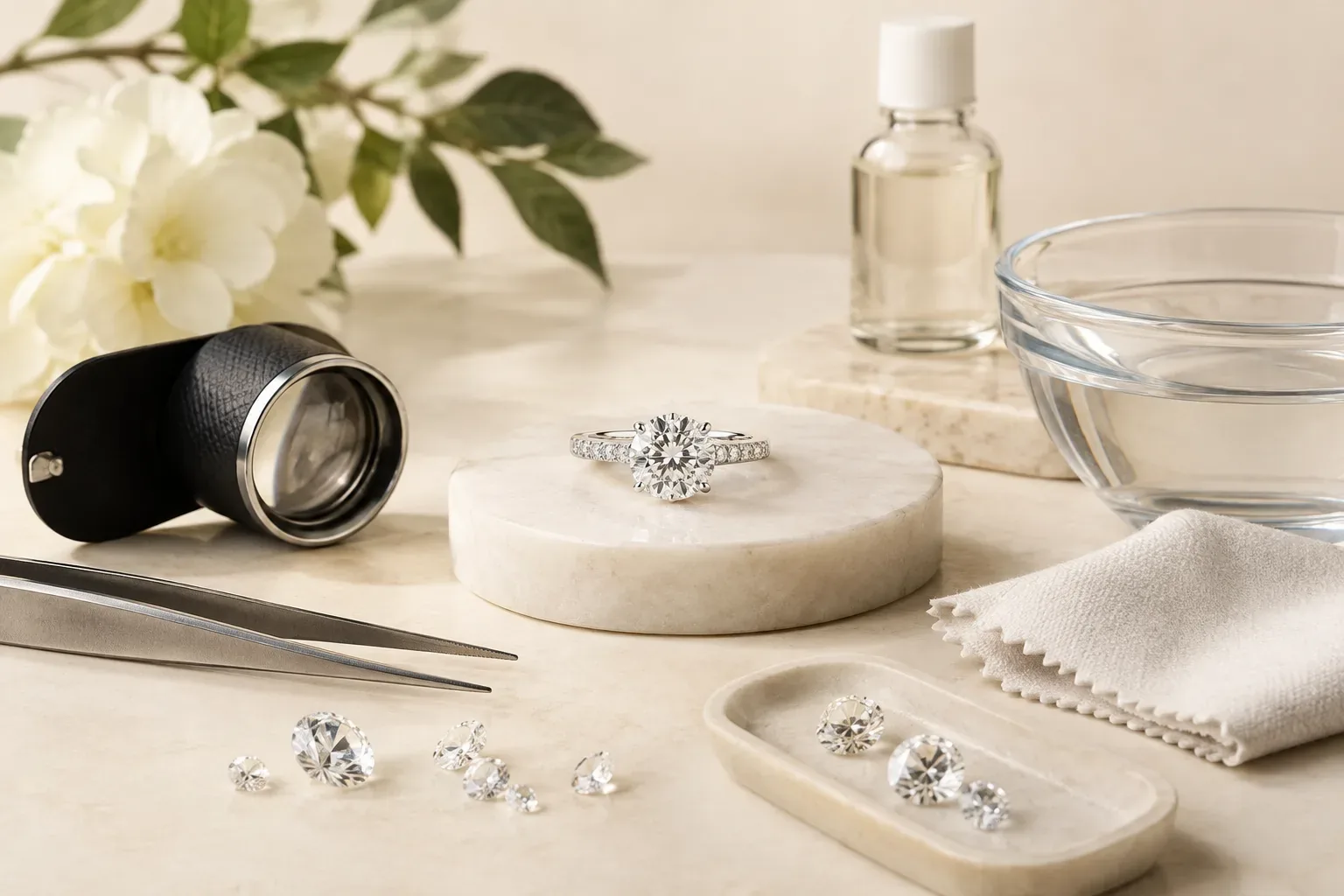
For routine cleaning, use warm water, a mild non-abrasive detergent and a soft toothbrush to remove oils and dirt. Rinse thoroughly and dry with a soft lint-free cloth. This method is effective for most diamonds and settings because it removes surface residues that reduce brilliance without applying damaging chemicals or heat.
Ultrasonic and steam cleaners restore brilliance quickly and are commonly used in professional settings, but they are not universally safe. Never use ultrasonic or steam cleaning if you are unsure whether a diamond has a treatment or a surface-reaching inclusion, and do not use them on fragile or glued settings. The Gemological Institute of America warns that treatments and certain conditions influence detectability and care needs; when in doubt, ask the seller or a qualified jeweler before using aggressive cleaning methods (GIA).
Repair and setting precautions
Before any repair that involves heat, soldering, prying or heavy pressure, disclose to the jeweler any known clarity issues, treatments, and the diamond’s origin if known. The jeweler should inspect the stone under magnification to determine if inclusions reach the surface or if the setting will protect vulnerable areas.
Avoid attempting prong re-tipping, resizing near the head, or removing stones yourself. If a diamond has an inclusion that appears to reach the surface, insist that the repairer uses protective measures or refer the piece to a bench jeweler experienced with diamonds. The Federal Trade Commission advises that consumers need clear distinctions among natural, lab-created, treated and imitation materials and written seller disclosures; similarly, consumers should obtain written confirmation of repairs and any changes to setting integrity (FTC).
Historical evidence and precise period attribution
The modern practice of assigning clarity grades and managing treated stones is a product of the gemological era driven by laboratories and consumer-protection rules largely developed in the 20th and 21st centuries. Authoritative gemological institutions document treatments, their detectability and how those factors affect durability and consumer guidance (GIA).
Regulatory guidance and disclosure practices that shape how clarity and treatments are presented to buyers are contemporary developments in consumer protection; the U.S. Federal Trade Commission’s guidance emphasises clear written seller disclosures and the need to distinguish natural, lab-created and treated materials for today’s marketplace (FTC). There is no single pre-modern culture that used today’s clarity-grade system; clarity grades are a modern classification used by gem labs and the trade.
Documented historical meanings versus modern personal interpretations
Documented history shows that clarity grades and laboratory reports are modern tools for describing and disclosing a diamond’s physical characteristics and treatments; that is the domain of gemology and consumer-protection law (GIA, FTC). Historical symbolic meanings attached to diamonds—such as ideals of purity or strength—are cultural and variable and should not be conflated with clarity grades.
Modern personal interpretations occur when buyers or gift-givers assign extra symbolic value to higher clarity or to visible inclusions. Those personal meanings are legitimate as private sentiment but are not historical facts about clarity grades. Distinguish documented, lab-based descriptions from contemporary symbolic choices when advising a buyer or making a gift.
How clarity grade appears in jewelry
Clarity affects how a stone looks in different designs. In open settings, such as solitaire rings and studs, inclusions are more visible; in pavé, halo or cluster settings, surrounding metal and smaller accent diamonds can hide small inclusions. Bezel settings can both protect and obscure portions of a girdle or edge where inclusions might appear.
Practical appearance: the same clarity grade can look different in a small accent stone versus a larger solitaire because inclusions scale with the stone. Retail descriptions and magnified images can help, but images and on-screen representations are not substitutes for an in-person inspection or a laboratory report.
Selection and gifting guidance
Decide first how the recipient wears jewelry. For active daily wear such as an engagement ring or a tennis bracelet choose a clarity grade with minimal risk of visible inclusions in that mounting, and opt for protective settings if the stone has surface-reaching features. If the recipient prefers occasional or formal wear, you can consider lower clarity grades that maximize carat size for a budget.
Budget and symbolism matter: buyers often balance clarity against cut and carat because a well-cut diamond hides minor inclusions by enhancing brilliance. For engagement rings and heirloom pieces, request written disclosures about treatments and a grading report from a reputable laboratory before purchase. Imaginaire Digital’s 2026 search data shows enduring strong demand for engagement rings, diamond studs and similar classic items, which means many shoppers will face these trade-offs in a crowded market (Imaginaire Digital).
Verification limits: what only a lab or qualified jeweler can confirm
You can judge some things at home—visible surface chips, obvious large inclusions and whether a stone is mounted solidly—but only a qualified jeweler or a recognized gemological laboratory can reliably grade clarity under standard magnification, detect many treatments, and issue an authoritative report. The GIA explains that treatments, disclosure and detectability create specific consumer questions and that laboratories use specialized equipment to make determinations (GIA).
The Federal Trade Commission emphasizes that consumers should demand written disclosures and that certain distinctions between natural, lab-grown, treated and imitation materials require laboratory or seller documentation to verify (FTC). If a clarity grade, origin, or treatment matters to you, request a current laboratory report and retain written repair records.
Practical decision checklist
Before purchase or repair, ask for a current lab report or seller disclosure, inspect the stone in a similar mounting to its intended use, consider protective settings for stones with surface-reaching inclusions, adopt gentle cleaning habits, and use ultrasonic or steam methods only after a professional confirms they are safe for that specific stone and setting.
When gifting, match the clarity grade to the recipient’s lifestyle and taste and include the lab report or seller disclosure with the gift. If you inherit a piece with questionable stability or an unknown treatment history, consult a qualified bench jeweler or a gemological laboratory before performing any repairs or heavy cleanings.
Frequently asked questions
How often should I clean a diamond?
Clean everyday-wear diamonds every few weeks with warm water, mild detergent and a soft brush to remove oils and dirt. Have professionally mounted or high-value pieces inspected and cleaned by a jeweler annually or when you notice reduced brilliance. Avoid professional ultrasonic or steam cleaning until a jeweler confirms the stone and setting are safe for those methods (GIA).
Can I verify a clarity grade at home?
No. A consumer can notice obvious chips or very large inclusions, but an authoritative clarity grade requires standardized magnification, lighting and a trained grader. For reliable verification, request a current report from a recognized gemological laboratory or have a qualified independent jeweler examine the stone (GIA, FTC).
Do inclusions make a diamond more likely to break?
Some inclusions—especially those that reach the surface or sit near an edge—can create weakness and increase the risk of chipping under impact or during aggressive repairs. Many inclusions are internal and pose no special danger in everyday wear, but large or surface-reaching features warrant protective settings and careful handling.
Are treated diamonds less durable?
It depends on the treatment. Some treatments can affect how a diamond responds to heat or ultrasonic cleaning and may reduce durability in certain situations. The GIA notes that treatments and detectability raise special care considerations; always ask the seller for disclosure and, if necessary, a laboratory report (GIA).
What should I ask the seller before buying?
Request a written disclosure of whether the diamond is natural, lab-grown, treated or an imitation; ask for a current laboratory report if clarity, origin or treatment matters; inspect the stone in the intended mounting; and ask about the recommended cleaning methods and any known vulnerabilities. The FTC advises clear seller disclosures on these distinctions (FTC).
Is a higher clarity grade always worth the price?
Not always. Higher clarity reduces the likelihood of visible inclusions but costs more. Many buyers prioritize cut and brilliance over marginal clarity improvements, or choose a lower clarity grade that appears clean to the naked eye in the chosen setting. Match clarity to appearance goals, budget and wear patterns rather than assuming higher is always better.
Sources and further reading
- Imaginaire Digital — Imaginaire Digital
- Gemological Institute of America — Gemological Institute of America
- Federal Trade Commission — Federal Trade Commission