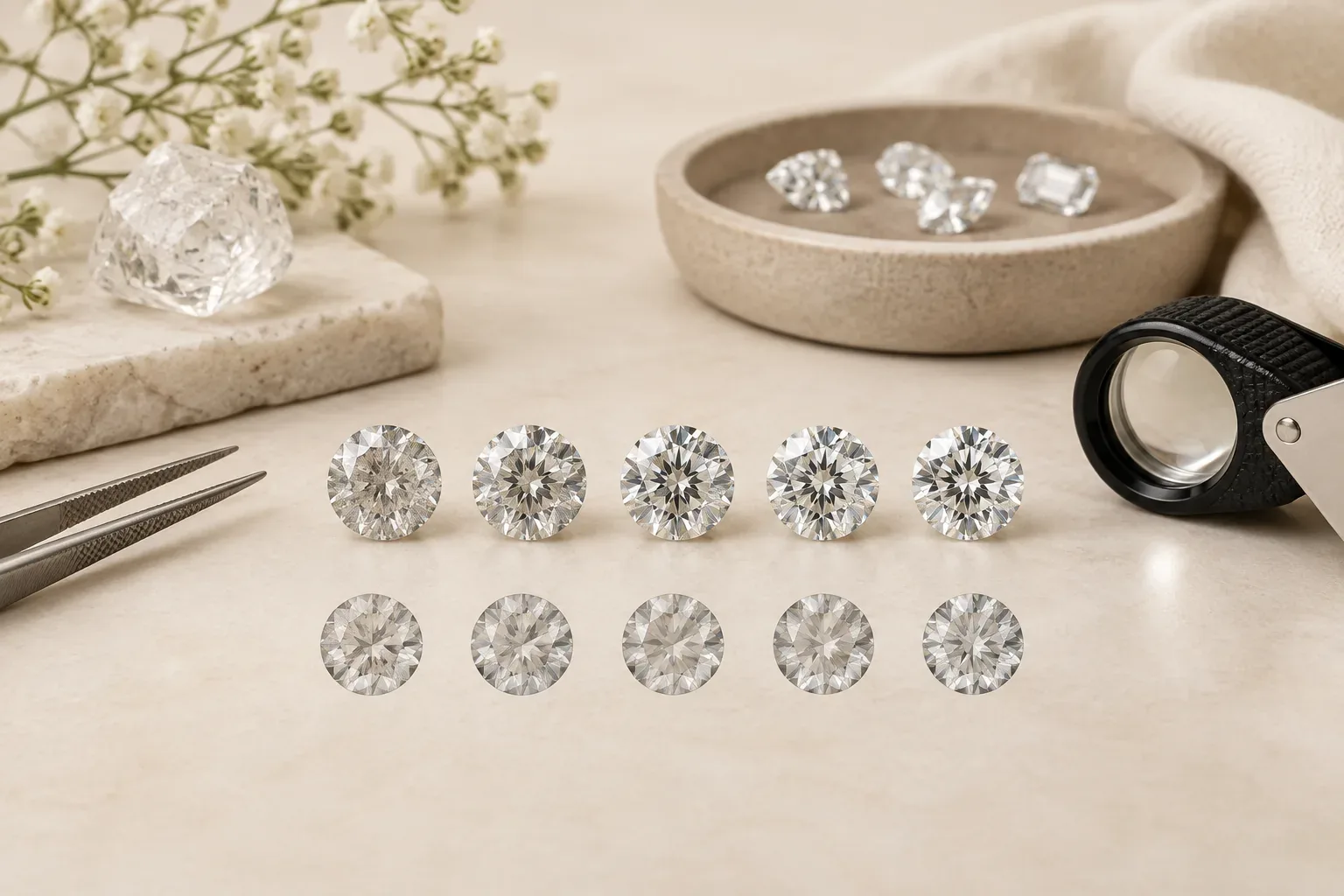
Meaning at a glance
This guide defines standard clarity grades, explains how inclusions and blemishes affect appearance and market price, outlines decision criteria and trade-offs buyers commonly make, notes care and treatment issues, and describes what only a qualified jeweler or gemological laboratory can confirm.
Quick answer
Clarity grade comparison matters because clarity describes internal and surface characteristics that can change a diamond’s visible sparkle and its market rarity. Higher clarity grades typically cost more because the features are rarer; however, many shoppers balance clarity against cut, carat, and color so the diamond appears bright to the eye at a lower price. This guide gives definitions, trade-offs, care notes, and clear limits on what you can confirm without a qualified jeweler or a gemological laboratory, matching the practical consumer intent behind a "diamond clarity grade comparison guide."
What clarity grades mean (simple definitions)
Clarity grading classifies the size, number, position and nature of internal inclusions and surface blemishes. The industry typically uses a scale running from the rarest, most inclusion-free stones to diamonds that contain obvious inclusions. That scale is used to communicate relative rarity and to guide pricing. The Gemological Institute of America (GIA) is a principal authority on grading practice and on what treatments and disclosures are material to consumers (Gemological Institute of America).
In plain terms, the top grades indicate a stone with no visible flaws to a trained grader at standard magnification; mid-range grades have small inclusions often visible only under magnification; lower grades carry inclusions that can be seen with the unaided eye and can affect transparency or durability. Which named grade corresponds to each description varies by laboratory and vendor, so always check which grading laboratory issued a certificate.
How clarity changes appearance
Whether an inclusion affects how a diamond looks depends on its size, type, and position relative to the table and facets. Small internal crystals, pinpoints, or tiny feathers close to the pavilion generally have minimal impact on face-up brilliance, while large clouds or dark crystals positioned under the table can reduce apparent brightness and contrast. Cut quality interacts with clarity: a well-cut diamond can mask modest inclusions by reflecting more light, while a poor cut can make even small inclusions more noticeable.
For many shoppers, the practical threshold is the unaided-eye appearance. In retail practice, many diamonds in mid-range clarity grades appear clean to most viewers when set and viewed at normal conversational distances; however, inclusions in lower clarity grades are frequently visible without magnification. Use magnified images or an in-person inspection to judge whether a given inclusion bothers you.
How clarity affects price and decision criteria
Clarity is one of the drivers of price because higher-clarity stones are statistically rarer in the rough. Price increases with clarity all else equal, but the incremental cost between adjacent clarity grades varies by carat, color, cut, and current market demand. Shoppers typically trade clarity against carat and cut: some prefer a slightly lower clarity in order to increase carat weight or to buy a better-cut stone that returns more sparkle.
When deciding, prioritize what is visible to the eye in the setting you expect to wear. If the goal is maximum visual impact, invest first in cut quality, then color, then the clarity level that meets your eye-clean requirement and budget. If resale or investment is the priority, documented high clarity and grading by a recognized laboratory typically retain broader market value.
Historical evidence and cultural context (documented sources and periods)
Most of the authoritative documentation relevant to modern clarity grading, consumer protection, and lab disclosure comes from industry institutions and consumer regulators of the 20th and 21st centuries. The Gemological Institute of America (GIA) documents laboratory standards, grading methodology, and the importance of full treatment disclosure in the modern gem trade, particularly in the period when laboratory grading and treatment-detection technology matured (Gemological Institute of America).
In the United States, consumer-protection practice and seller disclosure expectations have been formalized through guidance and enforcement by agencies such as the Federal Trade Commission, which explains why clear labeling of natural versus lab-created material, treatments, and other origin claims matters to buyers in the contemporary market (Federal Trade Commission). Finally, current retail search and purchase patterns for engagement rings, studs, and other diamond jewelry show strong consumer demand for those categories in recent UK market estimates, which helps explain buyer priorities and price sensitivity in 2026 and nearby years (Imaginaire Digital).
Documented historical meanings versus modern personal interpretation
Documented historical evidence relevant to grading and disclosures is institutional and regulatory, as described above, and applies to the modern commercial understanding of diamonds. That documentation does not prescribe a cultural or symbolic meaning for every era or society. Cultural meanings—for example, whether diamonds symbolize romantic commitment, status, or other ideas—have changed over time and differ by culture and period, and any specific historic symbol should be cited from a specialist cultural history rather than assumed universal.
Modern personal interpretations—what a diamond means to an individual or family today—are subjective. Retail narratives and advertising often shape expectations in a given market, but individual meaning depends on personal, cultural, and familial context. Because those personal meanings are not standardized, they should not be conflated with the documented practices and technical standards used to grade clarity and disclose treatments.
How clarity shows up in finished jewelry
Setting type, metal color, and cut shape all influence whether inclusions are obvious once a diamond is set. Prong settings and open halo styles expose more of the diamond’s pavilion and table, making inclusions more noticeable. Bezel settings and certain fashion rings can hide girdle-level or side inclusions. Yellow or rose gold can visually warm a diamond and mask slight color or minor inclusions; white metals emphasize brightness and can make some inclusions more noticeable by contrast.
Cut shape matters too. Step-cut diamonds (for example, emerald cuts) have large, open facets that can make inclusions easier to see. Brilliant cuts (round, brilliant-cut) use many facets to scatter light and can hide modest inclusions behind reflected brilliance. For small stones, like melee or accent stones, clarity standards are typically lower because the inclusions are unlikely to be visible at normal viewing distances.
Treatments, lab-grown stones, disclosure and what changes verification
Treatments and whether a diamond is natural or laboratory-grown materially change valuation and care. The Gemological Institute of America describes how different treatments affect detectability and durability and why accurate seller disclosure is essential to buyers (Gemological Institute of America). The Federal Trade Commission requires clear distinctions among natural, lab-created, treated, and imitation materials and expects written seller disclosures for those differences (Federal Trade Commission).
Insist on written disclosure and on an independently issued grading report when clarity is a purchase driver. Some treatments are stable and readily detectable in a modern laboratory, while others are subtle; lab reports from recognized laboratories are the only reliable way to confirm treatment history and origin with certainty.
Practical selection and gifting guidance
Decide the priorities you cannot compromise on—often either face-up brilliance or carat weight—and allow clarity to flex to meet budget. Inspect diamonds in the setting you plan to buy whenever possible. Request detailed images or videos showing the table and pavilion and ask for loupe-magnified photos. For engagement rings or heirloom pieces where sentiment matters, consider certificates from reputable labs and a short independent appraisal to document the stone.
When gifting, confirm the seller’s return policy and the ability to exchange the stone if the recipient prefers a different clarity or cut. If you buy online, choose vendors who provide clear, written disclosure about natural versus lab-grown and any treatments, and who provide a grading report. For purchases where certification matters, choose a reputable laboratory report rather than a seller’s internal certificate alone.
Care, durability, and safe handling
Most diamonds are durable, but clarity-related features such as surface-reaching feathers can weaken a stone’s durability or make it more sensitive to sharp knocks. The Gemological Institute of America discusses how treatments and certain natural features influence durability and the need for appropriate handling and care (Gemological Institute of America). Clean your diamond with gentle soap and water and a soft brush; avoid harsh chemicals or extreme heat if a stone has undergone any treatment unless the seller confirms the treatment is stable.
Have settings and prongs checked periodically by a qualified jeweler, especially for stones with inclusions near the girdle or surface, because a loose prong can expose a surface-reaching inclusion to damage. Keep paperwork and grading reports safe as those documents are the primary proof of clarity and origin for insurance and resale.
What you cannot verify without a lab or qualified professional
You cannot reliably determine whether a stone is treated, whether a particular clarity grade is accurate, or whether a stone is natural versus lab-grown without proper laboratory testing or inspection by a qualified gemologist. While experienced jewelers can often spot obvious inconsistencies, only accredited gemological laboratories provide authoritative grading reports and treatment detection. The Federal Trade Commission emphasizes that written disclosure and laboratory documentation are essential for consumers to make informed choices (Federal Trade Commission).
If a seller claims a high clarity grade without an accompanying report from a recognized laboratory, ask for a professional third-party opinion before purchase. For high-value purchases, lab certification and an independent appraisal are standard due diligence.
Frequently asked questions
What are the most common clarity grades and which look 'eye-clean'?
Common industry clarity grades range from the highest-clarity grades (where no inclusions are seen under standard magnification) down through very slightly included and slightly included grades to included grades with visible inclusions. Whether a diamond looks "eye-clean" depends on inclusion size, type and placement; many diamonds in mid-range grades appear clean to the unaided eye, but only a report from a recognized lab and an in-person inspection will confirm grade and appearance.
Can I tell if a diamond is lab-grown or treated by looking at it?
No. Visual inspection alone cannot reliably distinguish between natural versus lab-grown diamonds or detect many treatments. The Federal Trade Commission advises that sellers provide written disclosure and that laboratory testing is required to verify origin and treatment status.
Does higher clarity always mean a better-looking diamond?
Not always. Cut quality has a major impact on visible brilliance. A very well-cut diamond with modest clarity can appear more lively than a poorly cut diamond with higher clarity. Decide whether face-up sparkle or the absolute cleanness of the rough is more important to you.
What should I ask a seller when comparing clarity grades?
Ask for a grading report from a reputable laboratory, loupe-magnified images or video, written disclosure of any treatments or lab origin, and the return policy. For high-value purchases, request an independent appraisal.
How should I care for a diamond with surface-reaching inclusions?
Have the setting and prongs checked regularly by a qualified jeweler and avoid sharp knocks. Clean with mild soap and water and a soft brush. If a diamond has known treatments, follow any special care guidance from the laboratory or seller.
Is it worth paying for the highest clarity grade for an engagement ring?
Not necessarily. Many couples prioritize cut and carat to maximize visual impact, and choose a clarity grade that appears clean to the eye to meet budget goals. Consider the recipient’s preferences and whether certification and potential resale value justify the premium for very high clarity.
Sources and further reading
- Imaginaire Digital — Imaginaire Digital
- Gemological Institute of America — Gemological Institute of America
- Federal Trade Commission — Federal Trade Commission