Meaning at a glance
Diamond cut grade care guide: understand cut grade definitions and trade-offs, use gentle cleaning and avoid risky repairs, confirm disclosures with sellers, and consult a qualified jeweler or gemological laboratory for verification.
What diamond cut grade means and why it matters
Cut grade is a summarized assessment of a diamond’s proportions, symmetry and polish that influences brilliance, fire and face-up appearance. In trade and consumer practice the grade helps buyers compare stones with similar carat, color and clarity. Cut grade is distinct from a diamond’s chemical or crystal durability: diamonds score highest on hardness scales, but a poor cut can produce thin facet junctions, pointed culets or shallow girdles that are more vulnerable to chipping or damage during wear or repair.
Documented historical evidence and where the sources focus
The sources used for this guide do not provide a cultural history of symbolic meanings for diamond cut grades. Instead, the Gemological Institute of America (GIA) emphasizes technical aspects such as treatments, detectability and how those factors affect care and disclosure. The Federal Trade Commission (FTC) focuses on consumer protections, disclosure requirements, and clear distinctions between natural, lab-created, treated and imitation materials. Market trend evidence is available from Imaginaire Digital, which reports modern demand patterns for ring styles and diamond jewelry categories in the UK market in 2026. Because these approved sources are trade, regulatory and market documents rather than historical ethnographies, this guide keeps cultural symbolism separate from the technical, evidence-led care and verification guidance you need as a shopper.
Documented technical meanings versus modern personal interpretations
Documented, trade-level meanings are straightforward: a cut grade is a technical measure used by labs and sellers to describe light performance and cutting quality. GIA and similar laboratories report on cut using measurable criteria such as proportion, symmetry and polish, and they also document treatments that may affect durability or appearance. Modern personal interpretations — for example, treating a high-cut-grade diamond as a status symbol or associating a particular cut with a relationship milestone — are subjective and vary by individual and culture. Those symbolic or emotional meanings are valid as personal or cultural expression, but they are not the same as the laboratory and consumer protections described by GIA and the FTC.
How cut grade appears in finished jewelry
Cut grade affects how a diamond reads in the setting: a well-cut round or fancy-shape stone will return light efficiently and appear lively, which is especially important for solitaire engagement rings and diamond studs that depend on a single stone’s performance. Imaginaire Digital’s 2026 market analysis highlights strong demand for engagement rings, diamond studs, and specific shapes like ovals, which underscores why buyers often ask about cut grade. In multi-stone pieces such as tennis bracelets or pavé bands, consistent cut quality helps create uniform sparkle; in cluster pieces, a mix of cuts can be used deliberately for texture, but mismatched cut quality can make the piece look uneven.
Durability considerations and repair precautions
Despite a diamond’s high hardness, cut grade creates practical durability differences. Thin girdles, excessively sharp points (in marquise, pear, or princess cuts), or severe pavilion facets can create stress concentrations where chips are more likely. When a setting needs repair, a jeweler must assess whether a re-tipping, prong replacement or resizing will alter stress on those vulnerable areas. GIA’s guidance about treatments and how they affect care is relevant here: when a stone has received treatments or enhancements, those treatments can change how the stone tolerates certain repairs or cleaning methods. The FTC’s consumer guidance reminds buyers to get written seller disclosures so you know whether a stone has been treated, is lab-grown, or is natural — information that can affect repair decisions.
Safe cleaning and routine care
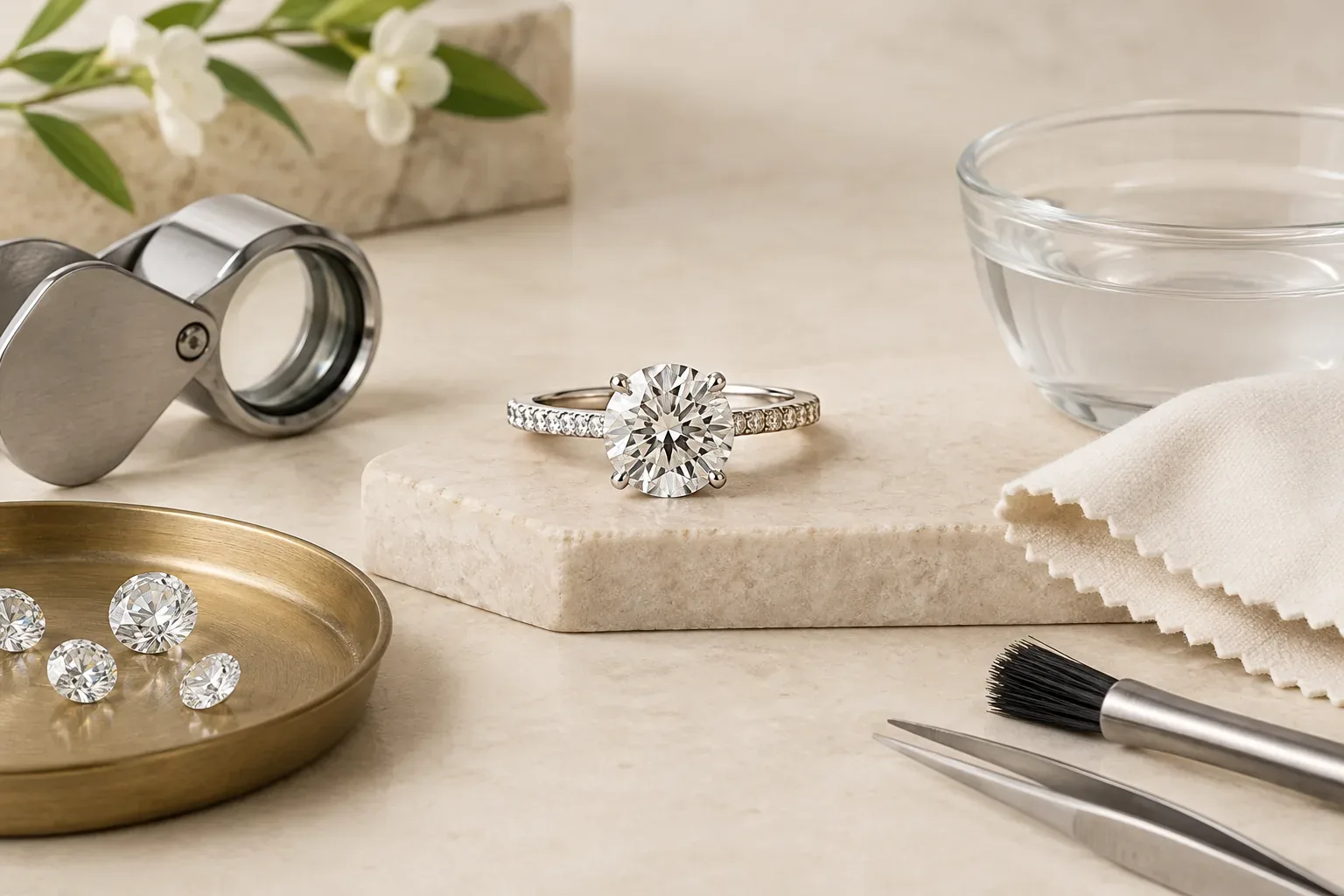
For routine cleaning, use warm water with a mild, phosphate-free detergent and a soft-bristled brush to remove oils and dirt from the crown, girdle and pavilion. Rinse thoroughly and dry on a soft cloth. Ultrasonic and steam cleaners can safely clean many diamonds, but avoid using them without first confirming that the stone and any adjacent gems or treatments will tolerate that process. If a diamond has been fracture-filled, coated, or otherwise treated, ultrasonic or steam cleaning can damage the treatment and the appearance of the stone; this is a point specifically flagged by gemological guidance as creating special-care needs. For pieces with delicate settings, side stones, or mixed materials (for example, opal side stones or low-hardness gems in the same ring), avoid ultrasonic and steam cleaning and take the jewelry to a professional for inspection and cleaning.
Repair precautions and when to consult a professional
Never attempt to re-seat a diamond or repair a broken prong at home. A qualified jeweler will inspect for signs of thin girdles, nicks, or tension-prong stress that could influence the repair technique. If you suspect a cut feature (for example a cleft or thin facet junction) is at risk, ask the jeweler to document the condition before work begins, and request photography and a written estimate of the proposed work and any warranty on the repair. For questions about treatment disclosure, origin, or cut grade accuracy, only a certified gemological laboratory can provide an authoritative report; the FTC advises consumers to obtain written disclosure from sellers about treatments, origin and whether the stone is lab-created or natural.
What shoppers can verify and what requires expert testing
As a shopper you can verify seller claims in several ways without a lab: ask for the grading report or certificate, request written disclosures about treatments and origin, inspect the stone in good light for obvious inclusions or chips, and compare stones in the same category for relative brilliance. However, you cannot reliably determine treatments such as fracture-filling, high-pressure high-temperature (HPHT) color changes, or whether a stone is natural versus lab-grown using unaided inspection. For those determinations, the only reliable methods are testing by a qualified jeweler with appropriate instruments or submission to a reputable gemological laboratory. This distinction — what you can sensibly check yourself versus what requires laboratory testing — is central to the practical buyer guidance in this diamond cut grade care guide and is consistent with the consumer and laboratory emphases in the FTC and GIA sources.
Selection and respectful gifting guidance
When selecting or gifting a diamond, match cut grade priorities to how the piece will be worn and to the recipient’s tastes. For everyday wear such as engagement rings or studs, prioritize a reliable cut grade and secure setting over maximizing carat at the expense of structural integrity. For fashion pieces or occasional-wear items, you may accept more experimental cuts or shallower settings. Always request written disclosures about treatments and origin and retain documentation for future care or resale. Present the stone with its grading report if available — sharing the report shows respect for the recipient’s informed decision-making and helps future caretakers understand any special-care requirements. If gifting vintage or heirloom pieces, have a jeweler inspect the setting and stones before regular wear to confirm prongs and mountings remain secure.
Summary: practical trade-offs and a clear path
In short, consider cut grade as both an aesthetic and a pragmatic attribute: it affects how a diamond looks, how vulnerable certain edges or points may be, and how a piece should be cleaned and repaired. Follow gentle cleaning practices, avoid risky home repairs, insist on written seller disclosures as advised by the FTC, and consult a qualified jeweler or a gemological laboratory when verification or structural repair is needed. Market demand trends, such as those reported by Imaginaire Digital for engagement rings and studs, explain why buyers commonly ask these questions; GIA and FTC guidance explain the limits and responsibilities around treatment disclosure and safe care.
Frequently asked questions
Can I safely use an ultrasonic cleaner on any diamond?
Not always. While many untreated diamonds tolerate ultrasonic cleaning, stones with treatments such as fracture filling or surface coatings can be damaged by ultrasonic or steam cleaning. If the seller’s disclosure does not explicitly state that the diamond is untreated, have a jeweler inspect the stone before using aggressive cleaning methods.
How can I tell if a diamond’s cut grade is accurate?
Ask the seller for a current grading report from a reputable laboratory. For definitive verification of cut grade, treatments, or origin (natural versus lab-grown), submit the stone to a recognized gemological laboratory or have a qualified jeweler inspect it with proper instruments.
Do higher cut grades make diamonds more durable?
Higher cut grades improve optical performance but do not automatically make a diamond structurally stronger. Some well-cut stones can have thin girdles or sharp points that require careful setting and handling. Assess structural vulnerability independently from light performance.
What routine cleaning is safest for most diamonds?
Use warm water with a mild detergent and a soft brush, rinse thoroughly, and dry with a soft cloth. Avoid harsh chemicals and confirm treatment status before using steam or ultrasonic cleaners.
When should I seek professional repair rather than DIY fixes?
Always consult a professional for prong replacement, stone re-setting, resizing, or when you spot a chip, loose stone, or structural concern. Professionals can document condition, choose appropriate repair methods, and advise on any treatment-related risks.
Sources and further reading
- Imaginaire Digital — Imaginaire Digital
- Gemological Institute of America — Gemological Institute of America
- Federal Trade Commission — Federal Trade Commission