Meaning at a glance
Before buying a tension-setting engagement ring, ask about the exact setting type and metal, the gemstone identity and treatments, written disclosures and grading reports, warranty and repair policy, resizing options, inspection rights, and insurance; understand trade-offs between the floating look and mechanical security, and know what you cannot verify without a qualified jeweler or gem lab.
Quick answer
A tension-setting engagement ring checklist should focus on five things: what exactly holds the stone and how it is engineered, the metal and its hardness, the gemstone’s identity and treatments with written disclosures, the seller’s inspection/repair and return terms, and whether you can obtain an independent jeweler or laboratory report; those items determine safety, long-term care, and whether the dramatic “floating” look is a good everyday choice for your life and budget.
Historical evidence and context
Tension settings are a modern jewelry engineering solution rather than a historically attested motif in premodern cultures. The approved sources for this article document current consumer demand for modern, fluid forms and craftsmanship rather than tracing an ancient lineage for the tension technique, so there is no authoritative evidence in those sources of a specific culture or preindustrial period using a true tension clamp in engagement rings.
Contemporary trade and trend reporting place tension and other modern, minimal settings within a broader 2026 shift toward fluid forms, gender-neutral styling and craftsmanship. Jewelers Mutual identifies current demand centered on modern stacking, fluid forms and craftsmanship, and Imaginaire Digital reports strong ongoing search demand for engagement rings among many styles, which helps explain why tension settings are a visible modern choice for shoppers seeking a contemporary look.
Documented historical meanings versus modern personal interpretation
There is no documented historic symbolic meaning for a tension setting in the approved reference material; any symbolic meaning attached to a tension-mounted ring is a contemporary, personal or marketplace interpretation. Modern shoppers often read the ‘floating’ look as symbolism for openness, modernity, or minimalist commitment, but those meanings are personal, not historical fact.
When you consider symbolism, clearly separate what a seller or recipient personally intends from what is historically documented. Use the ring’s visual language—clean lines, exposed pavilion, and a minimalist aesthetic—to support a contemporary personal meaning, but do not present those interpretations as universal or historically established.
How the tension aesthetic and gemstones appear in jewelry
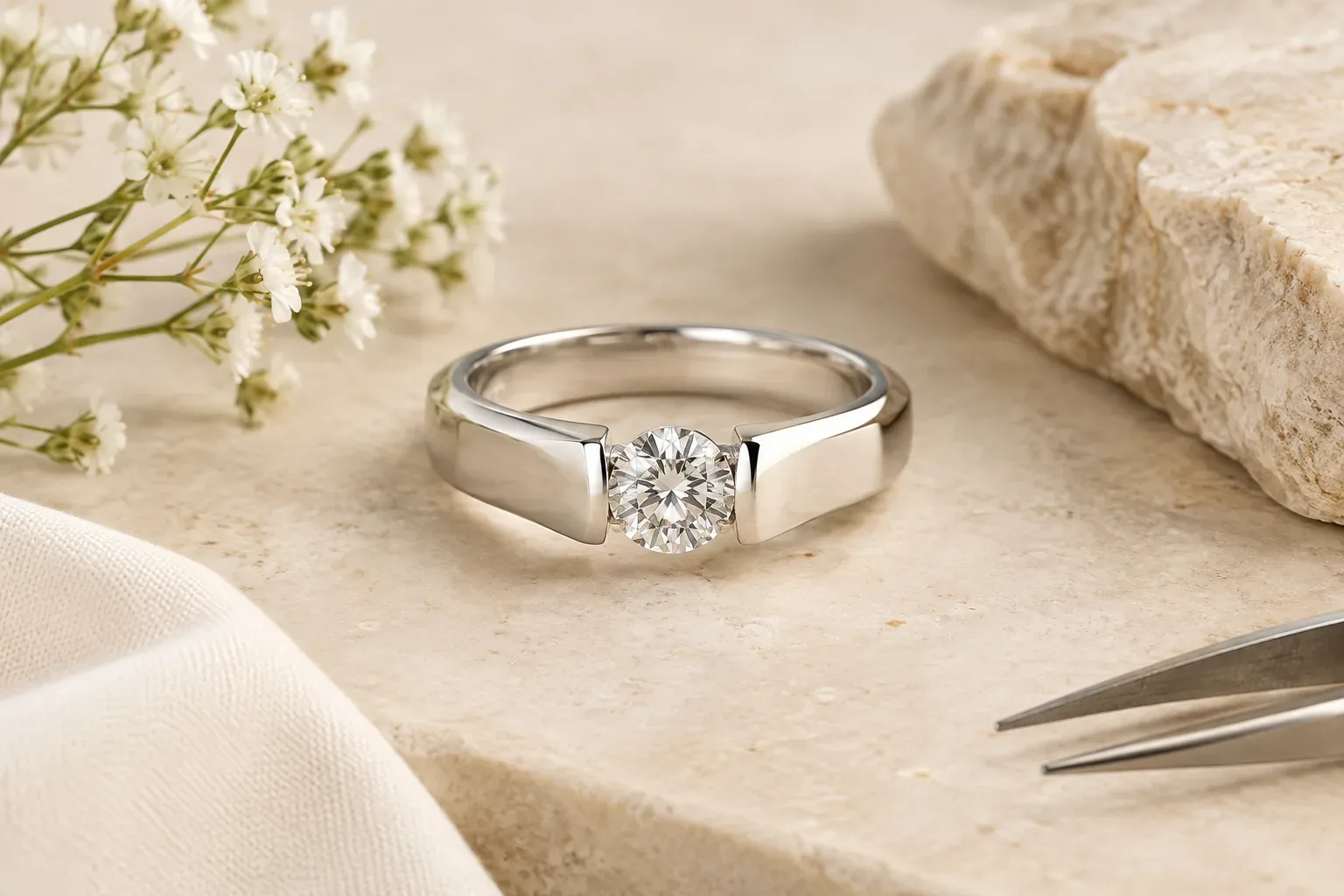
Tension-setting engagement rings emphasize the gemstone visually by minimizing visible metal and making the stone appear suspended between two ends of the shank. The effect favors a very open, modern silhouette and maximizes the stone’s face-up visibility.
Gemstones in tension settings are most commonly hard stones because everyday wear exposes the exposed girdle and pavilion to potential knocks. Shoppers therefore typically see diamonds and hard corundum varieties used in these settings, and sellers should disclose any treatments or enhancements that affect durability and care.
Practical selection and gifting guidance: the checklist of questions to ask
Ask the seller to describe exactly how the stone is retained. Use plain language: is this a true tension setting where compressive force of the metal holds the stone, or a visual tension look with hidden prongs? Understanding the mechanism lets you assess mechanical security and repairability.
Ask for the metal specification and the metal’s hardness or alloy. Platinum and certain hardened alloys are commonly recommended where the setting relies on precise pressure because softer gold alloys may deform over time. Ask what alloy and karat are used and whether the metal has been heat-treated or hardened.
Request written disclosure of the gemstone’s identity and any treatments. The Federal Trade Commission requires clear distinctions among natural, lab-created, treated and imitation materials and written seller disclosures, so get those guarantees in writing and ask for a description of any known treatments as advised by the FTC.
For diamonds or high-value stones, ask for an independent grading report or certificate and confirm whether the seller’s report aligns with major laboratories. If a grading report is not available, ask whether an independent inspection by a qualified gemologist or lapidary is possible before purchase.
Ask about inspect-and-return rights, the warranty or guarantee, and the repair policy if the stone becomes loose or the setting needs re-tightening. Because tension settings depend on precise fit and metal condition, you should have documented procedures for inspection intervals and a clear repair or replacement policy.
Find out resizing and alteration options. Some tension settings are difficult or impossible to resize without altering the clamping geometry; get a clear statement of whether the ring can be resized later and what costs or risks are involved.
Ask how the ring will be serviced long term and who performs maintenance. Jewelers Mutual emphasizes craftsmanship and repairability as consumer priorities; confirm whether the maker offers ongoing preventive checks, whether local independent jewelers are comfortable servicing the design, and whether any service network is included.
Confirm return, appraisal and insurance steps. Before purchase, ask whether the seller accepts returns after independent appraisal, whether they will provide an itemized appraisal for insurance, and whether they recommend or offer insurance enrollment.
Practical trade-offs to weigh
The tension look maximizes visibility and modern style but trades off some of the mechanical redundancy of traditional prong settings. That trade-off can mean a greater need for preventive checks and more careful day-to-day handling, particularly for recipients with active hands-on lifestyles.
Metal choice is a trade-off between cost and long-term stability. Harder metals or hardened alloys provide more reliable clamping force over time but can increase price. Softer alloys may be easier to rework but risk deformation that compromises the hold.
Gemstone choice matters for durability. GIA notes that treatments, detectability and durability create distinct consumer questions for gemstones; if you select a treated or softer stone, ask about long-term wear implications and special care. Diamonds and corundum (sapphires and rubies) are common picks for tension settings due to their relative hardness.
What you can and cannot verify without a qualified jeweler or gemological laboratory
You can verify seller-provided documentation and visible features yourself: confirm the metal stamp or hallmark, read and keep written disclosures about gemstone origin and treatments, inspect the mounting visually for obvious gaps, and confirm the seller’s stated resizing and repair policies.
You cannot, without a qualified jeweler or a gemological laboratory, reliably measure internal stresses in the metal, confirm the precise compressive force that secures the stone, detect some treatments or simulants, or guarantee the long-term fatigue resistance of a specific tension mount. GIA explains that treatments and detectability can require laboratory equipment, and the FTC requires written disclosure precisely because these issues are not always visible to consumers.
For high-value purchases, plan an independent inspection by a qualified jeweler and obtain a laboratory report when appropriate; if you rely solely on seller claims, you assume material limits on verification that can affect future repairability and insurance.
Care and maintenance guidance
Treat a tension ring as a precision mechanical item. Avoid hard impacts and situations where the ring may be squeezed or bent. Schedule professional inspections at least annually and any time the ring receives a hard knock or shows signs of looseness.
Follow gemstone-specific care. If the stone is treated or a softer material, follow the care guidance and cleaning restrictions in the seller’s documentation; GIA’s guidance on treatments explains that treated stones can require different handling and that trade-offs exist between appearance and durability.
Insure and document the ring. Obtain a written appraisal and keep photographs and receipts in case of loss or repair. Jewelers Mutual’s consumer guidance about craftsmanship and repairability supports the practice of insuring higher-risk modern settings and understanding the repair network before purchase.
Purchase checklist — short form to bring when shopping or contacting sellers
Confirm whether the setting is true tension or a tension-style mount and ask for an exact description of how the stone is secured and by what metal alloy.
Get written disclosure of gemstone origin (natural, lab-grown, treated, imitation) and any lab reports or grading certificates; do not accept verbal claims alone.
Ask about metal type and hardness, resizing possibilities, documented repair policy, inspection schedule, and whether the maker offers ongoing maintenance.
Request the return policy, independent inspection rights, an itemized appraisal for insurance, and the seller’s recommended cleaning and care procedures.
Ask for explicit answers about what happens if the stone is lost: who pays for replacement or repair, and whether there are time limits or exclusions in the warranty.
Closing guidance
A tension-setting engagement ring is an attractive, contemporary choice when you value a modern, minimalist silhouette, but it brings distinct considerations about metal selection, routine inspection and the limits of what you can verify without professional testing. Use the checklist above to get written facts up front, arrange an independent inspection for higher-value stones, and plan for periodic maintenance and insurance.
If symbolism matters to you as a giver or recipient, frame the ring’s modern look as a personal statement rather than a historically documented symbol. For practical durability and peace of mind, prioritize clear written disclosures, appropriate metal hardness, documented repair pathways and an independent appraisal when necessary.
Frequently asked questions
How secure are tension settings compared with prong settings?
Tension settings create a secure hold when engineered and maintained correctly, but they trade some redundancy for a dramatic visual effect. You should obtain written information about the clamping mechanism, a repair and inspection policy, and arrange periodic professional checks; for high-value stones, ask for an independent inspection since some mechanical issues are not visible to consumers.
Can a tension setting be resized?
Many tension settings are difficult to resize without changing the clamping geometry and risking the hold on the stone. Ask the seller specifically whether resizing is possible, what limits apply, and whether resizing voids any warranty.
Should I get a lab report for a diamond in a tension mount?
Yes, for diamonds and higher-value stones you should request an independent grading report when available and retain written disclosure of any treatments or enhancements. The FTC requires clear disclosure about natural, lab-created or treated materials, and laboratory reports help with insurance and independent verification.
What special care does a tension ring need?
Treat a tension ring as a precision mechanical object: avoid hard impacts and exposure to situations that could bend the shank. Schedule professional inspections at recommended intervals and follow any gemstone-specific care guidance provided by the seller, particularly for treated or softer stones.
What can I verify myself and what requires a professional?
You can verify hallmarks, written disclosures, visible gaps, return policies and warranty terms yourself. You need a qualified jeweler or gemological laboratory to confirm internal metal condition, precise clamping force, detect many treatments or simulants, and issue a formal grading report.
Sources and further reading
- Imaginaire Digital — Imaginaire Digital
- Jewelers Mutual — Jewelers Mutual
- Gemological Institute of America — Gemological Institute of America
- Federal Trade Commission — Federal Trade Commission