Meaning at a glance
A hidden halo setting places a ring of smaller stones beneath or around the gallery of a center stone to increase perceived size, add sparkle, or introduce subtle color; this guide explains what a hidden halo is, why shoppers choose it, practical selection criteria, care and verification limits, and the trade-offs buyers should expect.
Short answer
A hidden halo setting engagement ring buying guide should define the hidden halo, explain decision criteria (center-stone type and shape, finger size, metal, lifestyle and budget), weigh practical trade-offs (visual impact, maintenance, repair costs), give safe care advice, and clearly state what a shopper can verify only with a qualified jeweler or a gemological laboratory.
What is a hidden halo setting?
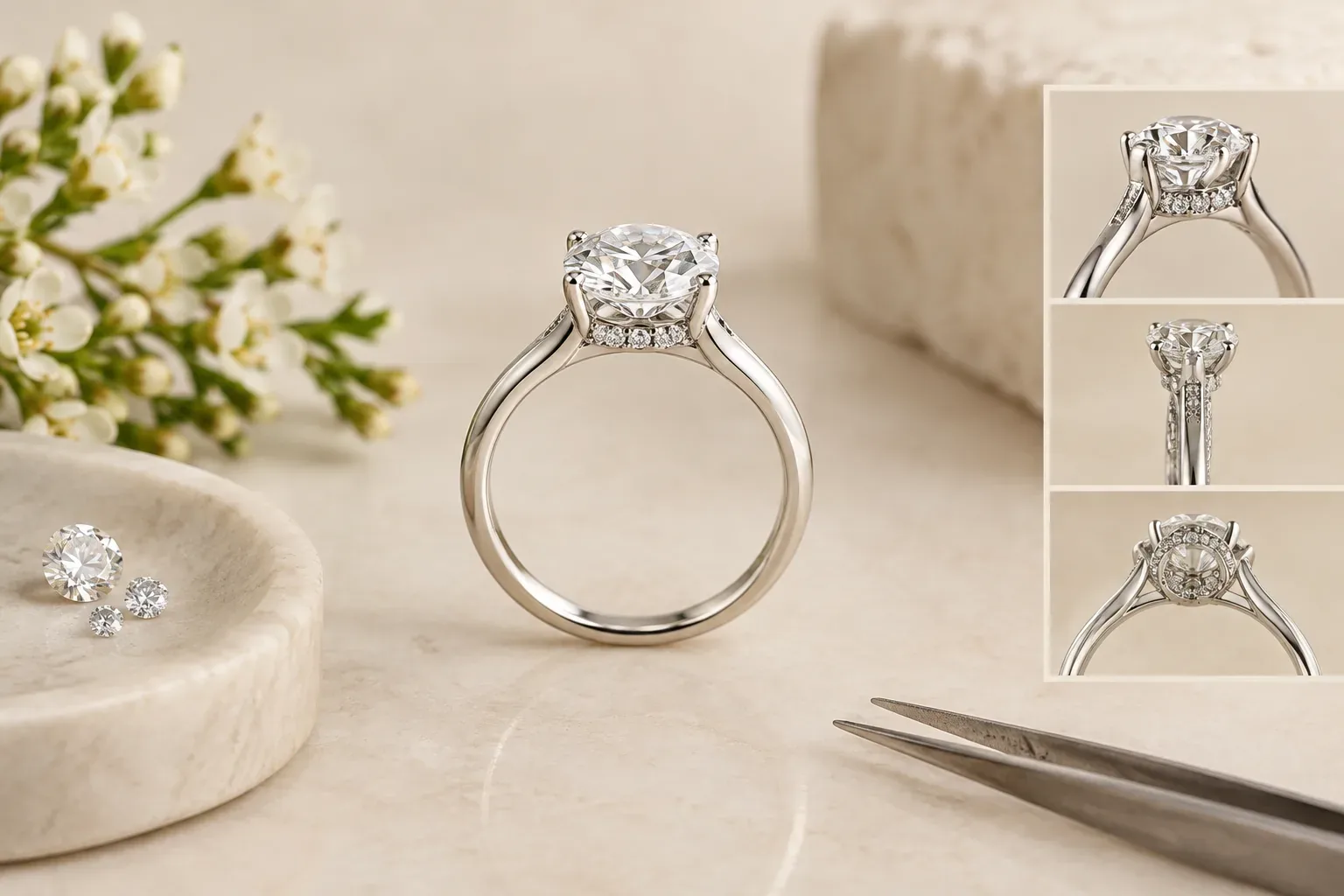
A hidden halo is a ring of smaller stones set just below or around the gallery of a center stone so that the accent stones are not immediately visible from the face of the ring. From the top view the center stone reads as the dominant element, while the halo contributes to brightness, perceived size and sometimes a contrasting rim of color when a colored accent is used.
Historical evidence and origins
Among the sources reviewed for this guide there is no specific, named historical record that traces a continuous cultural tradition called a 'hidden halo' across past centuries. The contemporary use and popularity of halo-style motifs—including discreet or partially concealed accent rings—appears as part of broader modern trends in engagement-ring design rather than as a clearly documented practice tied to a single historical period.
Contemporary market context
Recent industry reporting indicates that engagement-ring demand in the mid-2020s favors versatility, craftsmanship and design details that balance modern and classic forms. Imaginaire Digital's 2026 UK search analysis shows strong consumer demand for engagement rings among other categories, while Jewelers Mutual's 2026 trend overview highlights appetite for fluid forms, craftsmanship, and versatility. The hidden halo fits these trends because it is a detail that changes the look of a ring without radically altering traditional silhouettes.
Documented historical meanings versus modern personal interpretations
Because the reviewed sources do not provide a discrete historical symbolism for hidden halos, any meaning attached to them today is best treated as modern and personal rather than an inherited cultural credential. Many buyers interpret hidden halos as symbols of inner depth, private devotion, or subtlety, but these are contemporary personal interpretations and not documented historical meanings tied to a specific culture or era in the provided sources.
How the motif appears in jewelry
In practice the hidden halo appears as an architectural detail in the ring’s gallery or lower bezel. Jewelers set melee diamonds, colored sapphires, or other small gems on a ring rail that sits beneath the crown of the center stone. From above this detail may be invisible or only slightly visible at an angle, while from the side it creates a line of extra sparkle or a thin ribbon of color. Designers use hidden halos with a variety of center stones—round, oval, cushion and emerald cuts—adjusting the halo’s contour to echo or contrast the main gem’s shape.
Decision criteria: what to consider before buying
Start by deciding the goal: do you want the hidden halo to enlarge apparent diameter visually, to add a colored accent, or to protect the profile of the center stone? Choose the center-stone shape and size first because the halo must be proportionate. Consider finger size and personal style; smaller fingers may show a hidden halo differently than larger hands. Think about metal choice: white metals maximize brightness, while yellow or rose gold can warm the look and make a colored hidden halo stand out. Ask about the setting’s gallery height if you or your partner wears gloves or works with hands frequently, because deeper galleries can catch on fabrics or tools.
Practical trade-offs: pros and cons
Pros include increased perceived size and brightness with relatively little added face-size weight, the option to introduce a discreet color accent, and the ability to customize the ring’s personality without changing the center stone. Cons include slightly more places for dirt to collect beneath the center stone, marginally higher maintenance and cleaning frequency, potentially greater repair complexity if the hidden halo needs resetting, and sometimes higher cost because more stones and more precise setting work are required. Hidden halos can also complicate resizing if the design integrates the halo structure into the shank.
Care, maintenance and what you can verify
Follow practical cleaning guidance and ask the seller for written instructions. The Gemological Institute of America emphasizes that treatments and durability affect care needs; treated or fragile gems may require gentler cleaning. Because a hidden halo sits in the gallery area it can trap oil and dust, so professional cleaning and periodic inspection of prongs and settings are sensible. The Federal Trade Commission advises consumers to obtain written disclosures for whether stones are natural, lab-created, treated or imitations. You can and should verify written disclosure, obtain any available gem or grading reports, inspect photos or live views for consistency, and ask the jeweler to demonstrate the ring at different angles so you see the hidden halo in real-world positions. However, you cannot independently verify some things without laboratory testing: origin claims, certain treatments, and durable grading details that require gemological testing should be confirmed with a qualified jeweler or an accredited gemological laboratory.
Selection and respectful gifting guidance
If you are buying for someone else, prioritize their preferences for visible versus subtle details and their lifestyle. For recipients who value discreet symbolism and a classic face, a hidden halo can be a thoughtful choice. For someone who uses their hands a lot or prefers minimal profiles, choose a shallow gallery and sturdy prongs or consider a low-set design with fewer exposed accents. Always request clear written disclosure about stone type and treatments and, where possible, a grading report for significant center stones. When gifting, include care instructions and the seller’s maintenance policy because the hidden halo detail benefits from occasional professional attention. If you are uncertain about taste, take a photo of a ring they already love—or ask about metal color and daily jewelry habits—and use that as a design reference.
When to consult a professional
Consult a qualified jeweler for resizing, for assessing the security of tiny accent stones, or when deciding whether a vintage setting can support modern alterations. Seek a gemological laboratory for any claim about treatments, origin or grading that you need formally verified before purchase. The Federal Trade Commission recommends written seller disclosures and the Gemological Institute of America explains that some treatments require specialist detection methods; both points underline that a trained professional or lab is the right route for verification beyond visual inspection.
Summary and final considerations
A hidden halo setting can offer elegant, subtle enhancement to an engagement ring by adding brightness, perceived size and the option of a concealed color accent. It aligns well with contemporary tastes for craftsmanship and versatile design, but it introduces small practical trade-offs in maintenance and complexity. Use the decision criteria and care guidance above, insist on written disclosures, and remember the limits of what you can confirm without a qualified jeweler or a gem lab. When chosen with attention to proportions and lifestyle, a hidden halo can be both a beautiful design choice and a meaningful personal detail.
Frequently asked questions
Does a hidden halo make the center stone look bigger?
Yes—because the ring of small stones beneath or around the gallery increases light return and creates a visual frame, a hidden halo can make the center stone appear larger to the eye without increasing its actual carat weight.
Will a hidden halo trap dirt or require special cleaning?
A hidden halo sits where oil and dust can collect more easily than on a flat bezel, so it benefits from regular cleaning and occasional professional inspections; consult the seller’s care guidance and consider professional cleaning if the ring is worn daily.
Can I verify whether the accent stones are natural or treated at home?
No—while you can ask for written disclosure and view photos or magnified images, confirming treatments, origin or certain enhancements requires gemological testing by a qualified jeweler or an accredited laboratory as the Federal Trade Commission and the Gemological Institute of America recommend.
Are hidden halos compatible with all center-stone shapes?
Designers commonly adapt hidden halos to many shapes—round, oval, cushion and emerald among them—but the halo must be proportioned to the center stone so that it enhances rather than overwhelms the overall silhouette.
Does a hidden halo affect resizing or future repairs?
Possibly—if the hidden halo is integral to the shank or gallery, resizing and some repairs may be more complex and should be handled by an experienced jeweler to avoid damaging small accent stones.
Should I ask for a grading report for a ring with a hidden halo?
For significant center stones it is sensible to request an independent grading report and written disclosures about treatments and stone origin; the FTC specifically recommends written seller disclosures for gemstone purchases.
Sources and further reading
- Imaginaire Digital — Imaginaire Digital
- Jewelers Mutual — Jewelers Mutual
- Gemological Institute of America — Gemological Institute of America
- Federal Trade Commission — Federal Trade Commission