Meaning at a glance
Halo setting engagement ring styling balances halo scale, center-stone shape, band width and setting height to control perceived finger coverage; choose lower-profile halos and narrow bands for minimal coverage and wider halos with complementary bands for maximum visual presence, and always confirm gemstone disclosures and lab reports rather than relying on visual inspection.
What we mean by 'halo' and 'finger coverage'
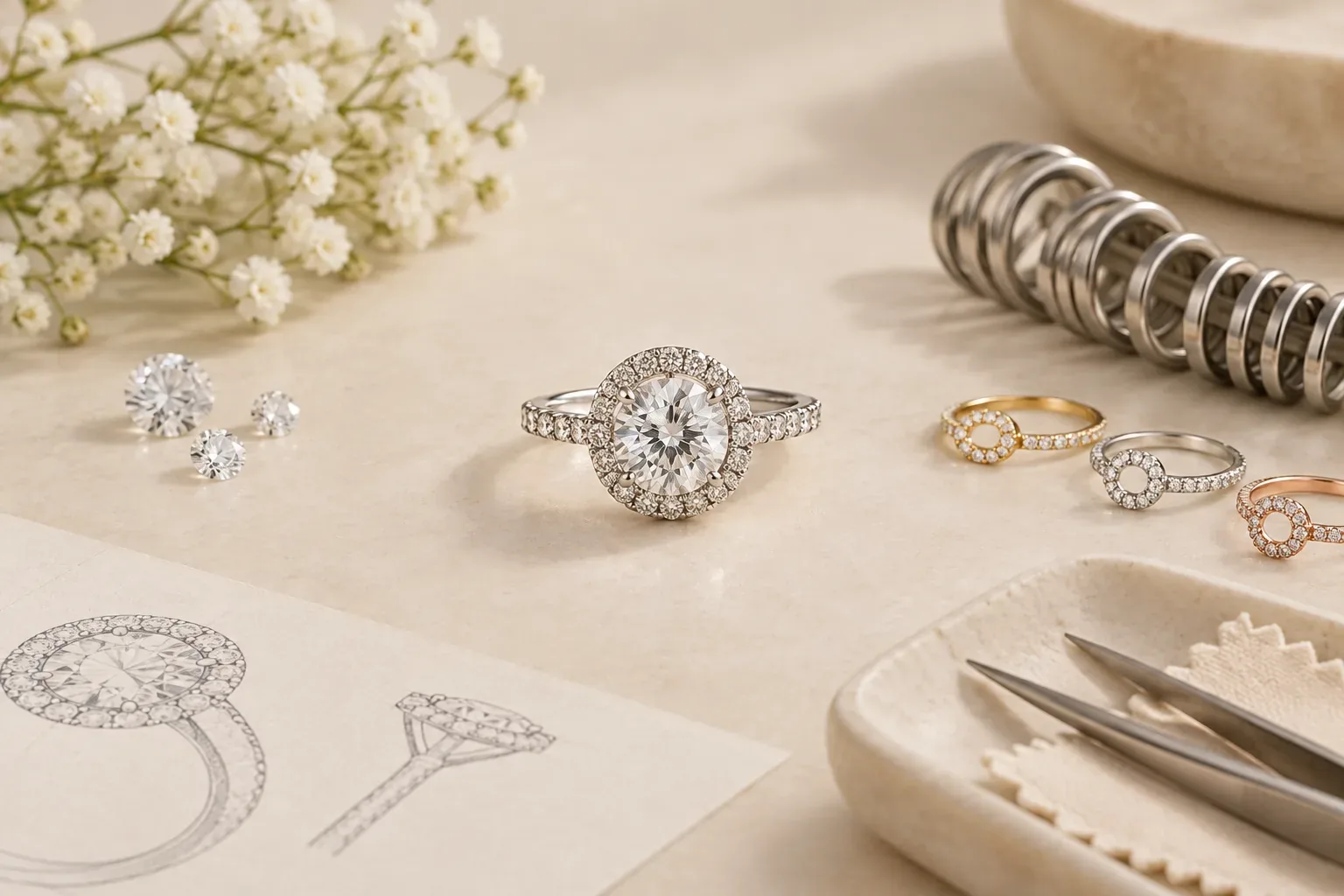
A halo setting puts smaller stones or a continuous metal rim around a centre gemstone. 'Finger coverage' is the perceived horizontal span and visual weight of a ring across the finger when worn, determined by halo diameter, centre stone shape, band width, and any flanking design elements. Proportion is the relationship among those elements and the scale of the wearer’s hand.
Historical evidence and what the record shows
Approved sources for this article do not provide a detailed archaeological or cultural chronology for halo settings as an enduring, identifiable motif in specific historical cultures. Contemporary industry research describes current consumer demand and styling trends rather than a definitive provenance for halo-style engagement rings. For example, UK search and market analysis document strong demand for engagement rings and specific shapes like the oval, reflecting shoppers’ contemporary preferences rather than a historical lineage (Imaginaire Digital).
When discussing history, be explicit about the difference between documented, sourced facts and later stylistic narratives. Trade and trend research published by professional organisations emphasises present‑day trends such as versatile styling, colored gemstones, and stacking, which inform how halo settings are being worn and combined today (Jewelers Mutual).
Documented meanings versus modern personal interpretations
There is limited, approved documentary evidence attributing a specific symbolic meaning to halo settings across cultures in the sources used here. Modern sentimental interpretations—such as halo rings symbolising protection, radiance, or added value—are personal or commercial readings and should be treated as contemporary meanings rather than verified historical facts.
Distinguish between documented facts you can verify and modern narrative. For verified consumer facts—such as disclosure obligations about treated or lab‑created stones—rely on regulatory guidance and gemological science rather than marketing language (Federal Trade Commission; Gemological Institute of America).
How the halo motif, gemstones and traditions appear in jewelry today
In modern jewellery practice, halos appear in several construction styles: prong-set pavé halos made of tiny accent stones, bezel or metal halos that form a continuous rim, and channel halos set within a metal track. Each technique produces a different profile and maintenance requirement.
Center-stone choices influence halo styling. Round and oval centres often pair with single or double halos to amplify perceived size. Colored gemstones appear in halo designs too, and recent trend reporting highlights growing interest in colored stones alongside diamonds and a move towards gender-neutral and versatile styling (Jewelers Mutual). Search‑demand analyses show sustained interest in engagement rings and specific shapes, which affects how designers proportion halos around popular centre cuts (Imaginaire Digital).
Styling rules and decision criteria for finger coverage and proportion
Start visually: compare the halo’s total diameter to the wearer’s finger width. If the halo’s visual span is notably wider than the finger, the ring will read as a statement piece; if it sits roughly within the finger’s width, the ring will appear more delicate.
Match halo scale to finger length. Shorter fingers often read longer when the centre stone is elongated (oval, marquise) and paired with a halo that does not add excessive lateral bulk. Conversely, long fingers can carry larger halos without appearing top‑heavy.
Consider band width and profile. A narrow band keeps finger coverage minimal and focuses attention on the halo and centre stone. Wider bands or shoulders that extend from the halo increase perceived coverage. For stacking or everyday wear, choose a halo profile that pairs with your intended companion bands and accommodates comfortable stacking.
Choose the halo type by lifestyle trade-offs. Micro‑pavé halos pack many small stones for sparkle but require more maintenance and careful cleaning. Bezel or continuous metal halos provide a lower profile and greater snag resistance, at the cost of reducing the open sparkle around the centre. Higher, open prong halos create more presence and light but can be more prone to catching on fabrics.
Think about metal contrast and optical proportion. A halo in a lighter-coloured metal or with white accent stones will visually enlarge the centre stone; darker metals or coloured accents can frame and contain it. The visual effect is an optical interaction—choose which effect matches the wearer's style goals.
Practical trade-offs and what each choice costs you
More accent stones increase brilliance but also raise maintenance needs and often repair costs. Micro‑pavé settings have many small claws that can loosen, whereas bezel or channel halos are sturdier but alter the light performance around the centre.
A larger halo increases perceived centre-stone size, which can be cost-efficient if budget prioritises look over carat weight. However, larger halos add metal and stone costs and may increase snag risk and cleaning frequency.
Lower-profile halos reduce wear issues and are better for active lifestyles, while taller halo constructions maximise light return and drama but can interfere with daily tasks or sitting flush against other rings.
Care, durability and verification limits
Gemological treatment, durability and care vary by material. The Gemological Institute of America explains that treatments and material properties create distinct care needs and that disclosure is important to a consumer’s decision. Ask for written treatment disclosures and for specific cleaning and care recommendations from the seller (GIA).
Regulatory guidance from the Federal Trade Commission requires sellers to clearly distinguish among natural, lab‑created, treated, cultured and imitation materials. Do not rely on visual inspection alone to confirm origin or treatment; require written disclosures and lab reports for high‑value stones (FTC).
Practical verification limits: you cannot conclusively verify a stone’s origin, many treatments, or exact grading without a qualified jeweller’s examination or a gemological laboratory report. A trained jeweller can spot some indicators, but only a recognised lab can issue a definitive grading or origin report for diamonds or certain gemstones.
Selection and gifting guidance — practical and respectful
Ask about lifestyle and daily habits before selecting a halo style. If the recipient is active or uses their hands a lot, prioritise low-profile bezels or tight channel work that resist snagging. If they love sparkle and fine detail, micro‑pavé or multi‑row halos may be appropriate but accept the trade-off of higher maintenance.
Request written information: ask the seller to provide any gemological reports, treatment disclosures and return or resizing policies in writing before purchase. Per FTC guidance, these disclosures are material to a purchase decision (FTC).
Try proportion in person whenever possible. Digital images are useful, but seeing a ring on the intended hand or trying similar halo diameters in-store is the most reliable way to judge finger coverage. Where in-person viewing isn’t possible, request a mock-up or loaner, or order from a jeweller with flexible return and resizing policies.
Consider pairing: if you expect the recipient will wear a wedding band with the engagement ring, bring that band to any fitting or ensure the engagement ring’s shoulder profile allows a flush or complementary fit. Jewelers Mutual highlights current preferences for stackable and versatile combinations; choose a halo that accommodates those trends (Jewelers Mutual).
Insure and register. Given the finer parts in halo settings and the higher number of small stones, ensure the purchase has repair and insurance options. Ask about warranty and routine maintenance services offered by the seller.
Final checks before purchase
Confirm in writing any claims about stone origin, treatments, and grading. Be sceptical of visual claims alone and insist on lab documentation for high‑value purchases. Keep receipts and any paperwork that describe the halo construction and care guidance.
If exact verification of a stone’s nature is essential to your decision, plan to obtain a gemological report from a recognised lab. Note that some determinations—such as certain treatments—require specific lab equipment and expertise to confirm reliably (GIA).
Conclusion
Styling a halo setting engagement ring is an exercise in proportion and trade-offs. Decide how much finger coverage you want, then select halo scale, centre shape and halo construction that deliver that effect while matching lifestyle needs. Rely on written seller disclosures and lab reports for verifiable facts about gemstones, and use in-person trials and careful comparison to judge how a halo will sit and read on the intended hand.
Frequently asked questions
How does a halo setting change perceived center stone size?
A halo adds visual diameter around the centre stone so the overall face of the ring reads larger. The exact increase depends on halo width, style and the colour contrast between the halo and centre stone; however, you cannot verify the optical effect precisely online—try the ring in person or request a mock-up.
Which halo style is best for active lifestyles?
Lower‑profile bezels or channel halos are typically better for active wear because they reduce snagging and protect accent stones. Micro‑pavé and high prong halos provide more sparkle but require more careful wear and maintenance.
Can I tell if the halo stones are natural or treated by looking?
No. You cannot reliably determine whether stones are natural, lab‑created or treated by sight alone. The Federal Trade Commission requires sellers to disclose these facts in writing, and for conclusive verification you should request a recognised laboratory report (FTC; GIA).
How should I choose halo proportion for short fingers?
For shorter fingers, prioritise elongated centre shapes (oval, marquise) and avoid very wide halos that sit beyond the finger’s width. A modest halo that increases perceived length without excessive lateral bulk generally reads as more balanced.
What basic care does a halo ring need?
Care depends on materials and treatments. Follow the seller’s cleaning recommendations and schedule periodic inspections for loose accent stones. Be aware that treated gems may require special care; consult conservation guidance or a qualified jeweller for treatment‑specific advice (GIA).
Sources and further reading
- Imaginaire Digital — Imaginaire Digital
- Jewelers Mutual — Jewelers Mutual
- Gemological Institute of America — Gemological Institute of America
- Federal Trade Commission — Federal Trade Commission