Meaning at a glance
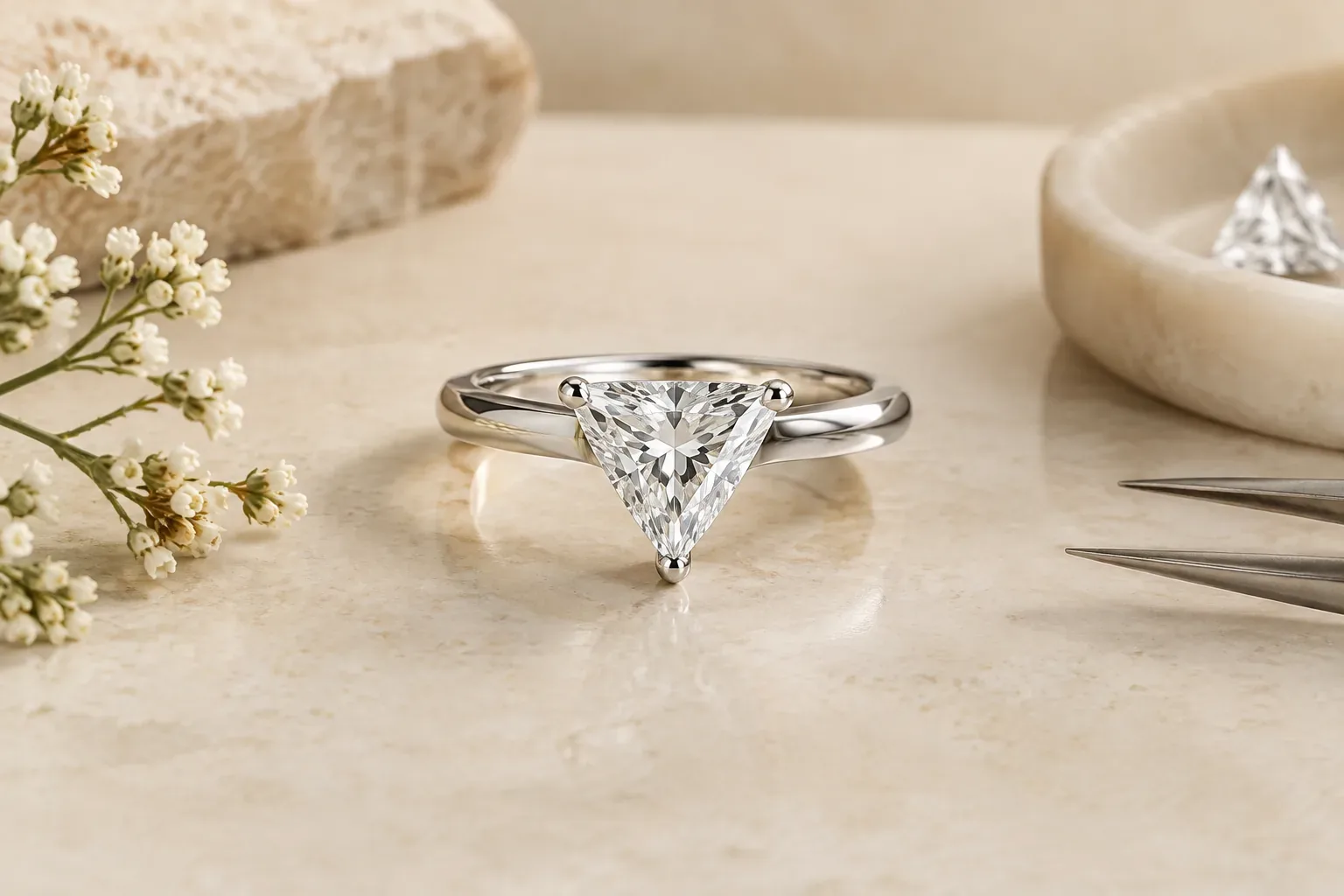
A trillion cut’s triangular profile creates three pointed corners that are the primary vulnerability; with a hard, untreated gemstone, protective setting (bezel, shield prongs or halo), regular inspections and appropriate insurance it can be suitable for daily wear, but only a qualified jeweler or gemological laboratory can confirm material, treatments and the real repairability limits.
What the historical record and contemporary sources show
There is little or no historical evidence in the approved sources that the trillion cut has an ancient cultural lineage or fixed symbolic meaning. The trillion is a modern faceting form used in contemporary jewelry design rather than a motif documented in older cultural jewelry traditions, and contemporary trade reporting treats it as part of modern stylistic demand rather than a historical symbol. Market and trend reports focused on 2026 note a strong consumer preference for modern, geometric and versatile forms, which is the context in which triangle and trillion shapes have become popular in rings, according to Jewelers Mutual and Imaginaire Digital.
For practical consumer concerns about a stone’s durability, manufacturership and care, the Gemological Institute of America (GIA) and the U.S. Federal Trade Commission (FTC) supply the relevant guidance. GIA explains that treatments, detectability and special care affect a gem’s durability and how it should be handled, while the FTC advises consumers to insist on clear written disclosure about whether a gem is natural, lab-grown, treated, or an imitation. Those modern regulatory and technical sources, rather than premodern cultural records, are the practical evidentiary basis for how shoppers should assess durability and repair risk today.
Documented meanings versus modern personal interpretations
The approved sources provide no documented historical or cultural meanings for the trillion cut in ancient or pre-modern contexts. Any symbolic meanings you hear associated with triangular shapes in jewelry—trinity, balance, direction, or a modern minimalist aesthetic—are contemporary or personal interpretations rather than archaeological or historical facts documented by the sources we rely on.
If symbolism matters to you as a giver or wearer, treat those meanings as intentional, modern choices. Explain the meaning you intend at the time of gifting, and do not assume the triangle carries the same meaning across cultures or eras. For practical matters of durability and consumer protection, follow the technical and regulatory guidance from GIA and the FTC rather than symbolic assumptions.
How the trillion cut appears in jewelry and why that affects durability
Jewelry designers use the trillion cut in a few common ways: as a center stone for a distinctive triangular solitaire, as side or accent stones flanking a central gem, and as a pavé or cluster element where many small triangular facets create geometric texture. The cut’s three corners focus stress and wear on narrow points that interact directly with the setting and with anything the wearer comes into contact with.
Settings and placement determine how exposed those points are. Three-prong settings can leave corners exposed; six or more prongs, bezel-style metal, partial bezels or halo surround settings reduce exposure and therefore reduce the chance of snagging and chipping. Low-profile settings bring the points closer to the band and reduce leverage on impact, but they can make cleaning and inspection more difficult. Each configuration trades off protection, light performance and ease of maintenance.
Decision criteria: how to evaluate a trillion cut engagement ring’s durability
Start with the stone identification and treatment status. Ask the seller for written disclosure about whether the gem is natural, lab-created, or treated, and request a gemological report where appropriate. The FTC requires clear distinctions and written disclosures from sellers, and GIA warns that treatments and the need for special care create distinct consumer questions; both agencies are the proper references when you need authoritative verification.
Consider the gemstone’s physical properties and any history of treatments. Some gem materials are harder and tougher than others and better suited for daily wear. Treatments can affect durability and often require special maintenance. Only a qualified jeweler or laboratory can identify treatments reliably; a seller’s documentation and a recognized laboratory report are essential if durability is a priority.
Assess the setting. Protective settings such as full or partial bezels, shields around the corners, halo surrounds, and lower-profile mounts reduce snag and chip risk. If the points are held by minimal prongs, expect higher repair frequency. Ask to see the setting from multiple angles, and have a jeweler point out how each corner is secured.
Match the ring design to lifestyle. For an active wearer or someone who uses their hands a lot, favor protective settings, harder gem materials and insurable purchase channels. If the ring is intended primarily as dress wear, a more exposed trillion can be acceptable, but still expect occasional repair and cleaning.
Practical trade-offs and real-world care guidance
A trillion cut offers distinct visual character: strong geometry and modern lines. That appearance comes with trade-offs. Highly exposed points maximize brilliance and sparkle but increase the chance of snagging on fabric and chipping if struck. Protective settings reduce both risk and visible light return in different measures, so decide which trade-off you prefer before purchase.
Routine care reduces risk. Have a jeweler inspect prongs and settings at least once a year and immediately after any notable impact. Keep written documentation of the stone identification, any treatments, and the seller’s disclosures, because those documents determine how the gem should be cleaned and whether specific solvents, ultrasonic cleaners or heat processes are contraindicated. GIA’s guidance on treatments and special care emphasizes that detectability and care requirements are central to a gem’s long-term durability.
Plan for repair and insurance. Exposed points may require prong re‑tipping, bezel work, or, in worst cases, stone replacement after a chip. The probability of repair is an expected maintenance cost for some designs. Consider ring insurance or a homeowners/jewelry policy for loss or damage and discuss repair coverage with the insurer and your jeweler. Professional bodies and trade insurers recommend routine inspection and clear documentation for claims and repair authority; Jewelers Mutual’s market perspective underscores the importance of craftsmanship, maintenance and insurance choices when consumers prioritize daily durability.
What you can—and cannot—verify before buying
You can and should verify the stone type, whether it is natural or lab-grown, and whether it has been treated, by requesting written disclosure and a gemological report from a reputable laboratory. The FTC requires clear disclosure and GIA explains why treatment status matters to durability and care. Reputable sellers will provide documentation up front.
You cannot reliably verify a gem’s internal structure, undisclosed treatments, or the full extent of previous impact damage with the unaided eye. Only a qualified jeweler using the right tools, or a recognized gemological laboratory, can detect many treatments and internal weaknesses or confirm a stone’s long-term toughness. If a seller claims a stone is especially durable despite a visible design that leaves the corners exposed, ask for laboratory verification and a written assessment from the jeweler.
Selection and gifting guidance
If durability is the priority for an engagement ring intended for daily wear, choose a hard, stable gemstone and a protective setting. Ask the seller for a lab report and written disclosure as required by the FTC, and if necessary obtain an independent opinion from a qualified jeweler. If you want the triangular look but expect rougher use, consider a design that tucks the points into a bezel, halo or guard.
When gifting, present the documentation and explain any special care needs. Offer practical guidance about daily wear—for example, removing the ring for heavy manual work—and arrange for an initial inspection and baseline photographic record by the jeweler. Purchase or discuss insurance and maintenance plans at the time of sale so the recipient is set up for routine care. These practical steps protect both the gift and the relationship that the ring represents.
Finally, balance aesthetics and lifestyle honestly. A visually bold trillion cut can be a beautiful, meaningful choice if you plan for protective design features and maintenance. If you or the recipient want a truly low-maintenance daily ring, select a less pointed shape or a design that prioritizes protection over maximal light performance.
Frequently asked questions
Is a trillion cut durable enough for everyday wear?
It can be, but durability depends on the gem material, whether it has been treated, and how well the setting protects the three pointed corners. Request written disclosures and a gemological report and choose a protective setting for daily wear.
Will the pointed corners of a trillion cut snag on clothes?
Pointed corners are more likely to catch on fabrics than rounded shapes. Settings that surround or shield the corners reduce snag risk; exposed three‑prong mounts are the most likely to snag.
Can chips or damage to a trillion cut be repaired?
Minor prong or metal repairs are common, and some chips can be polished or re‑cut, but significant damage may require stone replacement. A qualified jeweler can assess repairability; a gemological laboratory can confirm if treatments affect repair options.
What documents should I ask for when buying a trillion cut engagement ring?
Ask for written disclosure on whether the gem is natural or lab-created and whether it has been treated, and request a recognized laboratory report when appropriate. The FTC requires clear disclosure and GIA emphasizes the importance of treatment information for care.
How should I care for a trillion cut ring at home?
Follow the seller’s and laboratory’s recommendations. Remove the ring for heavy manual tasks, clean gently according to documented care instructions, and have a jeweler inspect the setting annually or after any impact.
Sources and further reading
- Imaginaire Digital — Imaginaire Digital
- Jewelers Mutual — Jewelers Mutual
- Gemological Institute of America — Gemological Institute of America
- Federal Trade Commission — Federal Trade Commission