Meaning at a glance
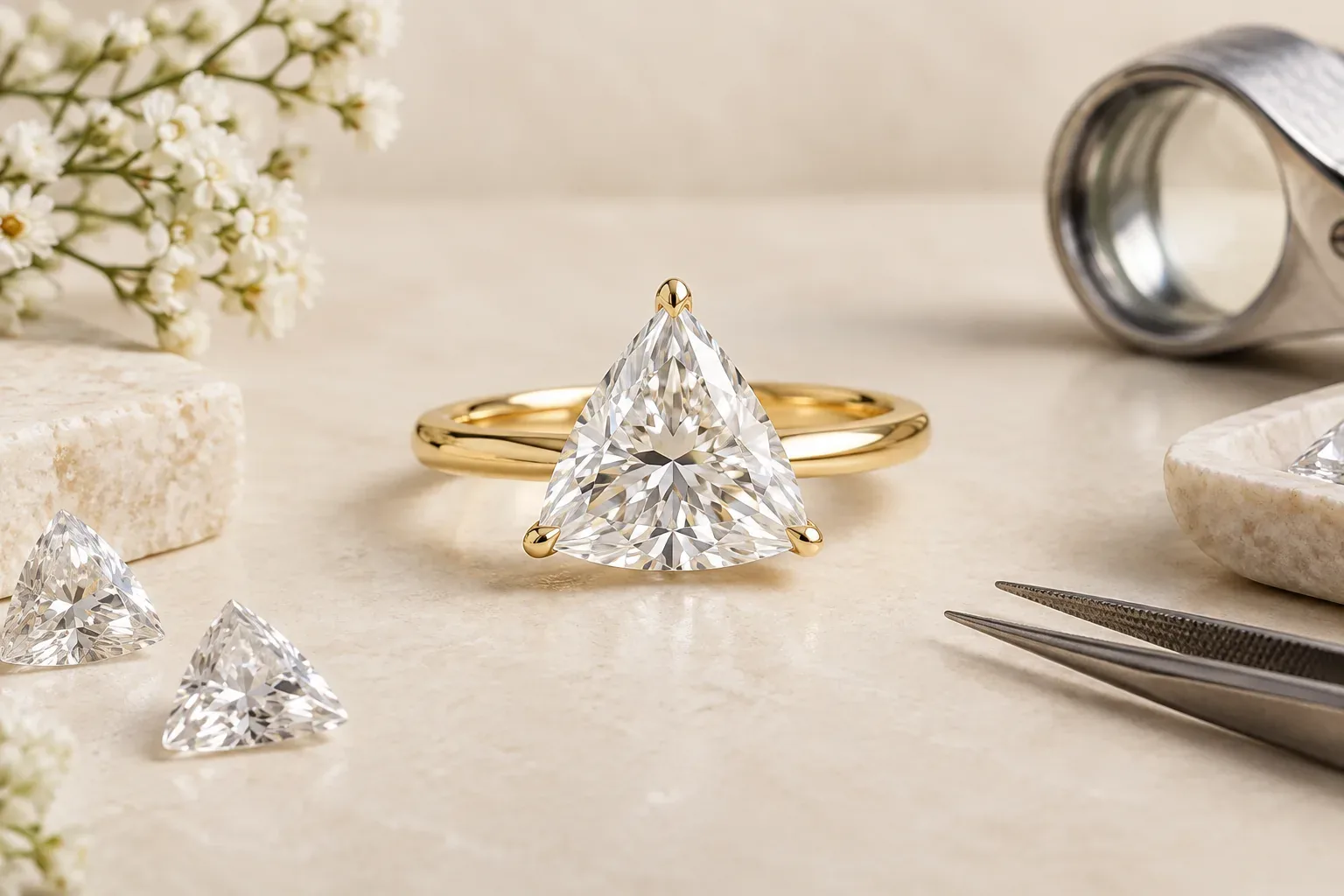
A trillion cut engagement ring is a modern triangular faceting style best suited to buyers who want a bold, geometric look, visible face-up spread, and versatile styling; choose it when you accept trade-offs around corner protection, setting complexity, and the need for clear treatment and origin disclosure verified by a qualified jeweler or gemological laboratory.
Quick answer
A trillion cut engagement ring is a triangular-faceted center or accent stone with a contemporary, geometric appearance; it suits someone who prefers a modern, angular aesthetic and who understands the practical trade-offs—most importantly the need for protective settings and for independent verification of origin or treatments by a qualified jeweler or laboratory.
What the trillion cut is and how it appears in jewelry
In practice the term "trillion" refers to triangular or triangular-brilliant faceting applied to diamonds and colored gemstones. Jewelers use trillion-cut stones as striking center stones, as side or accent stones flanking a larger center, and as creative cluster elements in halos and contemporary three-stone layouts. Designers commonly pair trillion stones with rounded brilliants or baguettes to balance the geometry of a ring.
Common setting choices for trillion cuts include solitaire or halo frames, three-stone settings where the trillion stones act as shoulders, and bezel or V-prong settings that help protect the angled corners. Because of the sharp points at each corner, many jewelers recommend secure prongs or partial bezels rather than exposed edge settings to reduce the risk of chipping.
Historical evidence and cultural context
The trillion cut does not carry a long, documented cultural or symbolic history in the way that some older ring motifs do. Institutional gemological references consulted while preparing this guide indicate that triangular faceting is a modern cutting practice rather than an antique cultural symbol, so you will not find a well-established, specific historical meaning tied to the trillion cut in classical jewelry literature (institutional gemology references such as the Gemological Institute of America were consulted for background on faceting and treatments).
Contemporary consumer demand for geometric and gender-neutral styling, and for modern cuts and colored gemstones, is reflected in recent trade and search data. Market analyses and industry trend reports show rising interest in fluid forms, modern stacking, colored gems, and craftsmanship—contexts that help explain why the trillion cut appears frequently in current engagement ring design (see Jewelers Mutual and Imaginaire Digital for 2026 trend and search observations).
Documented history versus modern personal interpretations
Documented history: there is no documented, long-standing ceremonial or cultural meaning specific to the trillion cut in authoritative gemological or consumer-protection sources consulted for this article. That absence means shoppers should not assume a single "traditional" symbolism attached to this cut.
Modern interpretations: people assign personal meanings to triangular cuts—balance, a modern take on the trinity motif, boldness, or geometric harmony. These are contemporary, individual attributions rather than historically documented associations. Keep distinct cultures and beliefs separate: while some wearers may assign spiritual or familial meanings to a triangular stone, those meanings are personal and not universal.
Pros and cons—practical trade-offs
Pros: The trillion cut is visually impactful and modern. It can show strong face-up spread for its weight, producing a bold look with relatively efficient carat distribution. It pairs well with contemporary settings and can serve as a distinctive center or as spirited accent stones. Current retail trends favoring modern shapes and colored gemstones make trillions an on-trend option for buyers seeking something outside classic round solitaires (see Jewelers Mutual and Imaginaire Digital).
Cons: The triangular shape creates pointed corners that are more vulnerable to chipping than rounded cuts, so the ring’s setting must protect those points. Not all jewelers stock well-cut trillions, so the buying pool can be smaller and customization more common. Triangles can be harder to match with traditional wedding bands without a custom shank or with careful selection of complementary band profiles.
How to decide if a trillion cut suits you
Style fit: Choose a trillion if you want a modern, geometric aesthetic or a distinctive alternative to round or oval centers. Consider the wearer’s daily activities and comfort with slightly more ornate or protective settings.
Finger and proportion considerations: Triangular stones can visually widen a finger when mounted with the point facing outward and can create a strong horizontal emphasis when set with a flat edge toward the hand. Think about the finger shape and whether a bold, triangular silhouette suits the wearer.
Setting and metal choices: Opt for protective V-prongs or partial bezels at the corners. Platinum and high-karat gold alloys provide good long-term stability for secure prongs. If selecting a colored gemstone, confirm hardness and treatment details before assuming daily-wear suitability.
What to verify before you buy—what only experts can confirm
Treatment and origin disclosures: The Federal Trade Commission requires sellers to disclose whether a gemstone is natural, lab-created, treated, or an imitation. You should ask for those disclosures in writing and for any supporting documentation. Gemological identification of treatments and origin often requires specialist testing; a reputable seller will offer a lab report or be willing to send the stone to a gemological laboratory (FTC guidance supports getting written disclosure).
Certification and grading: A qualified gemological laboratory can confirm identity, treatments, and provide objective measurements and proportions. Without a lab report or a qualified appraiser you cannot reliably confirm many invisible features such as heat treatment, fracture filling, or the exact nature of lab growth—these determinations are technical and sometimes detectability depends on specialized equipment (the Gemological Institute of America outlines how treatments and detectability affect consumer questions).
Setting integrity and protective features: A competent jeweler should show how the setting protects the corners and explain repair policies. Inspect prong count, prong thickness, and whether the points are seated within bezels or V-prongs; these are verifiable at purchase and affect long-term durability.
Care, maintenance, insurance and repairs
Routine care: Clean trillion-cut stones gently with soapy water and a soft brush unless the gem has a treatment that makes ultrasonic or steam cleaning unsafe. Ask your jeweler whether the specific stone has treatments or inclusions that require special cleaning precautions. The Gemological Institute of America provides guidance on how treatments and durability affect care.
Insurance and periodic checks: Insure an engagement ring promptly and schedule periodic professional inspections for prong wear and corner security. Jewelers Mutual and similar industry authorities emphasize the role of workmanship, regular maintenance, and appropriate insurance in preserving jewelry intended for everyday wear.
Repair considerations: If a corner is damaged, repair is possible, but restoration depends on the extent of damage and the original material. Protective design from the outset reduces repair needs.
Respectful selection and gifting guidance
Align the ring with the recipient’s style and lifestyle: A trillion cut is a visually assertive choice; confirm that the recipient favors bold, modern pieces. If surprise is essential, consider discreet discovery—ask close friends or family about preferences, or choose a temporary placeholder and involve the wearer in the final selection.
Sizing and band pairing: Match the engagement ring to a wedding band plan—some wearers prefer custom carrier bands or contoured rings that sit flush around a triangular profile. If you are unsure, purchase from a jeweler with reasonable return and resizing policies and that provides clear documentation about the stone and setting.
Transparency and documentation: Present the ring with its written disclosures, warranty, and any certification. This is both practical and respectful: it shows you considered durability and verifiability as well as aesthetics.
Final recommendation
Choose a trillion cut engagement ring when you value a modern triangular aesthetic and are comfortable investing in a protective, well-made setting plus independent verification of the stone’s identity and treatments. Ask for written disclosures, request a lab report when appropriate, and prioritize settings that shield the corners to ensure the ring wears well over time. For broader guidance on meaningful jewelry selection and symbols, consult related guides and consider the wearer’s personal style before buying.
Frequently asked questions
Is a trillion cut durable enough for an everyday engagement ring?
Trillion cuts can be worn daily, but their pointed corners are more vulnerable to chipping than rounded cuts; choose a setting that protects the corners (V-prongs or bezels) and schedule periodic inspections with a jeweler.
Will a trillion cut look bigger than other shapes of the same carat weight?
Triangular stones can present a broad face-up appearance for their weight, so a trillion may look large relative to its carat weight, but visual impact also depends on cut proportions and setting style.
Can a trillion cut gemstone be certified?
Yes; gemological laboratories can report identity, weight, proportions, and many treatments. For origin or subtle treatments you should request a laboratory report or an independent appraisal because some determinations require specialized testing.
Are trillion cuts more expensive or cheaper than rounds?
Pricing varies with material, cut quality, and market demand; round brilliants are often priced at a premium because of demand, while trillions can be more economical per face-up millimeter, but costs depend on availability and cut quality.
How should I protect a trillion cut ring while wearing it?
Wear with care during manual tasks, choose protective settings, remove the ring for heavy-impact activities, clean it gently, and have the prongs and corners checked periodically by a professional.
What should I ask the seller when buying a trillion cut engagement ring?
Ask for written disclosure of whether the stone is natural, lab-created, treated, or an imitation, request any available laboratory reports, verify the setting style and warranty, and ask about return, resizing, and repair policies.
Sources and further reading
- Imaginaire Digital — Imaginaire Digital
- Jewelers Mutual — Jewelers Mutual
- Gemological Institute of America — Gemological Institute of America
- Federal Trade Commission — Federal Trade Commission