Meaning at a glance
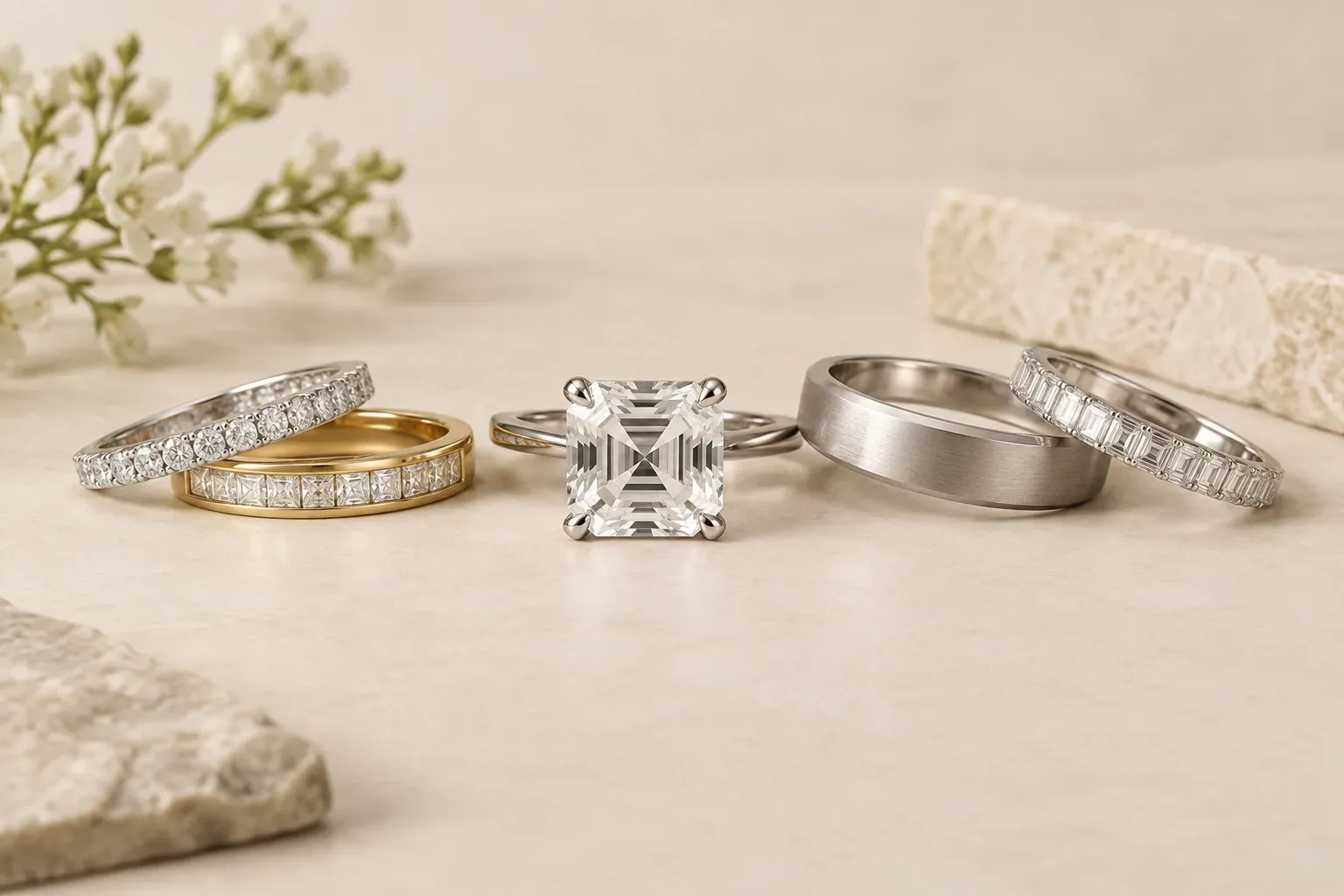
Pairing a wedding band with an Asscher-cut engagement ring depends on three things: the engagement setting's profile and shoulders, whether you want the band to sit flush or contrast, and the metal—each choice has trade-offs in comfort, appearance, and maintenance; rely on a qualified jeweler for fit and a gemological lab or written disclosures for material verification.
Short answer — concise, practical thesis
If you search for 'Asscher cut wedding band pairing' you are usually asking how to match band shape, manage the gap next to a step-cut square (Asscher-style) center, and choose metal to suit color and durability. The short, evidence-led answer: prioritize the engagement ring’s profile and shoulder shape first, pick a band contour (straight, notched, or shaped) that either fills or intentionally leaves a gap depending on your aesthetic, and select a metal with maintenance expectations you accept. Use a qualified jeweler to confirm fit and a gemological laboratory or written seller disclosures to verify material claims; this article explains decision criteria, common trade-offs, safe care steps, and the limits of what a shopper can confirm without professional testing.
What the historical and cultural evidence shows (and what it does not)
Direct historical evidence about how Asscher-cut stones have been paired with wedding bands across different cultures is limited in the industry literature summarized by the approved sources used here. Contemporary trade and search data indicate strong modern demand for engagement rings and variations in band styling, but those sources discuss current consumer behavior and trends rather than long-form cultural history.
Industry trend reporting for 2026 highlights that consumer interest centers on versatility, stacking, and fluid forms, which informs how contemporary shoppers combine engagement rings with bands. Imaginaire Digital’s 2026 UK search estimates show continued strong demand for engagement rings and related categories, indicating active buyer interest. Jewelers Mutual’s 2026 trends note a focus on modern stacking, colored gemstones, craftsmanship, and gender-neutral styling—these dynamics shape the modern practice of pairing bands with specific center cuts.
Because the approved sources do not provide primary historical narratives for specific cultures or time periods regarding Asscher pairing traditions, this guide treats historical symbolism separately from modern styling and focuses on present-day practical guidance supported by the industry and consumer-protection references available.
Documented meanings versus modern personal interpretation
The approved sources emphasize marketplace trends and consumer protection rather than traditional symbolic meanings tied to a particular cut. Where documented evidence exists in this context, it concerns buyer preferences, craftsmanship, and disclosure obligations rather than fixed cultural symbolism.
Modern symbolic interpretations—such as viewing a square, stepped Asscher as 'orderly' or 'vintage-inspired'—are personal readings and contemporary marketing narratives. These modern interpretations can guide aesthetic choices but are not historical facts and should be treated as optional layers of meaning a wearer may add.
How the Asscher-style motif and related design elements appear in jewelry
In practice, what matters for pairing is the geometry and setting of the engagement ring. Asscher-style stones are square in outline with pronounced step facets and a visible table area; their faceting tends to emphasize clarity and crisp lines rather than the scintillating pattern of brilliant cuts. That geometry affects how a plain or shaped band will read when set beside it.
Design elements that appear in pairing decisions include the engagement ring’s shoulder height and profile (for example, a low bezel versus high prongs), the band’s width and profile (flat, rounded, or knife-edge), and any design features like pavé, milgrain, or filigree. Each of these elements either helps a band sit flush, creates a deliberate visual gap, or establishes a complementary contrast.
Shape and gap: decision criteria and common solutions
Decision criterion one: flush versus framed appearance. If you want the band to sit flush against the engagement ring, choose a contoured or notched band made to fit the ring’s shoulders. If you prefer a framed look where the engagement ring stands apart, a straight band often leaves a small gap that can accentuate the center stone.
Decision criterion two: profile and comfort. Narrow, low-profile bands are less likely to create rubbing or extra height at the joint, while wider bands can stabilize a ring stack visually but may make the pair feel bulkier on smaller fingers. Consider finger anatomy and daily activities when choosing band height and width.
Common solutions include a custom notched band or a pre-shaped guard that fills the exact negative space next to the engagement ring, a straight band worn with a spacer (a thin ring placed between them) to control the gap deliberately, or a tapered band that visually narrows toward the center stone to complement the step-cut geometry.
Metal choices and practical trade-offs
Choice of metal affects color harmony, wear characteristics, maintenance, and cost. Platinum and high-karat yellow gold offer distinct visual personalities: platinum reads cool and modern and is very durable for everyday wear, while yellow or rose gold provides warmer tones that contrast with white metals and can soften a geometric look. Jewelers Mutual’s trend reporting underscores interest in gender-neutral styling and craftsmanship, which has driven diverse metal pairings in recent years.
Trade-offs include maintenance expectations—some white gold alloys are rhodium-plated for bright white color and will need re‑plating over time, while platinum develops a patina but typically does not require plating. These are practical maintenance considerations rather than value judgments. If matching metals exactly matters for resale or sentimental coherence, ask the seller for written metal specifications and warranties and keep documentation.
When mixing metals, consider whether you want a deliberate two-tone look or a matched set. Design features such as milgrain or shared accent stones in the band can bridge color differences visually.
Care, treatments, disclosure, and verification limits
Gemological and consumer-protection authorities remind buyers that treatments and origin affect durability and value. The Gemological Institute of America explains why treatments, detectability, durability and special care are meaningful consumer questions. The Federal Trade Commission stresses that consumers need clear written distinctions among natural, lab-created, treated and imitation materials and that sellers should provide those disclosures.
Practical care guidance: avoid harsh chemicals and extreme temperature shifts, clean gently with mild soap and a soft brush, and have prongs and settings inspected periodically by a qualified jeweler. For specific gemstone aftercare rules—especially when the ring includes treated or colored stones—follow manufacturer or lab guidance and ask the jeweler for documented treatment disclosures.
What a shopper can verify without professionals is limited. You can inspect for hallmarks, obtain written seller disclosures, and test fit and comfort in person. However, only a qualified jeweler or gemological laboratory can reliably confirm cut grading nuances, treatments, metal purity by assay, or whether a diamond is natural versus lab-grown; the FTC recommends obtaining written disclosures and insisting on transparent labeling at purchase.
Selection and gifting guidance — practical and respectful
Start with the engagement ring on hand. If you are buying a band to match an existing Asscher-style ring, take the ring to a trusted jeweler to try shaped options in person. If you are buying both pieces together, ask for mock-ups or custom fitting options so the jeweler can show how a band will sit.
Respect personal taste by asking about preferences before gifting—many people prefer to choose rings themselves, especially engagement or wedding jewelry. If the ring must be a surprise, choose a classic, low‑profile band in a metal likely to match the wearer’s existing jewelry and leave room for an exchange or resizing. Consider ordering with a return or alteration policy that allows the recipient to adjust width, contour, or finish.
Budget practically for custom work and maintenance. Contoured or notched bands and matching sets often add cost. Factor in the possibility of future re-plating, polishing, or resizing. Keep purchase paperwork, treatment disclosures, and appraisals together for warranty and insurance purposes.
Putting it together: step-by-step pairing checklist
Begin by examining the engagement ring’s profile, shoulder shape, and overall height. Decide whether you want a flush look or a framed gap. Choose a band width that balances the center stone without overwhelming it. Select a metal that harmonizes with the engagement ring and fits your maintenance preferences. If unsure, try a low-profile straight band first—it's the most forgiving option for future adjustments.
Before finalizing the purchase, request written disclosures about metal content and any treatments, have the jeweler verify fit, and ask for a clear alteration or return policy. If material origin or treatment is essential to you, budget for laboratory testing or insist on certified documentation from the seller. This stepwise approach maps directly to the decision criteria, trade-offs, and verification limits discussed earlier.
Final notes
The contemporary practice of pairing wedding bands with Asscher-style rings is built on practical geometry, personal taste, and modern trends toward stacking and versatility. Industry reporting from 2026 underscores shifting shopper priorities but does not prescribe one correct pairing. Use the guidance here to make evidence-led choices: prioritize the ring’s shape first, understand metal trade-offs, and rely on qualified professionals for fit and material verification.
Frequently asked questions
Can a plain wedding band sit flush against an Asscher engagement ring?
Possibly, but it depends on the engagement ring’s shoulder shape and setting height. A straight plain band will sit flush only if the engagement ring has straight, low-profile shoulders. To be certain, try the pair on together at a jeweler or order a custom contoured band made to the engagement ring’s exact profile.
What metal is best for durability and low maintenance?
Durability and maintenance differ by metal. Platinum is commonly recommended for everyday durability and a cool white appearance, while some white gold alloys are rhodium-plated and will require occasional re-plating. Because treatment and alloy details affect care needs, request written metal specifications from the seller and follow routine inspection advice from a qualified jeweler.
How can I verify whether a diamond is natural, lab-grown, or treated?
Only a qualified gemological laboratory can reliably identify origin and many treatments. The Federal Trade Commission advises consumers to request clear written disclosures at purchase. If origin or treatments are important, insist on certified documentation or lab reports and budget for additional testing if needed.
Is a contoured or notched band more expensive than a plain band?
Custom contoured, notched, or matching bands often cost more than a simple straight band because they require additional labor or bespoke work. If cost is a factor, consider starting with a simple band you can later replace or have contoured by a jeweler; ask for written pricing and alteration policies before purchase.
How should I care for a paired set to avoid rubbing and wear?
Have prongs and settings inspected regularly, avoid harsh chemicals and high-impact activities while wearing the rings, and remove stacked rings for heavy work. If the pair rubs, a jeweler can adjust profiles or add thin protective spacers. For gemstones with special care needs, follow guidance from a gemological authority or the seller’s written instructions.
Sources and further reading
- Imaginaire Digital — Imaginaire Digital
- Jewelers Mutual — Jewelers Mutual
- Gemological Institute of America — Gemological Institute of America
- Federal Trade Commission — Federal Trade Commission