Meaning at a glance
Opal comes in precious and common varieties; play-of-color is an optical phenomenon produced by hydrated silica structure, and responsible buying requires knowing whether a stone is solid, a doublet or triplet, whether it has treatments, and how its hydrated nature affects care and wear.
What opal is — the science behind the gem
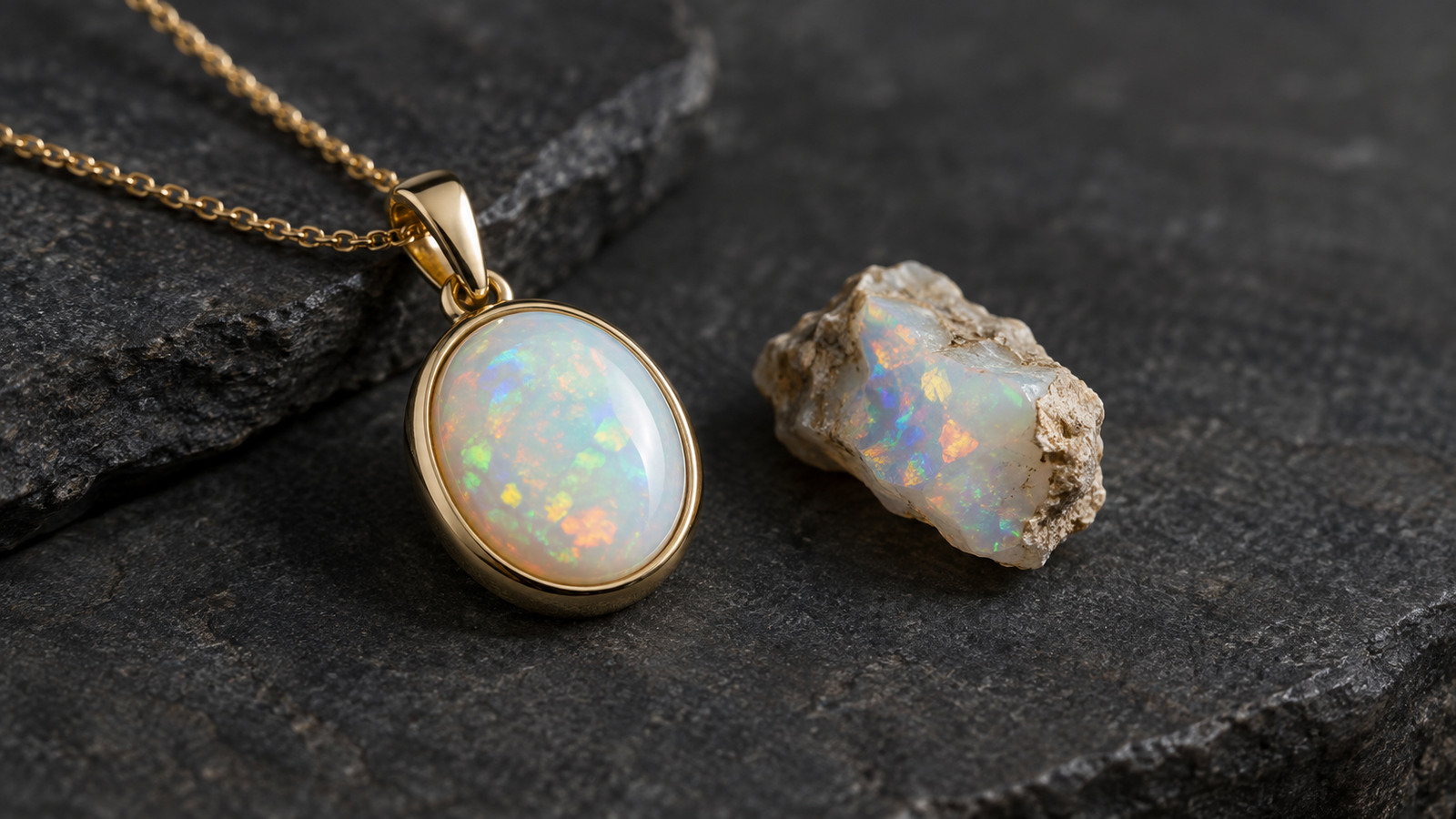
Opal is a hydrated form of silica whose internal structure can diffract light when microscopic silica spheres are stacked in regular arrays. The resulting play-of-color that some opals show is an optical phenomenon, not an intrinsic supernatural property, and it is the main feature that distinguishes precious opal from common opal. The Gemological Institute of America (GIA) explains the optical basis of play-of-color and how it differs from the appearance of common opal.
Because opal contains water within its hydrated silica framework, it behaves differently from many other gems. Both the GIA and the Smithsonian National Museum of Natural History describe opal as a hydrated material whose structure and water content influence durability and susceptibility to environmental changes.
Historical evidence and where it comes from
Museum and gemology sources record that opal has been known and traded since antiquity and has featured in jewelry and collections across different places and periods. The Gemological Institute of America summarizes how opal entered gemological and cultural awareness in multiple eras, and the Smithsonian’s mineral and gem collections document opals as notable specimens and exhibit items in natural history contexts.
Modern mining and classification of opals have expanded since the 19th century, with the Smithsonian’s collection records and GIA documentation reflecting the development of scientific study and commercial markets for opal in that period. These institutional sources present the physical and collecting history without asserting a single universal cultural meaning.
Documented historical meanings versus modern personal interpretations
Institutional sources such as the GIA and the Smithsonian focus on physical and historical facts about opal rather than universal symbolic meanings. Where museums and gemologists describe past uses or attributions, they treat those meanings as part of cultural history rather than objective properties of the stone.
Contemporary wearers and designers often bring personal or regional symbolism to opal jewelry—seeing it as expressive, mystical, or emotionally resonant—but those interpretations are modern and subjective. It is appropriate to present such symbolic meanings as personal or cultural practices rather than inherent attributes of the mineral itself.
How opal appears in jewelry: types and construction
In jewelry, opal appears in several physical forms. A solid opal is a single, continuous piece of opal material. A doublet combines a thin slice of opal with a backing material to improve durability and appearance. A triplet adds a protective transparent cap over the opal slice. The GIA’s buyer guidance explains these constructions and how they affect appearance, durability, and value.
Precious opal shows play-of-color across patterns that collectors and designers emphasize, while common opal lacks that diffraction effect but can be valued for color or translucency. Jewelers set opal in rings, necklaces, earrings, and brooches, often choosing protective bezels or raised profiles that shield the stone. Because play-of-color depends on viewing angle and light, designers frequently position opals to maximize sightlines and to let movement reveal changing flashes of color.
Buying opal: what to check and ask for
Start by confirming whether the stone is precious (shows play-of-color) or common (no play-of-color), because the two categories have different price ranges and typical uses. Ask the seller whether the opal is a solid, doublet, or triplet and request documentation stating that construction when available, since doublets and triplets behave differently from solid opals and usually command lower prices.
Inquire about treatments or stabilizing processes. The GIA buyer’s guide warns that opals can be treated or assembled so buyers should ask explicitly about treatments, such as resin impregnation or dyeing. Also ask about the gem’s provenance and any gemological reports that accompany higher-value stones so you can compare descriptions and confirm whether the opal matches the seller’s claims.
Because opal contains water, it is sensitive to heat and drying; both GIA and Smithsonian resources note that dramatic temperature changes or prolonged drying can damage opal. When considering a purchase, factor in how the recipient will wear the piece and whether the chosen setting and metal will protect the stone from impacts, heat from soldering, and exposure to harsh chemicals.
Caring for opal jewelry
Handle opal jewelry gently and avoid exposing it to direct heat, prolonged drying, or sudden temperature changes that can cause internal stress and cracking. The GIA and the Smithsonian both record that opal’s hydrated structure makes it more vulnerable to such environmental stresses than many other gems.
Clean opal jewelry with mild soap and lukewarm water and avoid ultrasonic cleaners or steam cleaning. For assembled stones such as doublets and triplets, take extra care because water and solvents can loosen the layers or penetrate adhesives. Store opal pieces separately from harder gems to prevent scratches, and consider a protective setting like a bezel if the piece will be worn frequently.
Selection and gifting guidance—practical and respectful
Choose an opal with the recipient’s lifestyle in mind. For someone who wears jewelry daily or does manual tasks, a solid opal set in a protective bezel will hold up better than an exposed doublet or a stone with a high cabochon profile that catches on clothing. For collectors or people who prize visual drama, a vivid play-of-color in a cabochon cut may be the best choice.
When gifting an opal, be mindful of personal and cultural perspectives. If the recipient values traditional beliefs or is sensitive to superstitions, ask discreetly whether they prefer stones with particular associations. Present factual information about the stone’s type, construction, and care requirements along with the piece so the recipient understands how to maintain it. If the seller provides a certificate or written care instructions, include those with the gift.
Final notes
Opal’s meaning in jewelry is partly scientific and partly personal. Institutions such as the Gemological Institute of America and the Smithsonian offer the scientific and historical context: play-of-color is an optical effect produced by hydrated silica and opal’s water content shapes both its beauty and its care needs. Beyond that, opal’s emotional or symbolic meanings are created by wearers and cultures, so clear communication about type, construction, and care will help you choose and give opal pieces respectfully and wisely.
Frequently asked questions
What is the difference between precious opal and common opal?
Precious opal shows play-of-color produced by diffraction from its internal silica structure, while common opal lacks this play-of-color and is valued for its body color or translucency, as documented by the Gemological Institute of America and the Smithsonian.
What causes opal’s play-of-color?
Play-of-color results from the interaction of light with ordered arrays of microscopic silica spheres in the opal’s structure; this is an optical phenomenon rather than a mystical property, according to GIA and Smithsonian explanations.
Are opals durable enough for everyday wear?
Opals are softer and contain water, making them more vulnerable to scratching, impacts, and damage from heat or extreme drying; careful settings and mindful wear are recommended, per GIA and Smithsonian guidance.
What are doublets and triplets?
A doublet is a thin opal layer glued to a backing to improve appearance and stability, while a triplet adds a transparent cap on top; the GIA buyer’s guide explains that these constructions look different and have different care needs than solid opals.
How should I clean opal jewelry?
Clean opal with mild soap and lukewarm water and avoid ultrasonic cleaners and steam; assembled stones like doublets and triplets need extra care because water or solvents can affect adhesives, following GIA and Smithsonian recommendations.
What should I ask a seller before buying opal?
Ask whether the opal is precious or common, whether it is a solid, doublet, or triplet, whether it has received any treatments or stabilization, and request any available documentation or a gemological report, following the GIA buyer’s guidance.
Sources and further reading
- Opal — Gemological Institute of America
- Opal Buying Guide — Gemological Institute of America
- Opals — Smithsonian National Museum of Natural History
- Opal — Smithsonian National Museum of Natural History