Meaning at a glance
Lapis lazuli is a blue rock composed of multiple minerals (not a single gem species), historically prized in long-distance trade and jewelry from Afghanistan to the ancient Near East; its associations with royalty, wisdom, or truth are culturally specific, and buyers should watch for imitations, treatments, and the stone's relatively soft, porous nature when selecting and caring for lapis jewelry.
Short answer
Lapis lazuli is a deep blue rock made of several minerals (not a single mineral species) that was prized in ancient long-distance trade and for jewelry and ornament; specific cultural meanings—such as links to royalty, wisdom, or truth—belong to particular peoples or periods rather than being universal, and practical buying and care decisions depend on composition, treatments, and the stone's relative softness and porosity.
What lapis lazuli is: composition, source, and material facts
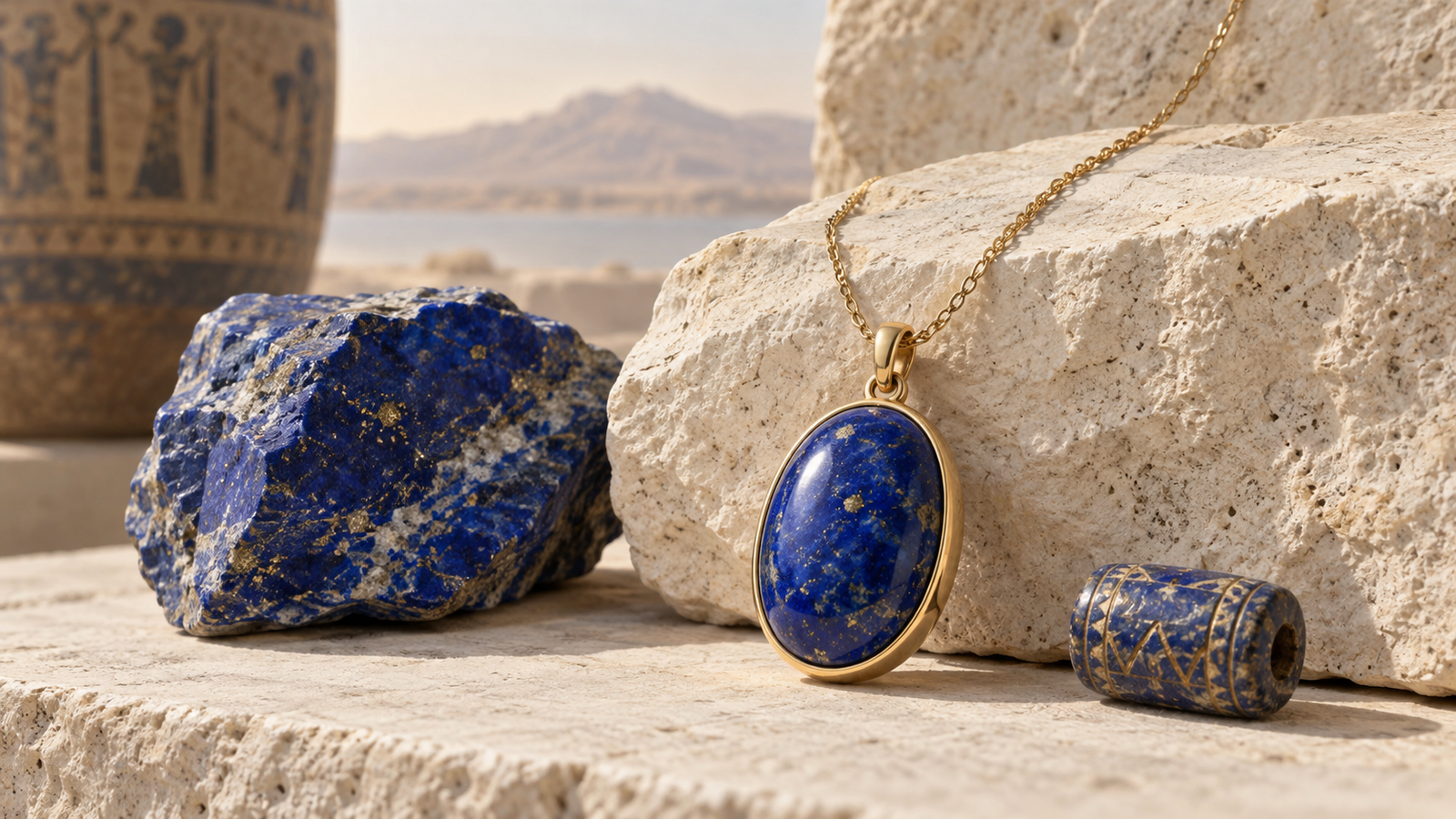
Scientifically and gemologically, lapis lazuli is a rock made up of multiple minerals rather than a single mineral. The deep blue color is primarily due to the mineral lazurite; other common components include calcite and pyrite, which can cause white streaks or gold flecks in the stone. This material description is summarized by the Gemological Institute of America (GIA).
Historically the most important prehistoric and ancient source for high-quality lapis was the Sar-e-Sang mines of what is now Afghanistan; the GIA describes this source as supporting ancient long-distance trade in lapis. Museum collections also document lapis used in ancient personal ornament: for example, The Metropolitan Museum of Art includes lapis-bead necklaces in its collection that illustrate early jewelry uses.
Documented historical meanings (by culture and evidence)
Ancient Near Eastern and Egyptian contexts: Archaeological and museum records show lapis was used in beads, inlay, and carved objects in the ancient Near East and Egypt. The GIA notes lapis's prominent role in antiquity as a traded ornamental stone, and museum holdings such as the lapis bead necklace at The Metropolitan Museum of Art provide direct material evidence of its use in personal adornment.
Long-distance trade and prestige: The presence of Afghan-sourced lapis in far-flung archaeological contexts is evidence that its value was at least partly tied to rarity and trade. The GIA describes lapis as a material that moved in long-distance exchange networks, and that movement is consistent with lapis appearing in high-status objects in various cultures.
What the sources document and what they do not: Evidence in the GIA and museum records documents lapis's physical use in jewelry, inlay, and decorative arts and shows it was a sought-after import. They document association with prestige or luxury through archaeological context and museum collections, but they do not support a single universal symbolic meaning across all past cultures. When writing about 'meaning' in antiquity, remain specific to the culture or archaeological context you are citing.
Modern symbolism and personal interpretation (clearly separated from historical evidence)
In contemporary Western and New Age contexts lapis lazuli is often associated with ideas like wisdom, truth, inner vision, or royalty. These modern symbolic associations are popular and meaningful to many individuals, but they are contemporary interpretations or revivals rather than single, uniform ancient meanings. Treat such symbolism as culturally situated and personal rather than universal.
If you encounter claims that lapis always means a particular thing—such as 'lapis equals truth'—ask for cultural precision. That statement can be true within a particular modern spiritual practice or marketing context, but it is not a documented universal from the material's long archaeological record.
How lapis lazuli appears in jewelry
Historically and today lapis is used in many jewelry forms: beads strung into necklaces, cabochons set into rings or pendants, carved cameos or intaglios, inlay panels in metal work, and polished beads for bracelets and rosaries. The Metropolitan Museum of Art's collection of lapis beads illustrates one of the oldest and most durable uses: beadwork.
Modern lapis jewelry ranges from rough, natural beads to highly polished cabochons set in precious metals. You will also see lapis used as accent stones or in mixed-material designs where its vivid blue contrasts with gold, silver, or other gemstones. Because lapis is a composite rock, its appearance varies: stones with visible pyrite inclusions are often prized for their 'starry' look, while significant white calcite streaking typically reduces perceived value.
Selection and gifting guidance
Match the stone to the wearer and to the object's use. Because lapis is relatively soft compared with many gem materials and can be porous, it is a good choice for necklaces, earrings, and pendants that are not subjected to heavy abrasion, but less ideal for everyday rings unless the wearer accepts the need for extra care.
Assess color and texture. Deep, even ultramarine-blue material with minimal white calcite is typically most prized. Small, bright pyrite reflections can add interest and are often seen as attractive, but large or uneven pyrite patches and extensive white calcite will change the look and value.
Ask about treatments, imitations, and origin. Lapis is commonly imitated or altered; dyed stones, stabilized pieces, and dyed howlite or other substitutes are available on the market. Ask the seller about any dyeing, impregnation, or other treatments and request clear disclosure. If origin matters to you, ask for provenance: Afghan (Sar-e-Sang) material has a long historical pedigree, and the GIA notes that Afghan sources supported much ancient trade in lapis.
Consider the recipient's cultural context. Gifting lapis may carry historical or contemporary connotations in different cultures; respect the recipient's background and preferences and avoid assuming a single meaning. A thoughtful gift message that explains why you chose lapis—whether for color, historical interest, or a symbolic meaning you and the recipient share—helps make the choice personally meaningful.
Care, cleaning, and maintenance
Handle lapis gently and avoid harsh chemicals. The GIA care guidance recommends cleaning lapis with a soft cloth and mild soap in water, rinsing well, and drying gently. Avoid ovenlike heat, strong acids, and household cleaners that can discolor or damage the surface.
Avoid ultrasonic and steam cleaning. Because lapis is a porous rock and contains multiple mineral components, the GIA advises against ultrasonic cleaners and steam treatments, which can fracture or leach materials and affect the appearance.
Store lapis separately and protect its surface. Keep lapis jewelry away from harder materials to prevent scratches and consider storing pieces in soft pouches or separate compartments. Because the stone can be affected by prolonged exposure to oils, cosmetics, and perfumes, put lapis jewelry on after applying products and wipe it gently after wear.
Putting meaning and material together
If you value lapis for its historical traction, choose pieces that display qualities tying them to that history: hand-shaped beads, carved elements, or material from regions with documented ancient sources. If your intention is a contemporary symbolic gift, explain that the meaning is a modern or personal layer applied to an ancient material.
Finally, recognize that the best lapis jewelry choice balances aesthetic appeal, realistic care needs, transparent vendor disclosure about treatments and origin, and respect for cultural specificity when discussing symbolism.
Frequently asked questions
What exactly is lapis lazuli made of?
Lapis lazuli is a rock composed of several minerals. The rich blue color mainly comes from the mineral lazurite, while calcite and pyrite are common accessory minerals that create white streaks or gold flecks. This mineralogical description is summarized by the Gemological Institute of America.
Was lapis used in ancient jewelry?
Yes. Museum collections and archaeological records show lapis in beads, inlays, and carved ornaments from ancient contexts. The Metropolitan Museum of Art, for example, holds lapis bead necklaces that illustrate historic uses, and the GIA describes lapis as an important traded ornamental material in antiquity.
Are there common imitations or treatments I should watch for?
Lapis can be imitated or altered. Common marketplace issues include dyed materials, stabilized stones, and dyed substitutes such as howlite or glass imitations. Ask sellers for disclosure about treatments and, if origin or authenticity is important, request documentation or third-party testing.
Can lapis be worn every day?
Lapis is relatively soft and porous compared with many gemstones, so daily wear—especially in rings or bracelets that receive heavy abrasion—can increase the risk of damage. If you want everyday pieces, choose protective settings, accept extra care, and avoid exposure to chemicals or rough contact.
How should I clean lapis jewelry?
Follow gentle methods: clean with a soft cloth and mild soap in water, rinse well, and dry. Avoid ultrasonic and steam cleaners and harsh chemicals. These care recommendations follow guidance from the Gemological Institute of America.
Sources and further reading
- Lapis Lazuli History and Lore — Gemological Institute of America
- Lapis Lazuli Care and Cleaning Guide — Gemological Institute of America
- Necklace beads — The Metropolitan Museum of Art