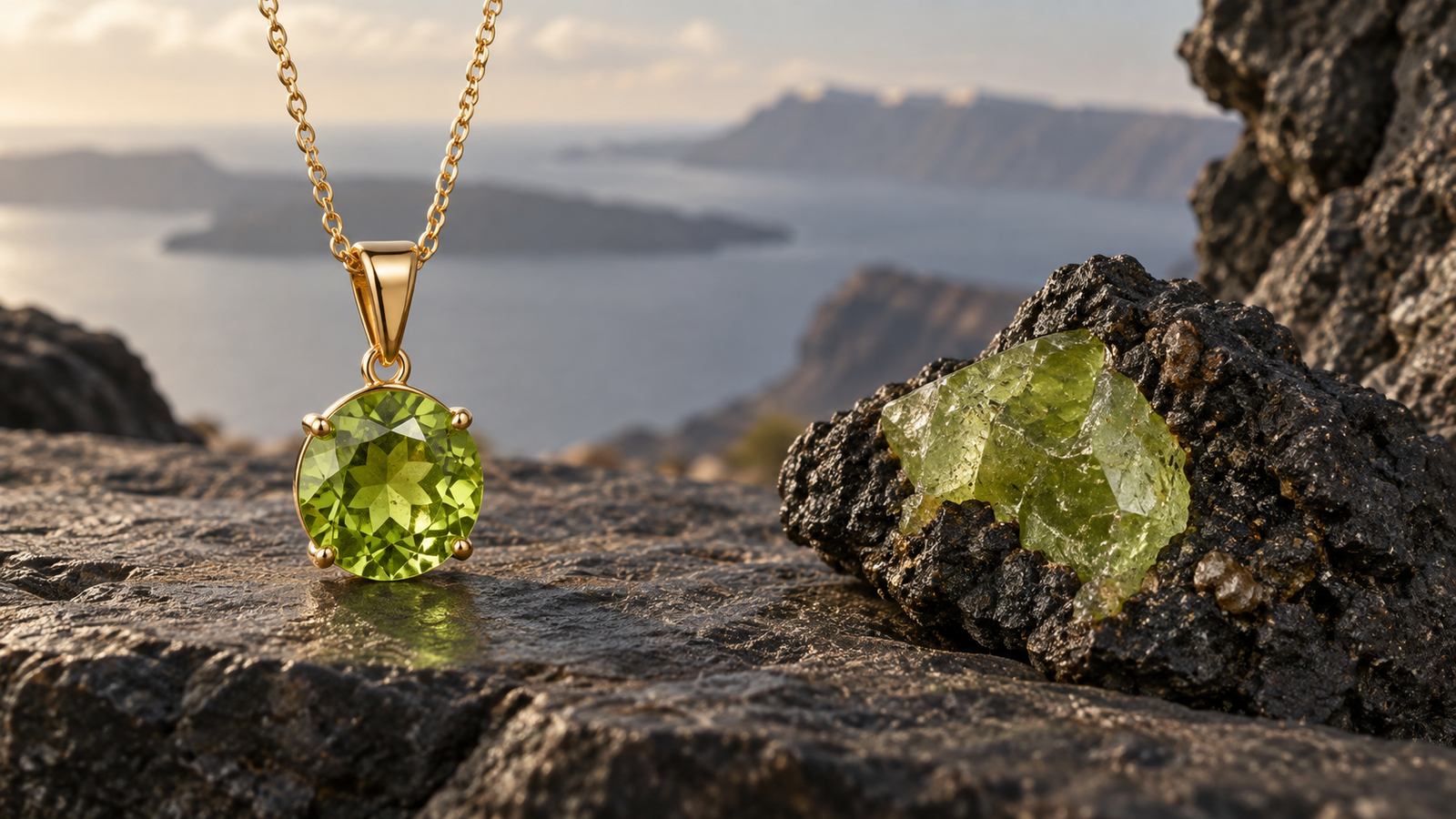
Meaning at a glance
Peridot is the gem variety of forsterite, its green color caused by iron; historical mining at Red Sea sites is documented by museum records, and symbolic meanings such as sun, luck, or renewal belong to tradition or modern interpretation; select protective settings and follow care guidance from gem professionals.
Short, direct answer
Peridot is the gem variety of the mineral forsterite, and scientific sources identify iron as the element responsible for its green color. Museum and gemology records document ancient Red Sea sources used in antiquity. Traditional or modern attributions—calling peridot a stone of the sun, luck, or renewal—are cultural meanings and personal interpretations rather than universal facts; practical choices about color, setting, and care determine how well peridot jewelry performs in daily wear.
What the historical evidence shows
The geological and gemological identity of peridot is well established by professional organizations. The Gemological Institute of America (GIA) describes peridot as the gem variety of forsterite and explains that trace iron in the crystal structure produces the green hues admired in jewelry. This is a mineralogical classification rather than a symbolic claim.
Museum collections and related research document human use and sources of peridot in antiquity. The Smithsonian National Museum of Natural History records that some of the earliest known peridot sources were islands in the Red Sea, and that these localities supplied gem material to ancient peoples. These museum attributions concern place and provenance: they document where historical peridot was found and traded rather than asserting a single cultural meaning.
When using historical claims, it is important to separate provenance and trade evidence from later mythmaking. The scholarly sources named here support the gem’s identity and archaeological provenance; any statements about what specific cultures believed or how they used peridot require separate primary historical evidence and should be attributed to the relevant culture or period.
Documented meanings versus modern interpretations
Documented evidence from scientific and museum sources establishes peridot’s material nature and ancient sources, but such sources do not assign a single, universal symbolic meaning. Where symbolism is discussed, it usually appears in later texts, folklore, or contemporary marketing rather than in primary geological or archaeological records.
Modern descriptions often call peridot a stone of the sun, a token of good luck, or a symbol of renewal and growth. These attributions are traditions or interpretations that many people find meaningful today, but they are not inherent properties of the mineral. Label these ideas as cultural or personal symbolism so readers understand they are optional ways to appreciate the gem.
If you want historical symbolism tied to a named culture or period, consult specialists in that culture’s material history. The GIA and Smithsonian resources used here support geological and provenance claims; they do not serve as primary sources for ancient belief systems.
How peridot appears in jewelry
Peridot’s clear green color makes it a popular faceted gem for rings, earrings, and pendants as well as a material for cabochons and beads. Jewelers commonly cut peridot into brilliant, step, and mixed cuts to display its color and clarity, and its relatively transparent nature lends itself to faceting that emphasizes hue and light return.
Design motifs that highlight peridot center stones often lean on color themes—sun motifs, floral and leaf forms, and light-themed settings—because the gem’s green is easily paired with yellows and warm metals. Peridot is used both as an accent and a primary stone; in smaller sizes it appears in halos and multi-stone clusters, while larger high-clarity pieces are set as single-stone solitaires.
From a practical viewpoint, the way a peridot is set affects how it will wear. Because peridot benefits from protection against knocks and abrasion, bezel and halo settings, or designs that shield the girdle and culet, are common choices to improve longevity while still showing off its color.
Selecting peridot jewelry: practical guidance
Decide how you will wear the piece before you choose a stone. If the item will be worn daily—especially rings—favor settings that protect the stone’s edges and consider metals and settings that reduce the gem’s exposure to hard knocks. The GIA’s buying guidance emphasizes that setting choice and care influence how well peridot performs as wearable jewelry.
Assess color and clarity with your own eyes when possible. Many buyers prefer vivid, even green tones with minimal brownish or yellowish zoning; clarity matters because visible inclusions can interrupt the gem’s color and brilliance. When shopping remotely, request high-quality photos or videos, and ask the seller for an honest condition report.
Ask clear questions about treatments, origin disclosure, and return policies. Sellers should state whether a peridot has been heat-treated or otherwise altered; reputable dealers will disclose treatments and offer information about origin when known. For valuable purchases, request documentation of the seller’s guarantees and consider getting an independent appraisal if provenance or size make the item a significant investment.
Match the metal and overall design to the wearer’s tastes and lifestyle. Warmer metal tones can emphasize peridot’s green, but choices should be guided by personal style. When gifting, consider how often the recipient will wear the piece and choose a design that balances beauty with practicality.
Care and maintenance
Professional gemology guidance cautions that peridot requires considerate care. The GIA buying guide and related consumer advice note that peridot jewelry benefits from protective settings and careful cleaning routines; the way a piece is set and cared for will affect its longevity.
Avoid exposing peridot to harsh knocks or heavy wear because the stone can chip or fracture if struck at an angle. When cleaning, check with the seller or a qualified jeweler about safe methods for a specific piece; some peridot jewelry may be cleaned with gentle soapy water and a soft brush, but always confirm whether ultrasonic or steam cleaning is appropriate for that stone and setting.
Store peridot separately from harder gemstones and metal items to prevent scratching. Keep peridot jewelry in a soft pouch or a compartmentalized jewelry box. For significant repairs or if you notice damage, consult a trusted jeweler experienced with colored gemstones rather than attempting aggressive at-home fixes.
Putting meaning and practicality together
If you choose peridot for its color and wearability, combine an honest assessment of the stone’s physical characteristics with a clear understanding of how you or a gift recipient will use the piece. If you choose peridot for symbolic reasons—sunlight, luck, or renewal—present those ideas as cultural traditions or modern interpretations that add personal significance but are not universally historic facts.
Balanced buying choices—good color and clarity for the budget, protective setting for daily wear, and seller transparency about treatments and returns—will help a peridot piece remain enjoyable and meaningful for years.
Frequently asked questions
What is the scientific identity of peridot?
Peridot is the gem variety of the mineral forsterite; professional gemological resources identify it by mineralogy and note that iron in the crystal causes its green color.
Is the association of peridot with the sun or luck historically documented?
While many modern and traditional sources ascribe sun, luck, or renewal symbolism to peridot, those attributions are cultural interpretations. The museum and gemology sources cited here document material identity and ancient sources rather than a single, universal symbolic meaning.
How should I care for peridot jewelry?
Follow jeweler and gemological guidance by choosing protective settings and gentle cleaning. Consult the seller or a qualified jeweler about safe cleaning methods for a specific piece and avoid exposing the stone to hard blows or abrasive contact.
How do I choose a peridot piece to gift?
Consider how often the recipient will wear the piece and select a setting that protects the stone if it will be worn daily. Ask the seller about treatments, origin information, and return or warranty policies, and choose a color and design that match the recipient’s style.
Does origin matter for peridot?
Origin can be of historical and collectible interest; museum records document ancient Red Sea sources used in antiquity. For modern purchases, origin information may be available from reputable sellers and can be one factor in valuation and provenance.
Can peridot be cleaned with an ultrasonic cleaner?
Cleaning suitability depends on the specific stone and setting. Check with the seller or a professional jeweler before using ultrasonic or steam cleaning; surface-safe cleaning with mild soap and water is commonly recommended, but verify for your piece.
Sources and further reading
- Peridot — Gemological Institute of America
- Peridot Buying Guide — Gemological Institute of America
- Peridot — Smithsonian National Museum of Natural History