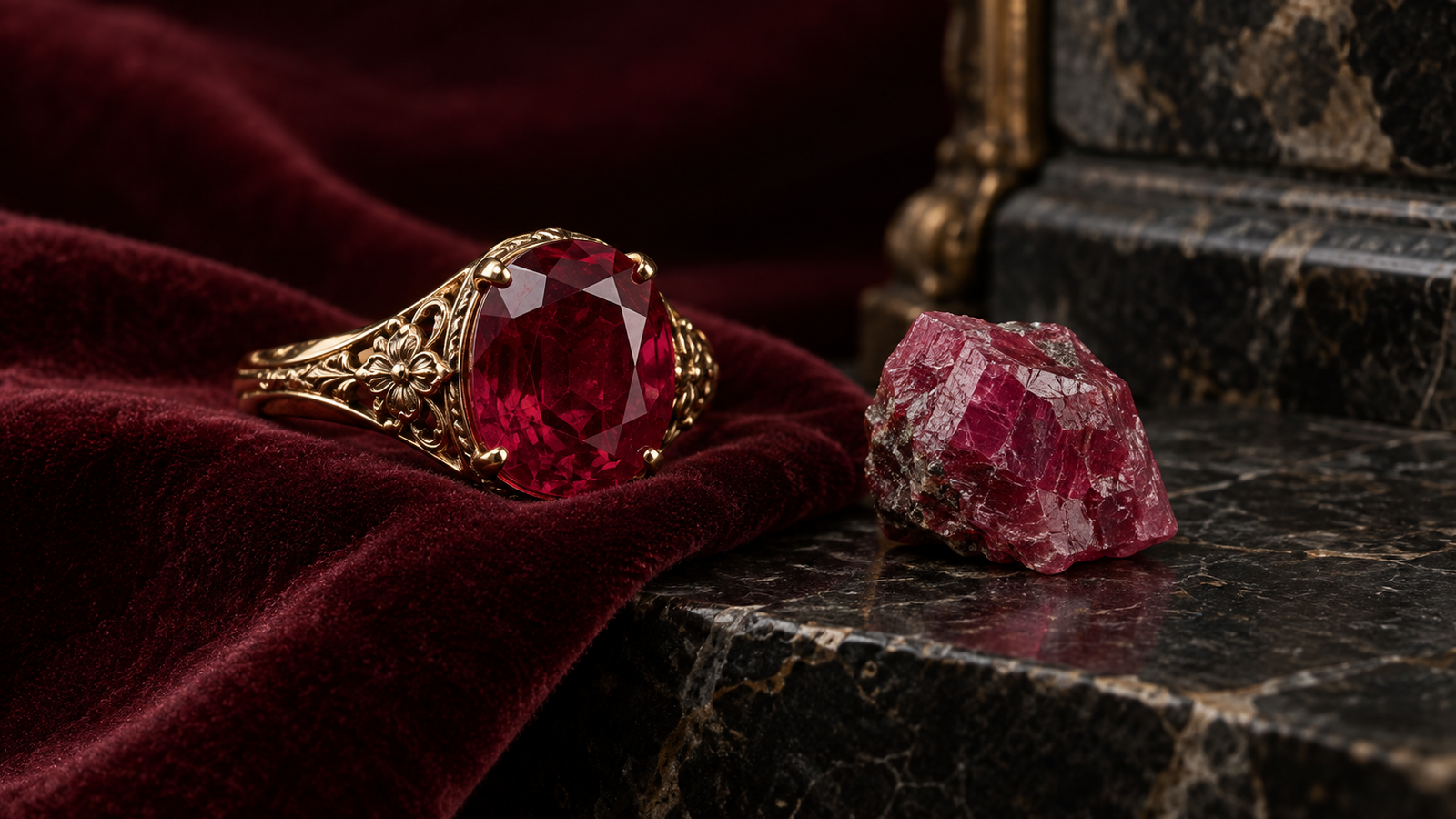
Meaning at a glance
Ruby is red corundum with documented prestige across many cultures; modern symbolic meanings like love and courage are contemporary interpretations, and buyers should consider treatments, value factors, and durability when selecting or gifting ruby jewelry.
Short answer
Ruby is red corundum with a documented history of prestige; contemporary love, courage, and vitality meanings are interpretations that should sit beside treatment disclosure, value factors, and durable-wear guidance.
What ruby is (science and material facts)
Scientifically, a ruby is the red variety of the mineral corundum. The red color results from traces of chromium in the crystal structure. The Smithsonian National Museum of Natural History identifies ruby as red corundum and explains that chromium produces the red color, making the gem visually and chemically distinct from other corundum varieties.
Documented historical prestige (what the records show)
Historical and cultural prestige for ruby is well documented in gemological and museum literature. The Gemological Institute of America (GIA) recounts ruby’s long association with high status, trade, and ornament across South and Southeast Asia and into Europe, noting that rubies were prized by rulers and included in ceremonial and luxury objects. These records support the view that rubies have been valued for their color and rarity across many periods and places rather than establishing a single universal cultural meaning.
Separating documented history from modern interpretations
Documentation from institutions such as the GIA shows that ruby has long been treated as a prestige gem in a range of cultures. Modern symbolic uses—where rubies represent romantic love, bravery, or vitality—are contemporary interpretations layered onto that history. While many people today choose rubies for those personal or cultural associations, those meanings are not a single, universal historical fact but rather modern or localized readings that sit beside the documented record of status and trade.
How ruby appears in jewelry and motifs
In jewelry, ruby is used both as the focal gemstone and as a colored accent. Jewelers set rubies as center stones in rings, pendants, and cufflinks and combine them with diamonds and other gems in cluster and halo settings. Rubies are also common in traditional cultural pieces and regalia where color and contrast are important design elements. The physical properties of corundum make the red color of ruby a strong visual anchor in many types of settings, and craftsmen have used that color quality to signify luxury and to create symbolic motifs when designers or wearers intend personal meaning.
Buying guidance: value factors and treatment disclosure
When selecting ruby jewelry, disclosure of treatments and full information about origin and enhancement are important to value and long-term satisfaction. The GIA’s Ruby Buying Guide notes that treatments can materially affect appearance and price, and that buyers should ask for explicit treatment disclosures and documentation. Color, clarity, carat weight, and cut all influence value, and certain enhancements—such as heat treatment or clarity-improving filling techniques—are common in the market and should be disclosed by dealers. Certification from a reputable laboratory provides a reliable record of treatment and, where available, documented origin.
Practical selection advice for everyday wear and special occasions
Because ruby is the red form of corundum, it is widely used in pieces intended for frequent wear, but the suitability of a specific stone and setting depends on the piece’s construction and the wearer’s lifestyle. Ask the seller about protective settings if the piece is intended for daily wear, and consider priorities such as color saturation versus inclusions when choosing a stone. For engagement rings and heirloom pieces, insist on clear written disclosure of any treatments and, if possible, a gemological report that accompanies the purchase.
Care and maintenance
Regular cleaning with mild soap and warm water and cautious use of soft brushes keeps ruby jewelry bright. Avoid sudden temperature shocks and aggressive chemical exposure, and consult a jeweler about how treatments on a particular ruby might affect cleaning options. Periodic professional inspection of prongs and settings helps prevent loss when the jewelry is worn frequently.
Gifting ruby jewelry respectfully
When gifting a ruby, consider the recipient’s cultural background and personal preferences rather than assuming a single meaning. If you intend to convey a particular sentiment—such as affection, admiration, or celebration—mention that intention when you present the gift. For higher-value pieces, provide documentation of treatment and, if available, a gemological report to the recipient so they inherit full context about the stone’s characteristics and care needs.
Final thoughts
Rubies combine an established material identity—red corundum whose color comes from chromium—with a long record of prestige in diverse cultures, as documented by institutions such as the Smithsonian and the GIA. Modern symbolic meanings like love, courage, and vitality can enrich personal connections to ruby jewelry, but they should be treated as contemporary interpretations layered upon documented historical and material facts. When buying or gifting, prioritize transparent treatment disclosure, appropriate settings for wear, and clear documentation to preserve both value and meaning.
Frequently asked questions
What does ruby symbolize historically?
Historical records compiled by institutions such as the GIA show that ruby has been associated with prestige, status, and luxury in multiple cultures, but specific symbolic meanings varied by region and period and are not universal.
Does the red color of ruby come from a particular element?
Yes. The Smithsonian documents that the red color of ruby comes from traces of chromium within the corundum mineral.
Are ruby treatments common and important to know about?
Yes. The GIA’s buying guidance emphasizes that treatments—such as heat treatment and clarity-enhancing procedures—are common and materially affect appearance and value, so buyers should request disclosure and documentation.
Is ruby suitable for daily-wear jewelry like engagement rings?
Rubies have long been used in wearable jewelry, but suitability depends on the stone’s setting and any treatments it has received; ask a jeweler about protective settings and confirm treatment disclosures before choosing a daily-wear piece.
How should I clean and care for ruby jewelry?
Clean ruby jewelry with mild soap, warm water, and a soft brush; avoid harsh chemical exposure and sudden temperature shocks, and have settings inspected periodically by a professional jeweler.
What should I ask for when buying a ruby as a gift?
Request written disclosure of any treatments, ask for a gemological report if available, verify the seller’s return policy, and consider the recipient’s style and cultural context when choosing the piece.
Sources and further reading
- Ruby History and Lore — Gemological Institute of America
- Ruby Buying Guide — Gemological Institute of America
- Corundum (var. ruby) — Smithsonian National Museum of Natural History