Meaning at a glance
Turquoise has a long, culturally varied history in adornment; its modern jewelry meanings are best presented as personal or tradition-specific interpretations alongside clear disclosure of treatments and practical care.
What the historical record shows
Documented evidence shows turquoise was prized and used in personal ornament and ritual across multiple, distinct cultures. The Gemological Institute of America (GIA) summarizes turquoise’s long history in jewelry and lore, noting its use in ancient Egypt, Persia and Iran, Tibet and Central Asia, and among Indigenous peoples of the southwestern United States, among others. These uses include beads, inlays, and mounted cabochons in settings appropriate to each culture’s metalworking and decorative practices, not a single universal style.
Archaeological and museum records indicate different societies prized turquoise for particular social or ceremonial roles. For example, the GIA reports that turquoise appears in Egyptian jewelry and burial objects, and that it was widely traded and valued in Persia. In the American Southwest, the GIA documents centuries of turquoise working and incorporation into silverwork by Native American artists. The Smithsonian National Museum of Asian Art notes that turquoise’s blue and green tones relate to its chemical composition and that color shifts with composition and geographic source, which has influenced how different cultures perceived and used it.
Documented historical meanings (what evidence supports)
When we say a meaning is documented, we mean there is historical or museum evidence that people in a named culture associated turquoise with particular roles or values. The GIA describes turquoise being used in amulets, burial adornment, and status jewelry in several regions. In some contexts these items appear to have been worn as protective talismans or markers of status, but the exact beliefs and rituals connected to them were specific to each culture and time.
Because primary sources and archaeological contexts vary, the safest historical claim is that turquoise served visible social, ceremonial, and decorative functions in many places, rather than that it always symbolized the same idea. The GIA’s overview shows recurring themes such as value, protection, and trade, but it does not support a single universal symbolic meaning across all cultures.
Modern interpretations versus historical meanings
Modern accounts of what turquoise 'means' include personal, spiritual, and fashionable readings that differ from documented historical roles. Contemporary writers and wearers may describe turquoise as representing healing, emotional balance, friendship, or spiritual protection. These contemporary meanings are modern interpretations or revived traditions and should be treated as personal or specific to particular communities or belief systems rather than universal facts.
When a modern meaning is presented as a cultural tradition, it is important to identify which community you are referencing. For example, some southwestern Native American artists and communities continue to work in turquoise and maintain cultural practices that give particular pieces communal significance. Conversely, New Age or commercial claims about turquoise’s metaphysical powers are contemporary interpretations and not the same as historic, documented uses identified by museum and gemological sources such as the GIA.
How turquoise appears in jewelry and design
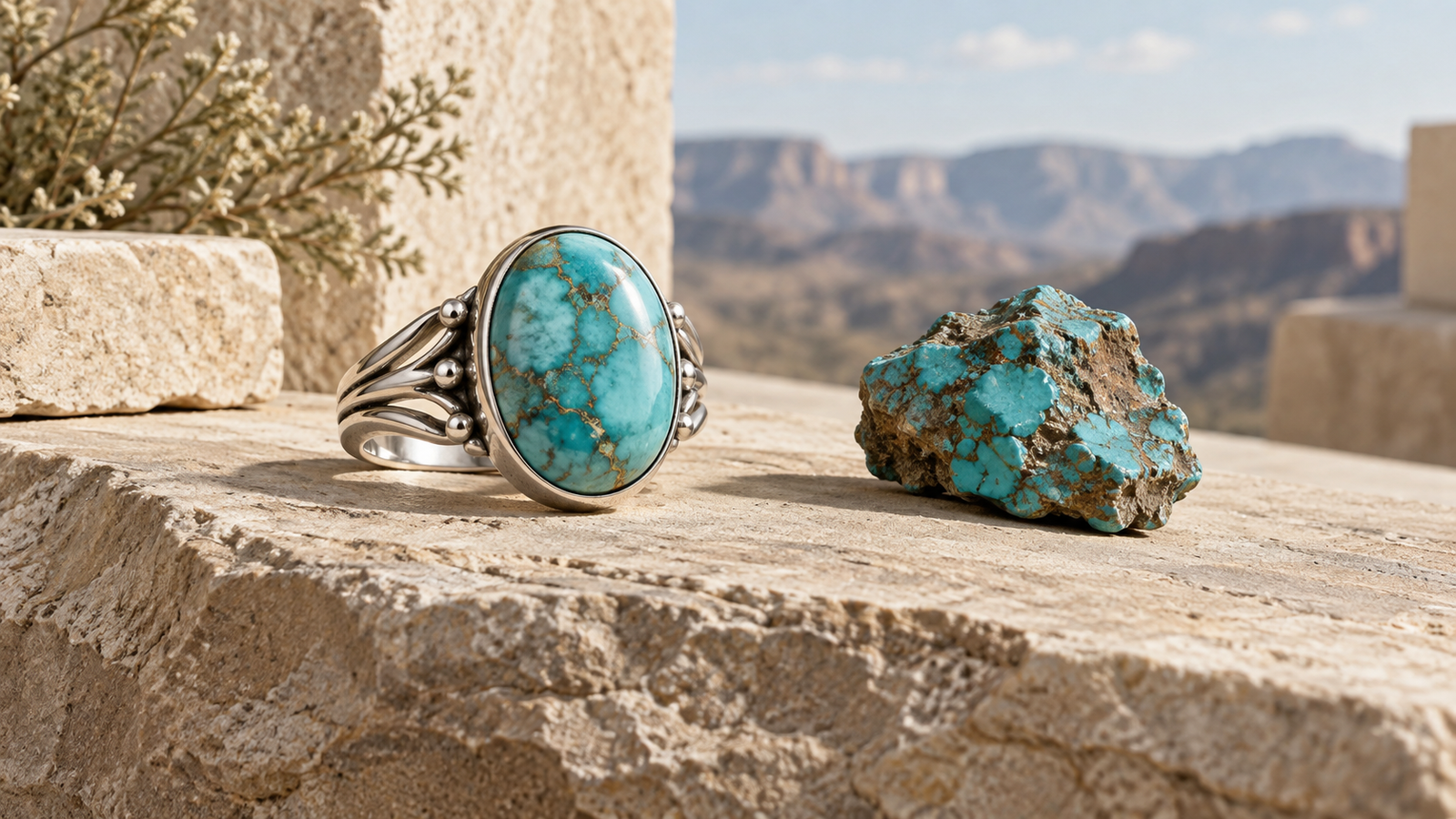
Turquoise is a hydrated phosphate mineral whose color ranges from blue to blue-green and green depending on its composition and trace elements; the Smithsonian National Museum of Asian Art explains that color variation relates to chemical composition and source. As a relatively soft gemstone typically cut en cabochon, turquoise most often appears in jewelry as polished cabochons, beads, inlaid panels, or set stones in metal settings.
Stylistically, different traditions favor different techniques. In the American Southwest, for instance, turquoise is frequently worked into silver settings and combined into cluster designs and inlay work, while Persian and Central Asian traditions have produced beaded strands and set stones in metalwork. In modern commercial jewellery, turquoise is also used for contemporary minimalist pendants, rings, and cufflinks, sometimes combined with other gemstones or metals for contrast.
Practical guidance for buying and gifting
Decide what matters most first: color, stability, origin, cultural significance, or maker. Because turquoise varies in color, determine whether you prefer sky blue, green-blue, or greener tones; the Smithsonian notes that color reflects composition and source. Ask whether the stone has been stabilized or otherwise treated, because many rough turquoise materials are porous and are commonly stabilized to improve durability. The Gemological Institute of America advises sellers to disclose treatments and for buyers to request that information before purchase.
Be respectful when selecting or gifting turquoise jewelry with cultural styles or meanings. If you want a piece that reflects a specific tradition—such as Native American silver inlay work—seek pieces by recognized Indigenous artists or shops that clearly identify community origin and maker. Appropriating traditional motifs without attribution or compensation can be insensitive; buying from artists within the tradition supports cultural continuity and accurate representation.
If you are selecting a gift, consider wearability and care needs. Turquoise can be relatively soft and porous compared with many gemstones, so choose settings that protect the stone for an active wearer, such as bezel settings or lower-profile rings. For heirloom-scale pieces or for recipients who prefer low-maintenance jewelry, prioritize stabilized turquoise or stones set behind protective metalwork and be transparent about any treatments.
Caring for turquoise jewelry
Turquoise requires careful care to avoid staining, heat damage, and chemical reactions. The Gemological Institute of America’s care guide warns that turquoise is sensitive to household chemicals, perfumes, cosmetics, and prolonged exposure to sunlight and heat, all of which can alter color or damage porous material. Ultrasonic cleaners and steam cleaners are not recommended for most turquoise.
Clean turquoise gently with a soft, slightly damp cloth and mild soap if needed, drying promptly. Store turquoise pieces separately from harder gemstones and metals to avoid scratches, and remove turquoise jewelry before swimming, cleaning, or applying lotions. If a piece is stabilized, that treatment improves durability but does not make the stone invulnerable; always follow the care advice the seller provides and, where possible, keep documentation of any treatments for future care and resale.
Final notes
Turquoise’s visual appeal and long presence in jewelry worldwide make it a meaningful choice for many wearers, but meaning depends on context. Use documented sources such as the GIA and museum collections to understand historical uses, ask sellers for full disclosure about treatments and origin, and respect the cultural origins of specific styles when buying and gifting. By combining informed selection with careful care, you can enjoy turquoise jewelry in ways that honor both its material nature and its many cultural stories.
Frequently asked questions
What does turquoise traditionally symbolize?
Historically, turquoise served social, ceremonial, and decorative functions in many cultures. Museum and gemological sources such as the GIA show it was used in amulets, burial adornment, and status jewelry in different regions, but the exact symbolic meanings were specific to each culture rather than universal.
Is turquoise good for everyday wear?
Turquoise is softer and often more porous than many gems, so it can be susceptible to scratches, staining, and damage from chemicals and heat. Stabilized turquoise is more durable, but all turquoise pieces benefit from cautious wear and protective settings for daily use.
How can I tell if turquoise has been treated?
Ask the seller for disclosure and documentation. The GIA recommends requesting information about stabilization, dyeing, or other treatments because these are common in the marketplace and affect care and value.
Are there cultural considerations when gifting turquoise?
Yes. If a design reflects a specific cultural tradition, such as Native American silverwork, seek pieces from recognized artists or sellers who identify the community and maker. This respects cultural ownership and ensures accurate representation.
How should I clean turquoise jewelry?
Clean turquoise with a soft, slightly damp cloth and mild soap if necessary, then dry promptly. Avoid ultrasonic cleaners, steam, and harsh chemicals. Follow any care instructions provided by the seller, especially for treated stones.
Sources and further reading
- Turquoise History and Lore — Gemological Institute of America
- Turquoise Care and Cleaning Guide — Gemological Institute of America
- Blue — Smithsonian National Museum of Asian Art