Meaning at a glance
Spinel is a distinct mineral historically confused with ruby; its identity, color range, famous royal examples, synthetic counterparts, buying factors, and care belong ahead of modern vitality or renewal symbolism.
What spinel is and its color range
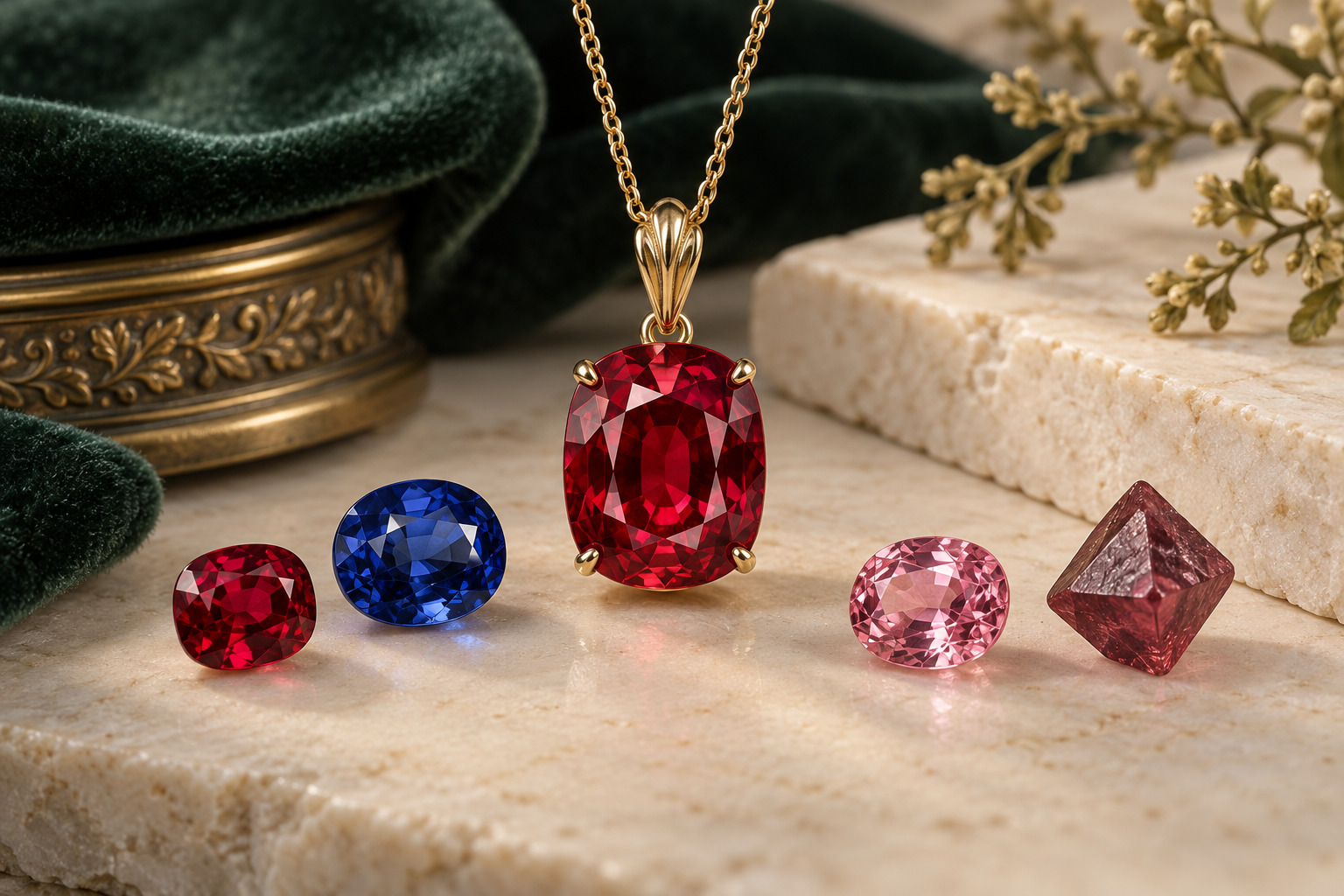
Spinel is a natural mineral with a wide color range that includes vivid reds, pinks, blues, purples, and blacks. The Gemological Institute of America (GIA) and the Smithsonian National Museum of Natural History both describe spinel as a separate species from corundum (the mineral family that includes ruby and sapphire) and note the variety of colors in which it occurs.
Because spinel comes in many colors, it is used in jewelry where color rather than mineral identity is the chief attraction. The color and clarity of an individual specimen are primary determinants of its visual effect and its market value.
Historical evidence and where spinel appears in the record
Documentary and institutional records show that spinel was long misidentified as ruby or other red gems in historical jewelry collections. The Gemological Institute of America explains that spinel is distinct from ruby and that historical confusion between the two minerals is common in older pieces.
Museum collections likewise record spinel’s presence and variety. The Smithsonian National Museum of Natural History highlights spinel specimens and their color diversity, which helps explain why spinel could be confused with other red gems when gem science was less developed.
A famous and concrete historical example is the stone known as the Black Prince’s Ruby in the British Crown Jewels. Historic Royal Palaces states that this so-called ruby is actually a large red spinel, demonstrating how spinel has been incorporated into high-status jewelry for centuries despite misidentification.
Documented historical meanings versus modern interpretations
Primary, documented historical sources in the gemological and museum record tend to emphasize spinel’s physical attributes—color, size, and rarity—rather than consistent symbolic meanings attached across cultures. Institutions such as the GIA and the Smithsonian concentrate on identification and provenance, so they record use and appearance but do not ascribe a single universal symbolism to spinel.
Modern symbolic interpretations—such as associating spinel with renewal, vitality, or personal transformation—are contemporary, individual, or marketing-driven. These modern meanings can be meaningful to wearers and gift recipients but should be presented as personal or cultural additions rather than as historical fact.
How spinel appears in jewelry and motifs
Spinel appears in jewelry wherever colored gemstones are used: in rings, necklaces, earrings, brooches, and crowns. The historic record and museum holdings show spinel set into crowns and other high-profile pieces because of its attractive colors and durability, and modern manufacturers cut and set spinel in the same contexts that favor gemstones of the same hue.
Contemporary jewelry makers use spinel both as a primary center stone and as accent stones. Because it occurs in a range of colors, it can replace or complement ruby, sapphire, or tourmaline in designs, offering jewelers more color options at varying price points.
Buying spinel: what to check and ask
When buying spinel, prioritize reputable identification and clear disclosure. The Gemological Institute of America warns that synthetic spinel exists and that historical confusion with ruby persists, so buyers should request written gem identification from a qualified laboratory or reputable seller to confirm natural origin and to disclose any treatments or synthetic manufacture.
Assess color, clarity, cut, and carat in the same way you would for other colored gemstones. Color saturation and hue are often the most influential factors in appearance and price. Because market distinctions exist between natural, treated, and synthetic stones, ask the seller for documentation that explains whether the stone is natural, whether it has been treated, and whether it is a laboratory-grown material.
If provenance matters to you—such as a stone coming from a known historic collection or a named historic example—ask for documentation or a clear provenance statement. Institutions like Historic Royal Palaces and the Smithsonian publish information about well-known historical examples; buyers should not assume a modern stone has historic provenance without paperwork to support the claim.
Practical and respectful selection and gifting guidance
Choose spinel to reflect the recipient’s color preference and lifestyle rather than an assumed universal symbolism. Because modern symbolic meanings are personal or cultural rather than historically uniform, a thoughtful note explaining why you selected a particular color or cut will make the gift more meaningful.
When gifting a spinel set into heirloom-style designs or referencing historic pieces, be precise in language. For example, if a piece echoes the look of the Black Prince’s Ruby, state that the design is inspired by a historic spinel rather than calling it a ruby. This is both accurate and respectful to the gemological record.
Request certification or a detailed sales receipt and consider engraving or a small certificate noting the date and reason for the gift to create a future provenance record for the recipient.
Care and maintenance
General care for spinel follows standard guidance for colored gemstones. Clean spinel jewelry with warm, soapy water and a soft brush, rinse well, and dry with a soft cloth. Avoid exposure to harsh chemicals and extreme thermal shock, which can damage mountings or cause sudden temperature change in some settings.
Have settings and prongs checked periodically by a professional jeweler, especially for rings and bracelets that receive daily wear. Store spinel pieces separately from harder stones to prevent scratching and keep them in a soft pouch or lined jewelry box when not in use.
Final thoughts
Spinel is best appreciated on its own terms: a distinct mineral with a broad color range and an intriguing place in jewelry history. Institutional records from the Gemological Institute of America, the Smithsonian National Museum of Natural History, and Historic Royal Palaces help clarify that spinel’s fame is tied both to its appearance and to historical misidentifications with ruby.
If you value documented history, ask questions and request lab reports. If you value personal symbolism, explain that meaning when you gift or wear the stone. Either approach treats spinel with the respect its history and beauty deserve.
Frequently asked questions
What exactly is spinel?
Spinel is a distinct mineral species that occurs in a broad range of colors, including red, pink, blue, purple, and black. Gemological authorities like the GIA and museum collections such as the Smithsonian document spinel as a separate gem type historically mistaken for ruby.
How is spinel different from ruby?
Ruby is a variety of the mineral corundum, while spinel is a different mineral species. Historical misidentification is common; authoritative sources including the Gemological Institute of America and the Smithsonian explain that spinel and ruby can look similar but are different minerals.
Are there famous spinel examples in royal jewelry?
Yes. A well-known example is the stone called the Black Prince’s Ruby in the British Crown Jewels, which Historic Royal Palaces identifies as a large red spinel rather than a true ruby.
Can spinel be synthetic or treated?
Synthetic spinel exists, and sellers should disclose whether a stone is lab-grown or natural. The Gemological Institute of America notes the existence of synthetic spinels; buyers should request written identification or certification to confirm origin and any treatments.
How should I care for spinel jewelry?
Clean spinel jewelry with warm, soapy water and a soft brush, rinse, and dry with a soft cloth. Avoid harsh chemicals and store spinel pieces separately from harder stones to reduce the chance of scratching. Have settings checked periodically by a professional jeweler.
What should I ask when buying spinel as a gift?
Ask for a written gem identification or lab report, request disclosure of any treatments or synthetic origin, verify return policies, and consider the recipient’s preferred color and style. If referencing a historic inspiration, be explicit about the distinction between spinel and ruby in your gift note.
Sources and further reading
- Spinel — Gemological Institute of America
- The Crown Jewels Up Close — Historic Royal Palaces
- Spinels — Smithsonian National Museum of Natural History