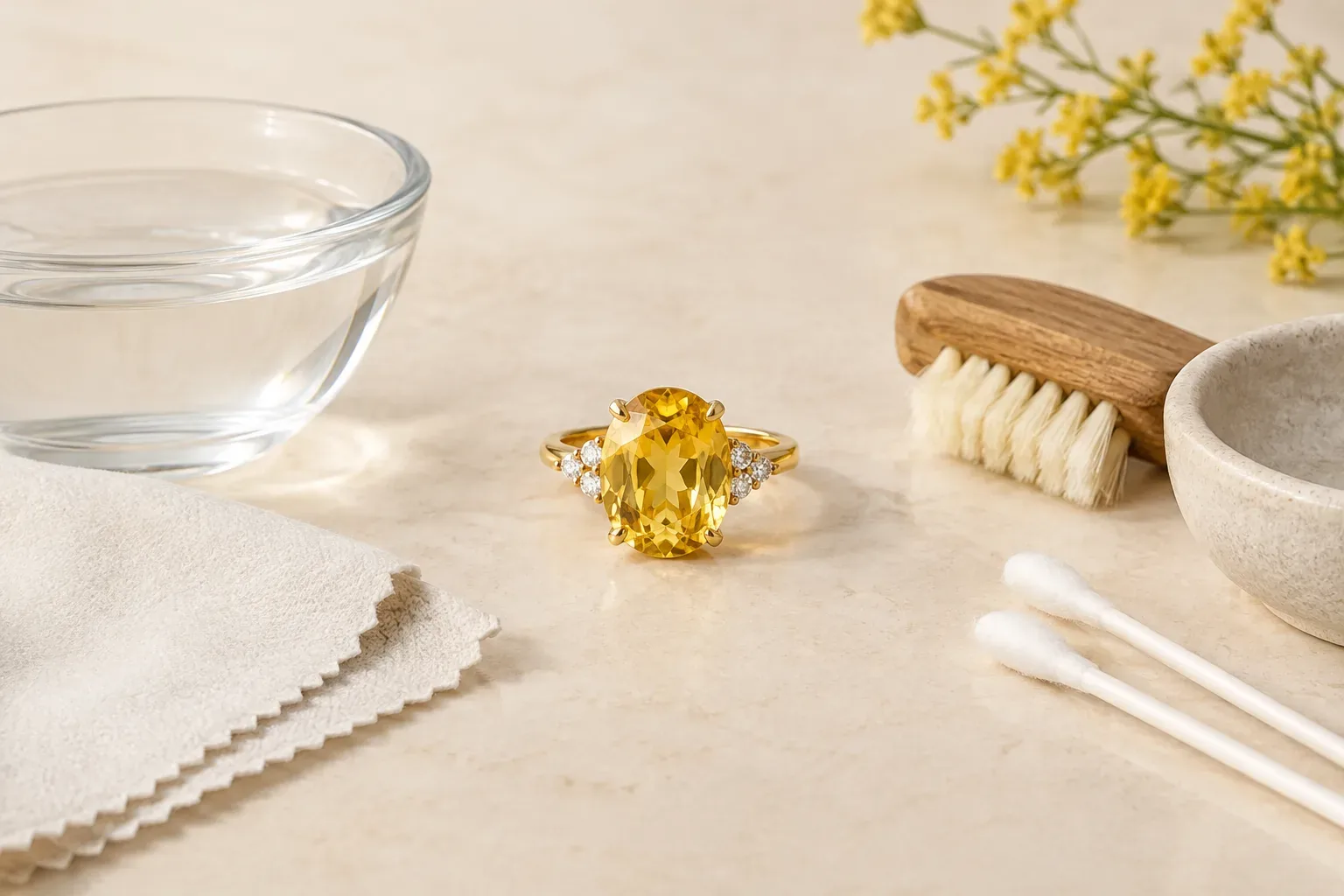
Meaning at a glance
Clean yellow sapphire with warm soapy water and a soft brush; avoid harsh chemicals and unknown ultrasonic or steam unless a qualified jeweler confirms the stone and setting are safe. Ask sellers for written treatment disclosure and lab reports when possible.
Direct answer — the short, evidence-led thesis
For most yellow sapphires, the safest at-home cleaning method is a gentle wash in warm water with a mild dish soap and drying with a soft, lint-free cloth; use a soft-bristled brush for dirt around prongs. Avoid aggressive chemicals, bleach, and household ultrasonic or steam cleaners unless a qualified jeweler has confirmed the gem is untreated or rated safe for those methods. Treatments, mounting materials, and repairs change what is safe; you cannot reliably detect many treatments or origin claims without a qualified jeweler or a gemological laboratory report, so always request written disclosure from the seller before using stronger cleaning methods.
Why cleaning guidance depends on treatments, setting and trade-offs
Cleaning decisions for yellow sapphire are decisions about trade-offs: stronger cleaning methods (steam, ultrasonic) remove more grime quickly but raise the risk of damaging a treated stone or fragile setting, while gentler methods preserve treatments and settings but may not fully remove stubborn residue. The Gemological Institute of America (GIA) explains that treatments, detectability and durability affect what care is appropriate, which is why treatment status is central to cleaning choices.
Treatments that are possible on sapphires change the practical trade-offs. If a yellow sapphire has had fractures filled, surface-reaching coatings applied, or diffusion treatments, these treatments may be altered or removed by heat, chemicals or vigorous mechanical action. Because the GIA identifies treatment, disclosure and special care as distinct consumer issues, you should treat uncertainty about treatments as a reason to favor the gentlest cleaning approach and to seek professional confirmation.
Historical evidence and cultural notes — what the approved sources document (and do not)
The approved sources for this article do not provide primary historical accounts of yellow sapphire symbolism in ancient cultures. The Gemological Institute of America material used here focuses on treatments, disclosure and durability rather than historical meanings, and the Federal Trade Commission guidance addresses consumer disclosure rather than cultural history.
Contemporary market research in the approved sources describes how gemstones, including colored stones, feature in modern jewelry demand. Professional Jeweller and Imaginaire Digital report increased interest in gemstone rings, birthstone necklaces and sculptural jewelry in recent trend research, which explains why yellow sapphires are commonly seen in present-day jewelry designs and commercial narratives rather than proving an ancient cultural meaning.
Documented historical meanings versus modern personal or marketing interpretations
Because the approved evidence for this article does not document historical cultural meanings for yellow sapphire, any specific claim that a particular culture 'historically' used yellow sapphire with a particular meaning would be outside the permitted evidence. That absence means readers should treat historical-meaning claims they encounter elsewhere with caution until they consult primary historical scholarship or museum catalogues.
Modern personal and marketing interpretations—such as attributing color-related symbolism (joy, intellect, prosperity) to yellow sapphire—are common in contemporary jewelry writing and sales copy. Professional Jeweller and other trend analyses show that modern demand and marketing shape how stones are presented today, but these are contemporary narratives rather than documented ancient beliefs.
How yellow sapphire typically appears in jewelry
In today’s market, yellow sapphire appears across rings, pendants, earrings and bracelets, often as faceted stones in settings designed to show color and brilliance. Industry reports from Professional Jeweller and Imaginaire Digital highlight growth in gemstone rings and birthstone necklaces, which helps explain why yellow sapphires are frequently chosen for engagement, cocktail and statement pieces.
Design choices for yellow sapphire vary by cut, mounting and metal. Jewelers commonly use bezel, prong or halo settings to secure a faceted yellow sapphire; the choice of setting affects how easy the stone is to clean and how vulnerable it is to knocks and chemical exposure. Because modern trends emphasize sculptural and clustered gemstone work, yellow sapphires may also appear alongside other colored gems in multi-stone compositions that require careful cleaning to protect different materials.
Practical cleaning methods — safe at-home routine
Prepare a mild cleaning solution using warm (not hot) water and a drop or two of a gentle, phosphate-free dish soap. Submerge the ring or pendant briefly and agitate the water gently with your fingers to loosen surface dirt.
Use a soft-bristled toothbrush or a soft brush to clean behind the stone and around the setting where oils and dust collect, taking care not to apply hard pressure to prongs or fragile settings. Rinse under lukewarm running water, ensuring the drain is closed or the piece is over a bowl, and dry with a soft, lint-free cloth.
Perform this gentle cleaning every few weeks if you wear the piece often. For pieces worn daily, a weekly quick wipe with a soft cloth and a monthly gentle soap-and-water clean will keep most grime from building up.
What to avoid — chemicals, heat and unknown mechanical cleaners
Avoid bleach, chlorine-based cleaners, acetone, ammonia, and other strong household chemicals. These substances can discolor metal settings, weaken soldered joints, and may affect any surface treatments on the stone.
Avoid steam cleaners and ultrasonic cleaners unless a qualified jeweler has verified that the specific stone and its treatments are stable under those conditions. The GIA warns that treatments and durability affect what care is appropriate, and some treatments that improve appearance are vulnerable to heat or vigorous mechanical energy.
Do not soak pieces with glued-in components or fragile inlays for long periods, and avoid exposing jewelry to saunas, hot tubs, and pools where heat and chemicals combine to increase risk to both metal and stone.
When to consult a jeweler or laboratory — verification and repairs
If you do not have written disclosure about treatments, or if the stone shows chips, loose prongs, unusual surface films or sudden color change, take the piece to a qualified jeweler for inspection. The Federal Trade Commission makes clear that consumers should expect disclosure about natural, lab-created and treated gems, and written information is important for trust and resale value.
You should request a gemological laboratory report if you need authoritative verification of treatments, origin or whether a stone is natural or lab-grown. Many important treatment and origin questions cannot be answered reliably with unaided visual inspection, and the GIA and other laboratories are the proper channels for those technical analyses. A jeweler can advise whether a lab report is appropriate for your purchase or appraisal needs.
Selection and gifting guidance — respectful and practical advice
When buying or gifting a yellow sapphire, ask the seller for written disclosure of whether the stone is natural, lab-grown or treated, and whether a gemological laboratory report accompanies the piece. The FTC emphasizes that clear written disclosures protect buyers, and they also protect the recipient who may want to insure or resell the piece later.
Consider the life of the recipient and the intended use. For everyday wearers choose durable settings with secure prongs or bezels and avoid fragile inlays. If the recipient prefers low-maintenance jewelry, favor pieces with simpler settings that are easier to clean with the gentle at-home routine described above. If cost is a concern, discuss whether a treated stone meets the aesthetic goal while understanding that treatments can change care needs.
If the gift has symbolic meaning for the recipient, clarify whether they value an untreated or certified stone for sentimental reasons; untreated stones and certified reports often come with a higher price and different care expectations. Finally, encourage the recipient to obtain insurance and periodic professional inspections—this is practical protection, not an implication that the item will fail.
Final summary and key limits
A conservative, evidence-led yellow sapphire cleaning guide favors mild soap and water with a soft brush, and reserves steam, ultrasonic or chemical methods for situations where a qualified jeweler has confirmed the stone and setting are safe. Because treatments and detectability are central consumer concerns, written seller disclosure and laboratory reports matter for both cleaning decisions and long-term care.
You should not rely on unaided visual inspection to determine whether a yellow sapphire is treated or lab-grown; when in doubt, consult a qualified jeweler or request a gemological laboratory report. Contemporary market trends explain why yellow sapphires are visible in modern designs, but the historical cultural meanings for yellow sapphire are outside the remit of the sources used here and should be researched separately if that matters to your purchase or gift.
Frequently asked questions
Can I clean yellow sapphire in an ultrasonic cleaner?
Only if a qualified jeweler has confirmed the stone and any treatments are stable under ultrasonic cleaning. The GIA warns that certain treatments and durability issues make ultrasonic cleaning risky; if you do not have written treatment disclosure, avoid ultrasonic cleaners.
How often should I clean a yellow sapphire ring?
For everyday wearers, wipe the piece with a soft cloth weekly and perform a gentle soap-and-water clean monthly. More frequent cleaning may be needed if the ring is exposed to lotions, cosmetics or grime.
Will cleaning change the color of my yellow sapphire?
Gentle soap-and-water cleaning will not change the color, but aggressive chemicals, heat or improper cleaners can affect surface treatments or coatings. If you suspect the stone has been treated, avoid harsh methods and consult a jeweler.
How can I tell if a yellow sapphire is treated or lab-grown?
You generally cannot reliably tell treatments or origin with unaided visual inspection. Request written disclosure from the seller and consider a gemological laboratory report for authoritative verification, as recommended by the Federal Trade Commission and the GIA.
Is it safe to sleep or swim while wearing a yellow sapphire piece?
Avoid wearing valuable gemstone jewelry in pools, hot tubs or while sleeping, since chemicals, heat and accidental knocks increase the risk of damage to the stone or setting. Remove jewelry before these activities to reduce wear and exposure.
Sources and further reading
- Imaginaire Digital — Imaginaire Digital
- Professional Jeweller / PRYA Jewellery Search Insights — Professional Jeweller / PRYA Jewellery Search Insights
- Gemological Institute of America — Gemological Institute of America
- Federal Trade Commission — Federal Trade Commission