Meaning at a glance
This guide explains documented historical uses and changing contexts of yellow gold, separates museum-documented meanings from later popular interpretations, describes how motifs and gemstones appear in yellow-gold jewelry, and gives practical advice for choosing, verifying, and gifting yellow gold today.
Short answer
Yellow gold jewelry buying guide: choose pieces by matching the metal’s purity and alloy to how you will wear and care for the item, verify gemstones and treatments through seller documentation, and select motifs and styles with awareness of their documented cultural origins (as recorded by museums) while recognizing modern personal meanings are not universal.
What historians and museums record about yellow gold
Precise evidence about how people used and understood gold comes from museum collections and curatorial research. The Victoria and Albert Museum describes gold as a durable, malleable metal that has been used for personal adornment in many societies and that its social meanings have changed with fashion, wealth distribution, and technological change. Museum-backed histories show gold appearing in funerary and ritual contexts in ancient Egypt, as engraved signet rings and coin-mount jewelry in classical antiquity, and as richly worked personal and ceremonial jewelry in medieval and later Europe, among many other contexts.
Those shifts are important to keep in mind when buying today: museums emphasize that the same material—yellow gold—has served practical, symbolic, and display functions at different times and for different cultures. That long span of use is why yellow gold still carries layered associations of permanence, status, and personal memory in many contemporary collections and exhibitions.
Documented historical meanings versus modern interpretations
When a museum labels an object as a ‘funerary pendant’ or a ‘wedding ring,’ that is an evidence-based interpretation grounded in archaeological context, inscriptions, or contemporaneous records. The Victoria and Albert Museum's work on jewellery history emphasizes these distinctions: curators identify how an object was used or displayed in its original culture and period and how tastes and meanings shifted over time.
Modern popular meanings—such as claiming a single symbol is universally lucky or that one metal guarantees a particular emotion—are often later additions or personal reinterpretations. Documented historical meanings are specific to place and time; modern wearers commonly attach new, personal significance to yellow gold pieces. Treat the historical record and contemporary personal meaning as separate layers: the first is evidence-based and culture-specific, the second is subjective and varies by wearer.
How motifs, gemstones, and traditions appear in yellow-gold jewelry
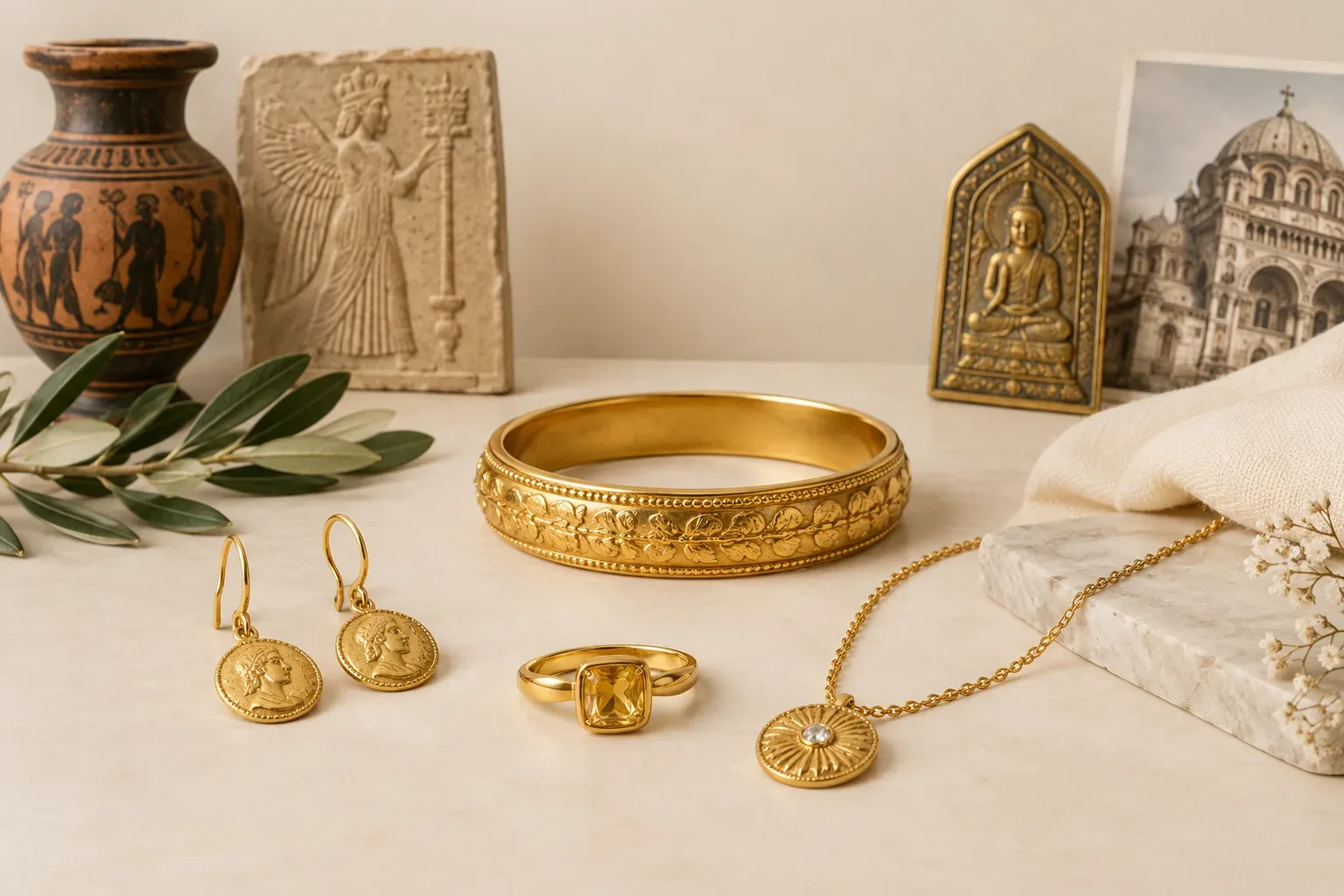
Yellow gold is commonly used as the structural and visual backdrop for many motifs and gemstones because of its warm color and malleability. Museum material shows repeated motifs such as signet and intaglio rings, coin mounts, lockets, chains, and filigree work in yellow gold. Each motif carries a historical lineage: for example, lockets and portrait miniatures appear in museum narratives as forms of memorial and sentimental jewelry; signets often have legal or family identification functions in the past, as demonstrated in historical collections.
Gemstones historically paired with yellow gold vary by period and region. The Victoria and Albert Museum’s A–Z of Gemstones demonstrates that curators and conservators document many traditional pairings and the ways gems were cut and set over centuries. In practice, yellow gold is often chosen to complement warm-toned stones such as citrine, garnet, or amber, and it is also a common setting for diamonds and pearls. How a gemstone appears—cabochon, faceted, bezel-set, or prong-set—ties to both aesthetic trends and technical capabilities documented across the museum record.
Quality and price: what to check when buying yellow gold
Price for yellow gold jewelry reflects several interlocking factors: the amount of gold (metal purity and weight), the complexity of workmanship, the presence and quality of gemstones, and market conditions. Because the metal content and treatments affect value, ask sellers for clear information about purity, alloy composition, and any gemstone reports.
Ask for written disclosure about treatments to gemstones and for confirmation whether stones are natural, lab-grown, treated, or simulants. The Federal Trade Commission requires clear disclosure about material treatments and imitations in jewelry transactions; sellers should not obscure whether a gem has been heat-treated, fracture-filled, or is an imitation. If you are buying a high-value stone, request an independent laboratory report or certificate.
Look for visible signs of good workmanship: consistent finishing in joins and settings, secure prongs or bezels for stones, and smooth interior surfaces on rings. If weight is a concern, compare similar pieces by metal weight as well as visual size—yellow gold at higher purity is softer, so designers may use more supportive construction for pieces intended for daily wear.
Practical choices: wear, durability, and appearance
Choose the alloy and finish to fit how you will wear the piece. Higher gold content typically gives a richer yellow tone but also a softer metal that may show scratches more readily; lower gold content alloys are harder and often better suited to rings or bracelets that receive daily wear. Consider brushed, polished, or satin finishes depending on whether you want an item that hides minor wear or one that shows lustre.
If you plan to wear gold daily in active situations, prefer secure settings and protective designs. For heirloom pieces or items with sentimental value, discuss repair options and long-term care with the seller; museums and conservators frequently note that regular maintenance extends both the aesthetic life and structural integrity of gold jewelry.
Selecting and gifting yellow gold respectfully
When you choose a gift that carries cultural or religious motifs, research that symbol’s historical and contemporary meanings before presenting it. The Victoria and Albert Museum’s approach to jewelry history—contextual and specific—illustrates why meaning is culture- and time-dependent. If a motif is documented by museums as ritual or sacred in a particular culture, consider whether gifting such an object is appropriate and whether the recipient would welcome it.
For personal gifts keep practical points in mind: confirm ring size or choose adjustable styles, include documentation (purity, gemstone reports, treatment disclosures), and ensure the seller has a reasonable return policy. Personal inscriptions, lockets with photographs, or engraved dates are practical ways to add meaning that is explicitly personal rather than presumed from a historical symbol.
Caring for yellow gold and verifying authenticity
Follow simple care to protect finish and stones: remove yellow gold jewelry during heavy manual tasks, avoid strong chemicals, and store pieces separately to prevent abrasion. For high-value gemstones, request any care recommendations from the seller, and keep documentation for future resale or insurance.
If authenticity is in question, seek professional testing and documentation. The Federal Trade Commission guidance emphasizes transparent disclosure of treatments and imitations in the market; reliable sellers will provide written information on treatments and, for significant purchases, reports from recognized gem labs.
Final considerations
Use a yellow gold jewelry buying guide that combines historical awareness with practical consumer questions: ask about metal purity and alloy, request disclosure about gemstone treatments, evaluate construction for intended daily use, and consider the documented cultural history of motifs if symbolic meaning matters to you or the recipient. Museums like the Victoria and Albert Museum provide essential context about how meanings and fashions changed over time, and government guidance like the Federal Trade Commission’s consumer advice helps protect buyers today.
Frequently asked questions
How can I tell if yellow gold jewelry is authentic?
Ask the seller for documentation of metal purity and any hallmarks, request information on alloy composition, and for higher-value pieces seek independent testing. The Federal Trade Commission requires disclosure about treatments and imitations, so reputable sellers should provide clear written information.
Does higher gold content always mean better jewelry?
Higher gold content (more pure gold) gives a deeper yellow tone but the metal is softer; lower gold-content alloys are harder and often better for everyday wear. Choose based on how often you will wear the piece and whether durability or richer color is your priority.
What should I ask about gemstones when buying yellow gold jewelry?
Request written disclosure on whether stones are natural, lab-grown, treated, or simulants and, for valuable gems, ask for an independent laboratory report. The Victoria and Albert Museum’s guides on gemstones document long histories of gem use, and the Federal Trade Commission advises that sellers disclose treatments and imitations.
Are there cultural sensitivities to consider when gifting yellow gold with a motif?
Yes. Museums document that many motifs have culture- and period-specific meanings. If a motif has documented ritual or sacred use in a particular culture, research whether gifting it would be appropriate for your recipient and respect their cultural context.
How should I care for yellow gold jewelry?
Remove gold jewelry during heavy manual tasks, keep it away from strong chemicals, and store pieces separately to avoid scratches. For items with gemstones, follow any specific care guidance provided by the seller and keep documentation for insurance or resale.
Sources and further reading
- Bedazzled: A History of Jewellery — Victoria and Albert Museum
- An A-Z of Gemstones — Victoria and Albert Museum
- Buying Gemstones, Diamonds, and Pearls — Federal Trade Commission