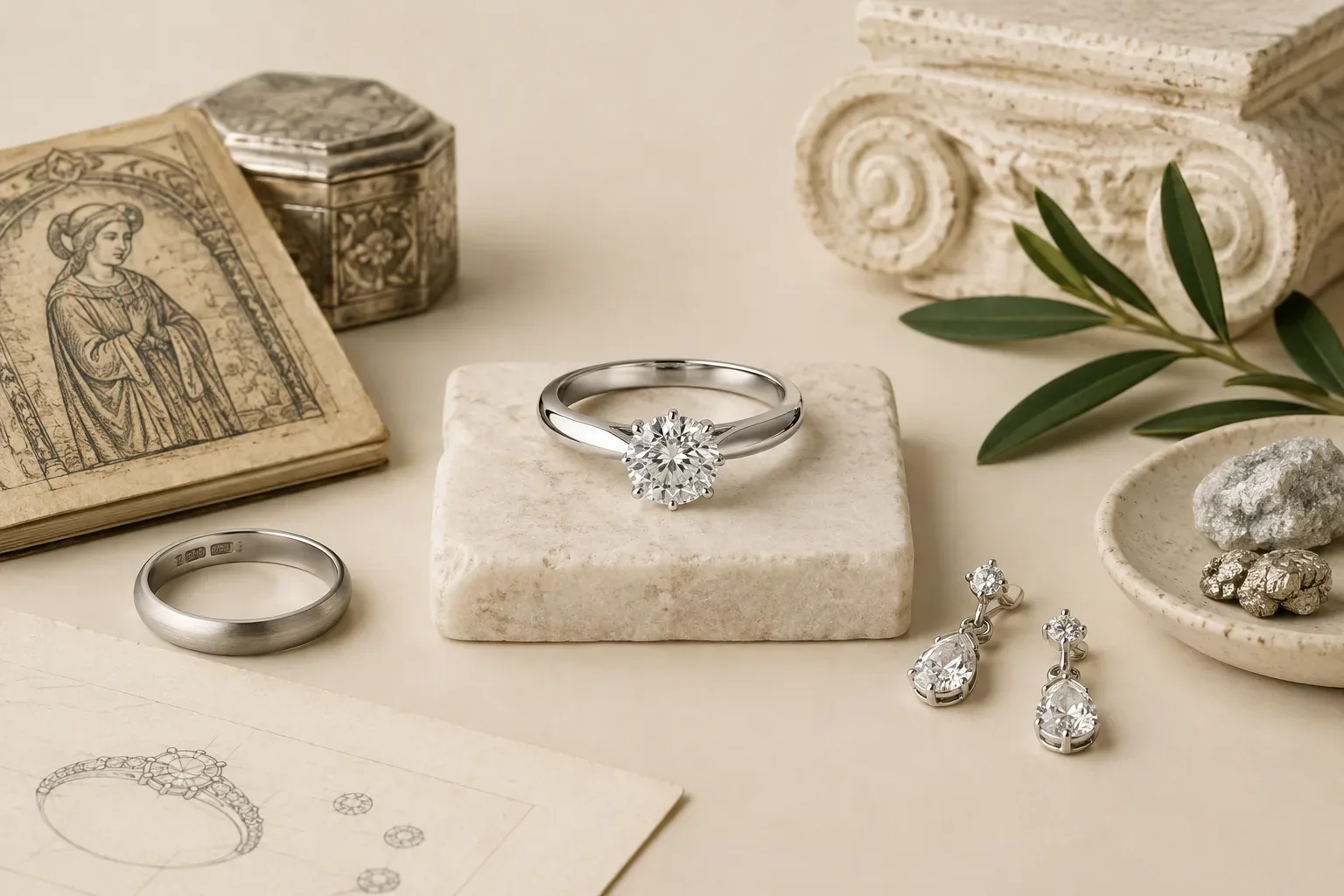
Meaning at a glance
White gold jewelry explained: white gold is an engineered alloy used as a pale setting metal and fashion statement; museum research shows shifts in taste that made pale metals popular in specific historical periods, while consumer-protection guidance stresses asking sellers about alloy content, surface plating, and documented hallmarks.
What "white gold" is and why composition matters
Technically, "white gold" is not a single pure metal but a working term for gold that has been combined with one or more other metals to produce a paler color than natural yellow gold. The exact alloying metals and treatments used to achieve the color are variable, and modern commercial pieces may receive a surface coating to enhance the white appearance.
Because "white gold" can mean different alloy recipes and finishing treatments, the composition matters for durability, color stability, and wearer safety. Consumer-focused authorities recommend that buyers ask sellers for clear information on the alloy and any surface finishes or treatments applied to a piece, rather than assuming every piece labeled "white gold" is the same.
How hallmarks and marks indicate metal and why disclosure matters
Hallmarks, stamps, and written certification are the standard routes by which sellers and assay offices communicate the metal content and quality of a piece of jewelry. Systems vary by country, and a hallmark may indicate a legally monitored standard, an assay office check, or simply a maker's mark. Because the presence and meaning of marks vary internationally, buyers should read marks together with written documentation and, when necessary, a reliable assay or laboratory report.
Consumer-protection guidance emphasizes disclosure for treated metals and plated surfaces. When a piece has a surface finish or plating that affects appearance, sellers are expected to disclose those treatments so consumers understand both how a piece will look initially and how its appearance might change with wear and over time.
Historical evidence and changing contexts
Museum research demonstrates that the metals and colors used in jewelry are not fixed in meaning; they change as tastes, technologies, and social contexts evolve. The Victoria and Albert Museum documents how different historical periods and cultural moments favored different metals and aesthetics, and how innovations in metallurgy and gem-cutting influenced jewellery design.
In particular, shifts in fashion during the later nineteenth century and the early twentieth century made paler metals and white-colored settings more fashionable in many Western markets, a context the Victoria and Albert Museum highlights when discussing the history of jewellery and changing social context. Those shifts were shaped by new industrial capabilities, changing tastes in dress and adornment, and the availability of alternative metals and finishes.
Documented historical meanings versus modern personal interpretations
Where historical evidence exists, it is important to distinguish what is documented from what has become a later interpretation. Museum scholarship documents that choices about metal and finish historically reflected taste, technology, and class signifiers rather than a single symbolic meaning. For example, the use of paler metals in certain periods is documented as a stylistic preference linked to broader aesthetic movements and available technology, as noted by the Victoria and Albert Museum.
Modern symbolic or personal meanings attached to white gold—such as associating it with contemporary ideals of minimalism, neutrality, or a perceived modernity—are recent interpretations that reflect current fashion narratives rather than continuous historical symbolism. Those modern meanings can be meaningful to wearers today, but they are cultural overlays rather than universal or ancient traditions.
How white gold appears in jewellery practice
In practical terms, white gold is most commonly used as a setting metal and as a fashion choice when a silvery backdrop is wanted for gemstones and designs. Museums that study gemstones and their settings note that jewellers have long chosen metals with an eye to how they present and protect stones; a paler metal can make a light-colored gemstone appear brighter and support particular stylistic effects.
White gold is therefore frequently encountered in engagement rings, wedding bands, and pieces designed to showcase diamonds and pale gemstones. The material is used both for small settings and for larger, more decorative forms, and it can be finished in ways that emphasize sheen, polish, or subtle texture.
Practical guidance for choosing and gifting
When selecting white gold for yourself or as a gift, start by asking the seller for clear, written details about the piece: what the underlying alloy is, whether the surface has been plated or treated, what hallmarks or marks are present, and whether any certification accompanies the piece. If the recipient has known metal sensitivities, particularly to nickel, confirm whether the alloy or plating could trigger a reaction and consider alternatives if needed.
Think about how the piece will be worn. If you want longevity of color without frequent replating, discuss with the retailer how the piece is finished and how it should be maintained. If the gift will bear sentimental value—such as an engagement ring—consider purchasing documentation of metal content and any gemstone reports to keep with the piece. For respectful gifting across cultures, focus on the personal meaning you attach to the gift and avoid asserting universal symbolic claims about the metal.
Consumer protection and disclosure you can rely on
Government consumer guidance stresses the importance of transparent disclosure when materials are treated or finished to alter appearance. Sellers should make clear whether a metal has received surface plating or other cosmetic treatments and whether any gemstones have been treated so that buyers can make informed choices and compare offers accurately.
If a seller cannot or will not provide satisfactory disclosure about alloy composition or surface finishes, consider seeking a different retailer or asking for an independent appraisal. National consumer agencies also provide advice for buyers who suspect misrepresentation, and shoppers are entitled to ask questions about the lifecycle and maintenance needs of a piece before buying.
Care, maintenance, and long-term considerations
Because some surface finishes can wear with time, buyers should plan for maintenance. Ask how the piece should be cared for and whether the finish can be renewed by a reputable jeweller. Keeping documentation about the metal and finish with the piece will help future service professionals perform appropriate maintenance.
Finally, think of white gold not as inherently more or less valuable than other precious metals, but as one choice among many with trade-offs in appearance, maintenance, and wearer compatibility. Matching the material to the wearer’s lifestyle and priorities will yield the most satisfactory long-term result.
Where to read further and how to research
For broader historical context about how jewellery materials and tastes have changed, museum resources such as the Victoria and Albert Museum provide overviews of jewellery history and the relationships between gems, metals, and design trends. For guidance on consumer rights, disclosure, and how treatments and finishes should be communicated to buyers, consult consumer protection resources such as those produced by national agencies.
If you want to research a specific piece, start by collecting whatever marks and paperwork come with it, consult reliable museum or reference material about that period or style, and, if necessary, obtain an independent assay or laboratory report to confirm metal content and treatments.
Frequently asked questions
What exactly is white gold?
White gold is a term for gold that has been combined with other metals to produce a paler color and often finished with a surface treatment. Because recipes and finishes vary, ask the seller for written information about the alloy and any surface treatments.
How do hallmarks help me when buying white gold?
Hallmarks, stamps, and certificates can indicate metal content and standards, but systems differ by country. Use hallmarks together with seller disclosure and, if you need certainty, an independent assay or laboratory report.
Does white gold need special care or replating?
Some white-finish jewellery receives surface treatments that can wear over time. Ask the retailer how the piece is finished and what maintenance or replating may be required to retain color and luster.
Is white gold hypoallergenic?
Hypoallergenic properties depend on the specific alloy and any plating used. If allergy to metals like nickel is a concern, confirm alloy details with the seller and consider alternatives if necessary.
What should sellers disclose about white gold?
Sellers should disclose material treatments, surface plating, and any alterations that affect appearance. Consumer-protection advice recommends clear disclosure so buyers can compare pieces and understand long-term care.
Sources and further reading
- Bedazzled: A History of Jewellery — Victoria and Albert Museum
- An A-Z of Gemstones — Victoria and Albert Museum
- Buying Gemstones, Diamonds, and Pearls — Federal Trade Commission