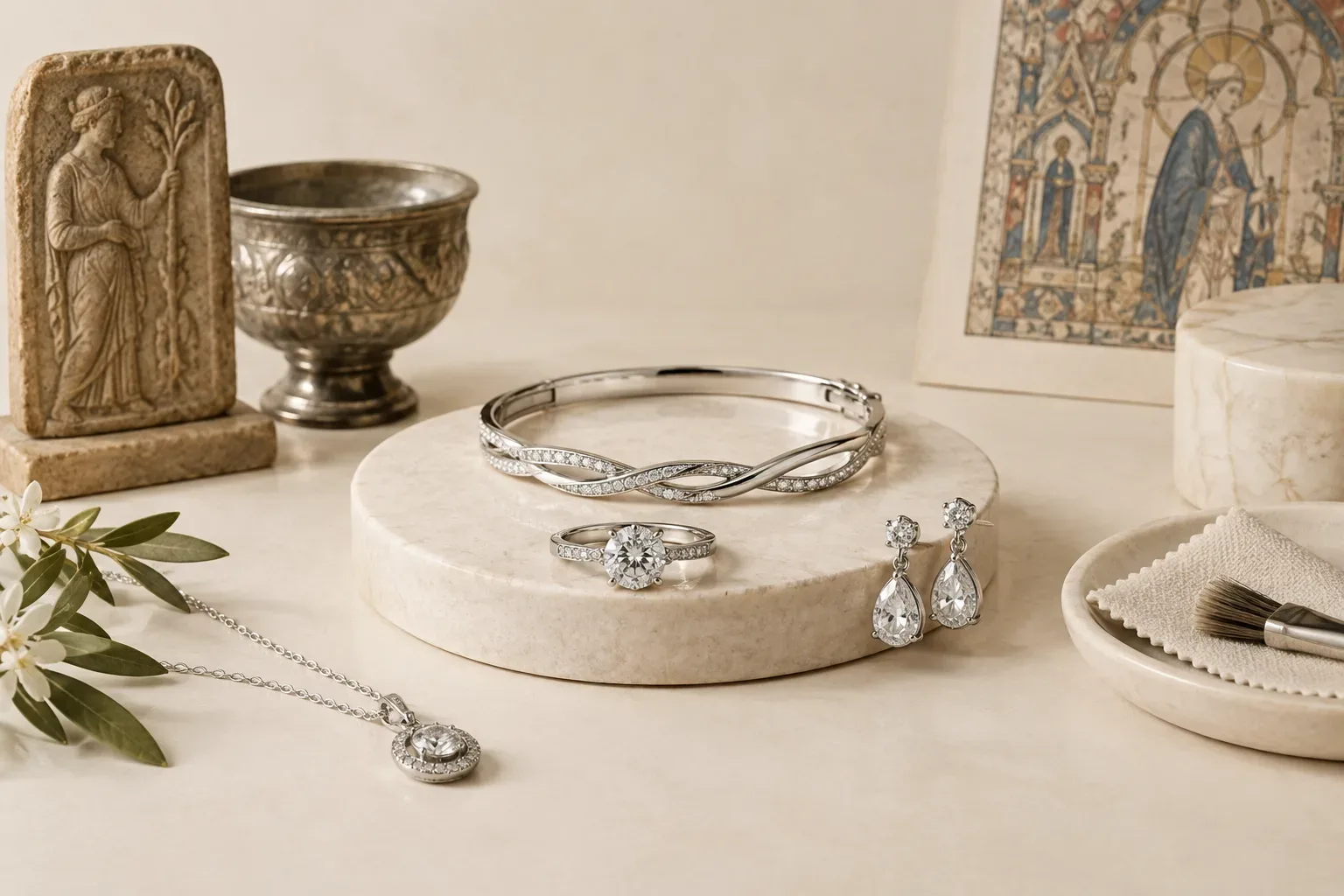
Meaning at a glance
White gold jewelry durability depends on both the metal alloy and any surface treatments; historical sources show tastes in pale metals shifted with fashion and technology, while modern meanings are personal—ask sellers about treatments, follow routine care, and choose pieces that match the wearer’s lifestyle.
What museum histories tell us about pale metals and changing tastes
The long story of jewellery is one of changing materials and social meanings, and museum scholarship emphasizes how tastes shift with technology, trade, and fashion. The Victoria and Albert Museum’s materials on the history of jewellery describe how different metals and finishes became fashionable in different eras and how their social roles changed as techniques advanced and new markets emerged. The V&A places pieces in the context of their makers, patrons, and technologies rather than treating material choices as universally meaningful.
That broader pattern—different periods preferring different metals or visual effects—helps us read contemporary choices about white metals in context. Where older collections might show the predominance of yellow or red-hued gold in certain places and periods, later centuries and modern fashion have included paler metals in popular designs. The point from the V&A’s work is not that any single metal carries one fixed meaning across cultures, but that material choice reflects changing taste, available technology, and social context.
Documented historical meanings versus modern personal interpretations
When assessing what 'white' or pale-metal jewellery meant historically, rely on documented provenance and museum interpretation rather than on later claims of universal symbolism. The V&A’s exhibition and interpretive materials give social and material context for pieces in their collections: they document when a technique or material was used and why it mattered in that period, such as signalling modernity, responding to a fashion trend, or taking advantage of a new production method.
Modern wearers and designers frequently attach personal meaning to white gold—associating it with minimalism, contemporary style, or pairing it with particular gemstones. Those modern meanings are valid as personal or cultural preferences, but they should be distinguished from documentary claims about historical symbolism. In short, documented historical meanings come from museum records and provenance; modern interpretations are often aesthetic, personal, or market-driven.
How white metal choices and gemstones appear in jewellery (what to look for)
In museum and commercial collections, pale metals are commonly used for settings that emphasize the colour and brilliance of pale gemstones. The Victoria and Albert Museum’s A–Z of Gemstones describes how gem properties and setting choices interrelate: jewellers have long selected metals and finishes that complement the colour, brilliance, and hardness of specific gems. A paler metal surface can make a diamond appear brighter or change the perceived tone of lighter-coloured stones.
In practical terms you will see white metal used in banded forms such as engagement rings and wedding bands, in mountings for diamonds and light-coloured gemstones, and in more modern-looking chains and contemporary motifs. Museum inventories and object descriptions typically identify the metal and the setting technique, and these records are the documented way to establish how a particular piece was made and used.
Durability, tarnish, and wear: what the record and consumer guidance say
Museum documentation focuses on how objects were made and how they were used; for modern purchasers, the Federal Trade Commission’s consumer guidance is directly relevant because it requires sellers to disclose treatments and material alterations. The FTC’s guidance on buying gemstones, diamonds, and pearls stresses that retailers must be clear about any treatments or coatings that affect appearance or value.
Applied to white metal jewellery, that means you should ask whether a specific item has a surface treatment or coating and how the maker describes durability and maintenance. Surface treatments and finishes can change a piece’s initial look without changing its underlying alloy. The FTC’s point is procedural and consumer-protection oriented: sellers should disclose material treatments so buyers can make informed decisions.
Practical care guidance based on documented practices and consumer protection
Because museums and consumer guidance both emphasise provenance and treatment disclosure, start by asking your jeweler or seller clear questions about composition and finishes. Ask for written confirmation of the metal content and any surface treatments or coatings. If the seller provides a hallmark or a grading card, keep that with the piece.
Routine care commonly advised by conservators and consumer guides includes keeping jewellery separate from other items to avoid scratches, storing pieces in a dry place away from chemicals, and having a professional inspect settings periodically. If a white-metal finish is a surface treatment, plan for periodic maintenance as recommended by the maker; the FTC guidance underscores that such treatments should be disclosed so you can anticipate future care and costs.
When cleaning at home, use gentle methods recommended by the jeweler or in manufacturer instructions; if you are unsure about a surface treatment or a gemstone setting, let a trained professional clean the item. Museums’ conservation practices are cautious: conservators avoid aggressive methods that can alter an object’s surface or remove historic finishes.
Selecting or gifting white gold: respectful and practical choices
Selection and gifting should combine aesthetic, practical, and documented considerations. Start with the wearer’s lifestyle—do they require hard-wearing jewellery for daily use, or will the piece be occasional? Consider the gemstones involved: consult the Victoria and Albert Museum’s A–Z of Gemstones for background on how particular stones are traditionally presented and what kinds of settings they require.
Ask the seller for written disclosure of the metal content and any coatings or treatments, and save receipts and any warranty or care instructions. If the piece is intended as a sentimental gift, consider choosing a style whose finish and maintenance requirements match the recipient’s preference and willingness to maintain the piece. When in doubt, a clear conversation about care, expected wear, and costs of maintenance will make the gift more thoughtful and practical.
Finally, when you present the gift, include the documentation, and if appropriate, a short note with care suggestions or a plan for periodic inspection; that will help the recipient understand both the meaning you intend and the practical measures that keep the item looking its best.
Distinguishing provenance-based meaning from personal symbolism
If you aim to convey a particular meaning with white gold—such as modernity, purity, or continuity—be explicit about that intention, but do not present it as an historical universal. The Victoria and Albert Museum’s curatorial approach shows that meanings assigned to jewellery are historically contingent. Museums document provenance, attribution, and the contexts in which objects were used; they do not treat material choices as carrying a single, fixed symbolism across time and place.
Therefore, document-based claims about meaning should rely on provenance and cited sources; personal symbolism is valid for the wearer but should be framed as a contemporary interpretation rather than as a historical fact.
Quick checklist before you buy or gift
Ask the seller for clear documentation of metal content and any surface treatments. Consider whether the wearer’s daily activities suit the finish and setting. Save receipts, hallmarks, and seller disclosures. Plan for periodic inspection and conservative cleaning. Use museum resources such as the Victoria and Albert Museum’s materials to understand historical context, and refer to consumer guidance from the Federal Trade Commission if you have questions about disclosure or treatments.
Final summary
White gold jewellery durability is a combined question of material, surface treatment, and use. Museum histories from the Victoria and Albert Museum show that material choices have varied with fashion and technology, while the Federal Trade Commission emphasises retail disclosure of treatments that affect appearance and value. Distinguish documented historical evidence from modern personal interpretation, ask sellers about composition and treatments, and choose or gift pieces that match the wearer’s lifestyle and willingness to maintain them.
Frequently asked questions
Does white gold tarnish?
White gold can show surface changes over time. Modern sellers should disclose whether a piece has a surface treatment or coating that affects appearance; consult the seller’s documentation and care guidance before purchasing.
How should I care for a white-gold ring?
Keep the ring stored separately to avoid scratches, follow any maker or seller cleaning instructions, and have a professional inspect settings periodically. If a surface treatment has been applied, ask the seller for recommended maintenance.
What should I ask the jeweler before buying white gold?
Ask for written confirmation of metal content, any surface treatments or coatings, maker care recommendations, and any warranties. The Federal Trade Commission advises that sellers disclose treatments that affect appearance or value.
Are meanings attached to white gold universal?
No. Museum documentation shows that meanings attached to materials vary by time, place, and context. Modern associations—such as viewing white gold as contemporary or minimalist—are valid personal or cultural interpretations but are not universal historical facts.
Is specialist cleaning required for gemstones set in white metal?
Gemstone care depends on the stone. Consult resources such as the Victoria and Albert Museum’s A–Z of Gemstones for context on specific gems, and follow professional advice when a piece has an unknown finish or delicate setting.
Sources and further reading
- Bedazzled: A History of Jewellery — Victoria and Albert Museum
- An A-Z of Gemstones — Victoria and Albert Museum
- Buying Gemstones, Diamonds, and Pearls — Federal Trade Commission