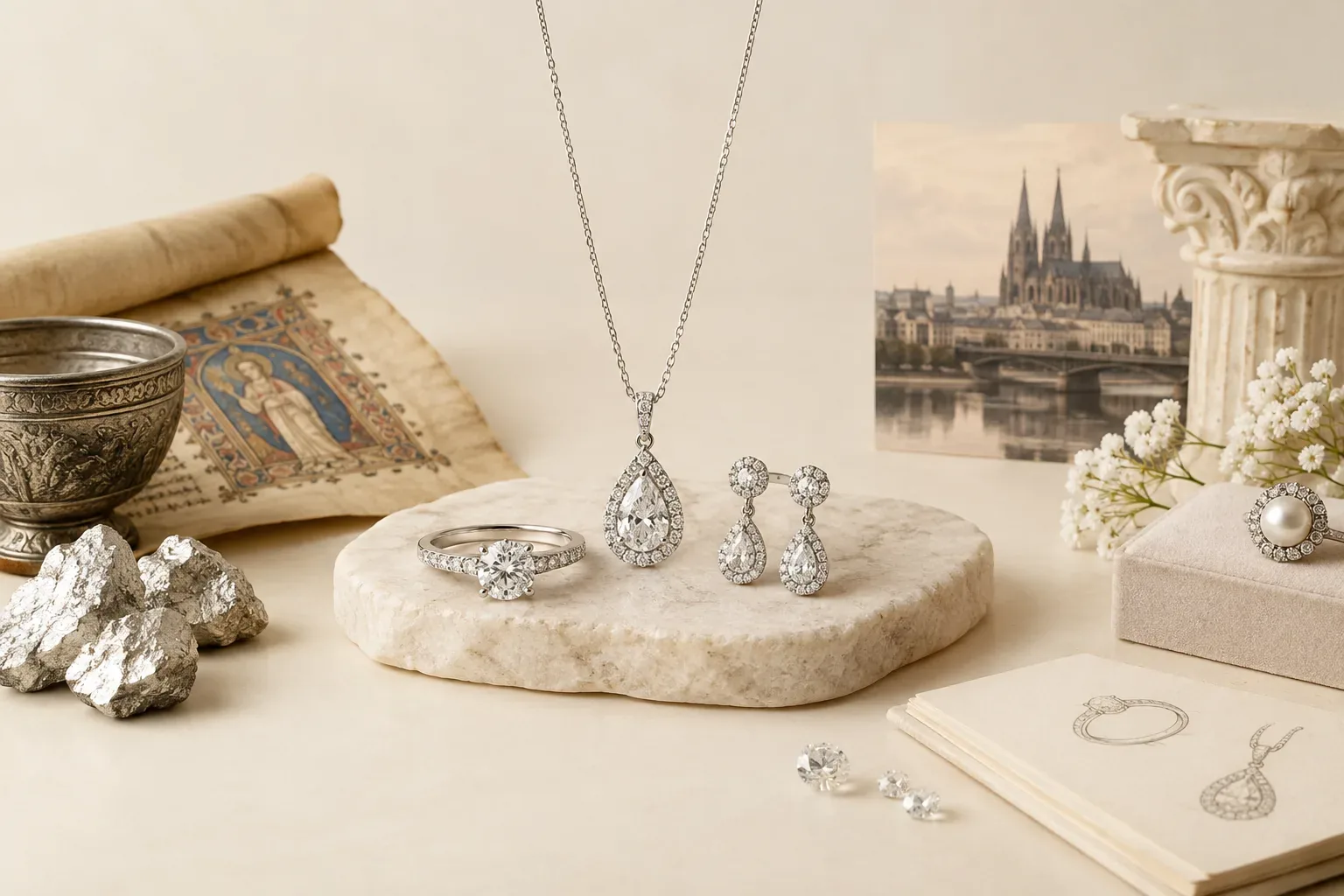
Meaning at a glance
This white gold jewelry buying guide explains the documented history and changing contexts of white metal use in jewelry, separates historically attested meanings from modern personal interpretations, shows how white gold appears with common gemstones and motifs, and gives practical, respectful advice for selecting, buying, and gifting white gold pieces.
What ‘‘white gold’’ means in practice
In modern jewellery, the term white gold describes gold that appears silvery rather than yellow because of alloying and finishes. Makers combine gold with other metals to change color and physical properties and often apply a bright white surface finish to achieve a specific look. The choice of white metal is a visual and material decision rather than a single universal symbol, and it is expressed through finishes, settings and the gemstones used alongside it.
Documented history and cultural periods
For a long view, museum scholarship emphasises that jewellery and the metals used in it change meaning as cultures and technologies change. The Victoria and Albert Museum’s overview of jewellery history demonstrates that gold and gem use has varied from ancient Egypt through classical antiquity, medieval and Renaissance Europe, the 18th–19th centuries, and into modern mass production and design movements. Those broad cultural periods each have distinct practices, materials and social contexts recorded in museum collections and catalogues.
It is important to note that specialised white-metal alloys or the specific finish we call ‘‘white gold’’ are products of relatively recent metallurgical and commercial practice in the modern jewellery industry. The museum record shows continuity in the desire for pale metal tones and gem settings, but museum accounts place shifts in technique and taste within particular periods and places rather than treating any one meaning as universal.
Documented historical meanings versus modern personal interpretations
Documented historical meanings come from objects, inscriptions, provenance and curatorial interpretation. The Victoria and Albert Museum’s materials link specific jewellery forms and gemstones to historical functions—such as status display, commemoration and personal ornament—within the cultures and periods they study. Those documented meanings are tied to particular times and places and should be cited as such when you explain why a piece mattered in its original context.
Modern personal or commercial interpretations—claims that a metal or motif ‘‘always’’ means something today—are separate. Contemporary wearers often ascribe personal meanings to white metals (for example, associating the colour with modernity, neutrality or minimalism). Those modern associations are valid personal or stylistic meanings, but they are not the same as the historical uses documented by museum research. Treat historical claims as contextual and culture-specific, and treat present-day meanings as individual or market-driven choices.
How white gold appears in jewellery design and with gemstones
White gold is used in many familiar forms: rings (including engagement and wedding rings), earrings, bracelets, necklaces and settings for mounted stones. Designers select white metal to set light-coloured gemstones such as diamonds, white sapphires, morganite or pearls when the goal is a cool, continuous appearance between stone and metal.
Museum guides to gemstones stress that the choice of setting affects how a stone reads visually and symbolically. The Victoria and Albert Museum’s A–Z of Gemstones explains that different stones have long cultural associations and that settings and metal colour interact with those associations in different periods. In practice, white gold is often chosen to make pale stones look brighter, to emphasise clarity in a diamond, or to create a neutral backdrop for coloured gems when a contemporary aesthetic is desired.
Quality factors to check when buying
Ask for and verify hallmarks or maker’s marks that indicate metal content and origin. Good retailers will show you clear marks and be willing to explain them; museum catalogues stress the importance of provenance and markings in understanding an object’s authenticity and history.
Confirm the karat or fineness of the gold and, when relevant, whether a white surface finish has been applied. Sellers should disclose any plating, coating or surface treatments applied to the metal, and you should receive clear information about maintenance needs. Consumer guidance from the Federal Trade Commission requires truthful disclosure about material treatments and imitations, so ask for written confirmation of any finishes or treatments.
Inspect gemstones and request documentation. For diamonds and high-value gems, ask whether a grading report or certificate is available. The FTC advises buyers to seek clear information about gemstone treatments and about the origin or certification of valuable stones.
Examine workmanship: settings should hold stones securely, shanks and clasps should be well finished, and any filigree or pavé work should be regular. If you can, view the piece at different angles and under good light to check for soldering marks, misaligned stones, or inconsistencies in colour and finish.
Price considerations
Price depends on multiple variables: the gold content, the presence and quality of gemstones, the complexity of craftsmanship, brand or designer premium, and whether the metal has a plated finish that may require future maintenance. Because white gold involves alloying and often a surface finish, the visible colour does not tell you the full story of cost or metal content; rely on hallmarks and seller documentation.
When comparing to other white metals, consider long‑term value and wear characteristics as well as upfront price. Some buyers accept periodic re-finishing or replating costs in exchange for the look of white gold, while others choose alternative metals for different wear or investment profiles.
Care, maintenance, and wear
White gold finishes can change with wear and exposure. Sellers should explain recommended care and whether a surface finish will need restoration over time. Cleaning methods for gold and set stones are gentle: remove oils and dirt using recommended cleansers or the retailer’s instructions and avoid abrasive chemicals or rough handling that could damage prongs or pavé work.
If the wearer has sensitive skin, ask about the alloying metals used to achieve the white colour and whether the item has a protective surface finish. Discuss allergies with the seller so you can choose an alloy or finish compatible with the wearer’s needs.
Practical and respectful selection or gifting guidance
Start from the recipient’s existing jewellery: match metal colour and style where possible. If they regularly wear yellow gold, a white-metal piece might be appreciated as a deliberate contrast, but it may be less likely to be worn every day than a piece that matches their usual metals.
Consider lifestyle and function. A daily-wear ring needs a robust setting and comfortable profile; an occasional pendant can prioritise delicacy or sparkle. Ask the seller about durability for the intended use.
Be culturally and personally attentive. Jewellery meanings are culture- and context-dependent; if a piece is intended to carry a specific symbolic message, research that symbol or motif within the recipient’s cultural context. Use museum and reputable cultural sources for historical meanings, and separate those from contemporary personal readings. For general help selecting meaningful jewellery, see our practical gift guide and the history of lockets for ideas about memory and sentiment.
Checklist for buying with confidence
Before you buy: check hallmarks and karat; ask for written disclosure of any plating or treatments; request gemstone certificates where relevant; examine workmanship; and confirm return and warranty terms. When gifting: match style, consider allergies and lifestyle, and be clear about what the metal and any motifs mean to you and to the recipient. Museums and consumer agencies recommend documenting provenance and treatment for future care and resale if that matters to you.
Final note
White gold is a flexible modern metal choice with distinct visual effects and practical considerations. Use documented historical sources to understand how materials and settings have meant different things in different times and places, and rely on consumer protections and transparent disclosure when buying. With careful questions and attention to workmanship and certification, you can select white gold pieces that suit both the wearer’s style and the long-term realities of care and value.
Frequently asked questions
Is white gold ‘‘real’’ gold?
Yes. White gold is still gold alloyed with other metals to alter its colour and properties; the precise gold content should be shown by a hallmark or karat marking and the seller should confirm any alloy or finish.
How does white gold differ from platinum or silver?
The difference is in composition and properties: platinum and silver are distinct metals, while white gold is an alloy of gold with other metals and frequently has a white surface finish. These metals differ in weight, wear and how they interact with gemstones and skin; consider documentation and the feel of the piece when comparing options.
Do sellers have to tell me about plating or treatments?
Yes. Consumer guidance from the Federal Trade Commission emphasises that sellers must disclose material treatments, coatings or imitations. Ask for written confirmation of any plating, coatings, or gemstone treatments before purchase.
Will a white gold finish last forever?
No finish is guaranteed to be permanent. Surface finishes may wear with everyday use; reputable sellers will explain expected maintenance and whether refinishing or replating is needed over time.
How do I know a gemstone in a white gold setting is genuine or untreated?
Ask the seller for a gemstone report or certificate for high-value stones and for details of any treatments. The Victoria and Albert Museum’s materials explain how gem types and treatments have varied historically; for purchases, request current documentation and any laboratory grading available.
What should I consider when gifting white gold?
Match the recipient’s usual metal colour and style, consider allergies and lifestyle, and be clear about what, if any, symbolic meaning you intend. Use credible historical sources for cultural meanings and separate those from present-day personal interpretations.
Are there hallmark standards I can rely on?
Look for recognised hallmarks or maker’s marks that indicate metal content and origin; a trustworthy retailer will explain these marks. When in doubt, request independent testing or a written guarantee.
Sources and further reading
- Bedazzled: A History of Jewellery — Victoria and Albert Museum
- An A-Z of Gemstones — Victoria and Albert Museum
- Buying Gemstones, Diamonds, and Pearls — Federal Trade Commission