Meaning at a glance
Explain the documented history and changing contexts of the rose gold jewelry explained motif, separate cultural or religious evidence from later popular interpretations, and give practical guidance for choosing and wearing the motif in modern jewelry.
Quick answer
Rose gold jewelry is gold that has been alloyed with copper (and often small amounts of silver or other metals) to produce a pink to warm red hue. Historically, warm-toned gold alloys have appeared at different times and in different places, and museum scholarship shows tastes and meanings change with social context. Modern buyers should treat color, karat/hallmarks, and any plating or treatments as distinct facts: ask sellers to disclose whether a piece is solid alloy, plated, vermeil, or treated, and check hallmarks and written descriptions before purchase.
What rose gold is and how it is made
Rose gold is not a single fixed composition but a family of gold alloys whose pink color comes primarily from the presence of copper. Because copper adds the warm hue, changes in copper content alter the tone from pale pink to deeper red. Jewelers may also include small amounts of silver or other metals to moderate color and workability. The resulting material can be used as solid alloy, as plating over a base metal, or as vermeil (gold plated over sterling silver).
How hallmarks and markings signal content
Assay marks and maker stamps remain the practical way to check a piece’s gold content and provenance. A trustworthy listing or label should identify whether the item is a solid gold alloy, plated, vermeil, or a base-metal fashion piece. Look for a stamped mark indicating gold content and any assay office symbols or maker marks; those marks exist to communicate legal or quality information about metal content and origin. Sellers should also provide written descriptions that match the marks on the object.
What sellers must disclose and what consumers should ask
U.S. consumer guidance from the Federal Trade Commission emphasizes accurate descriptions of metal and gem materials, and clear disclosure of treatments or coatings. That means a seller should not present plated jewelry as solid gold, and they should explain when an item is gold-filled, gold-plated, vermeil, or an alloy of a particular karat. For consumers, the practical questions are: is the piece a solid alloy or plated? What is the stated karat or fineness? Are any gemstones natural, treated, or synthetic? Seek written confirmation, receipts, and any hallmark references before committing to a purchase.
Documented historical evidence and cultural contexts
Museum scholarship and collections trace how preferences for gold color have shifted depending on fashion, technology, and cultural context. The Victoria and Albert Museum frames jewelry as an object whose meanings and uses change with social conditions, and museum collections show that tastes for warmer or pinker gold tones have appeared and reappeared as part of wider stylistic trends. For example, exhibitions and curatorial overviews at the Victoria and Albert Museum document how nineteenth- and early twentieth-century European fashions, advances in metallurgy, and the jewellery trade influenced the variety of gold alloys and their popularity in different periods.
Those museum records document use and context—what people wore, how items were made, and how styles circulated—but they do not claim a single, universal symbolic meaning for a metal color. Instead, museums show that meanings are contingent: a warm-hued gold may have been chosen for its fashionability, its perceived warmth against the skin, or because it complemented certain gemstones or garments in a particular place and era.
Separating historical meanings from modern interpretations
Historical evidence recorded by museums and curators speaks to documented practices: who wore a piece, what materials were used, and how jewellers constructed objects. Those records do not automatically equate to fixed symbolic meanings. Modern claims—such as assigning a single emotional or spiritual meaning to rose gold—are contemporary personal interpretations unless backed by historical documentation. If, for instance, a nineteenth-century piece is known from museum records to be part of mourning or sentimental jewellery, that context is a documented historical meaning. Conversely, the current marketing narrative that rose gold always means 'romance' or 'femininity' is a modern framing that grew with contemporary fashion and should be treated as such unless supported by period evidence.
How the look and motifs appear in jewelry
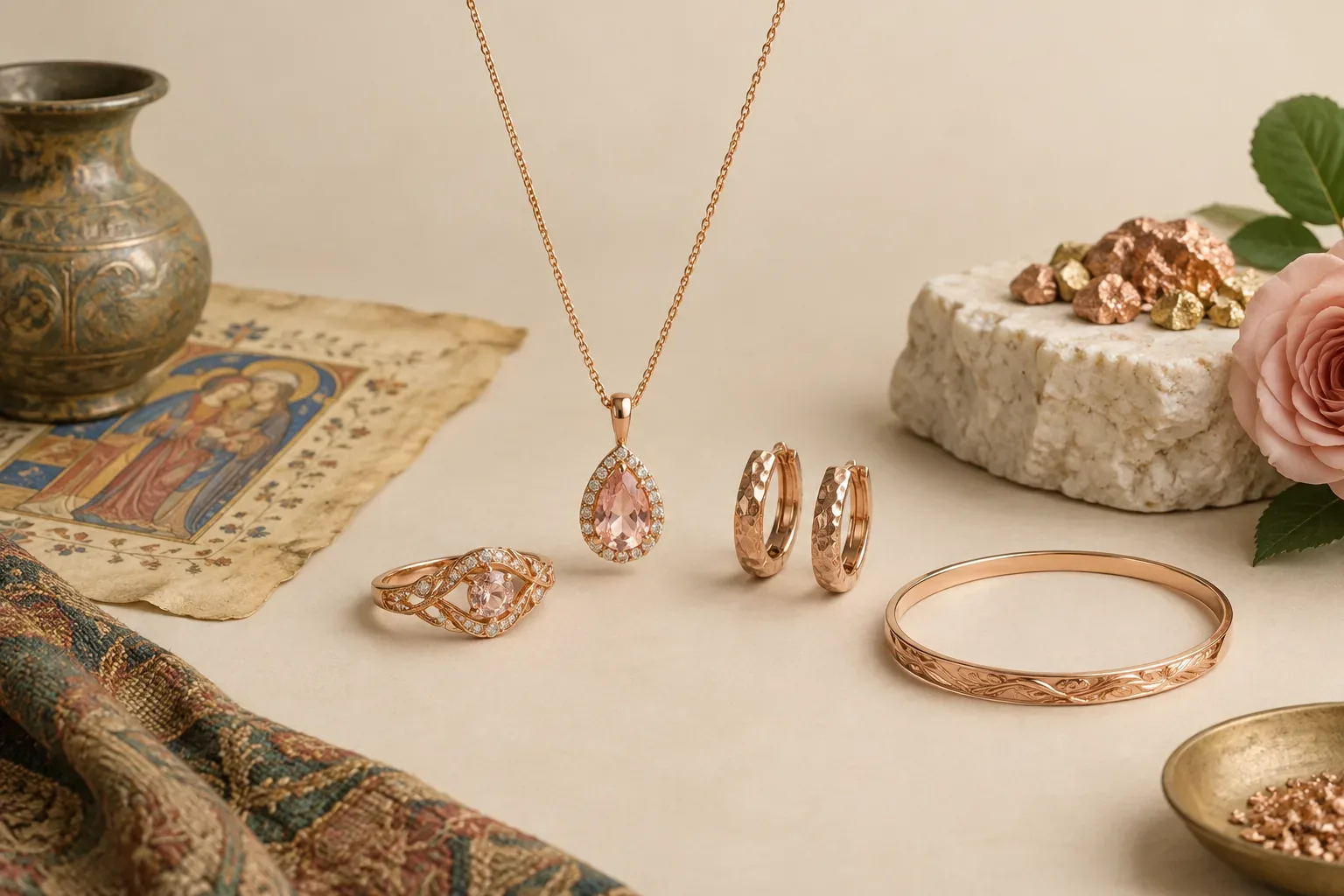
Rose gold can be the primary metal of a ring, necklace, bracelet, or earring, or it can be used as an accent—bezel settings, prongs, or decorative elements—to warm the overall palette. Jewelers often pair rose gold with warm-toned gemstones because the metal’s hue complements peach- and pink-toned stones, while cooler stones can create a deliberate contrast. Rose gold is also commonly used in mixed-metal designs and in contemporary reinterpretations of classic forms such as signet rings and lockets. Museum catalogues and gemstone guides at institutions like the Victoria and Albert Museum show long-standing practices of combining specific metals and stones for visual and social effect.
Practical guidance for choosing or gifting rose gold
Choose based on material facts, wearability, and the recipient’s preferences. First, ask whether a piece is plated, vermeil, gold-filled, or a solid alloy and check stamp marks and written descriptions to match those claims. If the recipient has metal sensitivities, know that higher copper content can affect skin reactions and that plating can wear away over time. Consider the recipient’s lifestyle: plated fashion pieces may be fine for occasional wear, while a solid alloy is a better choice for everyday jewelry such as wedding bands.
Respect cultural and personal associations. Rose gold is widely fashionable today, but tastes and symbolic associations vary; choose a piece that aligns with what you know about the recipient rather than relying on broad generalities. For an heirloom or long-term gift, prefer pieces with clear material identification and, if possible, a written appraisal or description that documents content and any treatments.
When buying vintage or antique rose-hued jewelry, consult museum records or a qualified appraiser if you need confirmation of age, materials, or historical context. Museum collections and guides can illuminate how similar items were used or understood in their original contexts, which is helpful when gifting a piece for its historical resonance.
Care and maintenance considerations
Care depends on whether a piece is solid alloy or plated. Solid rose gold alloys are durable but may acquire surface scratches and patina over time; routine cleaning with gentle soap and a soft brush is usually appropriate. Plated items will show wear faster and may require re-plating if you want to maintain the original appearance. If a piece contains gemstones, consult gem information and a jeweller to confirm safe cleaning methods. Always store jewelry separately to avoid abrasion and ask the seller for recommended care instructions specific to the piece.
Final notes on authenticity and research
Use hallmarks, seller disclosure, and reputable expertise to verify claims about metal content and treatments. The Victoria and Albert Museum’s material on jewelry history and its A–Z of gemstones are useful starting points for understanding how materials and stones have been used historically, while consumer guidance from the Federal Trade Commission clarifies what sellers should disclose. If historical meaning matters to you or the person you are gifting to, seek documentation or provenance rather than relying on modern marketing claims.
Frequently asked questions
What exactly is rose gold made of?
Rose gold is a gold alloy whose pink or warm color comes mainly from copper mixed with gold and often small amounts of other metals like silver. The precise look varies with the alloying metals and proportions.
How can I tell if a piece is solid rose gold or plated?
Check for stamped marks and ask the seller for a written description. Reliable sellers will state whether an item is a solid alloy, gold-plated, vermeil, or gold-filled. The U.S. Federal Trade Commission advises accurate disclosure of such details.
Does rose gold have a historical symbolic meaning?
Museum records show that the meanings of metal tones change with social context. While specific pieces in museum collections may have documented uses or sentimental meanings, modern symbolic claims (for example, that rose gold universally means romance) are contemporary interpretations unless supported by historical evidence.
Is rose gold suitable for everyday wear?
Solid rose gold alloys are durable and commonly used for everyday jewelry, but copper content can affect scratch resistance and potential skin sensitivity. Plated items will show wear more quickly and may require re-plating for long-term everyday use.
Should I prefer rose gold when pairing gemstones?
Designers often pair rose gold with warm-toned gemstones to create a harmonious palette, but contrast with cooler stones is also common. Museum gemstone guides illustrate many historical pairings and can help you choose combinations that suit your aesthetic.
What should I ask the seller before buying vintage rose-hued jewellery?
Ask for written details about metal content, hallmarks, any documented provenance, and whether the finish is original or restored. If historical context matters, consult a qualified appraiser or references from museum collections.
Sources and further reading
- Bedazzled: A History of Jewellery — Victoria and Albert Museum
- An A-Z of Gemstones — Victoria and Albert Museum
- Buying Gemstones, Diamonds, and Pearls — Federal Trade Commission