Meaning at a glance
This article explains documented Victorian jewelry history and how materials, social status, and daily wear changed with context, separates museum-supported meanings from later personal interpretation, and offers practical buying and gifting guidance.
What the museum evidence shows about Victorian jewelry
Museum scholarship describes Victorian jewelry as part of a larger history in which designs, materials, and uses changed as social conditions changed. The Victoria and Albert Museum frames this as jewelry history shaped by shifting fashions, technology, and social context rather than fixed, universal meanings (Victoria and Albert Museum).
The V&A’s exhibitions and interpretive writing make clear that pieces now called 'Victorian' appear in many registers: personal and sentimental objects, public status symbols, and functional accessories. The museum’s approach emphasizes the documentary record of objects, how they were made, and how they circulated, rather than asserting a single, unchanging symbolic meaning for any motif.
Materials documented by museum collections
Museum catalogues and reference essays record that a wide range of metals and gems were used in nineteenth-century jewellery, and that choice of material was influenced by function, fashion, and access to trade networks. The V&A’s general histories note the presence of traditional precious metals and gems as well as the increased use of novel materials and imitations as manufacturing and markets evolved (Victoria and Albert Museum).
For information about specific gemstones, the V&A’s A–Z of Gemstones gives context about identification, historical use, and the variety of stones that appear in period jewellery. That resource is useful for understanding which gems were prized, how they were described historically, and how museums identify them today (Victoria and Albert Museum).
Status, social meaning, and daily wear in historical records
Evidence presented by museum curators shows that jewellery functioned as a marker of social position for some owners, a token of personal sentiment for others, and sometimes as a practical or decorative accessory worn daily. The V&A emphasises that these roles could overlap and vary by wearer, occasion, and location (Victoria and Albert Museum).
The historical record preserved in museums includes items associated with mourning and remembrance, pieces designed for public display of wealth or taste, and more humble objects worn in everyday life. Surviving objects, provenance notes, and contemporary descriptions together allow curators to describe how jewellery could signal status or sentiment without claiming a single universal meaning for any given motif.
Documented meanings versus modern interpretations
Documented historical meanings are those that can be supported by contemporary sources, museum records, or consistent provenance. For example, when museum documentation links a piece to a burial, a named owner, or a contemporary catalogue description, that is a historical claim supported by evidence (Victoria and Albert Museum).
Modern personal interpretations—how wearers or buyers might experience a motif today—are layered on top of those documented meanings. Contemporary wearers often adopt Victorian forms for aesthetic or emotional reasons that differ from the original context. Museums caution against projecting a single symbolic vocabulary onto all pieces; a motif once used for public display might now be chosen as a private sentimental object, or vice versa.
How motifs, gemstones, and techniques appear on Victorian jewellery
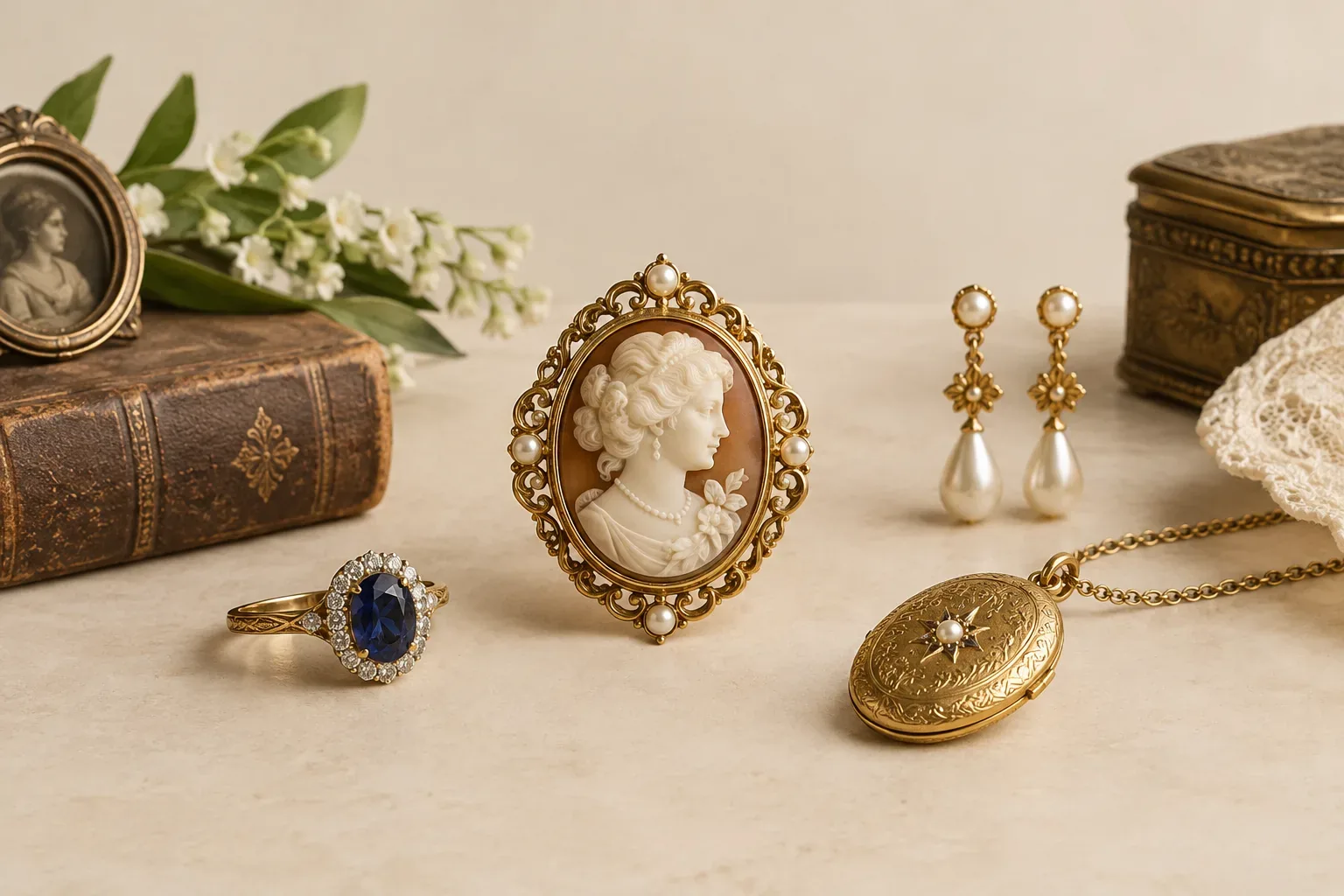
The museum record shows motifs and gems appearing in a variety of formats: pendants and lockets that hold images or keepsakes, brooches and pins that fasten dress, rings and bracelets set with gems or engraved for inscription, and small personal objects that could be carried daily. The V&A’s collections and interpretive materials illustrate how the same motif can be executed in different materials and levels of finish, reflecting the owner’s means and the object's intended use (Victoria and Albert Museum).
The V&A’s A–Z of Gemstones helps identify stones that appear in nineteenth-century jewellery and explains how gem choice relates to colour, durability, and availability. That resource is useful for understanding why certain stones are common in surviving pieces and how conservators and curators identify them today (Victoria and Albert Museum).
Practical, respectful guidance for choosing or gifting Victorian-style jewellery
When selecting a historical or Victorian-style piece, ask for documentary information. If an item is presented as antique, request provenance, condition reports, and any available maker or assay marks that can be verified by a qualified professional. Museum practice stresses the value of evidence when making historical claims about an object (Victoria and Albert Museum).
For gemstone purchases and disclosure of treatments or imitations, follow consumer-protection guidance: ask the seller to disclose treatments, enhancements, and whether stones are natural, treated, synthetic, or assembled. Government consumer guidance recommends that buyers receive clear information about material treatments and imitations so they can make an informed choice (Federal Trade Commission).
Consider the recipient’s tastes and the cultural meanings they attach to motifs. If a design has documented connections to mourning, religion, or a particular community, choose thoughtfully and, when appropriate, discuss the piece’s history with the recipient. Selecting a wearable size and durable materials for everyday use will make the gift practical and respectful of the wearer’s lifestyle.
If buying an original antique, budget for professional conservation or repair as required and request a written condition note. For reproductions, check that the maker discloses modern materials and methods so you are clear about what you are buying.
Care and daily wear considerations
Museum conservators note that surviving jewellery often shows the effects of long-term wear, exposure to cosmetics and household chemicals, and the fragility of certain materials. Choose durable stones and secure mountings for pieces intended for daily wear, and seek professional advice about cleaning and repairs for antique items (Victoria and Albert Museum).
When in doubt about a stone’s identity or a treatment’s permanence, obtain an independent appraisal. The V&A’s reference material on gemstones can help buyers and owners learn more about the properties of common stones in historical jewellery, while consumer guidelines help ensure transparent transactions (Victoria and Albert Museum; Federal Trade Commission).
Putting the evidence to use today
Use museum resources and provenance when you want historically informed pieces. If you are drawn to Victorian forms for their aesthetic, consult reputable guides to gemstones and reputable sellers who provide clear documentation. Treat museum-backed attributions as the best available historical interpretation rather than absolute proof of meaning, and balance historical evidence with your own reasons for choosing a piece.
For gifting, an informed conversation about materials and history turns a piece into a considered present rather than an assumption about the recipient’s values. Where a motif may have sensitive or specific cultural meaning, prioritise respect, information, and the recipient’s perspective over the desire to assign a single fixed meaning.
Closing summary
Museum evidence shows that Victorian jewellery history is best understood as a set of changing practices rather than a single symbolic system. The Victoria and Albert Museum’s work underscores the importance of provenance and object study for historical claims, and the V&A’s gemstone references and consumer guidance from the Federal Trade Commission are useful tools for buyers today. Use documented evidence where available, treat modern interpretations as personal and contextual, and make buying and gifting decisions with transparency and respect.
Frequently asked questions
How can I tell if a piece is genuinely Victorian?
Authenticating a so-called Victorian piece relies on provenance, maker’s marks, assay marks, consistent documentation, and specialist examination. Museums use object records and contemporary sources to support attributions, so request provenance and a condition report and consult a qualified appraiser or a museum specialist when authenticity matters.
Are Victorian motifs always symbolic of the same meaning?
No. Museums warn against assuming a universal symbolic vocabulary. When a motif’s meaning is documented by contemporary sources or provenance, that is historical evidence. Many motifs have layered meanings that changed with wearer, place, and time, and modern wearers may adopt different personal associations.
What should I ask a seller about gemstones and treatments?
Follow consumer-protection guidance and ask whether stones are natural, treated, synthetic, or assembled, and request written disclosure of any enhancements or imitations. The Federal Trade Commission advises buyers to seek clear information so they can make informed purchases.
Is it appropriate to wear Victorian-style mourning jewellery today?
Wearing Victorian-style mourning jewellery can be appropriate if done respectfully and with awareness of its historical associations. If a piece is presented with specific cultural or religious meaning, consider the wearer’s perspective and, when in doubt, choose a piece whose history and symbolism you understand or that is explicitly sold as a modern design.
How should I care for an antique Victorian piece worn daily?
Museum conservators recommend assessing an antique’s condition before regular wear, securing loose settings, and avoiding household chemicals or rough activity. Obtain a professional conservation or repair assessment and follow specialist cleaning advice rather than home remedies when preservation is a priority.
Sources and further reading
- Bedazzled: A History of Jewellery — Victoria and Albert Museum
- An A-Z of Gemstones — Victoria and Albert Museum
- Buying Gemstones, Diamonds, and Pearls — Federal Trade Commission