Meaning at a glance
This article explains how to recognize Renaissance European jewelry motifs and materials using museum-backed evidence, separates what is documented by historians from modern personal readings, highlights frequent mislabels (especially revival pieces), and gives practical, respectful buying and gifting guidance including questions to ask about treatments and provenance.
Historical evidence and cultural context
The Victoria and Albert Museum (V&A) frames jewelry as changing with social, artistic, and technical contexts rather than holding fixed meanings across centuries. When identifying a piece as Renaissance European, consider the specific cultural contexts within Europe: Italian courts and workshops favored a renewed engagement with classical antiquity and luxury materials, while northern European courts combined detailed enamel and jewel-settings with local devotional traditions. The V&A's research underlines that designs and techniques evolved regionally, so precise identification requires comparing stylistic and technical features to documented examples in museum collections.
How the V&A supports dating and identification
Museum collections studies and cataloguing, such as the V&A’s surveys of jewellery history, establish patterns useful for identification: recurring motifs, manufacturing techniques, and material combinations that cluster in particular periods and places. For example, the renewed interest in classical motifs—laurel, acanthus, mythological figures and cameos—appears alongside developments in gem cutting and goldsmithing that museums use to attribute objects. The V&A emphasizes provenance, archaeological context, and comparative typology rather than single stylistic features when assigning a date and origin.
Documented historical meanings versus modern interpretations
Historical meanings recorded by museum scholarship are often context-specific: religious imagery could signal private devotion or public piety in a court context, and a signet or heraldic device related to family identity and legal function. The V&A notes these social and functional contexts rather than universal symbolic dictionaries. By contrast, many modern interpretations graft contemporary personal meanings onto older motifs—for example, reading a classical laurel wreath primarily as a generic 'success' symbol without acknowledging its specific civic or poetic associations in Renaissance Italy. Separate what contemporary owners or sellers claim from what is supported by provenance and scholarship.
How motifs, gemstones, and traditions appear in Renaissance jewelry
Motifs: Classical motifs borrowed from antiquity—cameos of mythic figures, acanthus leaves, and putti—are common in pieces influenced by Italian humanism; devotional motifs such as crosses, Saints, and reliquary settings appear especially in religious contexts and personal devotion. The V&A’s work shows that portrait miniatures and set portraits also developed into wearable formats that carried personal identification and intimacy.
Materials and gems: Pearls, rock crystal, early-cut table or rose-cut gems, and intaglios/cameos were frequently used in period pieces. The V&A’s gemstone overviews explain how certain gem types and cutting styles correspond to different historical periods and aesthetic preferences. Decorative enamel, gold granulation, and filigree are technical signatures that help locate a piece within a region or workshop tradition.
Techniques and traditions: Enamelled medallions, goldsmithing that integrates small portrait miniatures or reliquary compartments, and the use of classical gem carving are recurring technical markers. The combination of motif and technique—such as a classical cameo set in a Gothic enamel frame—can indicate cross-regional influences or later remounting.
Common mislabels and dating pitfalls
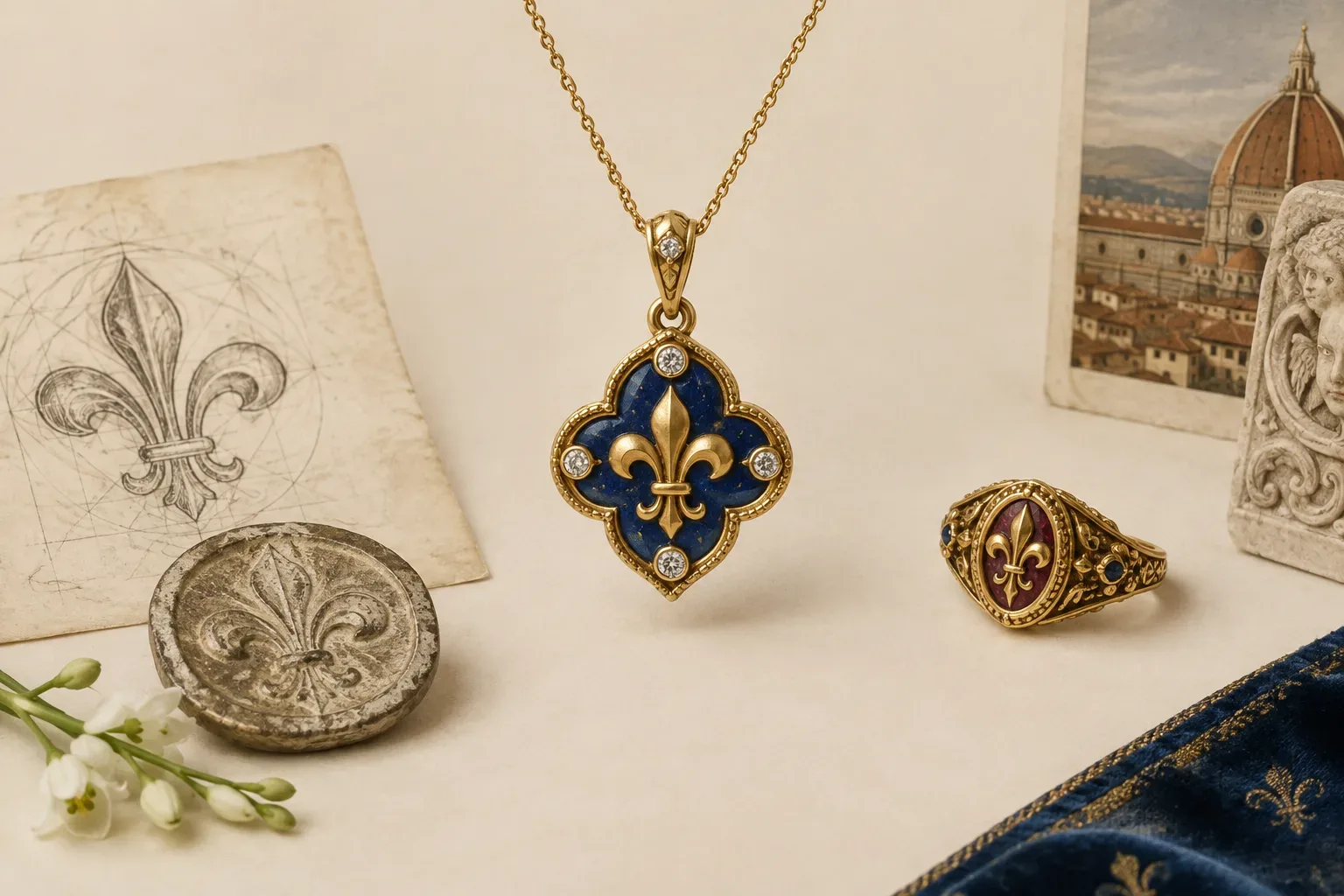
Revival versus original: Many pieces sold as “Renaissance” are 19th-century Renaissance Revival. The V&A documents vigorous revival movements during later centuries that deliberately copied or reinterpreted earlier motifs and techniques. A revival piece can be beautiful and historically interesting, but it should not be conflated with a work made in the Renaissance period.
Generic ‘antique’ labeling: Sellers sometimes use vague terms like “antique-style” or “old European” to imply age without substantiating provenance. The V&A’s curatorial practice emphasizes provenance, condition, and technical analysis over descriptive marketing terms. When a date matters, insist on documentation or testing.
Remounted gems and components: Individual gemstones and cameos have sometimes been reset into later mounts; a Renaissance cameo might be placed in a 19th-century setting. Museum catalogs note that such composite histories are common and must be read as part of an object’s biography rather than as a single-period artifact.
Material misrepresentation: Modern treatments, imitations, and composite stones can mislead buyers about age and value. The Federal Trade Commission (FTC) provides guidance on disclosure of treatments and imitations; always ask for full disclosure and a written statement about any enhancements or imitations.
Practical and respectful selection or gifting guidance
Decide whether you want authentic period work, a documented antique, or a modern piece inspired by Renaissance motifs. Each choice carries different cultural and conservation considerations and different price and care expectations. If authenticity is important, ask for provenance, condition reports, and any laboratory testing available.
Ask specific, respectful questions: who previously owned the piece, what is the documented provenance, has the object been altered or remounted, and are there conservation records? The V&A’s curatorial approach suggests that knowledge of an object’s history is part of respectful ownership and interpretation.
Insist on disclosure about gemstone treatments. The FTC recommends that sellers disclose enhancements, synthetics, or simulants; request written disclosure and, for higher-value purchases, consider independent gemological reports.
Consider context and meaning when gifting. If you choose a motif with known devotional or civic meanings in its original context, be transparent with the recipient about that history and whether the piece is an original or a revival. A historically accurate gift can be meaningful, but modern wearers may interpret the symbol differently—communicate the history rather than assuming a single reading.
Select for durability and wear: historical techniques such as enamel and filigree can be delicate. If the recipient plans to wear daily, prefer sturdy mounts or modern reproductions that mimic Renaissance motifs with contemporary construction for greater longevity.
Use reputable sources: museums, established dealers, and auction houses typically provide better documentation and clearer provenance than unvetted online listings. If buying online, request condition photos and documentation and verify return policies.
How to continue research and verify attributions
Compare a candidate piece with museum catalogues and online collections; the V&A’s publications and online articles are a sound starting point for stylistic comparisons. Look for matching technical features—enamel technique, gem cuts, tool marks—and corroborating provenance.
Where possible, seek professional appraisal or scientific testing. Specialist conservators and independent laboratories can test metal alloys, gemstones, and mounting methods to help determine age and alterations. Treat these reports as part of a cumulative case rather than a single definitive answer.
Record and preserve documentation: conservation reports, certificates, and purchase receipts are part of an object’s responsible stewardship and help future attribution work. Museums emphasize documentation as central to historical understanding and ethical collecting.
Frequently asked questions
How can I tell an authentic Renaissance piece from a 19th-century revival?
Look for corroborating provenance, consistent wear on the mount and components, period-appropriate gem cuts and metalwork, and documentation from reputable dealers or museums. The V&A highlights that technical details, comparative cataloguing, and proven provenance are key; absence of these often indicates a revival or remounting.
What motifs are reliably associated with Renaissance Europe?
Museological research identifies motifs such as classical mythological figures and cameos, naturalistic foliage in a classical manner, devotional images and reliquary forms, and portrait miniatures adapted as wearable items. The exact meaning of any motif depends on its original cultural and social context.
Are pearls, cameos, or other gems proof of Renaissance origin?
Not by themselves. The V&A’s gemstone studies show that materials and cuts can help date a piece, but gems are movable and may be reset into later mounts. Gemstone type, cut, setting style, and documented history together form a stronger basis for attribution.
What should I ask a seller about gemstone treatments?
Ask whether gems have been heat-treated, dyed, fracture-filled, or are synthetic or simulants. The Federal Trade Commission recommends full disclosure of any treatments or imitations; request written disclosure and consider independent gemological verification for high-value purchases.
Is it disrespectful to wear historically religious or civic motifs as modern jewellery?
Not inherently, but be aware of and honest about the motif’s origins. If a motif has specific devotional or civic meaning in its original context, consider whether the wearer’s use might conflict with those traditions and communicate the piece’s history when gifting to avoid unintended offence.
Sources and further reading
- Bedazzled: A History of Jewellery — Victoria and Albert Museum
- An A-Z of Gemstones — Victoria and Albert Museum
- Buying Gemstones, Diamonds, and Pearls — Federal Trade Commission