Meaning at a glance
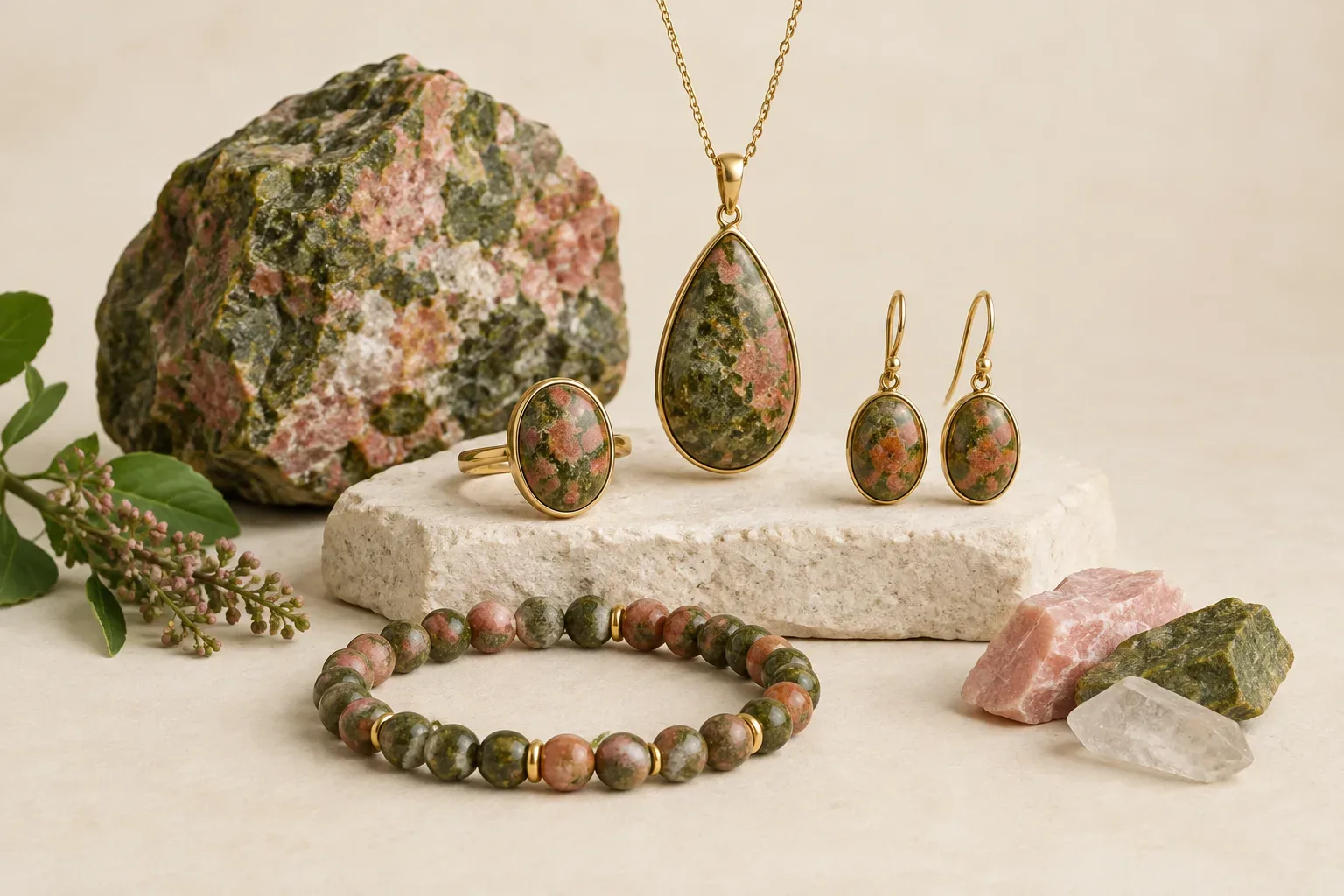
Unakite jewelry meaning begins with geology: unakite is a composite metamorphic rock made of green epidote, pink feldspar, and quartz. Museum and professional literature treat it as a gem material rather than a source of long-documented symbolic meanings. Modern spiritual or emotional associations—balance, renewal, heart-centered renewal—are contemporary personal or metaphysical interpretations rather than historical facts. When buying, ask sellers for disclosure about natural, treated, or imitation material; choose cuts and settings that protect the stone; and care for unakite with gentle cleaning and careful storage.
What unakite is: composition and gem context
In gem and mineral terms, unakite is not a single mineral but a composite metamorphic rock in which green epidote, pink orthoclase feldspar, and clear to white quartz are intergrown. The Smithsonian National Museum of Natural History presents unakite in the broader context of gem materials and minerals, noting how such combinations form attractive patterned surfaces that jewelers and lapidaries work into cabochons, beads, and decorative slices. Because unakite is a rock rather than a single crystalline mineral, its color balance, patterning, and the proportion of constituent minerals can vary widely from one specimen to another, which affects both appearance and performance when used in jewelry.
Historical evidence and cultural record
The professional and museum literature approved for this article treats unakite primarily as a gem material rather than as the bearer of a long-documented cultural symbolism. The Smithsonian’s educational resources place unakite in the context of gems and minerals for teaching and display, emphasizing mineral identity and material context rather than chronicling traditional beliefs tied to this specific rock. Likewise, the Gemological Institute of America discusses treatments and disclosure practices for gem materials but does not record enduring cultural meanings for unakite. Contemporary consumer-protection guidance from the Federal Trade Commission is concerned with accurate product disclosure rather than historical symbolism.
Because these authoritative sources focus on geology, gem treatment, and marketplace transparency, they do not document a clear, traceable line of symbolic meaning for unakite across particular historical cultures or periods. That absence in the museum and professional record is itself an important historical point: there is little in these sources to support claims that unakite carried widely shared symbolic or ritual roles in ancient societies. When you encounter statements about ancient or traditional uses of unakite, check whether those claims are supported by primary historical scholarship or are instead modern attributions.
Documented history versus modern personal interpretations
Distinguish between two categories when discussing meaning. The first is documented historical evidence based in museum, archaeological, or professional records. For unakite, the approved museum and professional literature treats the material as a useful and attractive gem rock but does not present a body of historical symbolism tied to specific cultures. The second category is modern personal, metaphysical, or commercial interpretation. Over recent decades unakite has acquired contemporary associations—often framed as emotional balance, heart-centered healing, or renewal—but these are modern meanings applied by individuals, metaphysical practitioners, and some sellers, not historic facts recorded in the museum or gemological literature cited here.
If you want to speak responsibly about meaning, present modern associations as contemporary and optional: many wearers find resonance in ideas of balance or recovery because the rock’s green-and-pink palette visually suggests an interaction between green (often associated with growth) and pink (often associated with the heart), but such associations are interpretive, not historically documented in the sources used for this article.
How unakite appears in jewelry
Jewelers and lapidaries commonly use unakite in forms that show off its mottled, colorful patterning. Typical presentations include polished cabochons set in pendants or rings, rounded beads strung for bracelets and necklaces, tumbled stones for simple pieces, and thin slices or tiles used as inlay in metalwork or decorative objects. Because the material is a rock with visible, often large-scale patterns, it is frequently cut as cabochons rather than faceted gems so the surface pattern can be read visually.
Designers often pair unakite with silver, oxidized metals, or muted settings that do not compete with the rock’s natural pattern. In contemporary jewelry, unakite may be used in casual and artisan styles where the emphasis is on color and texture. The variability of unakite means that two pieces described identically may look very different in practice; purchasing in person or viewing clear photographs is advisable when pattern and balance matter to you.
Buying guidance: disclosure, treatments, and authenticity
When you buy unakite jewelry, treat it like any gem or ornamental stone: ask the seller whether the material is natural, treated, stabilized, or an imitation, and expect clear answers. The Federal Trade Commission’s guidance for consumers of gemstones, diamonds, and pearls emphasizes full and truthful disclosure about whether a stone is natural, lab-grown, treated, or an imitation. The Gemological Institute of America likewise explains common gem treatments and the importance of disclosure in the marketplace. For unakite specifically, common seller disclosures should address whether the piece is a natural unakite rock, whether dye or resin stabilization has been applied to fill cracks or enhance color, or whether the piece is an imitation made from other materials.
Because unakite is defined by a mix of minerals, some lower-quality specimens may have cracks or weaknesses where the different components meet. Inspect pieces for obvious fractures, large fillers, or surface coatings that change the rock’s appearance. If buying online, request high-resolution images from several angles and ask about mounting and the expected wear behavior in rings or bracelets. Keep documentation of seller claims and receipts in case you need to verify authenticity or return a piece that differed from its description.
Care and maintenance
Care for unakite jewelry with conservative, general-purpose practices suitable for composite, patterned stones. Clean unakite with a soft cloth and a mild soap solution; rinse gently and dry thoroughly. Avoid prolonged soaking in chemicals or household cleaning products and be cautious with ultrasonic cleaners or steam cleaners, as those methods can exacerbate existing fractures or affect any adhesives or stabilizing resins that may have been used. The Gemological Institute of America’s materials on gem treatments remind buyers that certain treatments or enhancers can change how a material responds to cleaning, and the FTC reminds sellers to disclose such treatments so buyers can follow appropriate care.
Store unakite pieces separately from harder gemstones and metals that could abrade their surface pattern. For jewelry that will see rough wear, such as rings or bracelets, prefer settings that protect the stone edge and face, and consider reserve use for pendants or earrings if you are concerned about impact. If a piece contains visible fillers or stabilizers, follow any additional cleaning and care recommendations the seller provides.
Selecting and gifting unakite respectfully
When choosing unakite as a gift, think about the recipient’s style, how they wear jewelry, and whether they value geological authenticity, aesthetic patterning, or symbolic meaning. If you are selecting a piece for its contemporary symbolic associations, present those meanings as personal or contemporary interpretations rather than ancient fact. A thoughtful note explaining why you chose the piece and what the colors or pattern mean to you personally can make the gift more meaningful and avoids overstating historical claims.
Insist on transparent seller information that you can pass to the recipient: a clear description of whether the stone is natural unakite, any stabilizing or color treatments applied, and basic care instructions. Including a small card with the composition (green epidote, pink feldspar, quartz), the seller’s disclosure, and suggested care steps will help the recipient appreciate and preserve the piece. If the recipient prefers a specific style, choose settings and cuts that match their usual wear—for example, protective bezel settings for everyday rings or lightweight beads for comfortable necklaces.
Closing practical note
Unakite jewelry meaning is best approached as a blend of geology, design, and personal interpretation. The rock’s distinctive green-and-pink mosaic makes it attractive as an ornament and an expressive material for contemporary meanings, but museum and professional sources treat it primarily as a gem material. Buy with attention to disclosure, choose settings that suit the stone’s character, and explain any symbolic language as modern and optional rather than historical fact.
Frequently asked questions
Is unakite a gemstone?
Unakite is a metamorphic rock used as a gem material; it is a composite of green epidote, pink feldspar, and quartz rather than a single mineral species.
Does unakite have historical symbolic meaning?
Authoritative museum and professional sources in this article treat unakite primarily as a material and do not document a widely shared historical symbolism; many contemporary meanings are modern personal or metaphysical interpretations.
Can unakite be treated or stabilized?
Sellers may apply stabilization, resin filling, or color treatments to enhance appearance or durability; the Gemological Institute of America recommends disclosure of such treatments, and the Federal Trade Commission requires accurate labeling of treated or imitation materials.
How should I clean unakite jewelry?
Clean with a soft cloth and mild soap solution, rinse and dry thoroughly; avoid harsh chemicals and be cautious with ultrasonic and steam cleaners because composite stones and any stabilizers can respond unpredictably.
What should I ask a seller before buying unakite?
Ask whether the piece is natural unakite, whether any treatment or stabilization was applied, whether fillers or coatings are present, and request clear photos or a return policy; the FTC advises consumers to expect full disclosure about gemstone origin and treatments.
Sources and further reading
- Gems and Minerals: Beauties and Building Blocks — Smithsonian National Museum of Natural History
- An Introduction to Gem Treatments — Gemological Institute of America
- Buying Gemstones, Diamonds, and Pearls — Federal Trade Commission