Meaning at a glance
This guide explains the documented history and shifting contexts of tourmaline valuation, separates historical meanings from later personal interpretations, and gives practical guidance for choosing and gifting tourmaline jewelry.
Quick answer
This article explains the documented history and changing contexts of the tourmaline quality and value factors motif, separates cultural and religious evidence from later popular interpretations, and gives practical guidance for choosing and wearing the motif in modern jewelry. In short: understand color, clarity, cut, treatments and disclosure, and market context; consult reputable sources and ask for documentation when buying; and choose pieces that balance market value with the personal meaning you intend to express.
What the historical record shows
Museum scholarship emphasises that gemstones and the ideas attached to them are not fixed. The Victoria and Albert Museum has documented how jewellery’s social meanings and the criteria by which gems were valued have shifted across periods and places, reflecting changing technology, taste and social practices rather than a single, universal symbolism.
When we look for historical evidence about how particular gemstones were regarded, those records are usually fragmentary and context-specific. The V&A’s overview of gemstones and its exhibitions on jewellery history show that gems have served many functions: status, personal ornament, religious objects, trade goods and sentimental gifts. Written records, inventories and surviving objects tell us about the conditions of use and decoration, but they do not support universal claims about a single meaning for tourmaline across cultures.
Separating documented historical meanings from modern personal interpretations
Documented historical meanings for gemstones tend to come from inventories, wills, religious or ceremonial records and museum catalogues; the Victoria and Albert Museum’s work on gemstone history demonstrates that meanings and values are historically situated. For tourmaline specifically, like many gemstones, documentary traces are often modern and scattered rather than widespread and ancient.
Modern personal and popular interpretations — for example, assigning particular spiritual or healing properties to a gem — are widely held today but usually stem from contemporary beliefs, marketing, or new spiritual practices rather than from consistent historical evidence. Distinguish between what can be demonstrated in primary historical records (objects, inventories, exhibition catalogues) and what is a later or personal layer of meaning. When making or receiving a gift, both kinds of meaning matter: documented history can add cultural interest, while modern personal interpretation can make a piece emotionally significant to the wearer.
How tourmaline and the value-motif appear in jewellery
In museum narratives and collecting practice, gemstones are discussed both as material objects and as markers of taste and technology. The V&A’s A–Z of Gemstones explains how gem identification, cutting and mounting influence how gems are used in jewellery and how their appearance communicates social messages in different periods.
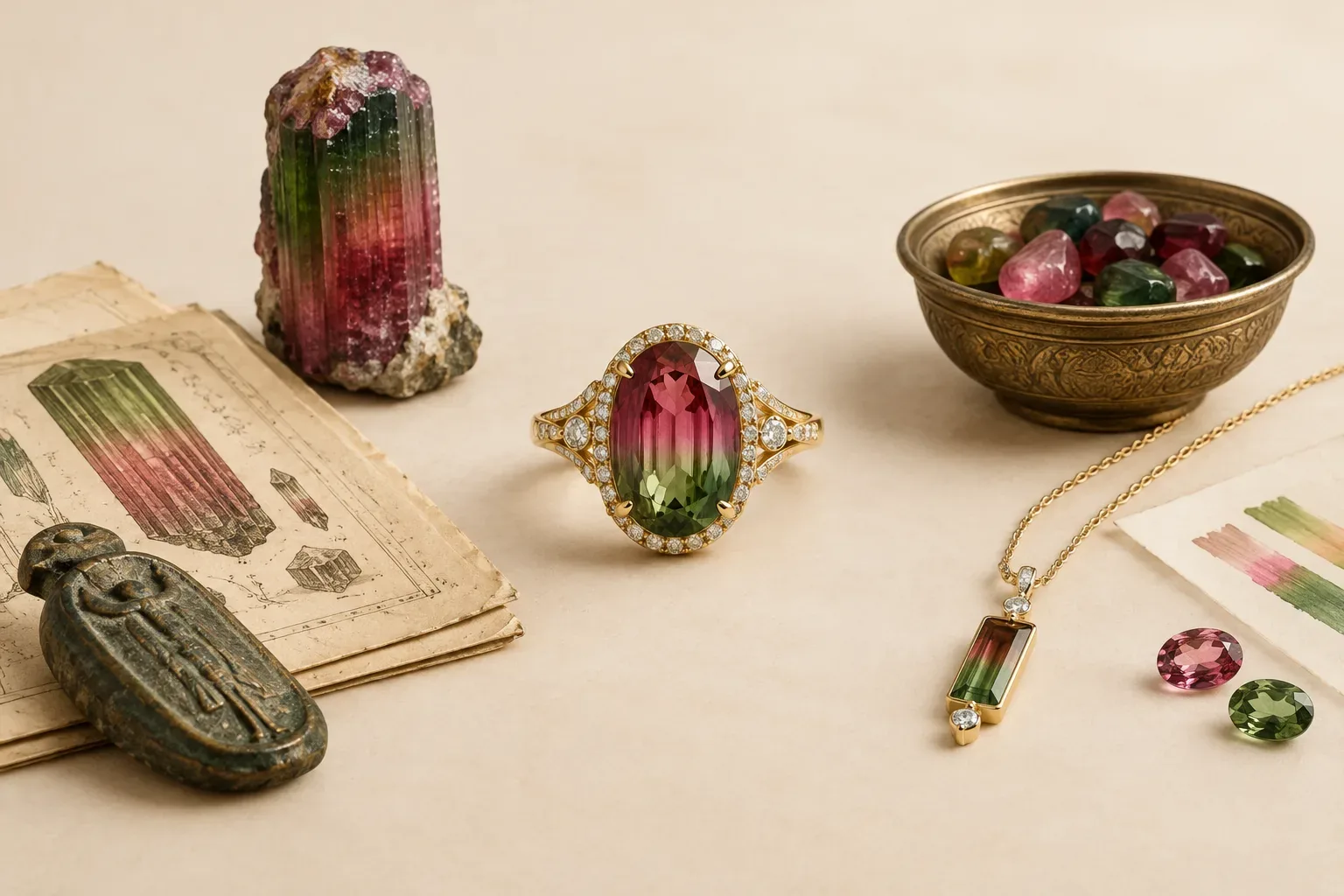
In practical terms, tourmaline pieces are made into rings, pendants, earrings and brooches where the stone’s color and cut are the visual focus and where settings are chosen to showcase and protect the gem. Across historical periods museum objects show that the same factors—colour, transparency, and workmanship—have long shaped how gemstones are displayed in jewellery, even as the fashions and technologies used to present them have changed.
Primary quality and value factors to consider
Color: Color and saturation are typically the most immediate determinants of a tourmaline’s appeal and market value. Look at hue, tone and saturation in daylight and against a neutral background; different buyers will prioritise different colors, and that preference strongly influences price.
Clarity and transparency: How free a stone is from visible inclusions affects its aesthetic appeal and perceived value. Stones with fewer visible inclusions typically appear cleaner and are often more desirable in fine jewellery, though some inclusions can add character and are acceptable in certain designs.
Cut and shape: How a stone is cut determines how it returns light and how its color is presented. A well-proportioned cut maximises a stone’s colour and brilliance and can increase its visual impact without changing its weight.
Carat and size: Larger stones generally command higher prices, but the effect of size on value depends on the quality of colour and clarity; a large stone with poor colour or heavy inclusions will not necessarily be more valuable than a smaller, superbly coloured stone.
Origin and rarity: Market perceptions of origin can influence price where provenance is documented and sought after. Rarity—whether naturally occurring or in particular colours—will also affect market value.
Treatments and imitations: Heat treatment and other enhancements may be used to improve colour and clarity. The Federal Trade Commission advises that sellers must disclose known treatments and any imitations or simulated materials. Always ask for disclosure and documentation when a treatment may affect value.
Practical guidance for choosing tourmaline jewellery
Decide what you want the piece to do: function as an everyday wearable, a special-occasion item, or a sentimental keepsake. Durability and setting design should follow intended use; for example, protective settings are appropriate if the piece will be worn often.
Prioritise the factors that matter most to you. If colour is your priority, focus your budget on the best colour you can afford even if that means compromising on size. If you prefer larger stones, accept that you may need to compromise on colour or clarity to stay within budget.
Ask direct questions of sellers. Use plain, specific questions about treatments, whether the stone is natural, whether any enhancements are disclosed in writing, and whether the seller can provide a recent certificate or laboratory report for higher-value stones. The FTC recommends disclosure of material treatments and any imitations or simulants, so insist on clear answers and documentation.
Buy from reputable sources and understand return policies. A trustworthy vendor will welcome questions, provide written disclosures about treatments and offer reasonable return or repair terms. If provenance or origin materially affects the price you are paying, ask for supporting documentation.
Gifting with sensitivity and respect
If you are buying tourmaline as a gift, consider the recipient’s style, lifestyle and any personal associations they already have with particular colours or gems. A piece that aligns with everyday habits will be worn more and therefore have greater sentimental value over time.
Be transparent if the stone has been treated. For many recipients, a clear explanation of why a particular stone was chosen — whether for its aesthetic qualities, rarity, or personal meaning — is more important than whether it is untreated. Honest communication preserves trust and allows the recipient to appreciate both the object and your intention.
Allow room for a personal story. Modern interpretations and personal meanings often make a piece more treasured than market value alone, so choose a design that lets the wearer attach their own meaning.
Documentation and appraisal — what to expect
For higher-value purchases, expect some form of documentation. A gemological report or certificate will identify whether the stone is natural, specify any known treatments, and may record basic characteristics. For most everyday purchases a detailed receipt with seller contact information and a clear returns policy is a minimum practical safeguard.
If the stone is expensive or rare, a professional appraisal for insurance purposes is worth considering. Make sure any appraisal notes treatments and is based on current market conditions; appraisals can change over time as markets and tastes shift.
Concluding notes
Museum research reminds us that the ways gems are valued and understood change over time and with social context, and that modern attributions of meaning often reflect contemporary tastes or beliefs rather than long continuous traditions. Use that historical perspective to inform, not to dictate, your choices.
In practice, buying tourmaline responsibly means balancing aesthetic priorities with documented facts: check colour and clarity in person, ask about treatments and provenance, insist on disclosure consistent with FTC guidance, and choose a setting and style suited to how the piece will be worn and valued by the recipient.
Frequently asked questions
How do treatments affect tourmaline value?
Treatments that improve colour or clarity can change how a stone looks and how it is priced. The Federal Trade Commission advises sellers to disclose known treatments; ask for written disclosure and consider how the treatment affects your long-term satisfaction and resale expectations.
Should I ask for a gemological report?
For higher-value stones it is sensible to request a recent gemological report that confirms whether a stone is natural and records known treatments. For lower-cost purchases, a clear receipt and a trustworthy seller with a fair returns policy may be sufficient.
Can I rely on historical meanings when choosing tourmaline as a gift?
Historical meanings can add cultural interest, but they are often specific to time and place. The Victoria and Albert Museum’s work shows that jewellery meanings change; pair any historical note with the recipient’s personal associations to ensure the gift resonates.
How can I be sure a seller is honest about imitations?
Ask the seller directly about any simulants or imitations and request written confirmation. The FTC requires disclosure of imitations and treatments, so a reputable seller will provide clear information without pressure.
What practical qualities should I prioritise for everyday wear?
Prioritise a secure setting and a stone whose appearance and comfort suit daily wear. Balance visual appeal with durability of the mounting and the wearer’s lifestyle; discuss setting options with the jeweller to reduce the risk of damage in everyday use.
Sources and further reading
- Bedazzled: A History of Jewellery — Victoria and Albert Museum
- An A-Z of Gemstones — Victoria and Albert Museum
- Buying Gemstones, Diamonds, and Pearls — Federal Trade Commission