Meaning at a glance
This guide explains the documented history and changing contexts of silk cord jewelry, separates museum-documented cultural uses from later popular interpretations, describes how cords are combined with motifs and gemstones, and gives practical advice for choosing, caring for, and gifting silk cord pieces.
What the historical record shows — culture and period, precisely attributed
Museum scholarship emphasizes that textile and silk cords have been used to suspend pendants, beads, and amulets over many centuries in multiple regions. The Victoria and Albert Museum frames this as a broad pattern in the history of jewelry where non-metal suspensions appear alongside metal chains and mountings. The V&A’s surveys discuss how materials and social meanings have changed as tastes, technology and trade routes shifted, rather than asserting a single origin or unchanging significance for silk cords.
Different cultures placed different emphasis on cords and their uses. For example, museum collections often show corded necklaces and threaded beads in Asian, Middle Eastern and European objects, reflecting local materials and techniques rather than a single global symbolism. The V&A’s descriptive work focuses on the changing social context and construction techniques in these collections, so when you encounter a corded piece you should look to its documented provenance and the museum or archival scholarship for culture- and period-specific meanings.
Documented historical meanings versus modern personal interpretations
What is documented by curators and museum studies is typically the physical use and social context of jewelry: how cords were made, what objects they supported, and which social groups wore them. The V&A emphasizes social and material change, so historical meaning in museum records usually rests on provenance, object use, and contemporaneous written sources rather than a single symbolic claim.
Modern sellers, designers, and wearers often attach new personal or commercial meanings to silk cords—ideas about mindfulness, naturalness, or specific symbolic associations for colors or knots. These contemporary interpretations can be meaningful to the wearer but are not the same as documented historical meanings. Treat modern symbolism as a current cultural layer: it may be authentic for individual or contemporary group practice, but it should not be presented as an intrinsic historical fact unless supported by primary evidence or museum scholarship.
How motifs, gemstones, and traditions appear with silk cord in jewelry
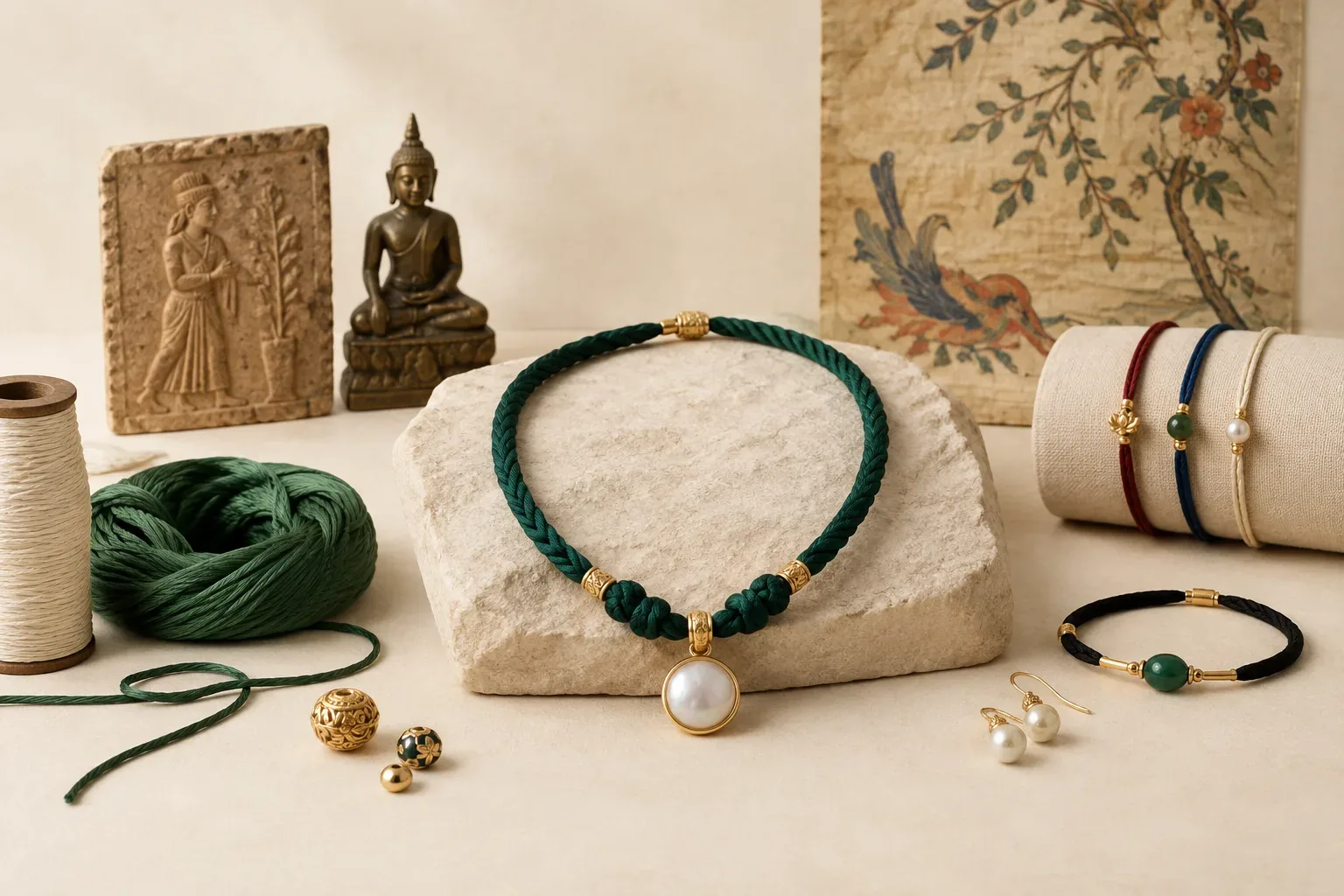
Silk cord functions as a mounting and design element: it can be the primary visible structure in chokers, bracelets, mala beads, and pendant suspensions, or it can be a hidden connector inside beadwork. The V&A’s materials and object descriptions note that cords are chosen for flexibility, comfort and color, and that they often complement metalwork and stone settings rather than replace them.
Gemstones on silk cord appear in several common ways. Drilled beads and pearls are strung directly on silk and secured with knots or bead tips; pendants with bails are hung from a cord; and cabochons or mounted stones are sometimes suspended by cord loops attached to the setting. The V&A’s resources on gemstones provide context for the kinds of stones commonly used and the historic preference for particular settings. From a practical standpoint in the modern market, the finished piece’s value depends on the gem’s quality, the setting or mount, and whether the seller discloses any treatments or imitations, a point emphasized by the Federal Trade Commission.
Quality markers and what affects price
Quality in silk cord jewelry comes from both materials and workmanship. Examine the cord itself: high-quality silk (or silk-faced cord) will have a smooth, tight surface with little fraying, and knots should be tidy and secure. Fittings where the cord meets metal—end caps, crimps, and bails—should be neatly attached and soldered or glued in a way that does not crush the cord. The Victoria and Albert Museum’s discussions of construction methods can help you assess whether a piece follows established techniques or appears improvised.
Price reflects the combined value of the cord, the gemstones, any precious metal components, craftsmanship and provenance. A simple silk cord with a common bead will cost much less than a finely knotted necklace with rare gems and hand-finished metalwork. Remember that cords usually reduce the metal content of a piece, so the main cost driver is often the stone and workmanship. Also ask about gemstone treatments and imitations: the Federal Trade Commission advises that sellers disclose treatments such as heating, dyeing, or filling, and buyers should ask for written confirmation of any treatments.
Selecting a silk cord piece: practical checklist
Assess materials and construction visually and by touch. A quality cord should feel smooth, resist immediate fraying when gently rubbed at an end, and hold knots without slipping. Check end fittings and attachments: crimps should be snug and not cut the cord, and any glue should be dry and invisible. If the piece is adjustable, test the slider or clasp to ensure it moves smoothly and locks reliably.
Verify gemstone identity and treatment. Ask the seller for documentation or certification for high-value stones and for explicit disclosure of any enhancements. The Federal Trade Commission recommends that buyers seek clear information about gem treatments and the seller’s return policy. For unfamiliar gemstones, consult reliable sources such as museum gemstone guides or a qualified appraiser before assuming value or meaning.
Care, repair, and longevity
Silk is a natural fiber that can be sensitive to moisture, cosmetics and abrasion. To extend life, avoid wearing corded pieces in the shower, during exercise, or while applying perfume. If a cord becomes soiled, mild hand cleaning recommended by the maker or a trained conservator is preferable; aggressive cleaning can weaken fibers and fade color. The V&A’s conservation practice around textile and jewelry objects highlights that textile mounting materials typically require more delicate care than metal chains.
Many corded jewelry items are designed to be re-corded; a good maker will construct the piece so gemstones and findings can be transferred to a new cord if needed. Ask the seller about re-cording options and costs, and keep original documentation for provenance and any treatment disclosures.
Respectful selection and gifting guidance
When a corded piece uses religious or culturally specific motifs, research its provenance before gifting. The V&A emphasizes the importance of context in museum interpretation; likewise, informed gifts are respectful gifts. If a motif is tied to a religious tradition, confirm whether it is appropriate for everyday wear by the recipient, especially if you or the maker are outside that tradition.
Match the piece to the recipient’s lifestyle and preferences rather than relying on assumed symbolism. Practical questions—does the recipient prefer metal chains or soft cords, do they have sensitivities to natural fibers, do they favor adjustable lengths—will help you choose a wearable gift. Include care instructions and any documentation about gemstone treatments or provenance; transparency about materials and meaning makes the piece more meaningful and less likely to cause offense.
When to seek professional advice
If a corded piece contains high-value gemstones or complex provenance claims, consult a qualified appraiser or gemologist before purchase. The Federal Trade Commission recommends that buyers ask for written disclosures about treatments and that high-value purchases be supported by independent documentation when possible. For historically claimed or culturally specific pieces, seek museum or academic sources that discuss comparable objects and contexts.
Frequently asked questions
How durable is silk cord jewelry compared with metal chains?
Silk cord is comfortable and flexible but generally less abrasion- and moisture-resistant than metal chains. Proper construction and care extend life: avoid water, perfume and heavy abrasion; inspect knots and end fittings regularly. Many high-quality silk-cord pieces are designed to be re-corded by a jeweler when the thread wears.
Can silk cord be replaced or repaired if it frays?
Yes. Good corded jewelry is made so beads and findings can be transferred to a new cord. Ask the maker about re-cording options and anticipated costs. If a repair involves valuable gemstones or historic pieces, consult a professional conservator or trusted jeweler.
How do I know if a gemstone on a silk cord is genuine or treated?
Ask the seller for written disclosures about treatments and any certificates for high-value stones. The Federal Trade Commission advises buyers to request clear information on treatments such as heating, dyeing or filling. For certainty on identity and value, obtain an independent appraisal or laboratory report.
Is it disrespectful to wear culturally specific corded motifs as fashion?
Context matters. Museum scholarship encourages learning about an object’s provenance and meaning. If a motif is deeply tied to a religious or cultural practice, research or ask before gifting or wearing it. In many cases, informed use and respect for the origin are what differentiate thoughtful appreciation from appropriation.
What should I look for when buying a silk cord necklace online?
Request detailed photos of knots, end fittings and any stamped metal. Ask about cord material, thickness, cleaning instructions, and gemstone treatment disclosures. Check the return policy and reviews that mention durability and customer service.
Sources and further reading
- Bedazzled: A History of Jewellery — Victoria and Albert Museum
- An A-Z of Gemstones — Victoria and Albert Museum
- Buying Gemstones, Diamonds, and Pearls — Federal Trade Commission