Meaning at a glance
Sapphire is the modern September birthstone; gemologically it is a corundum variety that can occur in many colors, is frequently heat-treated to improve color and clarity, rates 9 on the Mohs scale for everyday wear, and should be purchased and cared for with attention to documented treatments and certification.
Short answer — the September birthstone meaning
Sapphire is the conventional September birthstone. Gemologically, sapphire is a variety of corundum and can occur in a range of colors—blue is the most familiar but pink, yellow, and the rare padparadscha hue are also sapphires. The modern assignment of sapphire to September comes through the standard birthstone lists in use today and the stone is prized both for its color and its high durability, which makes it suitable for everyday jewelry. This article follows the Gemological Institute of America (GIA) and the Federal Trade Commission (FTC) for gem identification, typical treatments, buying guidance, and care.
What sapphire is (corundum identity, colors, and treatments)
According to the Gemological Institute of America (GIA), sapphires are gem-quality corundum, the crystalline form of aluminum oxide. Pure corundum is colorless; trace elements create color. Iron and titanium commonly produce blue sapphires, while chromium gives pink tones and the specific mix that produces padparadscha hues is much rarer.
The GIA notes that what most people call “sapphire” includes a broad color range. While the deep royal blue is historically and commercially dominant, the term sapphire also covers yellow, greenish, purple, and colorless corundum when the species name is used in gem trade practice. The very rare pink-orange padparadscha hue occupies a special place in the market and is treated and certificated with extra care by reputable labs.
The GIA also documents that treatments to improve color and clarity are common and accepted in trade, with heat treatment being the most established and widely disclosed method. Other treatments, such as surface diffusion or fracture-filling in some market segments, do occur; the GIA emphasizes the importance of disclosure so buyers know whether a stone has been enhanced and how.
Durability and everyday wear
Sapphire is one of the hardest gemstones used in jewelry, rated 9 on the Mohs scale, which the GIA cites as a reason it is suitable for rings and other items worn frequently. That hardness gives sapphire very good resistance to scratching, second only to diamond (which rates 10).
Hardness is only one part of durability. The GIA also explains that sapphires can fracture if struck or if they contain internal inclusions or prior treatments that affect stability. Settings that protect high-exposure edges and regular inspections are practical precautions for everyday wear.
Historical evidence: how sapphire became a birthstone for September
The history of birthstones and their month associations is complex and variable. The GIA’s museum exhibit 'Birthstones: Gems Through the Ages' traces changing lists and the varying cultural reasons for assigning specific stones to people or months. Those historical lists and meanings evolved across time and place rather than coming from a single, universal source.
What today’s consumers see as the September birthstone reflects the consolidation of modern birthstone lists. The GIA documents how lists were standardized over the 19th and 20th centuries, which led to the widespread acceptance of sapphire as September’s modern birthstone in many countries. The GIA’s work shows that while the modern list is widely accepted in jewelry markets, historical assignments differed by culture and period.
Documented historical meanings versus modern personal interpretations
Documentation compiled by the GIA indicates that gemstones have carried varied meanings in different societies, often tied to status, religion, or symbolic color associations. The GIA’s historical overview emphasizes that meanings attached to stones shifted over time and that many historical claims circulated in localized contexts.
Modern metaphysical or healing claims about sapphire—such as promises of specific emotional benefits or health effects—are personal interpretations rather than conclusions established by the historical record in the GIA materials. Those contemporary beliefs can be meaningful to individuals and are part of modern jewellery culture, but they are not documented as universal historical facts by the GIA.
How sapphire appears in jewelry (motifs, cuts, and settings)
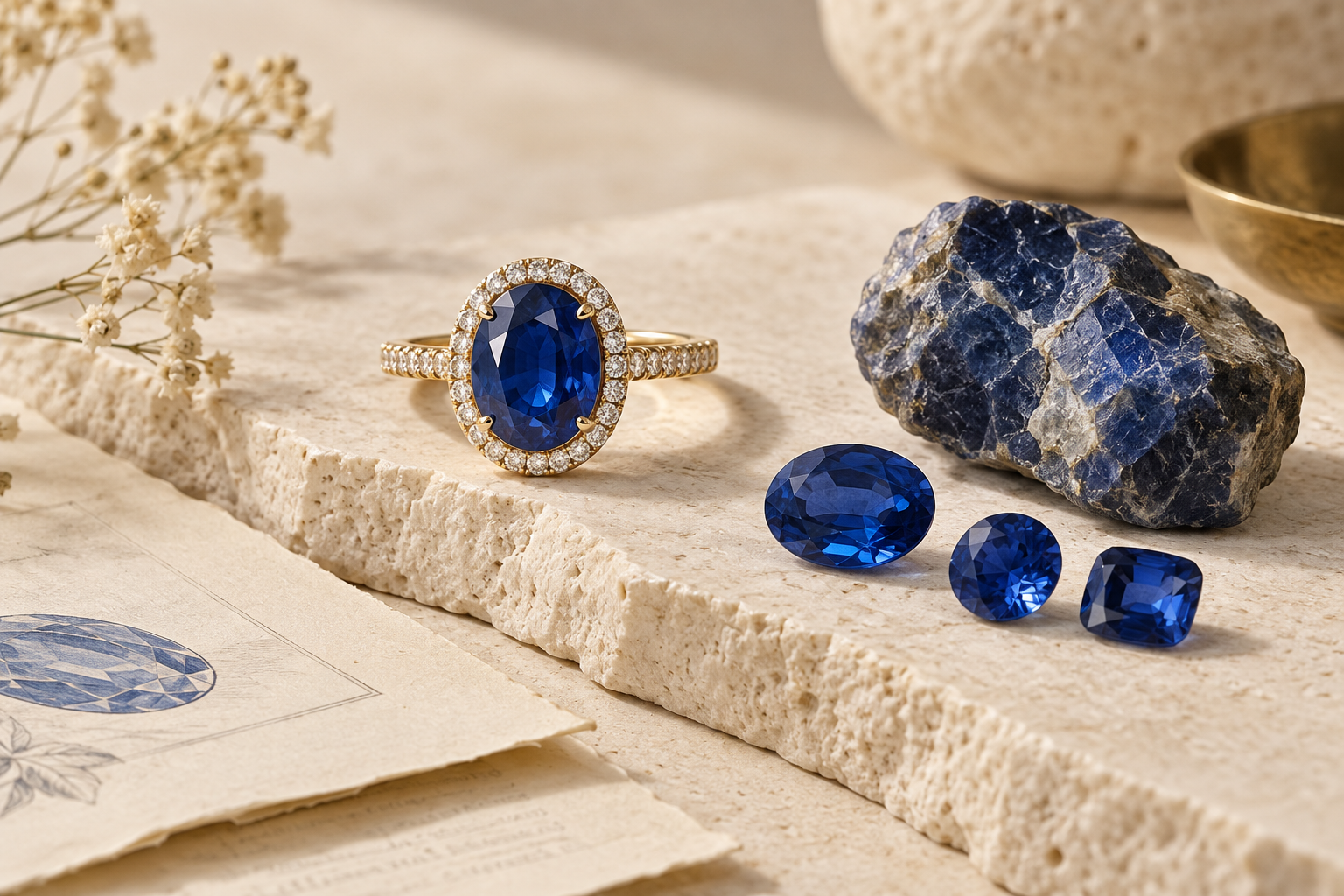
Sapphires are used across a wide range of jewelry types and styles. Faceted stones are common in engagement rings and colored-stone rings, while cabochons are sometimes employed for star sapphires that display asterism. The stone’s color and clarity guide the choice of cut: deeper blues often benefit from cuts that maximize color saturation while lighter or pastel tones may be cut to enhance brightness.
Settings for sapphire vary according to use and protection needs. Prong settings highlight large faceted stones, while bezel settings or halo settings can help protect a gemstone’s edges and show color contrast with surrounding diamonds or metals. Designers also use sapphires as accent stones on necklaces, bracelets, and earrings, and historically they appear in signet and royal jewelry where blue sapphires conveyed status.
Practical selection and gifting guidance
When selecting a sapphire for a gift, begin with the recipient’s preferences for color and style. Some people specifically want a classic deep blue; others prefer pink sapphires or the rare padparadscha tone. Consider whether the recipient wears jewelry daily, which favors more protective settings and durable metal choices.
From a market and ethics perspective, the FTC advises buyers to ask sellers for clear disclosure of any treatments, whether a stone is natural, lab-grown, or an imitation, and for details about return policies and certificates. A reputable seller will provide documentation showing treatment type and, when relevant, a laboratory report describing origin or significant enhancements.
Buying and certification: what to ask and expect
Ask for detailed information about the sapphire’s identity, treatments, and whether it is natural or lab-grown. The Federal Trade Commission (FTC) guidance on buying gemstones recommends that sellers clearly disclose enhancements and origin when known, because treatments can materially affect value and care.
Third-party gem reports from recognized laboratories such as those referenced by the GIA are valuable when purchasing significant stones. A report can confirm species (corundum), color descriptions, whether heat treatment is present, and whether more invasive enhancements have been used. Keep in mind that some enhancements, like routine heat treatment, are widespread and accepted in the trade, while others require more scrutiny and price adjustment.
Care and maintenance
The GIA’s guidance on durability and care notes that sapphires are generally safe to clean with warm water, mild dish soap, and a soft brush. Ultrasonic cleaners are usually safe for untreated or routinely heated sapphires, but stones that have had certain fillings or surface treatments can be damaged by ultrasonic or steam cleaning, so disclose treatment history to your jeweler before using these methods.
Practical care also includes avoiding hard knocks, checking settings periodically to ensure prongs are intact, and storing sapphire pieces separately to prevent them from scratching or being scratched by harder materials. If a stone has an unusual treatment or visible fractures, a qualified jeweler or the issuing laboratory can advise on safe cleaning methods.
Putting meaning into practice
If you are buying a sapphire to mark a September birthday, consider how tangible qualities—color, size, cut, setting, and provenance—align with the personal meaning you intend. A deep-blue faceted stone set in a protective band reads differently from a pastel pink sapphire pendant, and those differences matter when choosing a piece that the recipient will cherish.
Respect the difference between historical evidence and personal symbolism. Use documented gemological facts to make an informed purchase, and let personal stories, family traditions, or recipient preferences shape the emotional meaning you attach to the jewelry.
Frequently asked questions
Is sapphire the official September birthstone?
Yes; modern birthstone lists in use today assign sapphire as the primary birthstone for September. This assignment is reflected in the lists compiled by gemological authorities such as the Gemological Institute of America (GIA).
What is sapphire made of?
Sapphire is a gem-quality variety of corundum, which is crystalline aluminum oxide. Trace elements produce color variations; the GIA describes blue, pink, yellow, and other hues as part of the sapphire category.
Are sapphires treated and does that matter?
Yes; the most common treatment is heat to improve color and clarity, and it is widely accepted in trade when disclosed. The FTC advises buyers to seek clear disclosure of any treatments because enhancements can affect value and care.
How durable is sapphire for everyday jewelry?
Sapphire rates 9 on the Mohs hardness scale, making it highly resistant to scratching and suitable for everyday wear. However, sapphires can fracture from sharp blows and their settings should be inspected regularly, as noted by the GIA.
How should I clean and care for a sapphire?
For most sapphires, warm water, mild dish soap, and a soft brush are safe cleaning methods. Ultrasonic or steam cleaning is usually safe for routinely heated sapphires but may damage stones with certain fillings or surface treatments, so check the treatment history before using these methods as recommended by the GIA.
Should I get a lab report for a sapphire purchase?
For significant purchases, ask for a third-party gemological report that documents species (corundum), treatments, and other important details. A reputable seller will disclose treatments and provide or reference laboratory documentation, consistent with FTC guidance on transparent gemstone sales.
Sources and further reading
- September Birthstone Guide — Gemological Institute of America
- Birthstones — Gemological Institute of America
- Birthstones: Gems Through the Ages — Gemological Institute of America
- Buying Gemstones, Diamonds, and Pearls — Federal Trade Commission