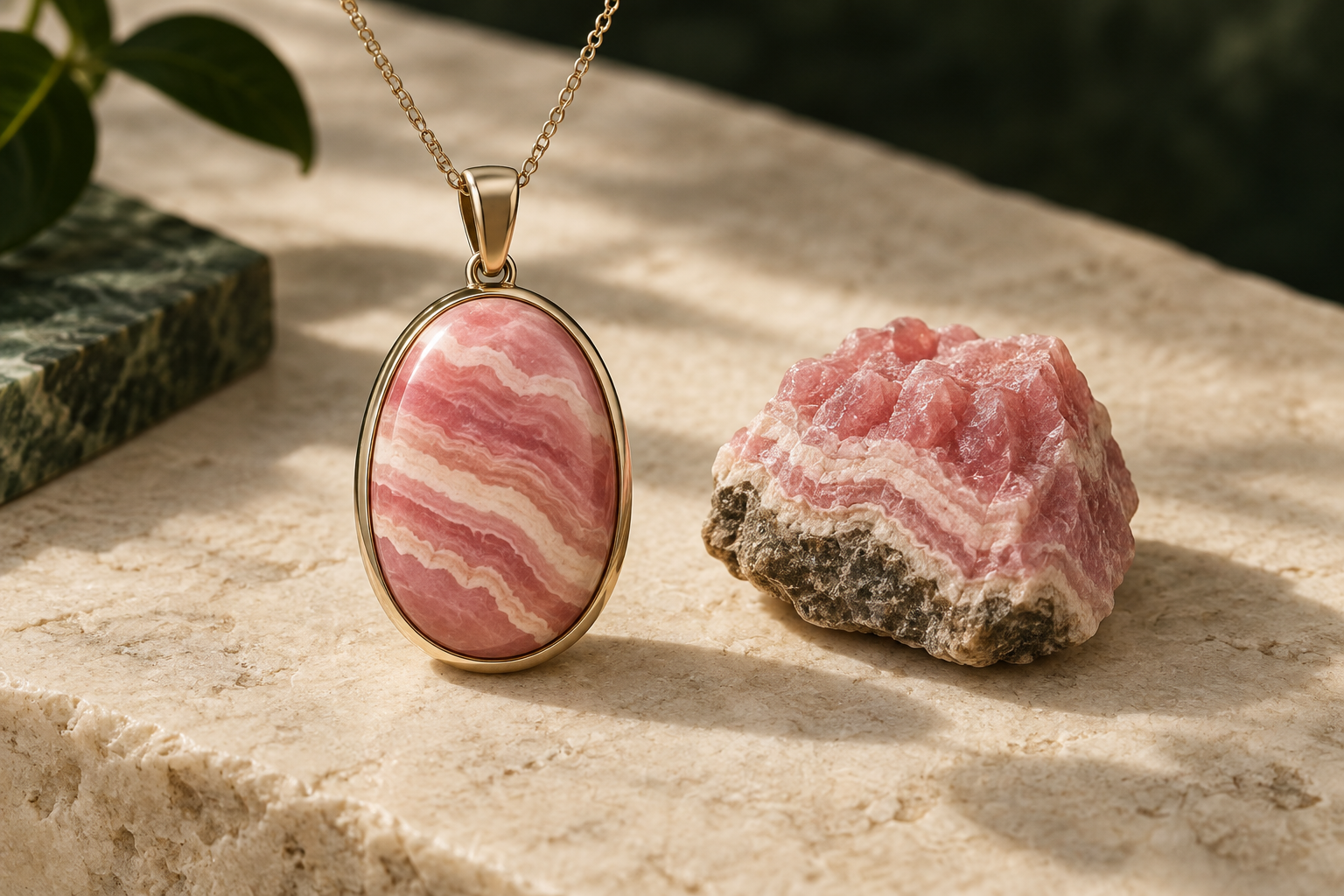
Meaning at a glance
Rhodochrosite is a soft manganese carbonate prized for pink-to-red color and banding; jewelry needs protective settings and gentle wear.
What rhodochrosite is—composition and appearance
Rhodochrosite is a manganese carbonate mineral that typically shows pink to red hues and often forms attractive concentric banding. The Smithsonian National Museum of Natural History identifies rhodochrosite by its composition as a manganese carbonate and uses that identification to distinguish it from other pink minerals.
Visually, rhodochrosite ranges from pale, nearly pastel pinks to saturated rose and red tones. The banding and patterns are a strong part of its appeal: specimens and cut stones can show layered concentric rings, swirls, or patchy color that make each piece distinctive.
Documented history and notable localities
The documented, published history of rhodochrosite in gem and mineral literature places particular emphasis on locality specimens rather than widespread cultural symbolism. The Gemological Institute of America (GIA) highlights the Sweet Home Mine in Colorado as a historically important source of fine, intensely colored rhodochrosite specimens. That locality raised awareness of rhodochrosite among collectors and museums because of exceptional crystal quality and color.
Other localities produce material for collectors and lapidary use, but published museum and gemological records often treat rhodochrosite first as a mineral specimen of interest. Where historical use in jewelry is documented, it is typically tied to the availability of cabochon-grade or worked material from particular mines rather than to a single long-standing cultural tradition recorded in the scientific literature.
Documented historical meanings versus modern interpretations
Published museum and gemological sources focus on identification, locality, and physical properties rather than assigning a consistent historical symbolic meaning to rhodochrosite. The Smithsonian and GIA records do not present a single, well-documented ancient cultural meaning attached to this mineral in the way some gemstones carry long, traceable symbolic histories.
By contrast, modern personal and metaphysical interpretations are common among contemporary jewelers, crystal enthusiasts, and wearers. Today people often associate rhodochrosite with ideas such as love, emotional healing, compassion, or self-acceptance. Those associations are personal, contemporary interpretations and should not be presented as documented historical facts. They can be meaningful in gifting or personal use, but they remain modern attributions rather than historically verified symbolic meanings.
How rhodochrosite appears in jewelry
Because of its color and banding, rhodochrosite is frequently cut as cabochons and polished beads to showcase its patterning. These cuts emphasize color and surface pattern rather than brilliance. In some pieces it appears as inlay or small carved elements, and collectors prize larger polished slabs or freeform stones for pendants and display pieces.
Gemological references note that rhodochrosite is softer than many common jewelry stones, so jewelers typically set it in designs that protect the stone. Protective settings include bezel mounts, closed-back pendants, and designs that minimize exposure to knocks and abrasion. Designers also tend to reserve rhodochrosite for pieces intended for occasional wear—pendants, earrings, brooches, or collector rings with strong protective settings—rather than high-wear items meant for everyday rough use.
Practical guidance for selecting and gifting rhodochrosite
When selecting rhodochrosite, prioritize color and pattern that appeal to the recipient. Saturation, contrast in banding, and a pleasing overall pattern are the most visible qualities. Because the material varies widely, pick the piece that visually resonates instead of relying on a single objective grading rule.
Consider the recipient’s lifestyle. If you are gifting a ring to someone who uses their hands for work or sports, choose an alternative stone or a design that offers maximal protection. For someone who wears jewelry mainly for social occasions, a rhodochrosite pendant, pair of earrings, or a ring set in a heavy bezel can be an excellent and thoughtful choice.
Be respectful when using or referring to modern symbolic meanings. If the recipient values metaphysical associations, mention contemporary interpretations as personal meanings rather than as historical certainties. If the recipient prefers scientific facts, highlight the mineral’s manganese carbonate composition and notable localities such as the Sweet Home Mine as documented by the GIA.
Care and maintenance: gentle handling preserves beauty
Because rhodochrosite is a relatively soft manganese carbonate, it benefits from gentle wear and careful storage. Avoid exposing the stone to hard knocks, heavy abrasion, or situations where it could be scratched or fractured. When designing or choosing a setting, prioritize protection—closed bezels, protective prongs used conservatively, and mounting that minimizes exposure to impact.
Cleaning should be mild and non-abrasive. Use a soft cloth and a gentle soap-and-water rinse, drying the stone carefully afterward. Avoid harsh household chemicals and any aggressive treatments that can damage the surface. For storage, keep rhodochrosite jewelry separate from harder gemstones to prevent accidental scratching. If in doubt about a professional cleaning method, consult a trusted jeweler familiar with softer ornamental minerals.
Final thoughts
Rhodochrosite’s appeal in jewelry lies in its range of pink-to-red colors and distinctive banding. Scientific and curatorial sources emphasize the mineral’s identity and notable localities, while modern wearers add personal meanings that can be powerful in a gifting context.
If you are buying rhodochrosite, choose pieces that match the recipient’s aesthetic and lifestyle, and ensure protective settings and gentle care. When you explain meaning, separate what is documented by museum and gemological sources from contemporary symbolic or emotional interpretations.
Frequently asked questions
What does rhodochrosite mean?
Museum and gemological records do not document a single ancient symbolic meaning for rhodochrosite; contemporary wearers often attribute personal meanings such as love or emotional healing, which are modern interpretations rather than historical fact.
Is rhodochrosite durable enough for everyday jewelry?
Rhodochrosite is a relatively soft manganese carbonate and is best suited to pieces with protective settings or occasional wear; choose sturdy bezel settings and avoid rough everyday use to preserve the stone.
How should I clean rhodochrosite jewelry?
Clean rhodochrosite gently with a soft cloth and a mild soap-and-water rinse, then dry carefully; avoid harsh chemicals and abrasive cleaning methods that can damage the surface.
Where does fine rhodochrosite come from?
Notable locality information published by the Gemological Institute of America highlights the Sweet Home Mine in Colorado as an important source of fine rhodochrosite specimens that raised the mineral’s profile among collectors.
Should I mention symbolic meanings when gifting rhodochrosite?
If the recipient values symbolic meanings, you may share modern personal interpretations, but present them as contemporary associations rather than historical facts and be mindful of the recipient’s beliefs and preferences.
What jewelry styles show rhodochrosite to best effect?
Cabochons, beads, inlays, and polished freeform pendants showcase the stone’s banding and color; designers often favor protected mounts such as bezels or pendants intended for occasional wear.
Can rhodochrosite be treated or enhanced?
Published museum and gemological sources used here focus on identification and locality rather than treatment practices; when buying, ask the seller about any treatments and request transparent information.
Sources and further reading
- Sweet Home Mine Rhodochrosite — Gemological Institute of America
- Rhodochrosite — Smithsonian National Museum of Natural History