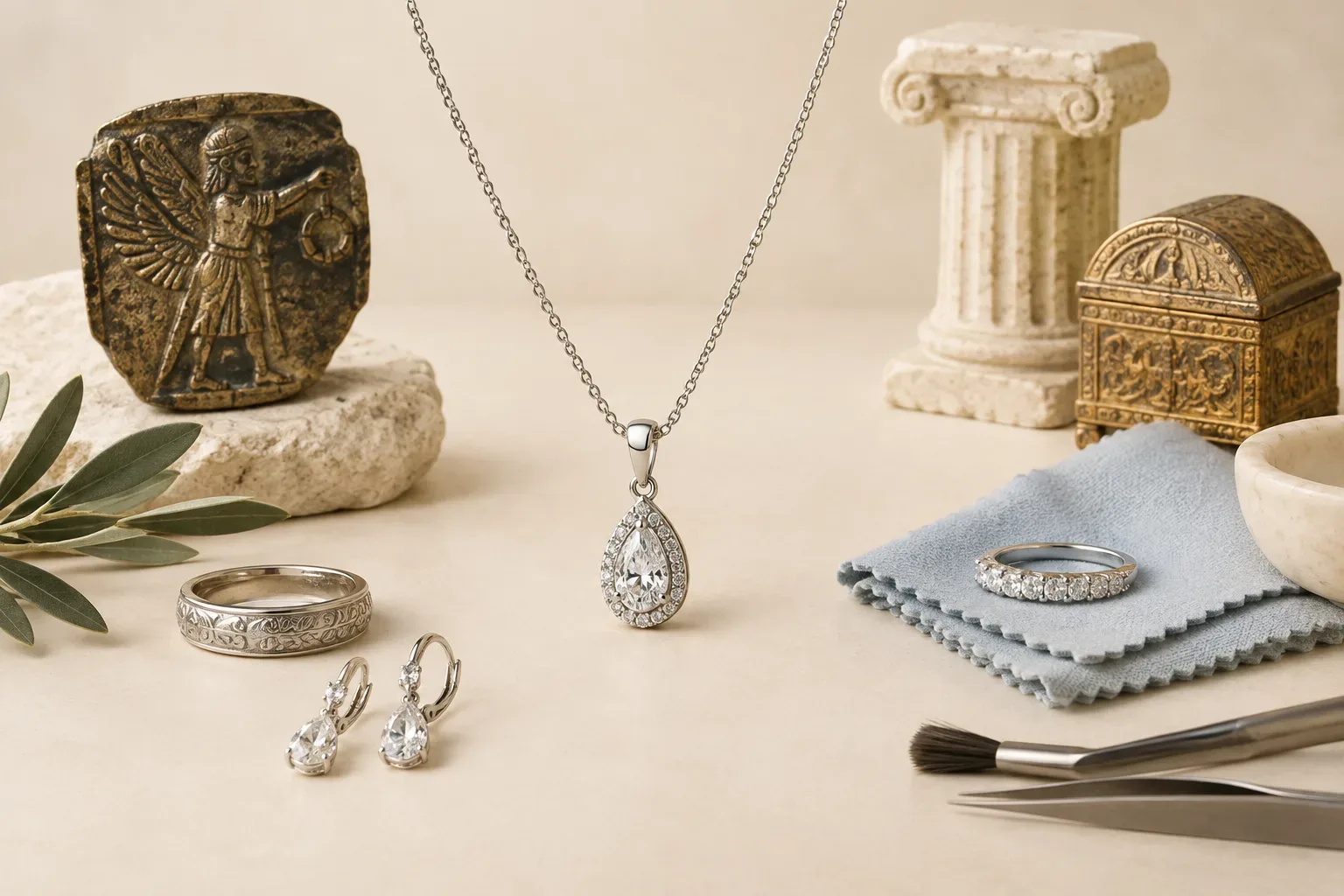
Meaning at a glance
Rhodium-plated jewelry requires occasional professional maintenance when the plated finish wears, flakes, or causes skin reactions; understand its modern role in finishing, ask sellers about treatments and base metals, watch for visible wear or loose settings, and choose a reputable jeweler for re-plating and repair.
Quick answer
Rhodium-plated jewelry repair and maintenance is a routine modern concern: when the bright, white finish has worn away, become patchy, or produces skin discoloration, have the piece evaluated and, when appropriate, re-plated or serviced by a professional jeweller who can confirm the base metal and the effect of any treatment on gemstones and settings.
What the historical record says about finishes and treatments
Historical surveys of jewellery show that surface treatments and finishes have long been used to change appearance, protect metal and respond to fashion, but these practices must be described by period and culture rather than treated as a single continuous tradition. The Victoria and Albert Museum documents how jewellery techniques and social meanings have shifted over time, with new materials and finishes changing how people wore and valued pieces (Victoria and Albert Museum).
The specific practice of using modern plating to achieve a bright white finish is a development of recent jewellery technology and belongs to the modern commercial context in which consumers expect consistent pale-white finishes on rings, chains and settings. For an overview of how changing technologies influence jewellery practice and taste, see the V&A’s history resources (Victoria and Albert Museum).
Documented history versus modern personal interpretation
Documented history, as preserved by museum surveys, treats finishes and treatments as technical and social changes rather than symbolic constants. Museums record that the appearance of jewellery—its colour, sheen and workmanship—has carried different social meanings in different places and times (Victoria and Albert Museum).
Modern personal interpretation treats rhodium-plated pieces differently: some wear them for the bright white look that resembles platinum, some for the protective surface, and some attach sentimental meanings based on context or the piece’s origin. None of these modern personal meanings are universal; they reflect contemporary tastes and individual choice.
How rhodium plating and related treatments appear in jewellery
In contemporary jewellery, rhodium is commonly used as a surface finish to produce a bright, reflective white appearance on rings, earrings, pendants and bracelets. The finish can make a piece look plainer or more lustrous and is often applied to pieces with pale gemstones or white metal settings to achieve a uniform look.
Because the finish is a coating applied over a base metal, wear can reveal the underlying metal or create a patchy effect. The practice of applying and later renewing surface finishes is part of the broader category of material treatments and surface work that museums and conservation experts document as technologies that change how jewellery is experienced (Victoria and Albert Museum).
Warning signs that professional repair or maintenance is needed
Visible loss of the bright finish, patchy colouring, or flaking of the surface coating are clear signs that a piece needs attention. Professional assessment is also wise when a wearer notices skin discoloration or irritation beneath a ring or bracelet, because that can indicate interaction between the base metal and skin or a rapid loss of finish.
Another reason to consult a professional is structural concern: if stones loosen or settings feel uneven, a jeweller can check whether wear of the finish is accompanied by movement in the mounting that requires repair rather than only re-plating.
What professional maintenance and repair usually involve
A trained jeweller will first identify the base metal and any treatments or coatings present, then advise whether the piece can be re-plated and whether gemstones or settings need attention first. The United States Federal Trade Commission advises consumers to ask sellers about material treatments and expects clear disclosure of such treatments when buying gemstones, diamonds and pearls (Federal Trade Commission).
Common professional services related to surface finishes include cleaning, inspection and re-plating or re-coating. A jeweller may need to remove accumulated grime and assess whether prongs or mountings require tightening before any plating is applied so that the finish lasts and the stones remain secure.
Choosing and gifting rhodium-plated jewellery—practical and respectful guidance
When selecting rhodium-plated jewellery as a purchase or a gift, confirm the base metal, the presence of plating and any expected care needs before buying. Ask the seller for written details about treatments and a recommendation for routine care; this helps the recipient understand future maintenance requirements and avoids surprises about wear or the need for periodic re-plating (Federal Trade Commission).
Consider the recipient’s lifestyle and preferences. If they wear a ring continuously or frequently swim with jewellery, a durable finish and the option for future professional maintenance may be important. If they have sensitive skin, ask the seller whether the piece is plated over a reactive base metal and whether alternative materials are available. Gifting with care means communicating clearly about maintenance expectations and offering a note that explains how to have the finish renewed if needed.
How to choose a professional and what to expect from service
Choose a reputable jeweller with experience in re-plating and repair. A qualified jeweller will be willing to identify base metals and disclose any risks to gemstones from heat or chemical exposure during cleaning or re-plating. Ask for references, a written estimate, and an explanation of any warranty or guarantee on work.
Expect the jeweller to inspect settings, advise on whether gems need temporary removal or protection, and to describe the expected life of a renewed finish based on wear patterns rather than an absolute timescale. For consumers, the FTC recommends asking clear, direct questions about treatments, prices and return policies when buying and maintaining jewellery (Federal Trade Commission).
Everyday care tips that reduce the need for urgent repairs
Minimise exposure to harsh chemicals, abrasive cleaners and persistent friction to slow wear of surface finishes. Store plated pieces separately to avoid rubbing against harder metals and remove jewellery when doing tasks that might cause knocks or contact with detergents.
Regular professional inspections catch loose stones and worn settings early, reducing the need for more extensive work later. When you buy a plated piece, record the seller’s maintenance recommendations and the jeweller’s contact details so you have a clear route to professional help when the finish begins to show wear.
Frequently asked questions
How can I tell if a piece is rhodium-plated?
Ask the seller to disclose treatments and to identify the base metal in writing. Visible signs can include a bright, very white finish and smooth reflective surface; however, only a professional jeweller can confirm plating and base-metal composition reliably.
When should I have rhodium-plated jewellery re-plated?
Consider professional assessment when the finish looks patchy, worn or flaking, or if you notice skin discoloration underneath the piece. A jeweller will advise whether cleaning and inspection or re-plating is the right next step.
Will re-plating damage gemstones or settings?
A competent jeweller will inspect and, if necessary, protect or temporarily remove gemstones before re-plating. Ask the jeweller to explain how they will protect settings and whether any stones are sensitive to heat or chemicals.
How long does rhodium plating last?
The longevity of a plated finish depends on how often the piece is worn, the wearer’s activities, and the thickness of the coating. Rather than relying on a fixed timeframe, get the seller’s expected care guidance and have a jeweller inspect the piece periodically.
What questions should I ask when buying plated jewellery?
Ask for written confirmation of the base metal, a description of any surface treatments, recommendations for care, and the seller’s return or repair policies. The Federal Trade Commission advises consumers to seek clear disclosure of material treatments when buying gemstones and jewellery.
Sources and further reading
- Bedazzled: A History of Jewellery — Victoria and Albert Museum
- An A-Z of Gemstones — Victoria and Albert Museum
- Buying Gemstones, Diamonds, and Pearls — Federal Trade Commission