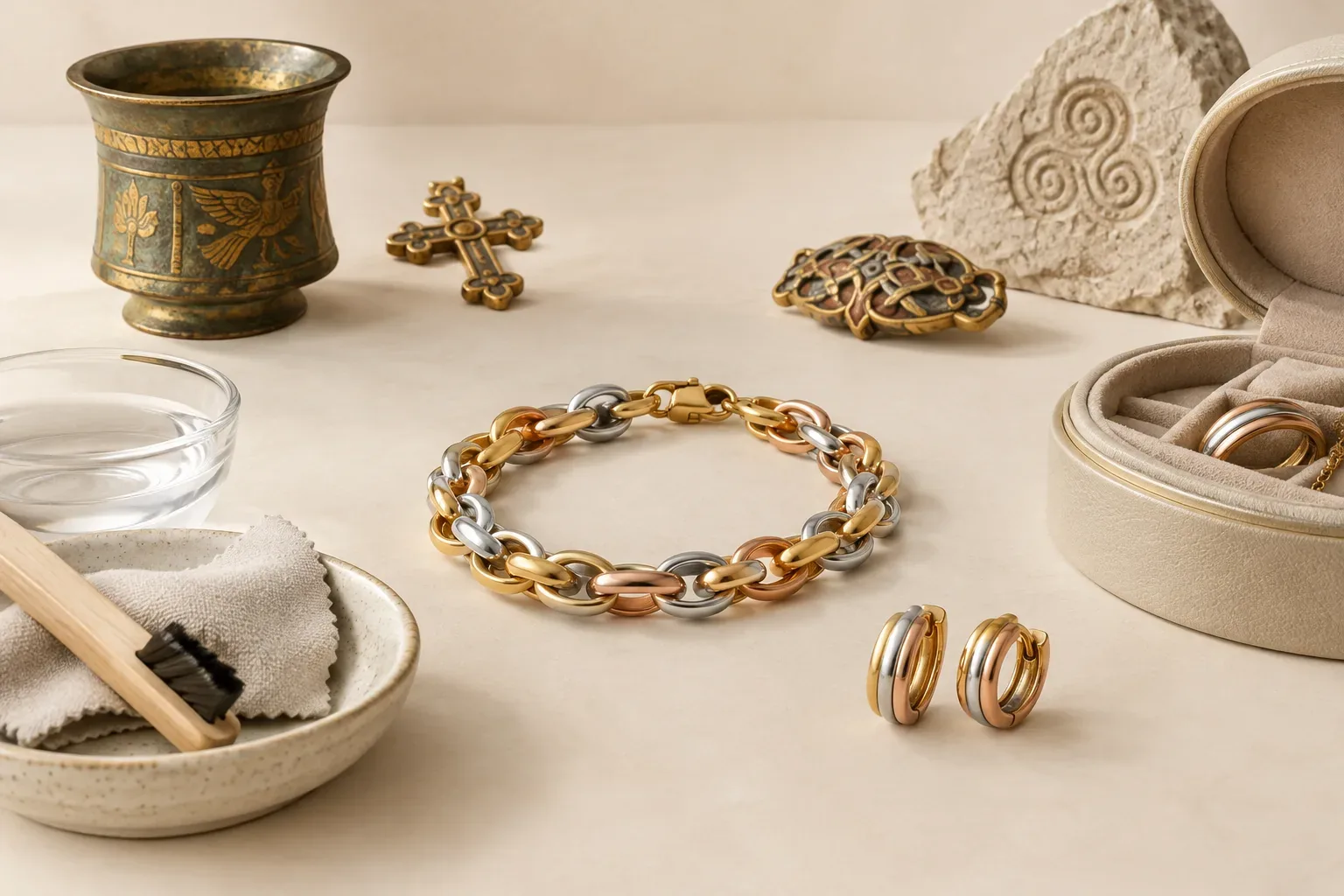
Meaning at a glance
Mixed‑metal jewelry needs careful cleaning and storage because different metals and treatments behave differently; historic use of mixed materials reflects changing social contexts (Victoria and Albert Museum), while modern meanings are personal; use gentle, metal- and gem‑appropriate cleaning, avoid harsh chemicals and ultrasonic cleaners with soft or treated gems, keep pieces stored separately, and verify metal type and treatments when buying or gifting.
Quick answer
Treat mixed‑metal jewelry as a collection of different materials rather than a single item: use the mildest cleaning method safe for the most delicate metal or gemstone present, avoid abrasive cleaners and strong chemicals, and store pieces separately to prevent abrasion, plating wear, and cross‑contamination.
Historical evidence and cultural context
The long use of multiple metals and mixed materials in jewelry is part of a broader historical pattern of combining metals, gemstones and alternative materials. The Victoria and Albert Museum’s overview of jewellery history highlights how changing social contexts and access to materials drove jewellers to pair precious and base metals, to use inlays and to combine different finishes for visual effect. The museum’s exhibition material frames these combinations as responses to fashion, technology and economic circumstance rather than as a single, fixed symbolic program.
That documentation at the Victoria and Albert Museum is primarily descriptive: it records that people in different periods and places chose mixed materials for deliberate aesthetic, technical and practical reasons. Any symbolic meanings attached to specific mixed‑metal combinations in the past are therefore best read in the particular cultural and temporal context recorded by museums and archives rather than assumed to be universal.
Documented historical meanings versus modern personal interpretations
The museum record (Victoria and Albert Museum) supports reading mixed‑metal practice as a material and stylistic choice influenced by technology, cost and fashion. For example, makers used contrasts in color and texture to emphasize form, to imitate more expensive alloys, or to incorporate recycled or locally available materials. Those are documented, contextual reasons rather than a single symbolic meaning.
Modern wearers, collectors and designers frequently apply new, personal or culturally recent meanings to two‑tone and mixed‑metal pieces. Today people may choose two‑tone rings to symbolize partnership, wear contrasting metals to represent different facets of identity, or prefer warm/cool metal mixes for wardrobe versatility. These contemporary interpretations are valid personal meanings but are not the same as the historically documented motivations noted by museum sources.
How mixed‑metal techniques and motifs appear in jewelry
Mixed‑metal techniques appear in jewelry as inlaid bands, two‑tone rings, bi‑metal bracelets, mixed‑finish chains, soldered accents and settings that combine a different metal from the shank or base. Gemstones and settings can also carry mixed‑metal treatments: a white metal prong can hold a colored center set in a warmer metal collar, or a bezel of one metal can surround a stone set in another.
Gemstones and surface treatments influence cleaning and storage decisions. Museum resources that catalogue gemstones (Victoria and Albert Museum, An A‑Z of Gemstones) underline that stones vary widely in hardness, porosity and sensitivity to heat, solvents and ultrasonic cleaners. When mixed metals sit alongside gemstones, the care method must be safe for the most delicate component.
Safe cleaning methods
Start by identifying each metal and any gemstone. Ask the seller for composition and treatment details if you are unsure; consumer guidance from the Federal Trade Commission stresses the importance of disclosure about treatments and imitations when buying gems and precious materials. When identity or treatment is unknown, err on the side of caution and use the gentlest approach.
A practical, gentle cleaning method that suits many mixed pieces is a short soak in warm water with a drop of mild dish soap followed by gentle brushing with a soft brush and immediate thorough drying with a soft lint‑free cloth. This method minimizes mechanical abrasion and exposure to strong chemicals that can remove plating or react with sensitive metals.
For pieces that include porous, treated or soft gemstones (for example, some opals, pearls, amber or doublets), avoid soaking for long periods and avoid steam, heat or ultrasonic cleaners. The Victoria and Albert Museum’s gemstone guidance stresses that some gems are vulnerable to water, heat and solvents, so cleaning must be selected to protect the stone first.
Common mistakes to avoid
Do not assume one method fits every mixed piece. Abrasive polishes or rotary tools will wear plating and mechanically damage softer metals and gemstones. Harsh household chemicals — including bleach, chlorine and oven cleaners — can discolor or pit many metals and can remove protective coatings.
Avoid ultrasonic cleaners when a piece contains soft, porous, treated or fracture‑filled gemstones, and when plating is present. Even where metals alone are robust, ultrasonic action can loosen settings and speed wear where different metals have been joined. When in doubt, consult a professional conservator or a reputable jeweller for an evaluation.
Don’t store mixed pieces piled together. Contact between harder and softer metals will cause scratches; plated parts can rub off onto adjacent pieces. Separate storage reduces abrasion, tangling and the risk of galvanic wear where dissimilar metals are in prolonged contact in the presence of moisture.
Storage recommendations
Store mixed‑metal jewelry in a dry, temperature‑stable environment away from direct sunlight and chemical vapors such as household cleaners. Use individual soft pouches or lined compartments so pieces do not touch. For long‑term storage, wrap pieces in acid‑free tissue or use anti‑tarnish strips for silver components, but keep the strip from touching porous gems.
Avoid humid bathrooms and basements. Relative humidity and salts from the skin accelerate tarnish and corrosion on many metals; keeping pieces dry and separated reduces those risks. For pieces with multiple metals, consider a storage choice that serves the most vulnerable component: choose a dry, padded environment that protects soft stones and delicate finishes first.
Selecting mixed‑metal jewelry and respectful gifting guidance
When choosing or gifting mixed‑metal jewelry, ask the seller for clear information about metal composition, plating, and any treatments to gemstones. The Federal Trade Commission advises consumers to seek disclosure about treatments and imitations; knowing whether elements are solid gold, vermeil, plated base metal or an alloy affects care and long‑term durability.
Match the piece to the recipient’s lifestyle. A daily‑wear ring or bracelet should be robust and, if possible, made in solid metals or high‑quality vermeil; delicate mixed pieces with soft stones are better suited to occasional wear. If the recipient has metal sensitivities, verify nickel content or look for known hypoallergenic options.
Consider presentation and explanation as part of a respectful gift. Including a short note about the materials used and recommended care helps the recipient protect the piece and understand any historic or personal meanings you intend to convey. If you are commissioning a piece that combines cultural motifs, research the cultural origin of those motifs and consult with knowledgeable makers to avoid unintentional appropriation; the Victoria and Albert Museum’s work on jewelry history shows the importance of context when interpreting material choices.
When to consult a professional
Take a mixed‑metal piece to a reputable jeweller or a professional conservator if it has significant historic or monetary value, if solder joints link dissimilar metals, if gemstones are loose, or if heavy tarnish and corrosion are present. A professional can assess joins, advise about re‑plating versus repair, and recommend conservation‑grade materials for long‑term care.
Use professional cleaning sparingly for plated or antique pieces; repeated re‑plating or aggressive restoration can reduce original material and alter historic character. If a piece is historically significant, ask a museum conservation department for advice before major intervention; the Victoria and Albert Museum’s collections work demonstrates the different priorities that conservators apply to preservation versus commercial restoration.
Closing note
Mixed‑metal jewelry rewards thoughtful care because each component ages and responds differently. Use the gentlest effective cleaning method for the most delicate element, store pieces separately and in dry conditions, ask questions about composition and treatments when buying, and treat historical and cultural contexts with respect by relying on documented sources rather than assuming universal meanings.
Frequently asked questions
Can I clean all my mixed‑metal jewelry together?
No. Clean each piece using the gentlest method required by its most delicate component. If a piece contains a porous, soft or treated gemstone, use a mild soap and soft brush rather than strong chemicals or ultrasonic cleaners. When in doubt, separate metals and stones and treat the most sensitive material first.
Will ultrasonic cleaners damage mixed‑metal pieces?
Ultrasonic cleaners can be useful for some robust metal pieces but are risky with soft, porous, fracture‑filled or treated gemstones and can loosen settings where dissimilar metals are joined. Avoid ultrasonics unless you know the piece contains only durable materials and secure settings.
How should I store two‑tone rings so the finish doesn’t wear off?
Store two‑tone rings individually in soft pouches or lined compartments away from humidity and other jewelry. Avoid stacking and keep pieces dry. For plated components, reduce friction by minimizing contact with harder metals and abrasive surfaces.
What information should I ask for when buying mixed‑metal jewelry?
Ask for the exact metal composition (for example, 14k gold, sterling silver, vermeil, base metal with plating), whether any plating or coatings are present, and whether gemstones have been treated or are assembled stones. The Federal Trade Commission recommends seeking disclosure about treatments and imitations when purchasing gems and precious materials.
My heirloom mixed‑metal piece is heavily tarnished. Should I clean it at home?
If the piece has historical or sentimental value, or if it combines fragile stones and joins of different metals, consult a professional jeweller or conservator before undertaking aggressive cleaning. Professionals can assess whether cleaning, consolidation or conservation is appropriate.
Sources and further reading
- Bedazzled: A History of Jewellery — Victoria and Albert Museum
- An A-Z of Gemstones — Victoria and Albert Museum
- Buying Gemstones, Diamonds, and Pearls — Federal Trade Commission