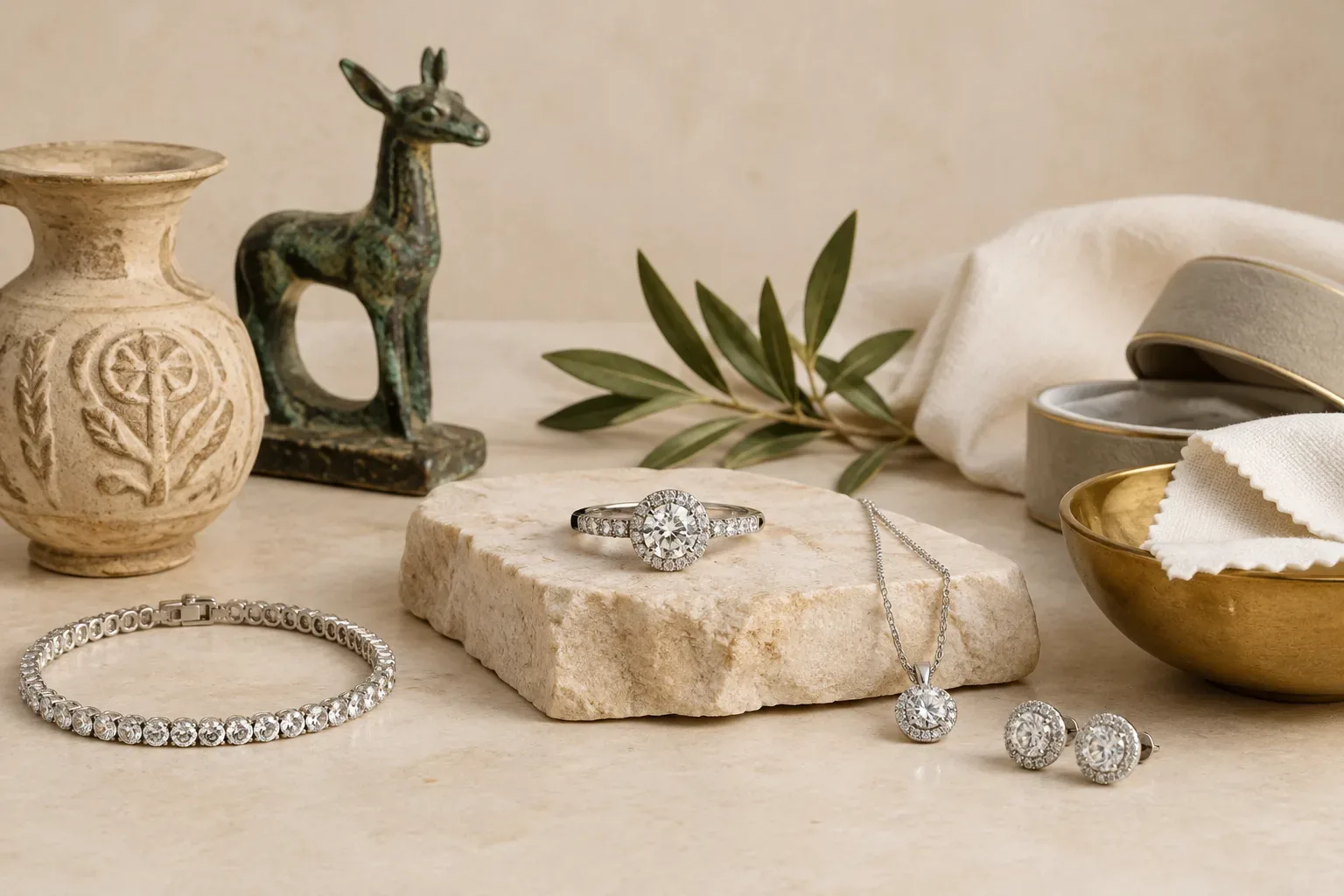
Meaning at a glance
Rhodium-plated jewelry requires gentle cleaning, careful storage, and clear disclosure when buying or gifting; historical museum evidence shows metal treatments and changing social meanings in jewelry, while modern plating is a technical finish whose care needs are largely practical rather than symbolic.
Quick answer
Treat rhodium-plated jewelry as a thin, protective surface: clean it with mild soap, warm water, and a soft cloth; avoid abrasive cleaners, harsh chemicals, and ultrasonic machines unless a jeweler confirms they are safe; store pieces separately in soft pouches or lined boxes away from direct sunlight, heat, and moisture; and when buying or gifting, confirm whether plating was applied and whether the piece will need occasional re-plating. This article explains the documented historical context reported by museums and consumer-protection guidance, separates historical meanings from modern personal interpretations, and gives practical cleaning, storage, selection, and gifting advice.
What museum and consumer sources say about jewelry treatments and meanings
The Victoria and Albert Museum presents jewellery as a material practice whose techniques and social uses have changed across cultures and periods. The V&A's historical surveys show that metalworking, surface finishes, and gem settings have long been used to alter appearance and to reflect fashion, status, and personal meaning. Those changes are documented in the V&A's work on jewellery history, which treats metal finishes and treatments as part of changing social and aesthetic contexts rather than as fixed symbolic codes (Victoria and Albert Museum).
For gemstones and their historic uses, the V&A's A–Z of Gemstones explains how particular stones have been worked, named, and traded across periods and places, and how their use in jewellery has carried social or aesthetic significance at different times (Victoria and Albert Museum).
On the consumer side, the U.S. Federal Trade Commission sets expectations for disclosure when materials are treated, enhanced, or imitated. The FTC guidance applies to modern surface treatments and plating: sellers should accurately describe material treatments so buyers understand what they are getting (Federal Trade Commission).
Historical evidence and precise cultural periods
Museum scholarship traces jewelry and surface treatments across named cultures and periods: for example, jewellery traditions appear in ancient Egypt, classical Greece and Rome, medieval and Renaissance Europe, and in modern Western and global craft and industrial practices. The V&A's exhibitions and writing outline how different peoples and eras used metals, stones, and finishes to signal status, identity, or personal sentiment, and how technical changes altered those meanings over time (Victoria and Albert Museum).
These historical accounts document the changing social contexts of jewellery—who wore which materials and why—but they do not prescribe a single, universal symbolic meaning for any surface treatment. Instead, the V&A presents treatments as part of fashion, technology and cultural practice rather than as uniform symbols across cultures.
Documented history versus modern interpretation
Documented history, as reported by the V&A, shows that techniques for changing a metal's look—plating, gilding, patination—have been used for centuries and have had social and aesthetic roles that differ by time and place. Those documented roles are evidence-based descriptions of practice and change, not universal meanings (Victoria and Albert Museum).
Modern personal interpretations—what a wearer or a seller might say a rhodium finish 'means'—are separate. A bright white finish applied by modern rhodium plating is primarily a technical and aesthetic choice that many people interpret as 'modern', 'elegant', or 'durable'. Those are contemporary perceptions, personal or commercial, not fixed historical facts. The FTC guidance reminds buyers to treat treatment claims as material facts about construction, not as inherent symbolic value (Federal Trade Commission).
How rhodium plating appears on jewellery today
In contemporary jewellery, a rhodium plate is a very thin layer of a white, reflective metal applied over a base metal such as silver or a white gold alloy to brighten colour, enhance reflectivity, and, in some uses, help resist surface tarnish or scratches. Museums describe the long history of altering metal surfaces to achieve particular aesthetic effects; modern plating is one of many technical approaches that achieve a desired finish (Victoria and Albert Museum).
Plating is a surface treatment: it changes the appearance and some surface properties but is not a bulk change to the underlying metal. Because it is a surface layer, it can wear over time with abrasion, contact with chemicals, or frequent polishing. For buyers, the FTC's materials on treated gems and metals emphasize that sellers should disclose which parts of an item are treated or plated (Federal Trade Commission).
Safe cleaning methods
Start with the gentlest approach: warm water, a few drops of mild liquid soap, a soft-bristled toothbrush or cloth, and gentle drying with a lint-free cloth. Light soils can usually be removed without abrasive action. Work over a bowl or a soft towel so pieces are not lost if dropped.
For everyday maintenance, a soft polishing cloth designed for jewelry can restore shine without abrading the plate. Avoid polishing past layers aggressively: repeated heavy polishing can thin a plating layer more quickly.
When a piece includes gemstones, check whether the stones are porous, heat-sensitive, or held with glued settings before cleaning. The V&A's guidance on gemstones explains that historical and modern gem materials have a range of vulnerabilities, and some modern stones or treatments require extra care (Victoria and Albert Museum).
Cleaning mistakes to avoid
Do not use abrasive cleaners, baking soda pastes, or coarse polishing wheels on rhodium-plated surfaces. Abrasives remove the thin plate and expose the underlying metal, changing colour and performance.
Avoid bleach, chlorine, acetone, and strong acids or alkalis. These chemicals can attack either the plating or the underlying metal and may damage gemstones and settings.
Ultrasonic cleaners and steam cleaners can be useful for some solid metal and hard-stone jewellery, but they are often inappropriate for plated items and for pieces with fragile or treated gemstones. If you are unsure, ask a qualified jeweler. The FTC recommends clear disclosure of treatments so buyers and caretakers can make informed decisions about cleaning and care (Federal Trade Commission).
Storage: safe practices
Store rhodium-plated pieces separately in soft pouches or lined compartments to avoid abrasion against other jewellery. Surface wear often occurs where pieces rub together inside a box or pouch.
Keep plated jewellery away from prolonged exposure to humidity, heat, and direct sunlight. A cool, dry environment reduces chemical and physical stresses that can accelerate wear. Avoid storing plated items near chemicals such as perfumes, cosmetics, and household cleaners.
For long-term storage, consider using anti-tarnish strips for silver-based pieces and ensure clasps and settings are closed so pins and prongs do not catch on fabric or other items.
Selection and gifting guidance—practical and respectful
When selecting or gifting rhodium-plated jewellery, ask the seller whether the piece is plated, how thick the plating is if known, and whether any re-plating service is recommended. The FTC advises sellers to disclose treatments so buyers know what maintenance the object may need (Federal Trade Commission).
Match the piece to the recipient's lifestyle. If the wearer leads an active life, swims often, or prefers low-maintenance jewellery, choose solid metals or pieces with clear care instructions rather than assuming plating will be 'forever'. If you gift a plated piece, include written care instructions and, if possible, a note about service options such as re-plating.
Respect personal and cultural meanings. While museums document historic practices and the uses of particular materials at specific times and places, a modern wearer may assign their own meanings to a bright white finish. Treat any symbolic interpretation you offer as personal and contextual, not as a universal historical truth (Victoria and Albert Museum).
When to see a professional
Consult a professional jeweler if a rhodium-plated piece looks significantly worn, if stones are loose, or if repair work is required. A jeweler can assess whether re-plating, restringing, retipping prongs, or other conservation is appropriate.
For antique or historically significant pieces, seek professional conservation advice before attempting any cleaning or repair. Museum conservators and reputable jewelers use techniques chosen to preserve both material and historical value; the V&A's approach to jewellery history emphasizes careful consideration of material and meaning when intervening in historic objects (Victoria and Albert Museum).
Conclusion
Rhodium plating is a modern surface treatment that alters appearance and some surface performance. Museum sources document the long history of metal finishes and how their social meanings have shifted over time; consumer-protection guidance stresses clear disclosure about treatments so buyers can make informed choices (Victoria and Albert Museum; Federal Trade Commission). Cleaning and storage should be gentle and preventative: use mild soap and soft cloths, avoid harsh chemicals and abrasives, store items separately in dry conditions, and ask a jeweler when in doubt. When selecting or gifting, confirm treatment details and offer care guidance so the piece earns its place in daily wear or treasured storage.
Frequently asked questions
How often should I clean rhodium-plated jewelry?
Clean lightly as needed—after noticeable dirt, lotions, or perspiration—with warm water, mild soap, and a soft cloth. Frequent, aggressive polishing should be avoided because plating is a thin surface layer that can wear down.
Can I use a jewelry polishing cloth on rhodium-plated pieces?
Yes, a soft, non-abrasive jewelry cloth is appropriate for gentle maintenance. Avoid abrasive polishing compounds or heavy rubbing that could remove the plating over time.
Is it safe to put rhodium-plated jewelry in an ultrasonic cleaner?
Ultrasonic cleaners can damage plated surfaces and some gemstones. Check with the seller or a jeweler before using ultrasonic or steam cleaners on plated pieces.
Will rhodium plating prevent tarnish forever?
Rhodium plating can protect and brighten a surface but does not guarantee permanent protection. The plating is a thin layer that can wear with time, exposure to chemicals, abrasion, or polishing.
Can rhodium plating be reapplied?
Yes. A professional jeweler can re-plate pieces when the surface looks worn, but the frequency and cost depend on usage, underlying metal, and the quality of the original plating. Ask the jeweler for guidance and estimated timing.
What should I ask when buying or receiving rhodium-plated jewelry as a gift?
Ask whether the piece is plated and whether the seller discloses the treatment. Find out recommended cleaning and storage practices, whether the piece can be re-plated, and whether any gemstones or settings require special care.
Sources and further reading
- Bedazzled: A History of Jewellery — Victoria and Albert Museum
- An A-Z of Gemstones — Victoria and Albert Museum
- Buying Gemstones, Diamonds, and Pearls — Federal Trade Commission