Meaning at a glance
Oxidized silver jewelry repair and maintenance requires different care than polished silver because the darkened finish is an intentional surface treatment; light at-home cleaning can preserve the patina, but structural problems, loose settings, or loss of stable surface finish are signs to consult a professional who understands how to preserve or restore oxidation without erasing it.
Documented historical evidence and contexts
Museum scholarship shows that jewellers across many periods used surface treatments to alter the look of metal for visual effect, contrast, and durability rather than for a single universal meaning. The Victoria and Albert Museum describes how finishes and surface treatments have been part of jewellery making and have shifted in social context over time, emphasising craftsmanship and changing fashion rather than fixed symbolism.
The V&A's survey of jewellery history places those techniques in cultural context but does not present a single, unified symbolic meaning for darkened metal applied across cultures. Instead, darkening or patination appears in different periods for practical or aesthetic reasons, such as increasing contrast around stones or highlighting engraved details.
Separating documented meanings from modern personal interpretation
Historical sources document the use of darkened metal as a finish and its changing social contexts, but they do not support a claim that oxidized silver carried a specific, universal symbolic meaning across different societies. Where museum research records intent, it is primarily aesthetic or technical, such as enhancing contrast or imitating older surfaces, as recorded by the Victoria and Albert Museum.
Modern interpretations and marketing often attach additional meanings—antique or gothic mood, authenticity, or a deliberately ‘lived-in’ look—and those are contemporary, subjective readings rather than documented historical beliefs. When choosing or interpreting oxidized silver, treat such attributions as personal or brand storytelling rather than established history.
How oxidized finish appears and how it relates to gemstones and motifs
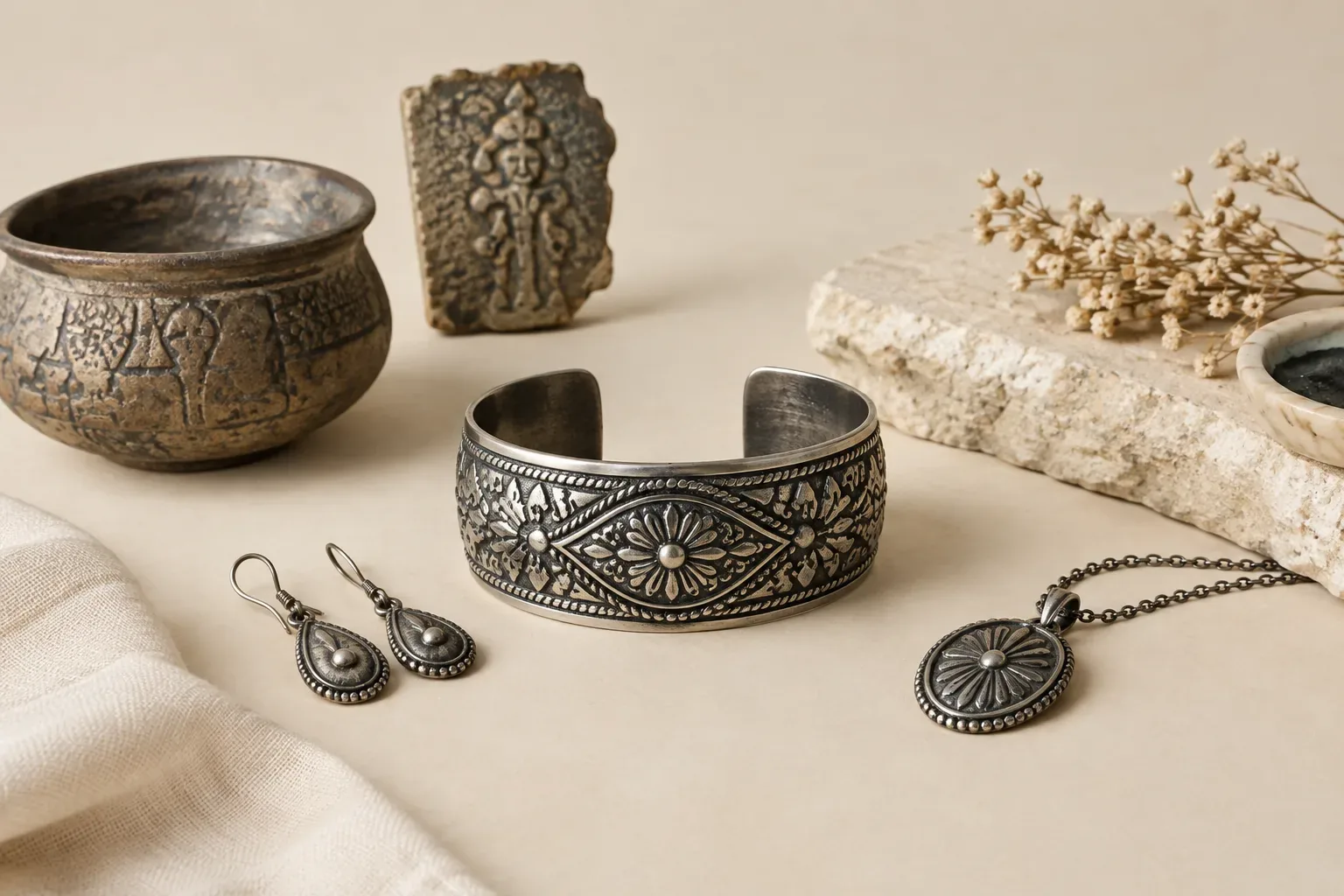
In jewellery, an oxidized finish typically appears as intentionally darkened recesses and surfaces that increase contrast with raised details, filigree, or set stones. The technique is often applied so that high points retain a hint of bright metal while lower areas remain darker, emphasizing engraving, granulation, or the silhouette of a motif.
Gemstones set in oxidized silver are chosen and placed with that contrast in mind. Museums such as the Victoria and Albert Museum catalogue showings of jewellery note that gem selections historically responded to metal finishes, with darker metals making lighter or more reflective stones stand out. For gemstone identification and historical context, the V&A recommends studying the stone's properties and how they display against different metal finishes.
Because finish and stone treatment affect appearance, sellers should disclose surface treatments and any gemstone enhancements. The Federal Trade Commission advises disclosure of material treatments and imitations so buyers can make informed decisions, and that guidance applies to oxidized finishes as an intentional treatment of the metal surface.
Warning signs that professional repair is needed
A jeweller should inspect any piece that shows signs of structural compromise, including visibly moving or tilting stones, thinning prongs, gaps in settings, or broken links and solder joints. These are mechanical problems that, if left unaddressed, risk permanent loss of gems or further metal loss.
If the darkened finish itself is flaking, uneven in patches that cannot be smoothed gently with a soft cloth, or if areas of the metal show raw wear that reveals different alloys beneath, professional intervention is advisable because aggressive home polishing can remove the intended finish and expose softer underlying metal.
When cleaning at home produces unexpected color transfer onto skin or cloth, or when a piece smells strongly of chemical residues after a DIY treatment, stop and consult a professional to avoid chemical damage to stones, settings, or surface treatments.
Basic at-home maintenance and what to avoid
For routine care, keep oxidized silver dry and free from lotions, perfumes, and household chemicals that can alter the finish. Wipe pieces gently after wear with a soft, dry cloth to remove oils and dirt, and store separately to avoid friction that will polish away darkened surfaces.
Avoid abrasive cleaners or polishing cloths designed to restore a mirror shine on sterling silver because those products can remove or reduce oxidation. Do not use ultrasonic cleaners or steam unless a professional jeweller confirms the treatment is safe for the particular stones and finish.
If a light refresh of the darkened areas is needed, consult a jeweller who can re-apply or retouch the finish selectively. Many oxidized pieces benefit from professional re-patination rather than household polishing because professionals can control contrast and protect settings and stones.
Choosing, gifting, and selection guidance
When selecting oxidized silver as a purchase or a gift, consider the recipient’s usual jewellery habits and styling. Oxidized finishes tend to read as casual, vintage-inspired, or deliberately aged, so pick designs that match the wearer’s wardrobe and tone. If the recipient prefers high shine, an oxidized piece may not suit them long-term unless they intend to keep it in occasional rotation.
Ask sellers upfront about the durability of the finish, whether the piece can be re-oxidized, and what maintenance they recommend. The Federal Trade Commission’s guidance on disclosure means sellers should tell you about treatments to metal and gems; use those disclosures to compare durability and care needs between pieces.
Respect sensitivities by checking metal content if the wearer has known allergies. If a piece is made from a silver alloy containing other metals, ask whether the oxidized finish will be affected by body chemistry, and whether the merchant offers a care or warranty policy for finish or setting repairs.
Finding a professional and questions to ask
Seek a jeweller or conservator with experience preserving oxidized finishes or working with historical-style silver. Ask whether they will prioritize conserving the existing finish, whether they recommend re-oxidation or selective retouching, and what solvents or processes they use so you can be sure they will not damage gemstones or delicate settings.
Ask for an estimate and a written description of the proposed work, including any changes to appearance that a re-finish will cause. For pieces with valuable or historically important stones, consider a conservator with museum experience rather than a mass-market repair shop.
When a repair requires soldering or reshaping of worn areas, request that the jeweller explain how they will match the patina and whether they can test on a hidden area first. Good professionals will also advise you on storage, cleaning intervals, and whether routine maintenance can be performed without affecting the overall look.
Frequently asked questions
How should I clean oxidized silver at home without removing the patina?
Wipe the piece gently with a soft, dry cloth after wearing to remove oils and dirt. If a deeper clean is necessary, use a soft cloth dampened with plain water or very mild soap, rinse quickly, and dry thoroughly. Avoid abrasive polishes, polishing cloths intended to restore high shine, and ultrasonic cleaners because they can remove the darkened surface.
Can oxidized silver be re-darkened if the finish wears away?
Yes, many oxidized finishes can be re-applied or touched up by a professional jeweller who knows how to control contrast and protect settings. Ask the jeweller for details about their process and whether they will match the existing patina on the piece.
When should I take oxidized silver to a professional rather than attempting a repair myself?
Consult a professional for loose or missing stones, thinning or damaged prongs, broken links, soldered joins, or when the finish is flaking or uneven in ways you cannot correct safely at home. Structural problems and delicate finishes require tools and expertise beyond typical home care.
Will cleaning oxidized silver damage set gemstones?
Some gemstones are sensitive to heat, chemicals, or ultrasonic cleaning, so avoid aggressive industrial cleaning methods unless a professional confirms they are safe for the specific stones. When in doubt, have a jeweller assess the piece before deep cleaning.
How can I find a jeweller experienced with oxidized finishes?
Look for jewellers who explicitly offer conservation or finish-restoration services and ask for examples of similar work. Ask whether they will prioritize preservation of the existing patina and whether they can test any process on a hidden area first.
Should the seller disclose that a piece has an oxidized finish?
Yes. The Federal Trade Commission advises that sellers disclose material treatments and enhancements. Ask the seller to describe the finish, any treatments applied to gemstones, and recommended care so you understand maintenance needs before purchase.
Sources and further reading
- Bedazzled: A History of Jewellery — Victoria and Albert Museum
- An A-Z of Gemstones — Victoria and Albert Museum
- Buying Gemstones, Diamonds, and Pearls — Federal Trade Commission