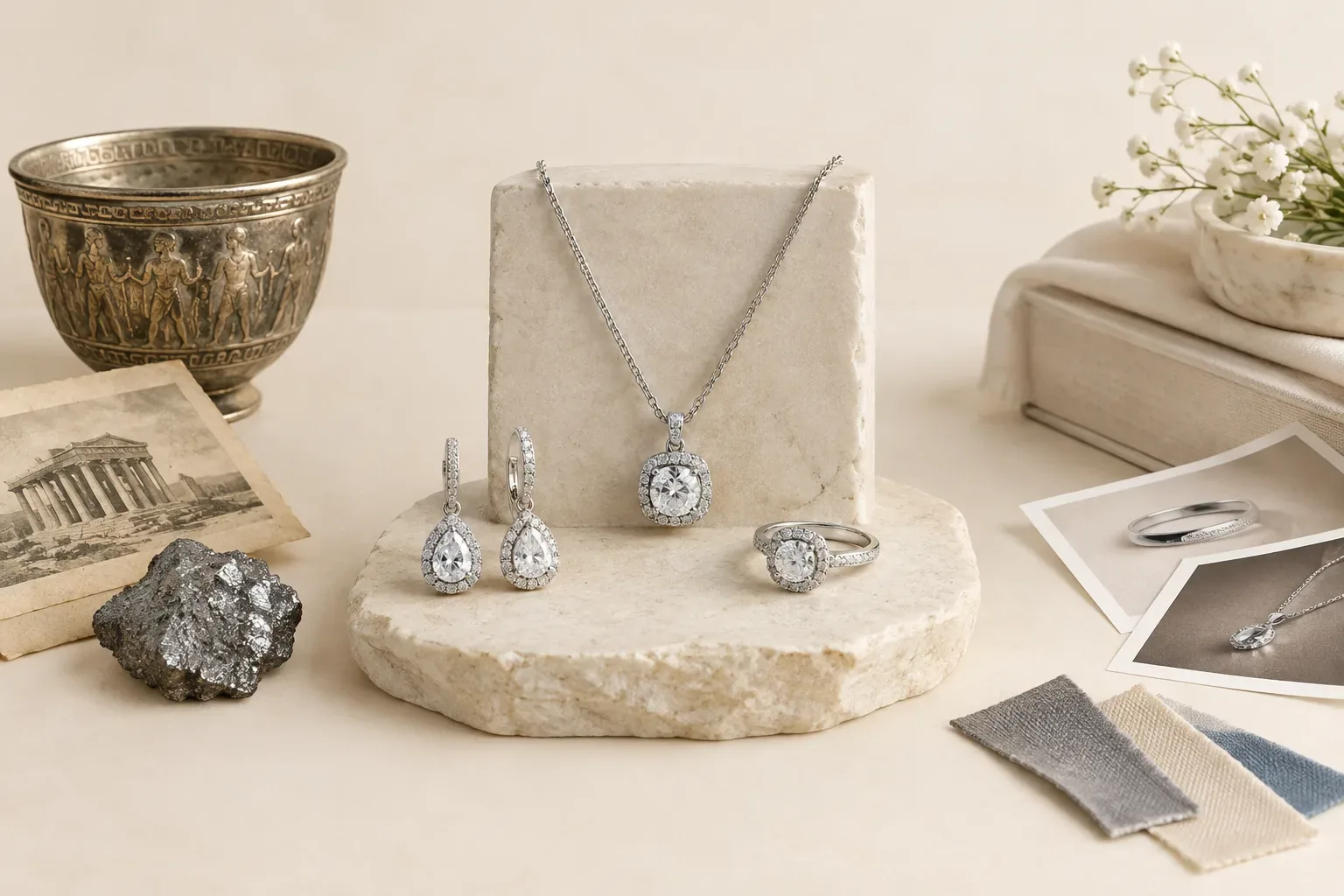
Meaning at a glance
This guide explains the documented history and changing contexts of plated finishes in jewelry, distinguishes historical meanings from modern personal interpretations, and gives clear, practical guidance for choosing, evaluating, and gifting rhodium plated pieces.
Quick answer
Rhodium plated jewelry buying guide — concise answer: rhodium plating is a modern surface finish used to brighten and protect white metals; choose it when you want a bright, tarnish-resistant look at lower cost than solid platinum or fully rhodium-alloyed pieces, but expect eventual wear and possible re-plating. This guide explains what historians and museums document about changing jewelry finishes, separates those documented contexts from later popular meanings, and gives practical steps for evaluating quality, price, and best uses for gifting and everyday wear.
What rhodium plating is and why buyers choose it
Rhodium plating is a surface finish applied to jewelry to create a bright, reflective white surface. Jewelers commonly use it over white gold, silver, and costume metals to enhance shine, create a uniform color, and add short-term corrosion resistance. Buyers choose rhodium plated pieces because they can achieve a clean, white look similar to platinum at a lower upfront cost, and because the finish can reduce visible tarnish on silver.
Historical evidence and changing contexts
The idea that finishes, materials, and gemstone choices carry meaning is historically variable. The Victoria and Albert Museum documents how jewelry styles, materials, and the social meanings attached to them have shifted across time and culture, reflecting technology, fashion, and social structure rather than a single, unchanging symbolism. For example, in many historical periods materials signalled social rank or wealth because they were expensive or difficult to obtain, while later industrial production made previously rare effects more widely available and changed how people understood those looks.
Because rhodium itself and modern electroplating are technologies of the 19th and 20th centuries, the specific practice of rhodium plating belongs to the modern industrial era and to contemporary jewelry manufacture. The V&A’s surveys of jewelry history make clear that finishes and treatments are part of a wider narrative of changing social context and stylistic preference rather than timeless symbolic codes.
Documented historical meanings versus modern interpretations
Documented historical meanings come from what museums and contemporary records record about how jewelry was used and understood. The Victoria and Albert Museum notes that gemstones and materials have had varied uses and symbolic associations in different times and places; those associations are recorded in inventories, portraits, and surviving objects. Such documentation supports claims like 'certain stones were prized in specific eras' or 'metalwork styles signalled social status' because they appear in the historical record.
Modern interpretations—such as claims that a specific white finish guarantees purity, permanence, or a particular emotional meaning—are often personal or commercially amplified. These interpretations are valid at the level of individual taste or marketing, but they are not the same as historically documented meanings. In short: documented meanings are linked to historical sources and contexts; modern personal meanings are subjective and may vary by wearer, maker, and region.
How rhodium plating appears across motifs, gemstones, and traditions
Rhodium plating is a surface treatment and therefore can appear on almost any motif—from minimalist bands to ornate Victorian-style lockets—and over a range of base metals. Museums such as the Victoria and Albert Museum catalogue shows and articles on gemstones illustrate how gem settings and decorative motifs travel across eras; a bright white metal finish often highlights color contrast with colored gemstones and makes diamonds and colorless gems appear whiter.
When paired with colored gemstones, a rhodium finish accentuates contrast and can make gems read as cleaner or brighter. Over sterling silver it reduces early tarnish visibility; over white gold it reinforces the white appearance that might otherwise yellow over time. In costume jewelry, rhodium plating is used to imitate the look of fine white metals without the cost. As with any finish, the combination of motif, setting style, and gemstones influences the overall impression and wearability of the piece.
Quality indicators: what to ask and what to expect
Because plating is a surface treatment, the long-term look and value of a rhodium plated piece depend on both the base metal and the quality of the plating. Practical questions to ask a seller include: what is the base metal (sterling silver, white gold, brass, or plated base), what is the plating policy for re-coating or repairs, and whether the seller provides any care instructions or warranties. According to consumer guidance from the U.S. Federal Trade Commission, sellers should disclose treatments and any imitations clearly, so ask for clear written information if you need it.
Look for reputable markings and a transparent return or repair policy. Pieces with a high-quality base metal such as sterling silver or solid gold are easier to re-plate and generally yield better long-term wear than pieces with weak or reactive base metals. Expect that plating will wear over time in high-contact areas such as ring bands and bracelet clasps; reputable sellers will describe expected wear and offer re-plating or refurbishment services.
Price, durability, and best uses
Price reflects materials, maker reputation, and finish. Rhodium plating adds labor and materials cost to a piece, but it can still be substantially less expensive than solid platinum or heavy white-gold alloys. Durability varies with the metal beneath and how the piece is used: everyday items like engagement rings and wedding bands typically suffer faster finish wear than occasional-wear necklaces or stud earrings. Decide whether you want the look of a bright white finish at lower cost, or whether you prefer an investment in a solid white metal that will not rely on surface treatments.
Care, maintenance, and re-plating
Care practices help prolong rhodium plating. Gentle cleaning with a soft cloth and avoidance of harsh chemicals reduces surface wear; store pieces separately to avoid abrasive contact. When wear appears as dullness or color change at high-contact points, many jewelers offer re-plating services. Ask a prospective seller about expected lifespans and local or recommended repair options so you can plan for maintenance rather than being surprised when the finish needs renewing.
Selecting and gifting guidance — practical and respectful choices
When choosing rhodium plated jewelry for yourself or as a gift, match the selection to the recipient’s lifestyle and preferences. For daily-wear pieces choose a sturdier base metal and confirm the seller’s re-plating or repair options. For occasional-wear fashion jewelry, aesthetic appeal and price may take priority. If the recipient has known metal sensitivities, ask the seller about base-metal composition and whether the plated finish fully covers reactive surfaces; when in doubt, choose pieces with clear material disclosure.
Be sensitive to cultural or personal meanings. As the Victoria and Albert Museum documents, materials and motifs can carry different meanings in different cultures and periods. If you select a motif with cultural or religious significance, research or ask about its context before gifting so the gesture is respectful. If you’re unsure about a person’s preferences, a neutral, well-made piece with a clear return policy is a safe choice.
When to choose rhodium plating and when to choose alternatives
Choose rhodium plated jewelry when you want a bright white aesthetic at lower cost, when you’re pairing it with colored gemstones for contrast, or when you prefer a finish that reduces visible tarnish on silver. Choose solid white metals—such as platinum or high-quality white gold—when you want a finish that does not rely on surface treatments and you’re prioritizing longevity and resale value. For heirloom pieces intended for daily wear over generations, many buyers prefer solid metals; for trend pieces, seasonal styles, or budget-conscious purchases, rhodium plating is often appropriate.
Final checklist before you buy
Before purchase, confirm the base metal, request written disclosure of treatments, ask about re-plating and repair policies, inspect hallmarks or maker information, and consider the wearer’s lifestyle and sensitivities. The U.S. Federal Trade Commission’s consumer guidance underscores the importance of disclosure for treatments and imitations; use that principle when comparing offers and reading product descriptions. A well-informed purchase balances aesthetics, maintenance expectations, and the seller’s transparency.
Frequently asked questions
How long does rhodium plating last?
Lifespan varies with wear, base metal, and thickness of the plating; high-contact items like rings will show wear sooner than earrings or pendants. Ask your seller about typical wear for the specific piece and about re-plating services.
Can rhodium plating be reapplied?
Yes. Most jewelers offer re-plating or refurbishment services. Confirm whether the seller or a recommended local jeweler performs re-plating and whether the piece’s base metal is suitable for repeated re-coating.
Is rhodium plated jewelry the same as white gold or platinum?
No. Rhodium plating is a surface finish applied to a base metal such as white gold, silver, or costume metal to create a bright white look. Solid white gold and platinum are base metals or alloys that do not rely solely on a surface coating for their color.
How do I know if a seller has disclosed treatments or imitations?
The U.S. Federal Trade Commission advises that sellers should disclose treatments and imitations. Look for clear written descriptions of the base metal and any plating or enhancements; if information is missing, request it before purchase.
Are there special care steps for rhodium plated pieces?
Yes. Clean gently with a soft cloth, avoid harsh chemicals, and store pieces separately to reduce abrasion. Follow any care instructions from the seller to extend the life of the plating.
Sources and further reading
- Bedazzled: A History of Jewellery — Victoria and Albert Museum
- An A-Z of Gemstones — Victoria and Albert Museum
- Buying Gemstones, Diamonds, and Pearls — Federal Trade Commission