Meaning at a glance
Explain the documented history and changing contexts of the brass jewelry explained motif, separate cultural or religious evidence from later popular interpretations, and give practical guidance for choosing and wearing the motif in modern jewelry.
Short answer
Brass jewelry explained simply: brass is a copper-based alloy widely used for decorative metalwork; its use and meanings have varied by place and period. Historical evidence shows jewelry materials and motifs change with social context (Victoria and Albert Museum). Modern symbolic readings often differ from documented historical meanings, and U.S. consumer rules require sellers to disclose material treatments and imitations (Federal Trade Commission).
What people mean by “brass jewelry” and how it’s made
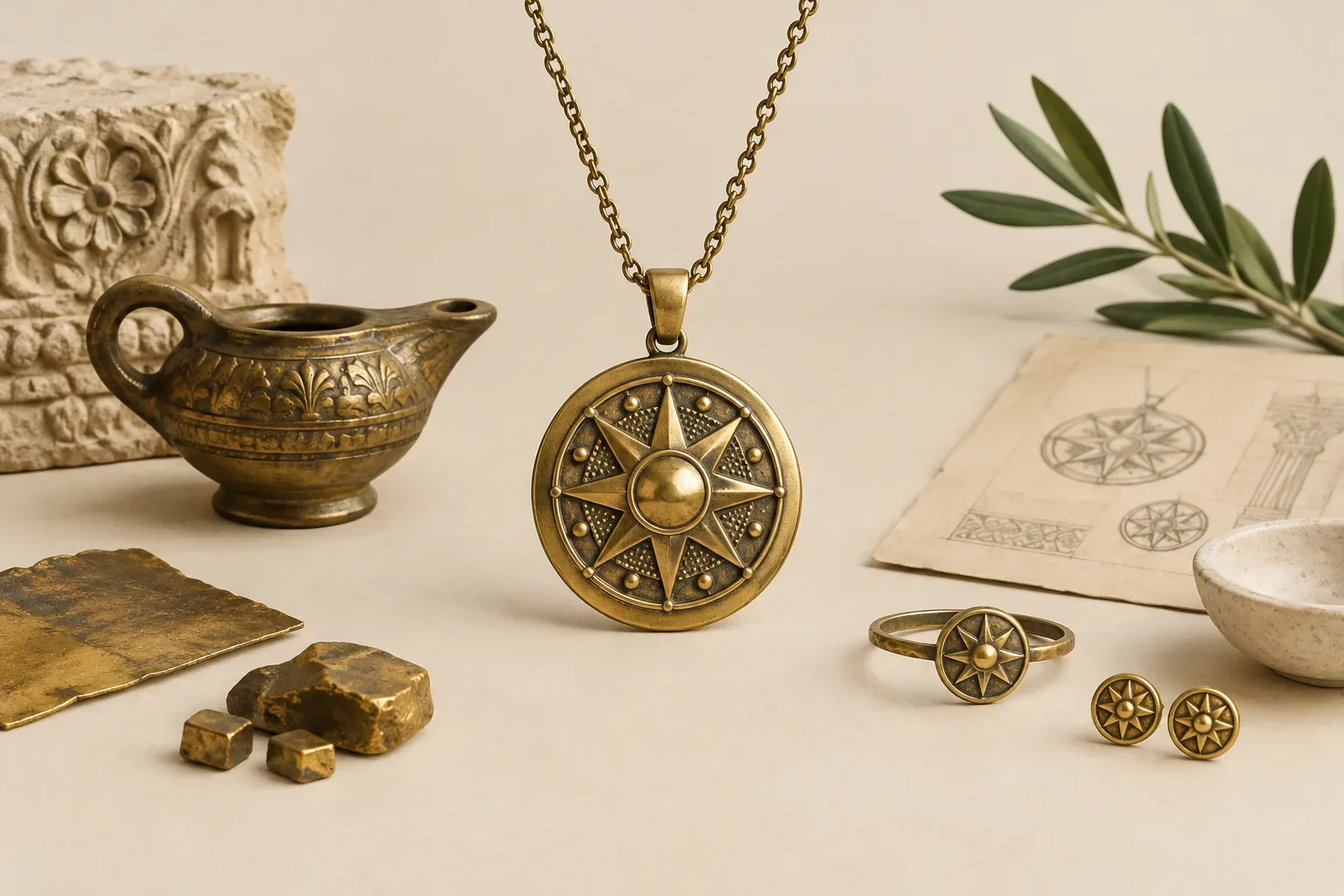
In everyday use, brass jewelry refers to pieces made from a copper alloy commonly known as brass. Craftspeople form brass into rings, necklaces, bracelets and decorative elements by cutting, casting, forging, chasing, or by sheet techniques such as punching and stamping. Common surface finishes include polishing, antiquing (to create a darker patina), plating, and lacquering to slow tarnish.
Because brass is a metal alloy rather than a single mineral, makers may alter its appearance with surface coatings, colored lacquers, or by setting stones and glass. These treatments can affect color, durability, and care needs, and consumers should seek clear disclosure about such modifications before purchase.
Documented historical uses and cultures
Museum scholarship shows that jewelry’s materials and meanings have changed repeatedly across cultures and periods. The Victoria and Albert Museum’s exhibition and interpretive work situates jewelry in shifting social contexts from ancient civilizations through medieval, early modern, and modern Europe, and into the global exchanges of the 19th and 20th centuries. That research emphasizes that materials like base metals gained prominence at different times depending on fashion, technology, and economy.
Across regions, metal alloys similar to brass appear in decorative objects and adornment where bronze and other copper alloys were used for functional and ornamental work. In some periods and places, richly worked metal—whether precious or base—served as a visible marker of status or identity; in others, less costly alloys enabled wider ownership of fashionable forms. The V&A’s historical overview highlights these shifts without offering a single, universal reading of any material.
Separating documented historical meanings from modern interpretations
Scholarly sources that trace jewelry history focus on context: who wore an object, how it was made, and how its value was understood at the time. That evidence seldom supports a single symbolic meaning for a material such as brass. For example, museum interpretation explains changes in social function—such as a piece serving as status display, personal ornament, or mass-produced fashion—rather than asserting an inherent spiritual or moral quality of a metal.
Modern personal, spiritual, or fashion-based interpretations often layer new meanings onto older forms. Contemporary sellers and wearers may ascribe symbolism to brass—such as warmth, rustic charm, or an ‘antique’ character—but those are living, individual readings rather than universally documented historical meanings. Where a specific symbol or motif has documented cultural meaning, museum records and object histories (as summarized by the Victoria and Albert Museum) are the appropriate sources to consult; do not assume modern marketing claims repeat historical fact.
How motifs, gemstones, and traditions appear in brass jewelry
Brass is used in a wide variety of decorative techniques. Motifs such as floral scrolls, geometric patterns, filigree and repoussé are executed in brass for costume and artisan jewelry as readily as in silver or gold where designs are shared across materials. Brass can be punched, chased, inlaid, stamped, or cast to reproduce regional decorative languages or contemporary designer signatures.
Gemstones and glass are often set into brass in costume and contemporary pieces. The Victoria and Albert Museum’s resources on gemstones explain how different stones have been identified, valued, and set across time; that context helps when assessing whether a stone in a brass setting is a natural gem, a treated stone, or an imitation. Because brass is a less expensive metal, many pieces that use brass also use less costly or simulated stones—again underscoring the need for transparent identification and disclosure.
Hallmarks, labeling, and truthful disclosure
Hallmarks are official stamps used in many countries to certify the content and sometimes the maker of precious metals such as gold, silver, and platinum. Historical and museum treatments of jewelry explain that hallmarking systems developed to protect buyers and standardize trade. Brass, as a base metal, is not typically subject to traditional precious-metal hallmark systems and is often sold without a government hallmark.
In markets such as the United States, consumer-protection rules require sellers to be honest and not misleading about the nature of goods. The Federal Trade Commission advises sellers to disclose material composition, whether gems are natural, treated, or synthetic, and whether an item is plated or an imitation. When buying brass jewelry, look for clear labeling that states the metal is brass (or a brass alloy), notes any plating, and specifies the treatment or nature of any stones or finishes. If a seller claims a piece is ‘antique,’ ‘vintage,’ or made of a precious metal, ask for supporting documentation or testing.
How to choose and gift brass jewelry respectfully
Choose brass jewelry with attention to craftsmanship, disclosure, and cultural context. Ask the maker or seller for clear information about composition, surface treatments, and the origin of any motifs that have specific cultural or religious meaning. If a motif comes from a particular culture or religious tradition, research its historical use through reliable museum sources or ask the maker about provenance before presenting it as a meaningful gift.
Consider the recipient’s skin sensitivity and lifestyle. Some people react to base metals or to plated finishes when the plating wears. Lacquered or coated brass can reduce skin contact but may wear over time; solidly made pieces with durable finishes generally require less frequent maintenance. For gifts intended as sentimental objects, choose makers who provide honest descriptions and, where appropriate, a written note about the piece’s materials and care instructions.
Practical care and long-term considerations
Brass patinates and can darken with exposure to air, moisture, and skin oils. Some buyers prefer the aged patina; others like to keep brass bright. Small amounts of polishing, a soft cloth, or gentle cleaning solutions designed for base metals will change appearance; follow the maker’s care guidance to avoid removing protective coatings or finishes.
If resale, donation, or museum-quality documentation matters, keep receipts and any maker’s notes about materials and treatments. Clear provenance and disclosure improve long-term value and avoid misunderstandings about what a piece is made from or represents.
Final note
Brass jewelry can be beautiful, affordable, and historically resonant, but its meanings are not fixed. Use museum resources such as the Victoria and Albert Museum to understand documented histories and consult consumer-protection guidance such as the Federal Trade Commission when evaluating claims about materials, treatments, or imitations. When in doubt, prioritize transparent disclosure, respectful research into cultural origins, and clear communication with the maker or seller.
Frequently asked questions
Is brass jewelry the same as gold or silver jewelry?
No. Brass is a base metal alloy used for decorative jewelry; it is neither gold nor silver. Unlike many precious metals, brass is rarely covered by traditional precious-metal hallmark systems, so buyers should rely on seller disclosure and documentation to understand composition and treatments.
How can I tell if a gemstone in a brass piece is genuine?
Ask the seller for information about the stone, including whether it is natural, treated, synthetic, or glass. Museum resources on gemstones provide context about common materials and treatments. In jurisdictions such as the United States, the Federal Trade Commission expects sellers to disclose such details; if the seller cannot confirm, consider an independent appraisal.
Are there cultural meanings tied to brass that I should know before buying or gifting?
Meanings vary by culture and by time period. Museum scholarship emphasizes context rather than a single symbolic reading. If a motif has a clearly documented cultural or religious meaning, research it through reputable sources or ask the maker for provenance. Avoid assuming modern marketing interpretations reflect documented historical belief.
How should I care for brass jewelry to preserve its appearance?
Care depends on finish. Many brass pieces patinate over time; polishing will restore brightness but may remove intentional aging or protective coatings. Use gentle cleaners suitable for base metals and follow any maker-provided care instructions. If the piece is lacquered or plated, avoid abrasive cleaners that may damage the surface.
What should I ask a seller before buying brass jewelry online?
Request clear statements about the metal and any coatings or plating, the nature of any stones, photographic detail of the finish, return and care policies, and any provenance for culturally specific motifs. If the listing claims antique status or precious-metal content, ask for documentation or testing results.
Sources and further reading
- Bedazzled: A History of Jewellery — Victoria and Albert Museum
- An A-Z of Gemstones — Victoria and Albert Museum
- Buying Gemstones, Diamonds, and Pearls — Federal Trade Commission