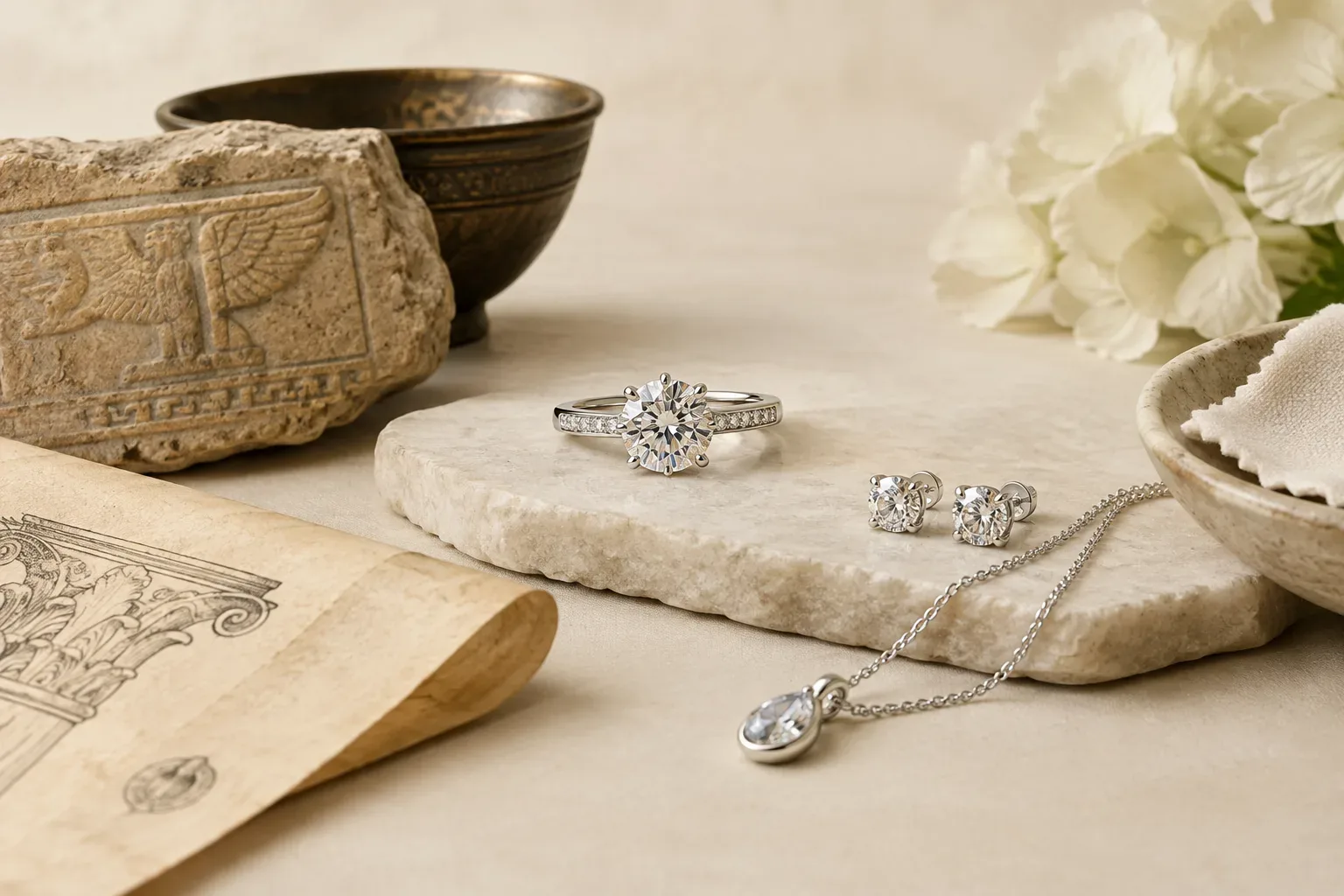
Meaning at a glance
Rhodium plating is a modern surface treatment applied to jewelry to change color and surface properties; its durability depends on layer thickness, the underlying metal, and wear conditions. Historical sources show that surface finishes and protective coatings have long been part of jewellery practice, while modern disclosure rules require sellers to state treatments. Practical care, informed selection, and clear communication with retailers keep plated pieces looking their best.
What history tells us about surface finishes and jewellery
Museum scholarship shows that jewellers have altered and protected surfaces for millennia. The Victoria and Albert Museum’s materials on jewellery history describe changing techniques and social contexts from Ancient Egypt and Classical antiquity through the Medieval, Georgian, Victorian and modern periods, demonstrating that finishes and surface treatments have long been part of how societies value and wear personal adornment.
Those historical sources document a sequence of materials and practices rather than a single continuous technology. Ancient and classical makers used gilding, inlay, enamels and other methods to change color and protect underlying metals. Medieval and later European traditions refined techniques such as vermeil and gold plating and developed fashions for bright or darkened surfaces. The V&A emphasizes that these changes often reflect wider social trends: availability of materials, shifting tastes, and the symbolic needs of particular periods.
Documented historical meanings versus modern interpretations
When museum sources describe a finish or surface treatment in a past culture, the statement is an historical observation about technique, materials, or documented use. The V&A’s accounts focus on workmanship, provenance and how pieces were used in their cultural moment. Those are documentary claims: for example, that certain finishes were used in a particular region or period, or that a society preferred highly polished gold or oxidised silver.
Modern marketing and personal meanings around rhodium-plating are interpretations layered onto a contemporary treatment. Claims that rhodium plating makes a piece inherently 'permanent' or that it transforms the symbolic meaning of a historic form belong to contemporary consumer practice. The Federal Trade Commission’s guidance on gemstones, diamonds and pearls emphasises that sellers must disclose treatments and imitations; this ruleframes modern claims about durability and identity as commercial statements that require factual disclosure rather than cultural history.
How plating and surface treatments appear in contemporary jewelry
In modern jewellery the visible effect of a plating is part of a piece’s appearance and function. Plating can be used to make a metal look whiter, darker, shinier or more matte than the base metal, and it can be combined with stones, settings and motifs. Contemporary makers often apply surface finishes to white gold to achieve a bright white look, or to sterling silver for extra shine and temporary tarnish resistance. The historic pattern of altering surfaces for aesthetic or protective reasons continues in these practices, as documented by museum surveys of jewellery techniques and changing fashions.
Plating may also be used creatively: a jeweller can plate only part of a piece to contrast finishes, or plate a base metal as a cost-effective way of achieving the look of a more expensive metal. These design choices often reference historical finishes—such as the bright mirror polish prized in some Victorian pieces or the darker patinas seen in medieval work—while remaining distinct technical processes in modern manufacture.
Durability: what to expect and how to judge a plated piece
Historical sources do not prescribe modern plating lifetimes; durability in contemporary pieces depends on how the item is constructed and used. The term 'durability' for a plated surface involves at least three things: the thickness and quality of the plating, the hardness and chemistry of the underlying metal, and the amount and type of friction or chemical exposure the piece receives during wear. A thin decorative layer will not last as long as a heavier, professionally applied finish, and a soft base metal will expose wear more quickly than a hard alloy.
Because the Federal Trade Commission requires sellers to disclose treatments, you can and should ask about plating method and thickness, the base metal, and recommended care before purchase. If a seller discloses re-plating options, or if the piece is warranted for service, that information is a practical indicator of expected longevity. Museums show that finishes are historically contingent choices; in a modern context, transparency from the maker or retailer helps you set realistic expectations.
Practical care to preserve plated surfaces
Treat plated surfaces gently and treat them as a delicate finish rather than a permanent skin. Remove plated rings and bracelets for activities that cause friction or chemical exposure, such as gardening, swimming, heavy lifting or cleaning. Household chemicals, chlorinated water and abrasive cleaners can accelerate wear on any plated finish. Store plated items separately to avoid abrasion against harder metals and gemstones.
For routine cleaning, use a soft, lint-free cloth and mild soap with warm water; dry thoroughly before storing. Avoid ultrasonic cleaners and aggressive polishing compounds unless a qualified jeweller confirms they are safe for the specific plating. When small scratches or local wear appear, a professional can re-plate the item; re-plating schedules vary with use, so ask a trusted jeweller for an estimate based on how you wear the piece.
Selecting and gifting rhodium-plated jewelry respectfully
When choosing a plated piece as a gift, be explicit about the nature of the finish and the expectations that come with it. Ask the seller to confirm the base metal, whether the plating covers the entire piece or only selected surfaces, how the piece should be cleaned, and whether the shop offers re-plating or maintenance services. The Federal Trade Commission’s consumer guidance highlights the importance of disclosure for treated and imitation materials, so insist on clear information and written confirmation if durability is a key concern for the recipient.
Consider the recipient’s lifestyle and preferences. If the person wears the same piece daily or leads an active life, a solid precious metal item may be more appropriate than a plated alternative. If the look is the priority and the recipient enjoys changing or seasonal jewellery, a plated piece with a plan for future maintenance can be a thoughtful, cost-effective choice. Respect personal and cultural meanings by asking about motifs or gemstones that may carry particular significance, and consult museum resources when you want historically grounded context for a design tradition.
When to consult a specialist
If you inherit an older piece or buy a vintage item, consult a trained conservator or jeweller before attempting cleaning or restoration. Museums and professional conservators treat historical finishes as part of an object’s story, and an inappropriate cleaning method can remove original finishes or historic evidence. For contemporary pieces with sentimental value, a reputable local jeweller can advise on re-plating options and establish a maintenance plan that preserves appearance while respecting the piece’s construction.
For consumers concerned about allergic reactions or chemical interactions, discuss materials openly with the seller and consider seeking medical or materials advice if you have known metal sensitivities. Transparent information from the retailer, combined with the FTC’s disclosure expectations, helps you make an informed choice that fits both aesthetic wishes and practical needs.
Frequently asked questions
How long does rhodium plating last?
There is no single answer: longevity depends on plating thickness, the base metal, how often the piece is worn, and what it encounters. Lightly worn pieces may keep their finish for a year or more, while rings and bracelets that rub against surfaces may show wear sooner. Ask the seller about expected re-plating intervals and whether the shop offers maintenance.
Will rhodium plating prevent tarnish?
Rhodium and other platings can reduce the appearance of tarnish on the surface they coat, but they are thin finishes and will not permanently prevent chemical reactions if the underlying metal is exposed. Routine care and avoiding corrosive chemicals reduce the risk of discoloration.
Can rhodium-plated jewellery be re-plated?
Yes; professional jewellers can re-plate worn areas. The feasibility and cost depend on the piece’s construction, the base metal and how much work is required to prepare the surface. Ask a jeweller for an estimate before purchasing if re-plating is important to you.
Is rhodium plating hypoallergenic?
Some people find plated surfaces helpful if they are sensitive to nickel or other base metals, but plating can wear away and expose the underlying metal. If you have metal allergies, confirm materials with the seller and consider a solid precious metal or long-term maintenance plan.
How should I clean rhodium-plated jewelry?
Clean plated pieces gently with a soft cloth and mild soap in warm water, then dry thoroughly. Avoid abrasive cleaners, bleach, chlorinated water and ultrasonic baths unless a jeweller confirms they are safe for that specific finish.
Sources and further reading
- Bedazzled: A History of Jewellery — Victoria and Albert Museum
- An A-Z of Gemstones — Victoria and Albert Museum
- Buying Gemstones, Diamonds, and Pearls — Federal Trade Commission