Meaning at a glance
Resin jewelry durability depends on the materials used: fossilized resin (amber) behaves differently from modern synthetic resins, and metal findings can tarnish even when resin does not. Documented history and changing meanings are recorded by museum sources, and consumer-protection rules require transparent disclosure about treatments and imitations. Choose pieces with clear material information and follow gentle care to reduce wear.
Direct answer — the thesis in one sentence
Resin jewelry durability varies by material: fossilized resins like amber have long archaeological and museum-documented histories and age differently from modern synthetic resins, while the metal parts of a resin-set piece can tarnish; the documented history and changing cultural contexts are summarized by museum research and consumer-protection guidance and should guide how you select, gift, and care for resin jewelry today.
What the historical record says (and which source it comes from)
The Victoria and Albert Museum’s materials on jewellery history and gemstones show that organic and mineral materials used as gems and inlay have moved in and out of fashion as societies and technologies changed. The V&A’s exhibition and reference articles trace how different materials were chosen for their look, rarity or symbolic value across periods and regions rather than treating any single meaning as universal.
One important point the V&A makes is that some items commonly discussed as 'resins' in jewellery are in fact fossilized resins classified with gemstones, most notably amber. Amber appears throughout museum collections and literature as a long-documented material used for beads, amulets and inlays in many periods. The museum’s A–Z treatment of gemstones places materials such as amber in a broader historical context, helping distinguish older uses of natural resin from later techniques and imitations.
Separating documented historical meanings from modern interpretations
Museum documentation establishes historical facts about materials and their uses: that amber was collected and worked into beads and inlays in many regions, that gem materials carried social meanings that shifted over time, and that changes in taste often tracked technological and economic change. Those are the kinds of claims supported by the Victoria and Albert Museum’s work on jewellery history and gemstones.
By contrast, modern spiritual or personal interpretations of “resin” jewellery — for example, attributing particular healing properties to synthetic resin pendants or asserting that a resin piece confers specific protections — are contemporary beliefs. Those modern meanings are personal or community-based and are not the same as the historical, documented uses recorded by museum scholarship. Treat modern symbolic claims as personal interpretation unless a source documents a historical practice for a named culture or period.
How resin and related motifs actually appear in jewellery
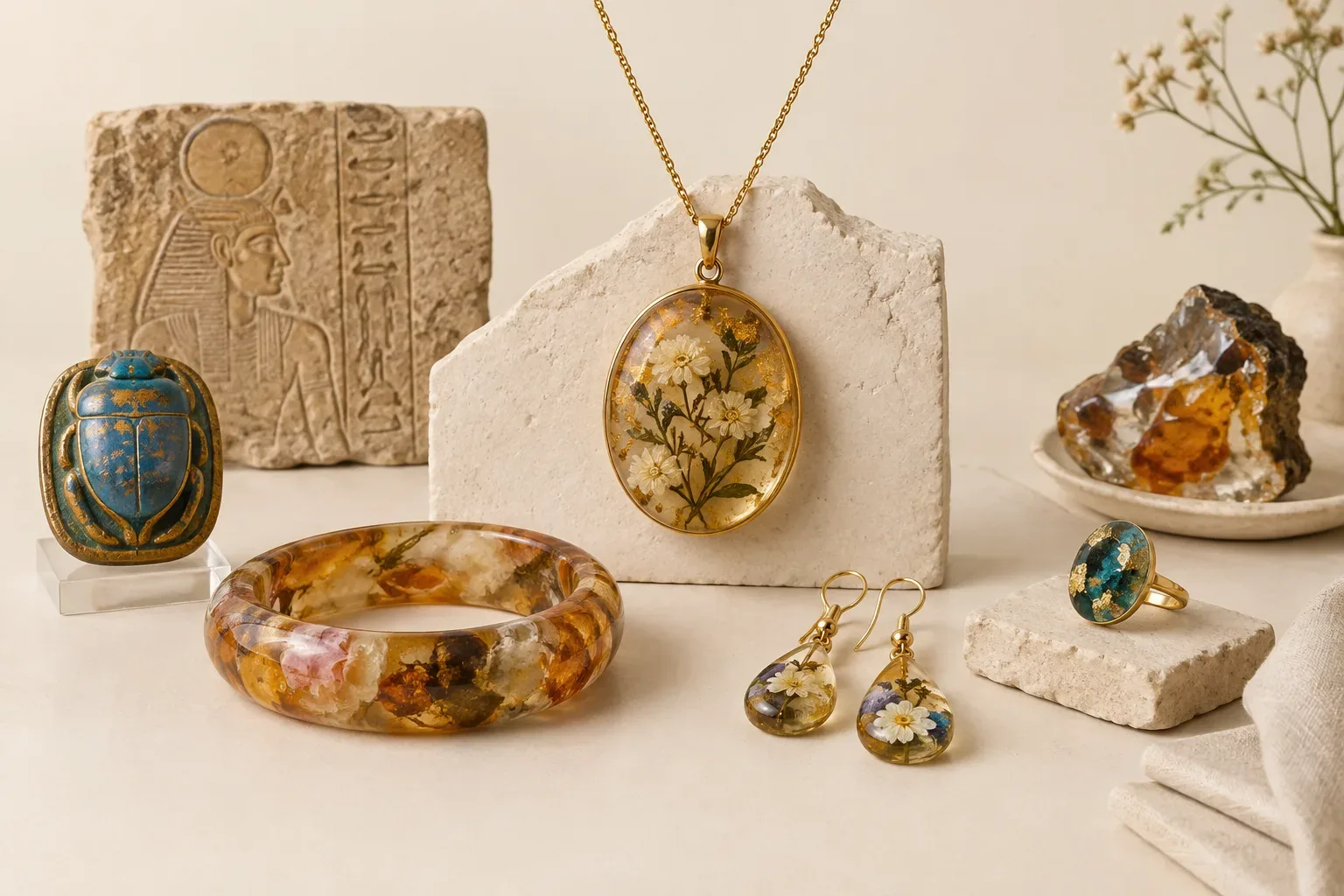
You will encounter three overlapping categories in the market: natural fossilized resins (commonly sold as amber), natural but less-altered resins such as copal, and synthetic or cured polymer resins used by contemporary makers to cast, embed or coat decorations. Museum collections and gemstone guides emphasize fossilized resins’ role among traditional gem materials, while modern makers use engineered resins to achieve effects—transparent inlays, suspended objects, bright colors and lightweight cast forms.
Design motifs using resin range from simple translucent beads and cabochons to more elaborate inlays and ‘suspended inclusion’ pieces where flowers or pigments are embedded in clear polymer. In historical examples noted in museum literature, resin-like gemstones were often cut and polished for beads, cameos or inlaid surfaces; in modern work the resin itself is often the primary visual material and may be paired with metal settings, chains and findings that determine the piece’s longevity.
What ‘tarnish’ means for resin pieces versus metal parts
Tarnish is a chemical change most often associated with metals, especially silver and copper alloys; polished metals develop surface films or oxides that change color. Resin materials — whether amber or synthetic polymer — do not ‘tarnish’ in the technical sense used for metals, but they can undergo different forms of deterioration such as surface scratching, clouding, yellowing or crazing depending on the resin type and exposure conditions.
Because many resin pieces incorporate metal findings, clasps, or settings, the visible change you associate with ‘tarnish’ may be from those metal components even when the resin body remains relatively unchanged. When evaluating durability, consider both the resin’s tendency to scratch or discolor and the metalwork’s susceptibility to tarnish and corrosion.
Practical care to reduce wear and extend life
Treat resin pieces gently. Avoid abrasive cleaners and hard scrubbing that can scratch polymer resins or dull polished amber. Keep resin jewelry out of prolonged direct heat and strong UV where possible; prolonged exposure can accelerate yellowing or surface degradation in some modern resins. Store pieces flat and separately to prevent abrasion against harder gemstones or metal.
Clean metal findings with appropriate cloths or solutions recommended for the metal (for example, a soft silver polishing cloth for silver parts) while avoiding abrasive metal polishes on adjacent resin. If a piece combines a soft resin and a plated metal, be aware that aggressive polishing can remove plating and expose base metal. When in doubt, wipe resin surfaces with a soft, damp cloth and dry promptly.
Selection and gifting guidance: practical and respectful
When buying or gifting resin jewelry, ask sellers for clear material information. The FTC advises that treatments and imitations should be disclosed; transparent information about whether a piece is natural amber, copal, or a synthetic polymer helps set realistic expectations about durability and value. Request information about the metal content of findings and any platings so you can anticipate tarnish or allergy concerns.
Consider the recipient and the context. For a daily-wear piece choose a design with robust metalwork and low-profile resin elements that are less likely to snag. For a sentimental or symbolic gift, distinguish historically documented meanings from contemporary personal claims: if the gift’s symbolic value depends on an asserted historical practice, confirm that practice in reliable museum or scholarly sources. Above all, present material facts honestly; clear expectations about care and longevity are part of a respectful gift.
When to seek professional help and what to ask
If a resin piece develops deep scratches, cracks, or the metalwork shows significant corrosion, consult a conservator or jeweller experienced with organic materials. Describe the materials you have been told the piece contains and ask for an assessment of whether repair, consolidation or replacement of findings is advisable.
For valuable historical pieces identified by museums as fossilized resins or rare gemstones, professional conservation treatment differs from the routine maintenance of contemporary fashion jewellery. Museums like the Victoria and Albert Museum document different handling and conservation needs for historical materials; if you believe a piece to be of historical significance, pursue expert verification rather than attempting amateur restoration.
Final practical checklist
Before purchase, confirm material disclosures and request care guidance from the seller. For everyday wear prefer secure settings and durable metalwork. Clean gently, store carefully, and avoid prolonged exposure to harsh sunlight, solvents or abrasive surfaces. If a piece has historical provenance or you are unsure about its materials, seek expert assessment rather than relying on seller claims alone.
Frequently asked questions
Does resin jewelry tarnish?
Resin itself does not tarnish like silver or copper alloys, but it can scratch, cloud or yellow; the metal parts of a piece can tarnish, so inspect both resin and findings when assessing wear.
How can I tell if a piece is real amber or synthetic resin?
Ask the seller for disclosure and provenance. For valuable or historical claims, consult a qualified jeweller or conservator; the Federal Trade Commission advises sellers to disclose treatments and imitations.
What routine care should I do at home?
Wipe resin surfaces with a soft, slightly damp cloth and dry promptly, avoid abrasive cleaners, keep away from prolonged heat and UV exposure, and store pieces separated to prevent scratches.
Can I wear resin jewelry daily?
You can wear resin jewelry daily if the design and metalwork are robust, but expect some surface wear over time; select low-profile settings and durable findings for everyday use.
Who should I contact if a historical resin piece needs repair?
Seek a conservator or jeweller experienced with organic and historical materials rather than attempting DIY repairs; museums such as the Victoria and Albert Museum document different conservation needs for historic materials.
Sources and further reading
- Bedazzled: A History of Jewellery — Victoria and Albert Museum
- An A-Z of Gemstones — Victoria and Albert Museum
- Buying Gemstones, Diamonds, and Pearls — Federal Trade Commission